The Two Treasures: The Prophet's Final Gift
The Prophet's farewell message; the Quran and Ahlul Bayt as the two inseparable guides
This is our last night together, and tonight we tell the most important story of all. It is the story of a promise, a gift the Prophet Muhammad (PBUH) left for all of humanity on the last journey of his life. It is the story of the two treasures he said would never lead us astray, and the day he stood in the blazing desert sun to deliver the message Allah had been waiting for him to announce.
After twenty-three years of prophethood, the message of Islam was nearly complete. The Quran had been revealed, the laws had been established, the community of Muslims had grown from a handful of believers in a small cave to a nation stretching across the Arabian Peninsula. The Prophet (PBUH) was now in his early sixties, and he knew that his time in this world was drawing to a close.
In the tenth year after the Hijra, the Prophet (PBUH) announced that he would perform the Hajj pilgrimage. Word spread across the Muslim lands, and people came from every direction to join him. Over one hundred thousand Muslims gathered in Makkah to perform the Hajj with their beloved Prophet, a pilgrimage that became known as Hajjat al-Wada, the Farewell Pilgrimage, because it would be his last.
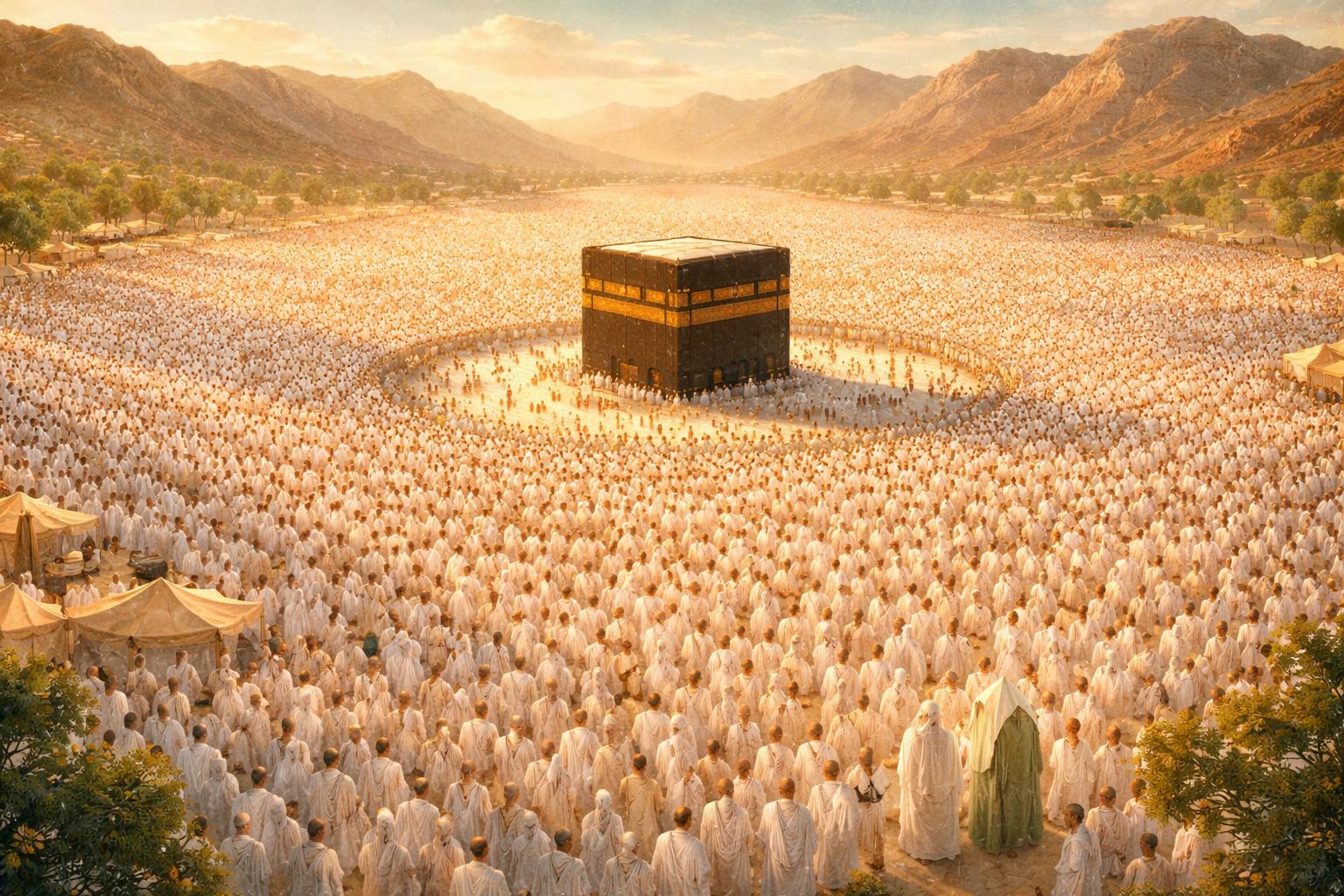
During the Hajj, the Prophet (PBUH) gave a sermon at Mount Arafat that shook the hearts of all who heard it. He spoke of the sanctity of human life, the equality of all people, the rights of women, the prohibition of usury and injustice. He said: "All of you are from Adam, and Adam was from dust. No Arab has superiority over a non-Arab, and no non-Arab has superiority over an Arab, except through taqwa, consciousness of Allah."
Then he asked the gathered thousands: "Have I conveyed the message?" And they answered: "Yes!" And he pointed to the sky and said: "O Allah, be my witness."
After completing the Hajj, the Prophet (PBUH) and the vast caravan of over one hundred thousand Muslims began the journey back to Madinah. On the 18th of Dhul Hijjah, they reached a place called Ghadir Khumm, a crossroads in the desert where the different groups of pilgrims would separate to go to their various homelands.
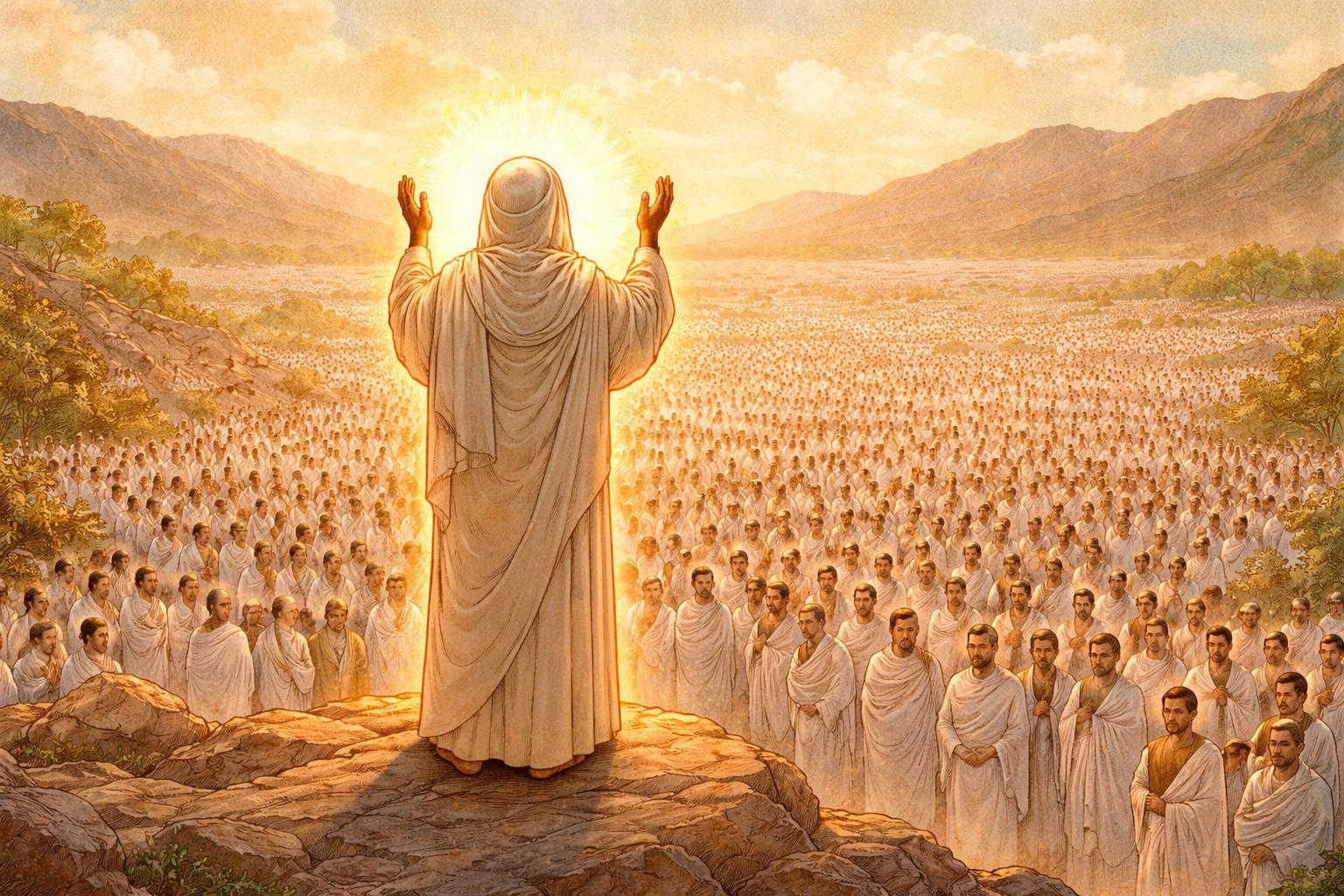
But the Prophet (PBUH) stopped the entire caravan. He sent word ahead to call back those who had already passed, and he waited for those still behind to catch up. All one hundred thousand gathered under the desert sun in the middle of the day. Something extraordinary was about to happen.
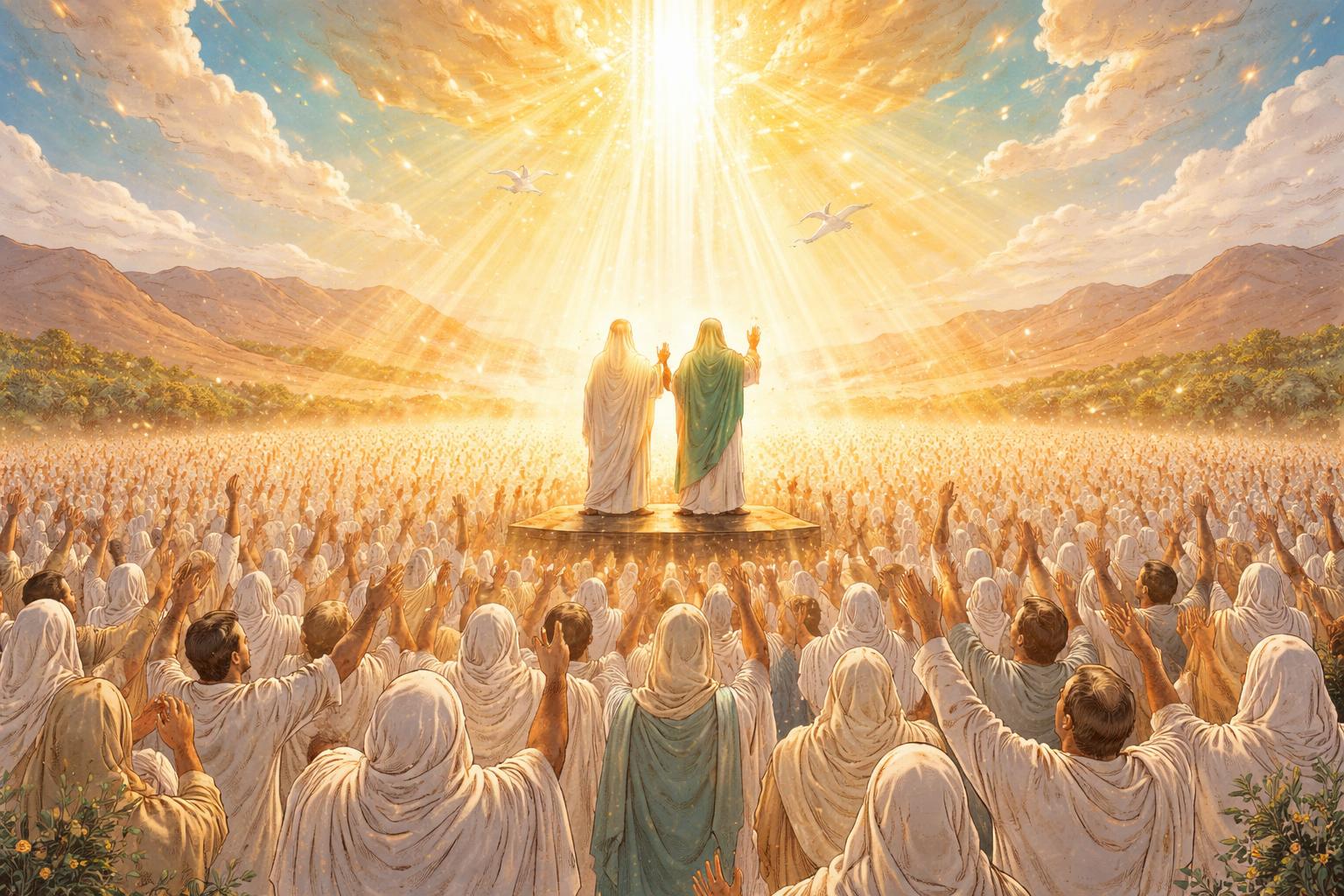
A platform was built from camel saddles so the Prophet (PBUH) could be seen by the massive crowd. The heat was so intense that people placed parts of their cloaks under their feet and parts over their heads for shade. Why would the Prophet stop everyone in this scorching heat at a barren crossroads? Because a verse had come down from Allah that could not wait:
"Ya ayyuhar-Rasul, balligh ma unzila ilayka mir-Rabbik. Wa in lam taf'al fama ballaghta risalatah. Wallahu ya'simuka minan-nas."
"O Messenger, convey what has been sent down to you from your Lord. And if you do not, then you have not conveyed His message. And Allah will protect you from the people."
This verse, from Surah Al-Ma'idah (5:67), carried an urgency unlike any other. Allah was telling His Prophet: if you do not deliver this message, it is as though you have delivered nothing at all. The entire mission of prophethood hung on this one announcement. And Allah promised to protect him, because He knew this message would face opposition.
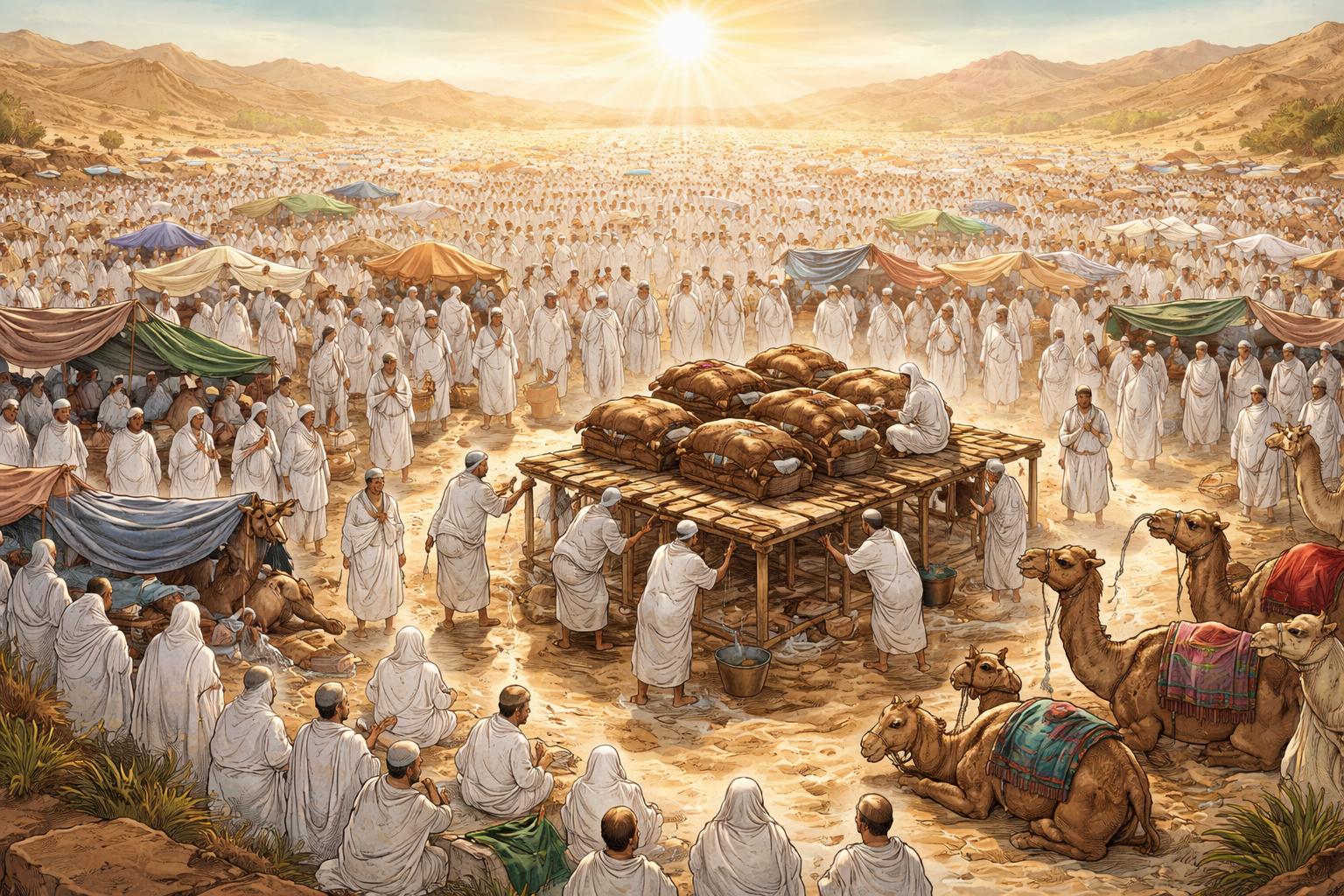
The Prophet (PBUH) stood on the platform and delivered a long sermon. He began by praising Allah and reminding the people that he was a mortal man whose time would soon come. Then he said the words that define the Shia understanding of Islam:
"Inni tarikun fikum ath-Thaqalayn: Kitab Allah wa 'Itrati Ahla Bayti. Ma in tamassaktum bihima lan tadillu ba'di abadan. Wa innahuma lan yaftariqa hatta yarida 'alayya al-hawd."
"I am leaving among you two weighty things: the Book of Allah and my Progeny, my Ahlul Bayt. As long as you hold fast to both of them, you will never go astray after me. And these two will never separate from each other until they meet me at the Pool of Kawthar."
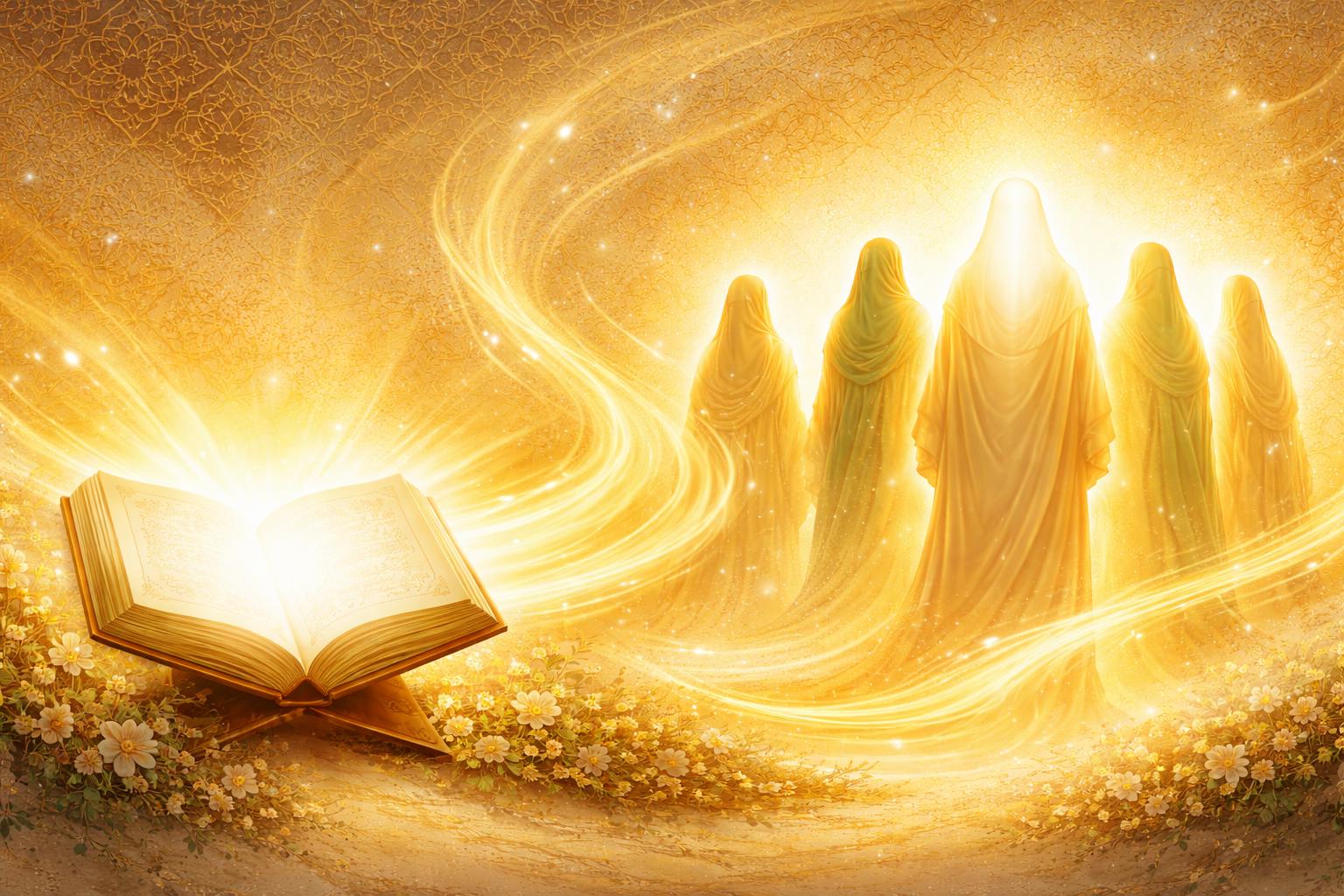
Two treasures. Not one, but two. The Quran, the word of Allah, and the Ahlul Bayt, the family of the Prophet. They go together, inseparable, like two ropes twisted into one. You cannot follow the Quran properly without the guidance of the Ahlul Bayt, and you cannot follow the Ahlul Bayt without the Quran. They are the two lights that illuminate the path.
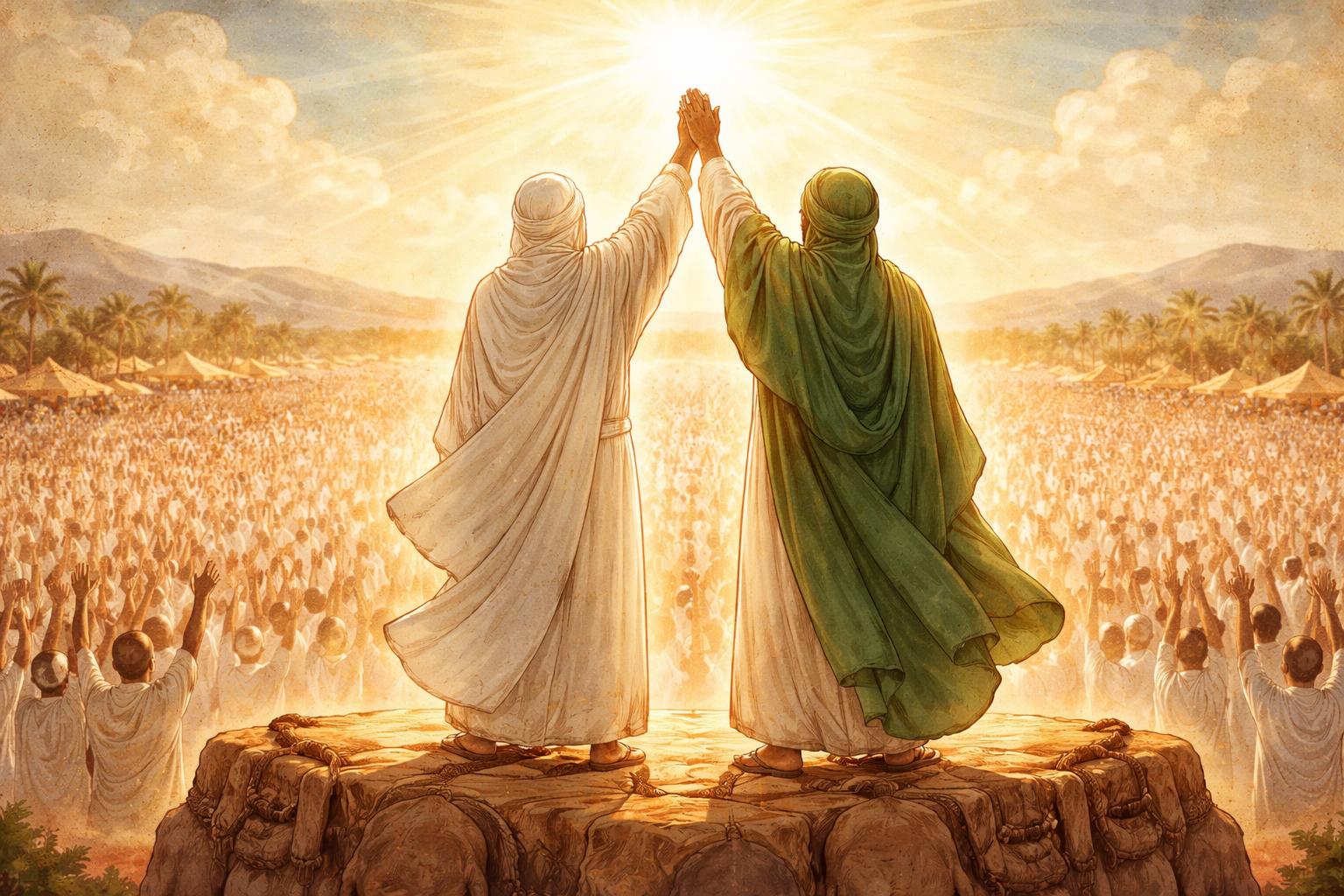
Then the Prophet (PBUH) called Ali ibn Abi Talib (AS) to his side. He took Ali's hand and raised it high, so high that the white of both their arms could be seen by the crowd. And he proclaimed:
"Man kuntu mawlahu fa hadha Aliyyun mawlah. Allahumma waali man waalah, wa 'aadi man 'aadah."
"Whoever I am his master, then Ali is his master. O Allah, befriend whoever befriends him, and oppose whoever opposes him."
The crowd erupted. People came forward to congratulate Ali (AS). The first to do so was Umar ibn al-Khattab, who said: "Congratulations, O Ali! You have become the master of every believing man and woman."
And then the final verse descended, completing the religion of Islam:
"Al-yawma akmaltu lakum dinakum wa atmamtu 'alaykum ni'mati wa raditu lakumul-Islama dina."
"Today I have perfected your religion for you, completed My favor upon you, and have chosen Islam as your religion."
This verse, from Surah Al-Ma'idah (5:3), was the last major verse of the Quran to be revealed. The religion was not complete with just the Quran. It was not complete with just the prayers and fasting and Hajj. It was complete when the line of guidance after the Prophet was established, when the people knew who would lead them after he was gone.
In the Shia tradition, Ghadir Khumm is the most significant event after the Prophet's own mission began. It is the day when the chain of leadership, the Wilayah, was passed from the Prophet to Imam Ali (AS), and through him to the Eleven Imams who would follow: Hasan, Husayn, and nine from the descendants of Husayn (AS), ending with Imam Muhammad al-Mahdi (may Allah hasten his reappearance).
Imam Sadiq (AS) called Ghadir "the greatest Eid of Allah." He said: "There is no Eid for the Muslims, neither Fitr nor Adha, that is greater than the Eid of Ghadir. And it is the Eid of Allah, the Most Exalted."
The story of the Two Treasures is the story of how Allah ensured that humanity would never be left without guidance. The Quran is the message, perfect and preserved. The Ahlul Bayt are the living interpreters, the ones who understood the Quran not just with their minds but with their being, because they lived it completely.
And the Quran itself tells us about the love we should have for the Prophet's family. In Surah Ash-Shura (42:23), Allah says: "Qul la as'alukum 'alayhi ajran illal-mawaddata fil-qurba." "Say: I do not ask you for any reward for this, except love for my close relatives." The only reward the Prophet (PBUH) asked for his twenty-three years of sacrifice was that we love his family.
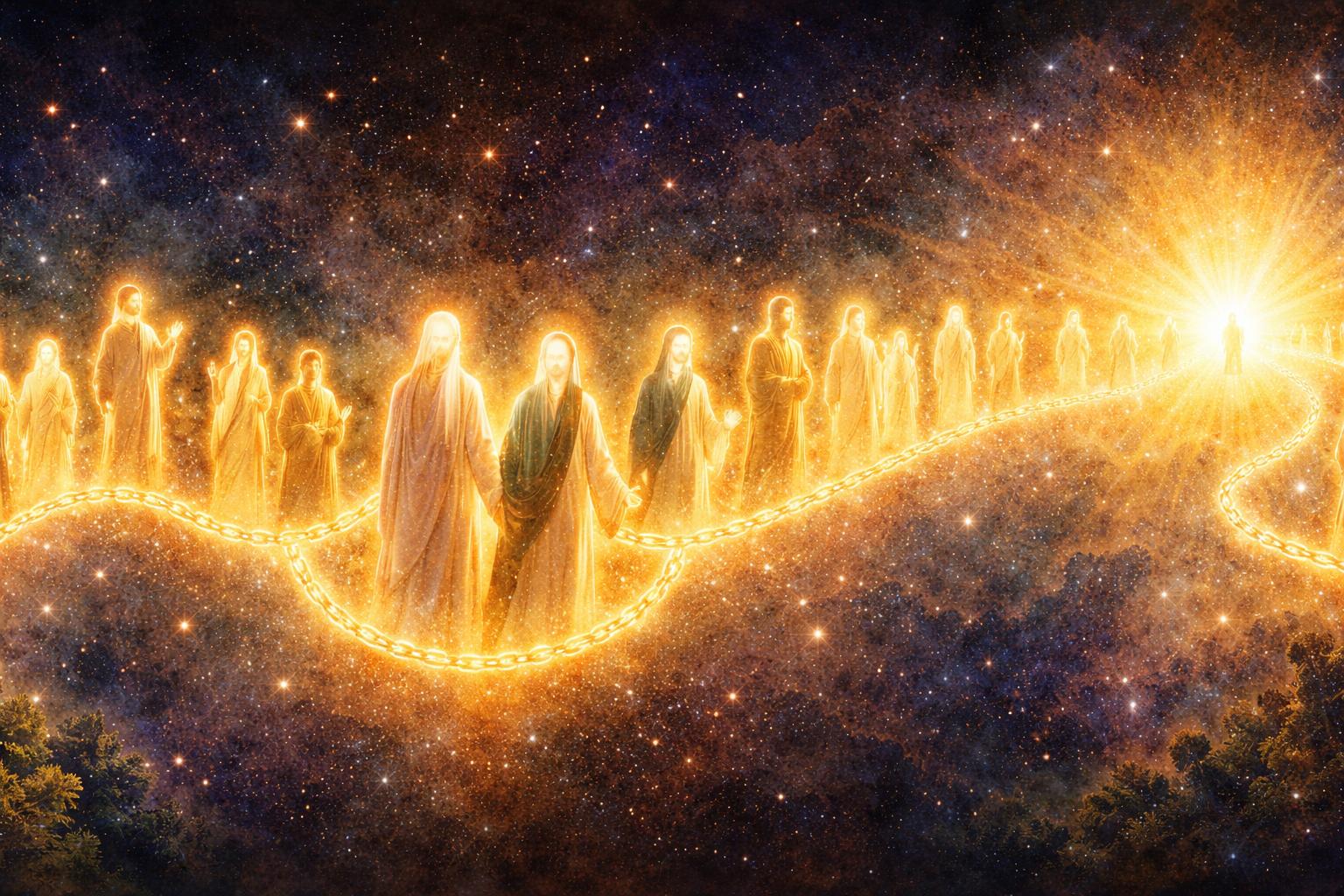
As we end our thirty nights of stories, remember this: every story we have told, from Adam's first step on earth to Ibrahim's sacrifice, from Musa's staff to Yunus in the whale, from Maryam's palm tree to the companions of the cave, all of these stories lead to this moment. All of the prophets carried the same light, and that light was passed from one to the next until it reached Muhammad (PBUH), and from him to Ali (AS), and from Ali through the chain of Imams until the final Imam, al-Mahdi (may Allah hasten his reappearance), who carries it still.
The two treasures, the Quran and the Ahlul Bayt, are the Prophet's gift to every generation until the Day of Judgment. They will never separate. They will never lead you astray. Hold fast to both, and you will find your way.
Key Verses
"Ya ayyuhar-Rasul, balligh ma unzila ilayka mir-Rabbik. Wa in lam taf'al fama ballaghta risalatah." "O Messenger, convey what has been sent down to you from your Lord. And if you do not, then you have not conveyed His message." -- Al-Ma'idah (5:67)
"Al-yawma akmaltu lakum dinakum wa atmamtu 'alaykum ni'mati wa raditu lakumul-Islama dina." "Today I have perfected your religion for you, completed My favor upon you, and have chosen Islam as your religion." -- Al-Ma'idah (5:3)
"Qul la as'alukum 'alayhi ajran illal-mawaddata fil-qurba." "Say: I do not ask you for any reward for this, except love for my close relatives." -- Ash-Shura (42:23)
Reflection Questions
- The Prophet (PBUH) left us two treasures: the Quran and his Ahlul Bayt. Why do you think he said they must go together and would never separate? What happens if someone tries to follow one without the other?
- Over thirty nights, we have heard stories of prophets, believers, and communities. Which story touched your heart the most, and what lesson from it will you carry with you?
- The Prophet asked for only one reward: love for his family. How can you show love and respect for the Ahlul Bayt in your daily life?
This is our very last night together. Night number thirty! And tonight, we are going to hear the most important story of all. It is about a gift. The best gift anyone has ever given to anyone. It is the gift that Prophet Muhammad, peace be upon him and his family, left for us, for you and me and everyone, on the very last big journey of his life.
For twenty-three years, Prophet Muhammad (PBUH) had been teaching people about Allah. He taught them to pray. He taught them to be kind. He taught them to share with the poor and to tell the truth. He taught them to love each other and to treat everyone fairly. The Quran, the holy book of Allah, had been coming down from heaven piece by piece, and now it was almost finished.
The Prophet (PBUH) was getting older. He was in his early sixties. He knew that he would not be in this world much longer. And there was something very, very important he still needed to do, one last message he had to give to the people.
One day, the Prophet (PBUH) said, "I am going to do the Hajj." Hajj is a special trip that Muslims take to Makkah, to the Ka'bah, the house of Allah. When people heard that the Prophet was going, everyone wanted to go with him. People came from every direction, from the north and the south, from the east and the west. Over one hundred thousand people came! That is like a whole city of people, all walking together through the desert to Makkah.
This Hajj became known as the Farewell Hajj, because it was the last time the Prophet (PBUH) would make this trip.
During the Hajj, the Prophet (PBUH) stood on a big hill called Mount Arafat and gave a speech. He told all the people, "Every person is equal. An Arab is not better than a non-Arab. A non-Arab is not better than an Arab. A white person is not better than a black person. A black person is not better than a white person. The only thing that makes someone special is how good their heart is, how much they love Allah and do what is right."
Then he asked everyone, "Have I given you the message?" And all one hundred thousand people called out, "Yes!"
The Prophet pointed up at the sky and said, "O Allah, You heard them. You are my witness."
After the Hajj was finished, the Prophet (PBUH) and all those thousands of people started walking back home to the city of Madinah. On the 18th day of the month of Dhul Hijjah, they reached a place in the desert called Ghadir Khumm. It was a crossroads, a place where the road splits into different paths, and this is where people would say goodbye and go to their different homes.
But the Prophet (PBUH) stopped everyone. He sent people to run ahead and call back anyone who had already gone past. He waited for everyone who was still behind to catch up. All one hundred thousand people gathered together in that one spot in the middle of the desert. The sun was burning hot. People put parts of their cloaks under their feet because the sand was scorching, and parts over their heads for shade.
Why did the Prophet stop everyone here, in the blazing heat? Because Allah had sent him a very important message. Allah told him:
"O Messenger! Tell the people what has been sent down to you from your Lord. If you do not tell them, then it is as if you have not given them any of My message at all. And Allah will protect you."
Can you imagine how important this message must have been? Allah was saying, "If you do not say this one thing, it is like you never said anything at all!" That means everything, all twenty-three years of teaching, all the prayers, all the lessons, everything came down to this one announcement.
The people built a tall platform out of camel saddles so that everyone could see the Prophet. Muhammad (PBUH) climbed up and started to speak. His voice carried across the crowd. He praised Allah. He reminded the people that he was a human being, and that his time in this world would come to an end soon.
Then he said the most important words. Listen carefully, because these words are like a treasure:
"I am leaving behind for you two precious things: the Book of Allah, the Quran, and my family, my Ahlul Bayt. As long as you hold on to both of them together, you will never, ever get lost. And these two will never be separated from each other."
Two treasures! Not one, but two. The first treasure is the Quran, the book of Allah, full of Allah's words and guidance. The second treasure is the Ahlul Bayt, the family of the Prophet. They go together, like your two hands, like the two wings of a bird. A bird cannot fly with just one wing. You need both!
The Quran tells us what Allah wants. And the Ahlul Bayt show us how to do it. They are like a book and a teacher together. You need the book, but you also need the teacher to explain it to you and show you how it works.
Then the Prophet (PBUH) did something that everyone could see. He called Imam Ali (AS), his cousin and the closest person to him, to come stand beside him. The Prophet took Ali's hand and raised it up high, so high that everyone in that huge crowd could see their hands together in the air.
And the Prophet said, "Whoever takes me as their guide and leader, then Ali is their guide and leader too. O Allah, be a friend to whoever is Ali's friend, and do not be pleased with whoever is Ali's enemy."
The people were so happy! They came forward, one by one, to shake Ali's hand and say, "Congratulations! Congratulations, Ali!" Everyone could see that the Prophet had chosen Ali (AS) to be the guide after him.
And right then, the very last big verse of the Quran came down from Allah:
"Today I have finished your religion for you. I have given you all My blessings. And I am happy with Islam as your way of life."
Did you hear that? Allah said the religion was now finished, now complete. It was not complete before this moment. The prayers were there, the fasting was there, the Hajj was there, but the religion was not finished until the people knew who would guide them after the Prophet was gone. Now they knew. Now it was complete.
Imam Sadiq (AS) told us that the day of Ghadir is the greatest celebration in Islam. He said, "There is no Eid, no holiday, for Muslims that is greater than the day of Ghadir." That is why Muslims who follow the Ahlul Bayt celebrate Eid al-Ghadir every year, to remember this beautiful day.
After the Prophet (PBUH), Imam Ali (AS) became the guide. And after Imam Ali, the guidance passed to his sons, Imam Hasan (AS) and Imam Husayn (AS), and then to nine more Imams from the family of Husayn, one after another, like a chain of bright lights. The very last one is Imam Muhammad al-Mahdi, may Allah bring him back soon. He is alive today, and one day he will come and fill the world with fairness and kindness.
The Quran tells us one more beautiful thing. It says that the Prophet (PBUH) never asked people for any payment or reward for all his hard work. Twenty-three years of teaching and helping and sacrificing, and he asked for nothing. Nothing except one thing. Allah says in the Quran: "Say: I do not ask you for any reward, except that you love my family."
That is all the Prophet wanted. Just love his family. Love the Ahlul Bayt. Learn from them. Follow their example. They were the kindest, wisest, most generous people who ever lived.
And now, as we finish our thirty nights of stories, remember this: every story we heard, from Adam (AS) walking on earth for the first time, to Ibrahim (AS) building the Ka'bah, to Musa (AS) crossing the sea, to Yunus (AS) in the belly of the whale, to baby Isa (AS) and his mother Maryam (AS), to the Sleepers in the Cave, and all the rest, all of these stories are like lights on a path. And that path leads right here, to the two treasures: the Quran and the Ahlul Bayt.
The Prophet's gift is for every person, in every time, forever and ever. The Quran will never change. The Ahlul Bayt will never leave us. Hold on to both, and you will always, always find your way.
Thank you for spending these thirty beautiful nights with us. May Allah bless you, protect you, and fill your heart with the love of the Quran and the Ahlul Bayt. Ramadan Mubarak!
Key Verses
"Ya ayyuhar-Rasul, balligh ma unzila ilayka mir-Rabbik." "O Messenger! Tell the people what Allah has sent down to you." -- Al-Ma'idah (5:67)
"Al-yawma akmaltu lakum dinakum wa atmamtu 'alaykum ni'mati wa raditu lakumul-Islama dina." "Today I have finished your religion for you, and I have given you all My blessings, and I am happy with Islam as your way of life." -- Al-Ma'idah (5:3)
"Qul la as'alukum 'alayhi ajran illal-mawaddata fil-qurba." "Say: I do not ask you for any reward, except that you love my family." -- Ash-Shura (42:23)
Let's Talk About It
- The Prophet left us two treasures: the Quran and his family, the Ahlul Bayt. Why do you think he said we need both of them together?
- We heard thirty stories this Ramadan! Which story was your very favorite, and what did you learn from it?
- The only thing the Prophet asked for was that we love his family. How can you show love for the Ahlul Bayt in your life?