The Night of Destiny: When the Quran Came Down
The revelation of the Quran; the power of Laylat al-Qadr
Tonight's story is about the most important night in all of creation. It is about the night when heaven touched the earth, when the first words of the Quran descended upon the heart of Prophet Muhammad (PBUH) in a cave on a mountain above Makkah. It is about Laylat al-Qadr, the Night of Power, a night that the Quran itself tells us is better than a thousand months.
For years before this night, Muhammad (PBUH) had been troubled by what he saw around him. The people of Makkah worshipped idols of stone and wood. They buried their infant daughters alive. The rich oppressed the poor. The strong crushed the weak. Lies were told as truth, and truth was mocked as weakness. The world had forgotten the message of Ibrahim (AS), of Musa (AS), of Isa (AS), all the prophets who came before.
Muhammad (PBUH) was known among his people as "Al-Amin," the Trustworthy, and "Al-Sadiq," the Truthful. Even those who would later oppose him admitted that he never lied, never cheated, never harmed anyone. He was generous to the poor, kind to orphans, and gentle with animals. But kindness alone could not fix a broken world. Something more was needed.
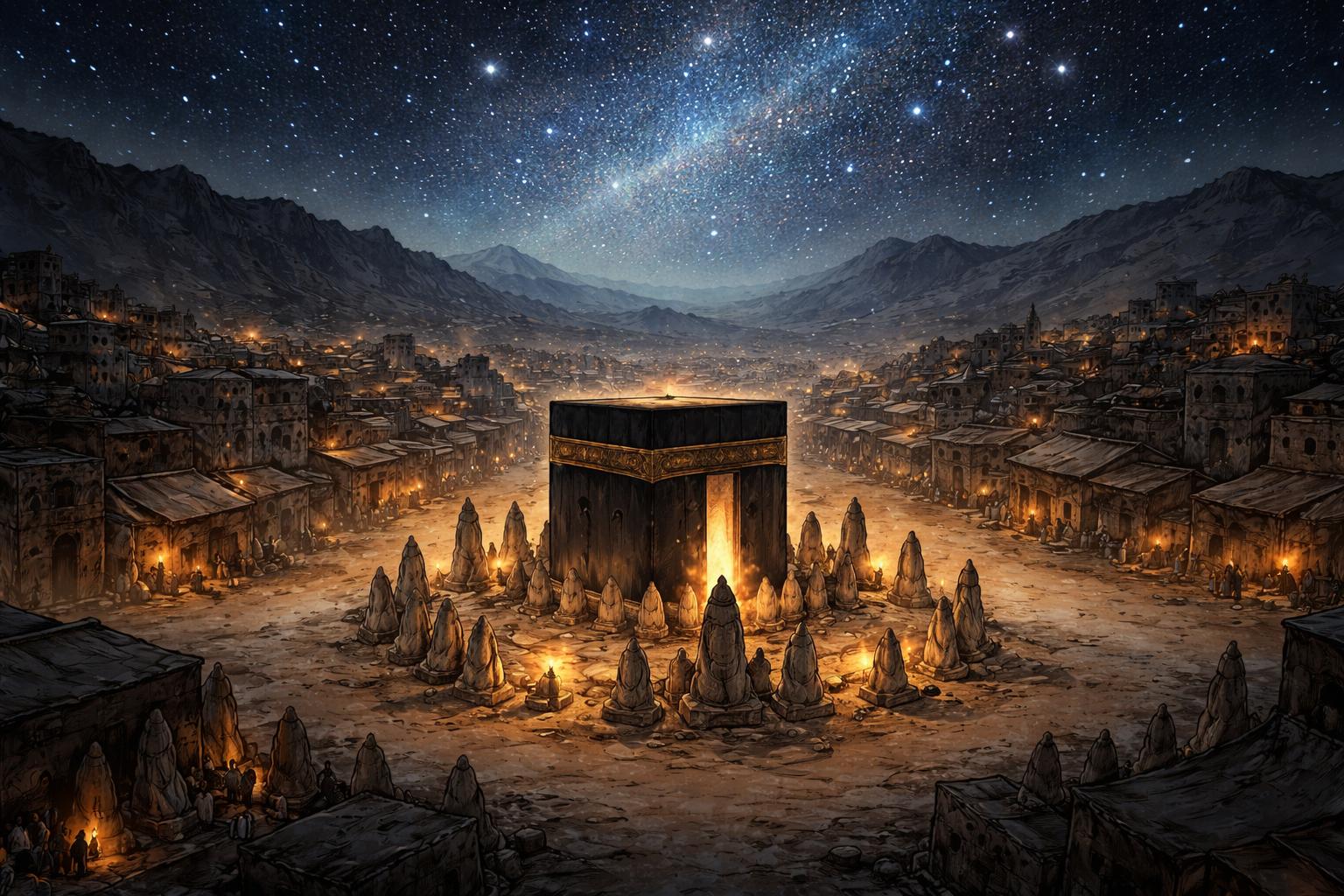
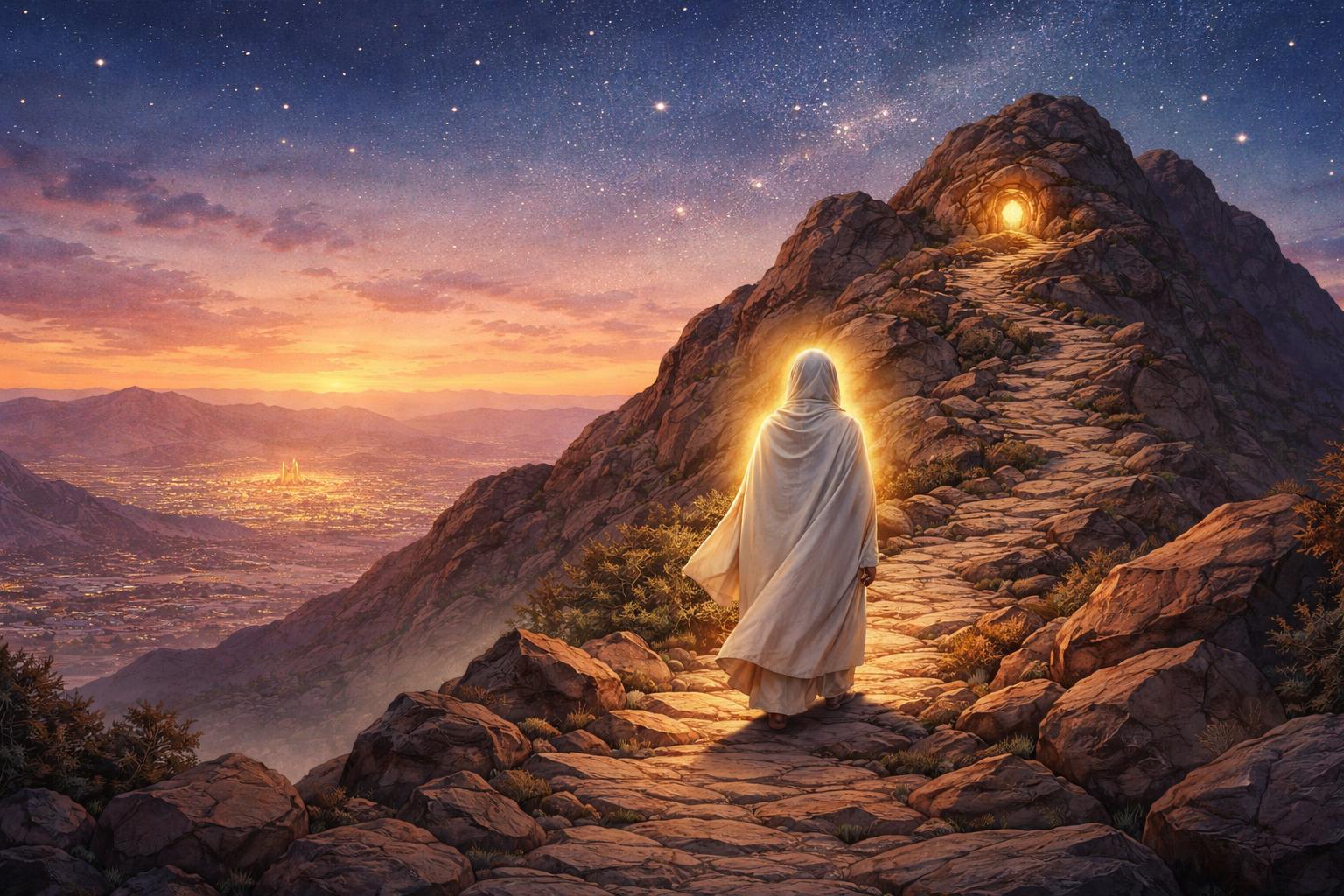
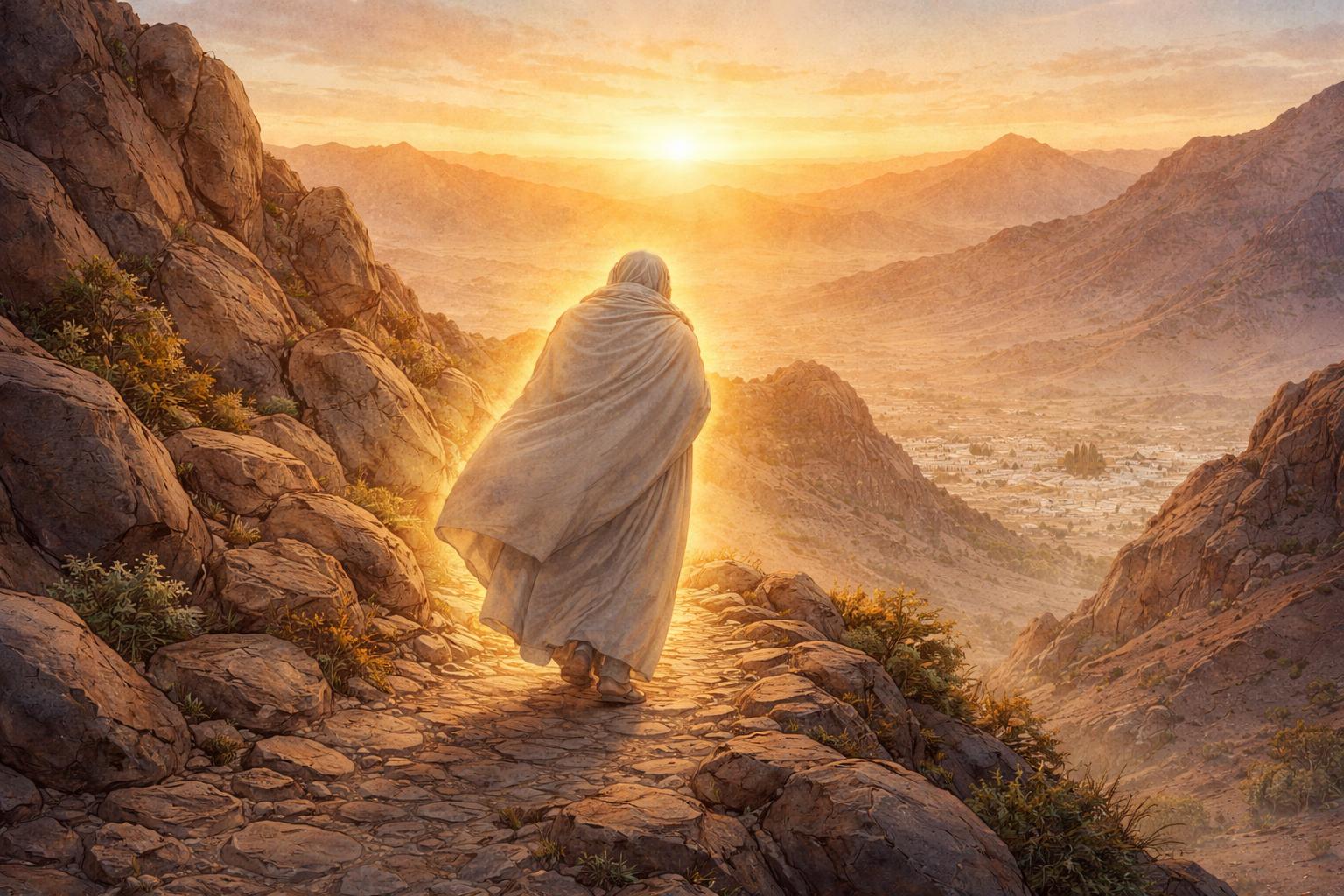
Every year, especially during the month of Ramadan, Muhammad (PBUH) would leave the noise of Makkah and climb to a small cave near the top of Mount Hira. The cave was barely large enough for one person to sit in, a narrow opening in the rock overlooking the vast desert below and the city of Makkah in the distance. There, in the silence, he would think, reflect, and pray. He was searching for truth, for the answers that his heart told him must exist.
He was forty years old when the night came. It was one of the last nights of Ramadan. The cave was dark. The stars burned bright above the desert. Muhammad (PBUH) sat in the stillness, as he had done many nights before.
Then everything changed.
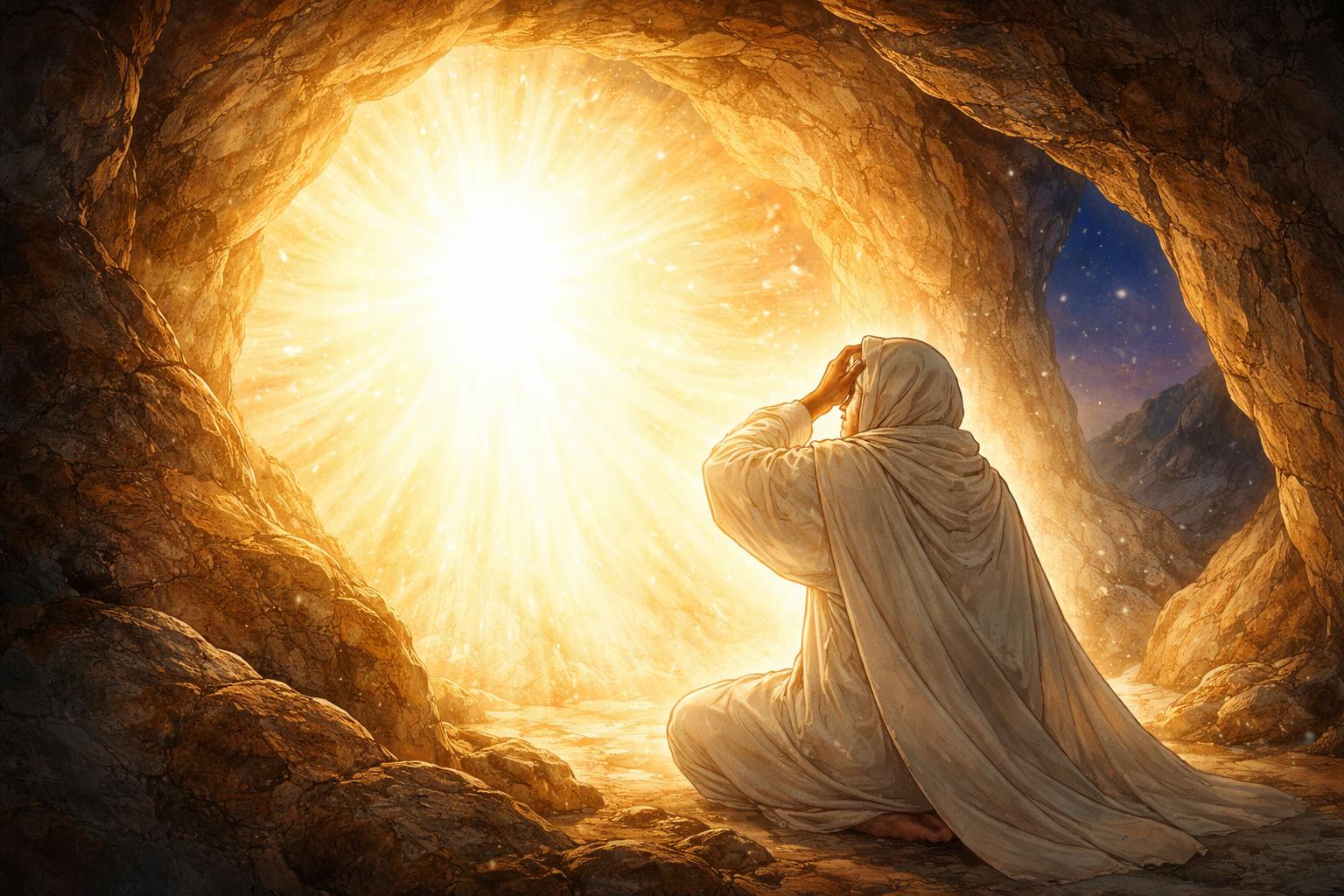
A presence filled the cave, a light, a force, something beyond anything human. It was Jibril (AS), the angel of revelation, the same angel who had spoken to Ibrahim, to Musa, to Maryam, to every prophet before. But Muhammad (PBUH) had never seen an angel before.
Jibril commanded: "Iqra!" Read!
Muhammad (PBUH), who had never been taught to read or write, answered: "I cannot read."
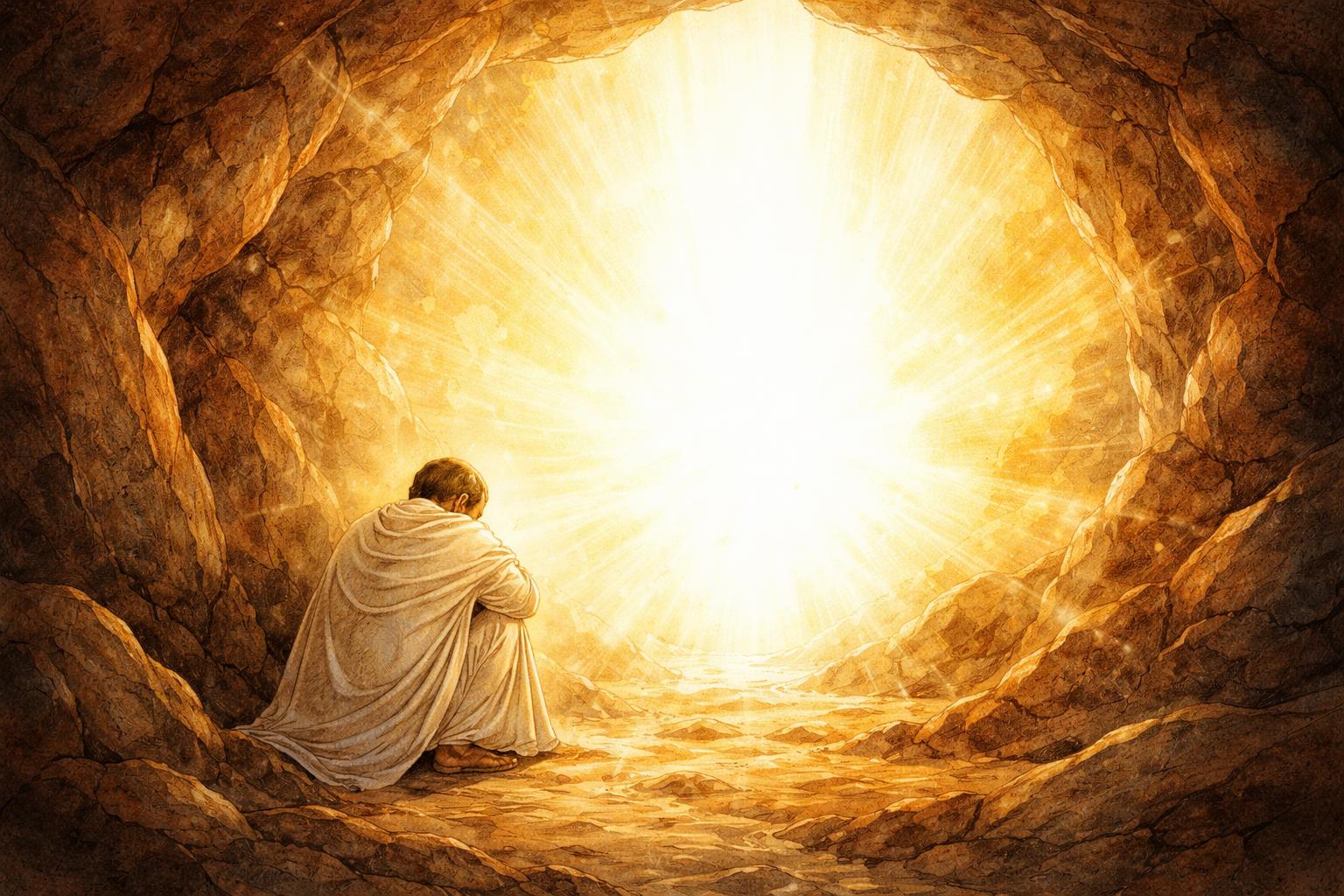
Jibril embraced him, pressed him to his chest with a force that took his breath away, then released him and commanded again: "Iqra!" Read!
Again Muhammad (PBUH) answered: "I cannot read."
A third time Jibril embraced him, pressed him until the pressure was almost beyond bearing, then released him and spoke the first words of the Quran ever revealed to a human heart:
"Iqra bismi Rabbik-alladhi khalaq. Khalaqal-insana min 'alaq. Iqra wa Rabbuk-al-Akram. Alladhi 'allama bil-qalam. 'Allamal-insana ma lam ya'lam."
"Read in the name of your Lord who created. Created the human being from a clinging substance. Read, and your Lord is the Most Generous. Who taught by the pen. Taught the human being what he did not know."
These five verses, Surah Al-Alaq, were the beginning of everything. The first word revealed was "Iqra," Read, a command that would echo through all of history. Allah did not begin His final message with a command to fight, or to conquer, or to build empires. He began with a command to learn, to read, to seek knowledge. This tells us what matters most.
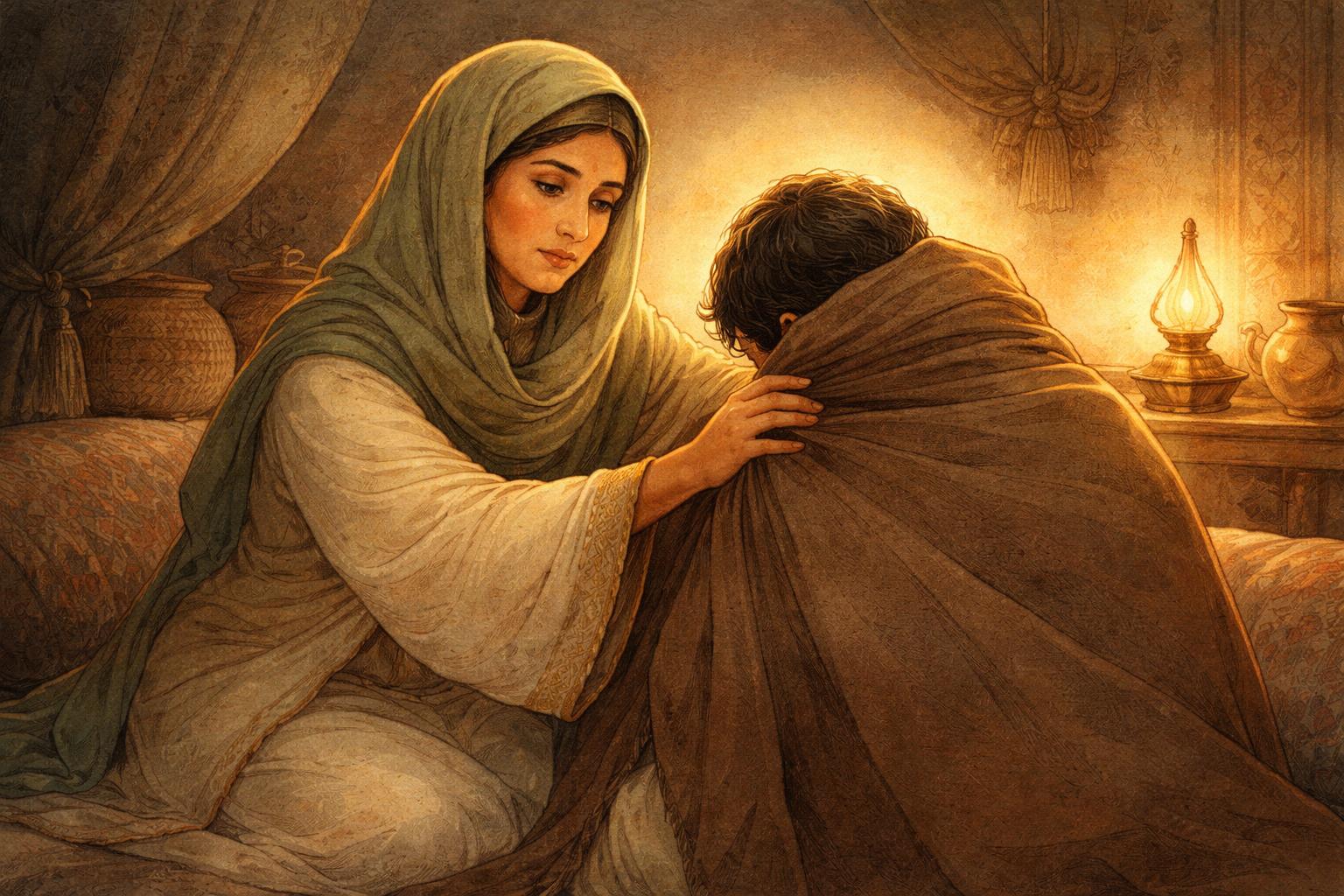
Muhammad (PBUH) came down from the mountain trembling. His heart was racing. He went home to his wife Khadijah (AS), the first person he told. "Cover me, cover me," he said, shaking. Khadijah wrapped him in a cloak and held him. When he told her what had happened, she did not doubt him for a moment.
"By Allah," Khadijah said, "Allah would never disgrace you. You maintain the ties of kinship, you speak the truth, you bear the burdens of the weak, you help the poor, you honor your guests, and you support those afflicted by calamity."
Khadijah (AS) became the first person to believe. She was the first Muslim, the first to accept the message of the Quran. Her faith was immediate and complete, without hesitation.
And so the revelation began. Over the next twenty-three years, the Quran would continue to descend, verse by verse, surah by surah, guiding humanity in every matter of life and faith. But that first night, Laylat al-Qadr, remained special above all others.
Allah revealed an entire surah about this night: "Inna anzalnahu fi Laylatil-Qadr. Wa ma adraka ma Laylatul-Qadr. Laylatul-Qadri khayrum-min alfi shahr. Tanazzalul-mala'ikatu war-Ruhu fiha bi idhni Rabbihim min kulli amr. Salamun hiya hatta matla'il-Fajr."
"Indeed, We sent it down on the Night of Power. And what will make you realize what the Night of Power is? The Night of Power is better than a thousand months. The angels and the Spirit descend therein by permission of their Lord for every matter. Peace it is until the emergence of dawn."
Better than a thousand months. That is more than eighty-three years, more than an entire human lifetime. One night of sincere worship, prayer, and connection with Allah is worth more than a lifetime of ordinary worship. This is the gift that Allah gives to the believers every Ramadan.
In the Shia tradition, Laylat al-Qadr holds extraordinary significance. It is not merely a historical event that happened once. It is a living night that returns every year, and on it, the angels still descend with the divine decree for the coming year.
Imam Baqir (AS) taught: "The angels descend on Laylat al-Qadr to the Imam of the time, and they bring to him the decree of Allah for the year." This means that the connection between heaven and earth that began on that first night in the cave never stopped. Every Laylat al-Qadr, the divine plan for the year is brought down, and the living Imam receives this knowledge.

Imam Sadiq (AS) said: "If there were not an Imam on the earth to whom the angels descend on Laylat al-Qadr, the proof of this verse would be broken." The Quran speaks of angels descending every Laylat al-Qadr, which means there must always be someone to receive them.
This is why the nights of Qadr in Ramadan, particularly the 19th, 21st, and 23rd nights, are the most important nights of the year for worship in Shia practice. Believers stay awake all night in prayer, reciting Quran, and asking for forgiveness. They hold the Quran above their heads and ask Allah to judge them by this Book. They pray for the health and guidance of the Imam of their time.
The story of that first revelation in the cave is a reminder that the greatest changes in history began not with armies or wealth, but with words. Five verses in a small cave changed the entire world. The Quran that began that night became the guide for over a billion people across fourteen centuries, and it continues to guide those who open their hearts to it.
Key Verses
"Iqra bismi Rabbik-alladhi khalaq. Khalaqal-insana min 'alaq. Iqra wa Rabbuk-al-Akram. Alladhi 'allama bil-qalam. 'Allamal-insana ma lam ya'lam." "Read in the name of your Lord who created. Created the human being from a clinging substance. Read, and your Lord is the Most Generous. Who taught by the pen. Taught the human being what he did not know." -- Al-Alaq (96:1-5)
"Inna anzalnahu fi Laylatil-Qadr. Wa ma adraka ma Laylatul-Qadr. Laylatul-Qadri khayrum-min alfi shahr." "Indeed, We sent it down on the Night of Power. And what will make you realize what the Night of Power is? The Night of Power is better than a thousand months." -- Al-Qadr (97:1-3)
Reflection Questions
- The first word revealed was "Iqra" (Read). Why do you think Allah chose to begin the Quran with a command to learn? What does this tell us about the value of knowledge in Islam?
- Khadijah (AS) believed immediately and supported the Prophet without hesitation. What does her response teach us about the qualities of a true believer?
- Laylat al-Qadr is better than a thousand months. How can you make the most of the special nights of Ramadan in your own life?
Tonight's story is about the most special night in the whole, whole world. It is about a night when something so wonderful happened that Allah says this one night is better than a thousand months. Can you imagine that? One single night, more special than a thousand months! That is more than eighty years. That is longer than most people live! This night is called Laylat al-Qadr, the Night of Power. And here is how it happened.
A long time ago, in the city of Makkah, there lived a man named Muhammad, peace be upon him and his family. Even before he became a prophet, everyone knew he was special. People called him "Al-Amin," which means "the Trustworthy One." They called him this because he never, ever told a lie. Not once. He was kind to poor people. He was gentle with children. He took care of orphans, which are children who do not have parents. He was even gentle with animals. If he saw a hungry cat, he would feed it. If he saw a hurt bird, he would help it.
But Muhammad (PBUH) looked around at the world and felt sad. The people of Makkah did many bad things. They prayed to statues made of stone and wood. They were mean to people who were poor or weak. They told lies and cheated each other. Muhammad knew in his heart that this was wrong. He knew there had to be something better, something true. But what could he do?
Every year, especially during the month of Ramadan (the same month we are in right now!), Muhammad (PBUH) would leave the noisy, busy city and climb up a big mountain called Mount Hira. Near the top of the mountain, there was a small cave, just big enough for one person to sit inside. The cave was quiet, so quiet that you could hear the wind whispering and the stars twinkling. Well, stars do not really make a sound, but it was so peaceful up there that it felt like you could hear everything.
Muhammad (PBUH) would sit in that little cave, all alone, and think. He would think about the sky and wonder, "Who made the stars?" He would think about the mountains and wonder, "Who made them so tall and strong?" He would look down at the little city far below and wonder, "Who will help these people find the truth?" And he would pray and pray, asking Allah for answers.
He was forty years old when the big night finally came. It was one of the last nights of Ramadan. The cave was very dark. The sky outside was full of bright, bright stars. Muhammad (PBUH) was sitting quietly, the way he always did.
Then, suddenly, everything changed.
A light filled the cave. A beautiful, powerful, amazing light. And in that light, there was someone. It was an angel, a messenger from Allah. His name was Jibril (AS). Jibril is the same angel who had spoken to Prophet Ibrahim (AS), to Prophet Musa (AS), and to many prophets before. But Muhammad (PBUH) had never seen an angel before. He must have been so surprised!
Jibril said one word: "Iqra!" That means "Read!"
Muhammad (PBUH) said, "I do not know how to read." He had never gone to school. He had never learned to read or write.
Jibril came close to Muhammad (PBUH) and hugged him tightly, so tightly that Muhammad could feel the angel's great power. Then Jibril let go and said again, "Iqra! Read!"
Muhammad (PBUH) said again, "I cannot read."
Jibril hugged him a third time, even tighter than before. Then he let go and spoke the most important words that had ever been said. These were the very first words of the Quran:
"Read in the name of your Lord who created. He created people from a tiny, tiny thing. Read! And your Lord is the Most Generous. He taught people using the pen. He taught people what they did not know."
These five sentences were the very beginning of the Quran, our holy book! And guess what the very first word was? "Read!" Allah did not start His book by telling people to fight, or to build big buildings, or to get lots of money. He started by telling people to learn, to read, to discover. That tells us something very important: learning and knowledge are one of the most special things in the whole world.
Muhammad (PBUH) came down from the mountain shaking and trembling. His heart was beating so fast. He had just seen an angel! He had just heard the words of Allah! He ran home to his wife, Khadijah (AS).
"Cover me, cover me!" he said, shaking. He was cold and surprised and amazed all at the same time.
Khadijah (AS) quickly wrapped him in a warm blanket and held him close. "What happened?" she asked softly.
Muhammad (PBUH) told her everything, about the light, about the angel, about the words. And do you know what Khadijah did? She did not doubt him. She did not say, "Are you sure?" or "Maybe you imagined it." No! She believed him right away.
Khadijah (AS) said, "Allah would never hurt you. You are too good. You are kind to your family. You help poor people. You always tell the truth. You take care of people who are sick. Allah has chosen you for something wonderful!"
Khadijah (AS) became the very first person in the whole world to believe in the message of the Quran. She was the first Muslim. She believed before anyone else, without waiting, without asking for proof. She just knew in her heart that it was true. What an amazing woman she was!
And so the Quran began. Over the next twenty-three years, Jibril would bring more and more of the Quran to Muhammad (PBUH), piece by piece, verse by verse, until the whole book was finished. But that very first night, the night when it all started, that night stayed special forever.
Allah loved that night so much that He gave it its very own chapter in the Quran, called Surah Al-Qadr. In it, Allah says:
"We sent the Quran down on the Night of Power. And what will tell you what the Night of Power is? The Night of Power is better than a thousand months. The angels come down on that night, with the Spirit, by the permission of their Lord, with every kind of plan. That night is full of peace, all the way until the morning comes."
Better than a thousand months! That means if you pray and worship Allah on this one special night, it is worth more than if you prayed for over eighty years! Is that not the most amazing gift? Allah gives this gift to us every single Ramadan.
And here is something very beautiful that the teachers from Prophet Muhammad's family, the Ahlul Bayt, teach us. They tell us that the Night of Power is not just something that happened once, long ago. It comes back every single year! Every Ramadan, the angels come down to earth again on this special night.
Imam Baqir (AS), one of the great teachers from the Prophet's family, said that every year on Laylat al-Qadr, the angels come down and visit the Imam of that time, the special guide that Allah has chosen for the people. The angels bring the plan for the whole year, from Allah. That means heaven and earth are connected on this night, just like they were in the cave so long ago.
Imam Sadiq (AS) taught that there must always be someone on earth for the angels to visit on this night. If there were no Imam, the Quran's promise about the angels coming down would not be true anymore. And the Quran is always, always true.
That is why the special nights of Ramadan, especially the 19th night, the 21st night, and the 23rd night, are so important. On those nights, Muslims stay up late praying and reading the Quran and asking Allah to forgive them. They hold the Quran above their heads and ask Allah to be kind to them. They pray for everyone in the world, and they pray for the Imam of our time.
The story of that first night in the cave teaches us something very special. The biggest change in the whole history of the world did not start with a big army or lots of money. It started with one man, sitting alone in a small, dark cave, hearing five sentences from an angel. Just five sentences. But those five sentences changed everything. They became the beginning of a book that over a billion people, that is a thousand million people, read and love today.
And it all started on one quiet, magical night in Ramadan, just like the Ramadan nights we are sharing right now. Every time you sit and listen to a story from the Quran, every time you learn something new about Allah, you are connected to that first beautiful night when the Quran came down from heaven to earth.
So tonight, when you look up at the stars, remember that little cave on the mountain. Remember the angel's voice saying "Read!" And know that Allah's words are a gift for you, too, a gift that will never, ever run out.
Key Verse
"Inna anzalnahu fi Laylatil-Qadr. Wa ma adraka ma Laylatul-Qadr. Laylatul-Qadri khayrum-min alfi shahr." "We sent the Quran down on the Night of Power. And do you know what the Night of Power is? The Night of Power is better than a thousand months!" -- Al-Qadr (97:1-3)
Let's Talk About It
- The very first word of the Quran was "Read!" Why do you think Allah thinks learning and reading are so important?
- Khadijah (AS) believed right away when the Prophet told her what happened. What does it mean to believe in someone and trust them?
- Laylat al-Qadr comes every Ramadan. What is something special you can do on the nights of Ramadan to feel close to Allah?