The Two Brothers: When Jealousy Whispers
Consequences of jealousy; the value of sincerity and righteousness
Have you ever felt a burning feeling in your chest when someone else got something you wanted? Maybe a sibling got a bigger piece of cake, or a classmate won a prize you thought you deserved. That hot, tight feeling has a name: jealousy. And tonight's story is about the very first time jealousy poisoned a human heart, and where it led.
Adam (AS) and Hawwa had settled on Earth, and Allah had blessed them with children. Among their sons were two brothers: Habil and Qabil. Habil, the younger, was a shepherd who tended his flocks on green hillsides, watching the clouds drift overhead while his sheep grazed peacefully. Qabil, the older, was a farmer who worked the soil, planting seeds and harvesting grain under the hot sun.
The two brothers were as different as the earth and the sky. Habil was gentle and soft-spoken. He cared for even the weakest lamb in his flock, carrying it on his shoulders when it could not keep up. Qabil was strong and proud. He measured his worth by the size of his harvest and the strength of his arms.
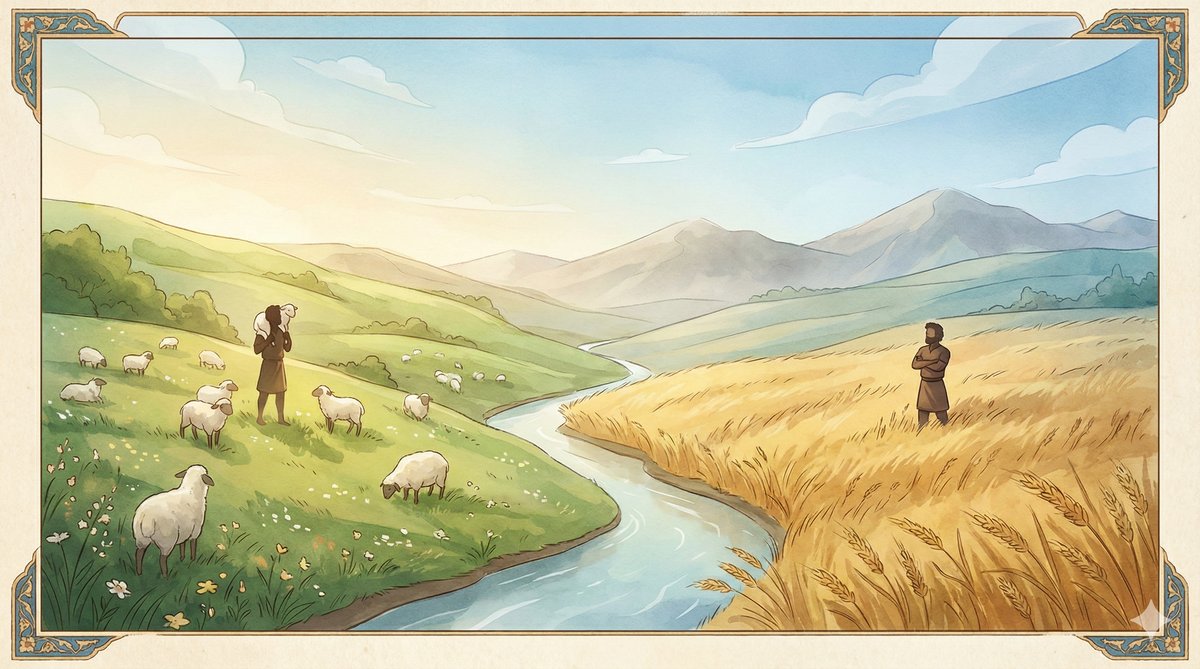
One day, Allah commanded both brothers to offer a sacrifice, a gift from their best possessions to show their devotion and sincerity. This was a test, though neither of them knew it yet. Not a test of wealth or strength, but a test of the heart.
Habil chose the finest ram from his flock, the healthiest and most beautiful animal he owned, the one he loved most. He placed it on the hilltop altar and stepped back, his heart full of gratitude. "O Allah," he whispered, "I give You my best because You deserve nothing less."
Qabil looked at his harvest. He had piles of golden wheat and baskets of plump fruits. But giving away his best grain? That seemed like a waste. So he gathered some leftover stalks, the ones that were slightly wilted, the ones he would not miss, and placed them on the altar. "This should be enough," he muttered.
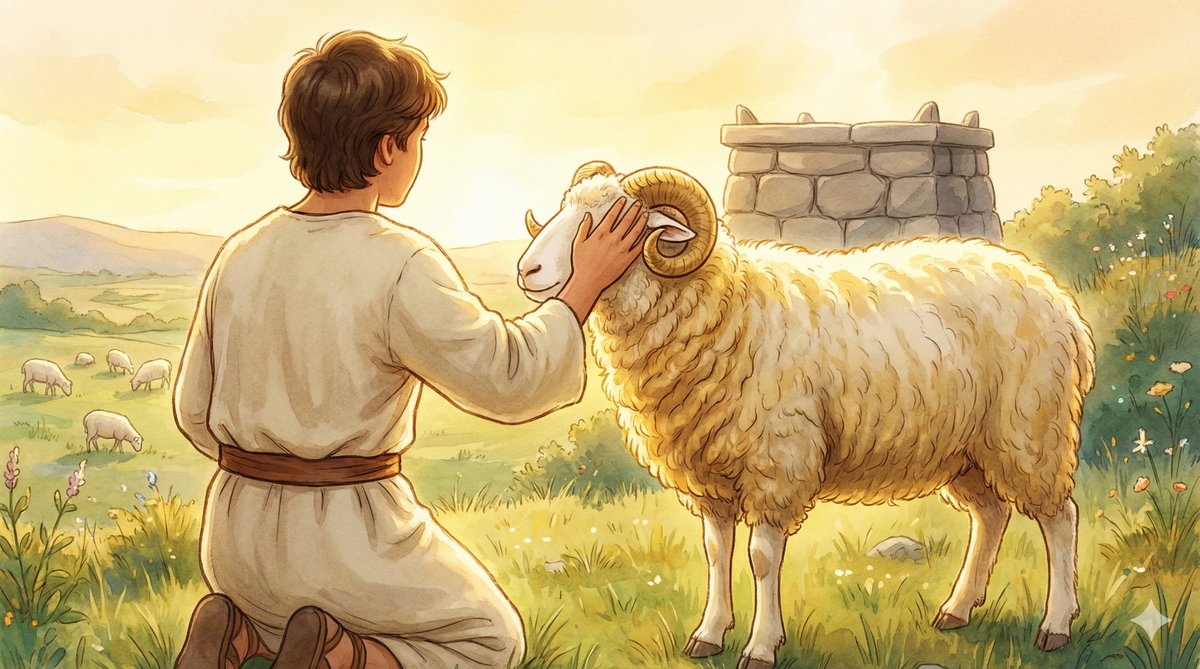
Then they waited.
A fire descended from the sky, bright and clean, and consumed Habil's offering completely. The ram vanished in the divine flame, accepted by Allah. But Qabil's pile of grain sat untouched. No fire came. No sign of acceptance.
Qabil stared at the rejected offering, and that is when the burning began. Not a fire from the sky, but a fire inside his chest. Jealousy.
"Why was your offering accepted and mine was not?" Qabil demanded, his voice sharp as a blade.
Habil looked at his brother with gentle eyes. He could see the anger twisting Qabil's face, and it frightened him. But he answered honestly: "Allah only accepts from those who are mindful of Him. If you had given your best with a sincere heart, your offering would have been accepted too."
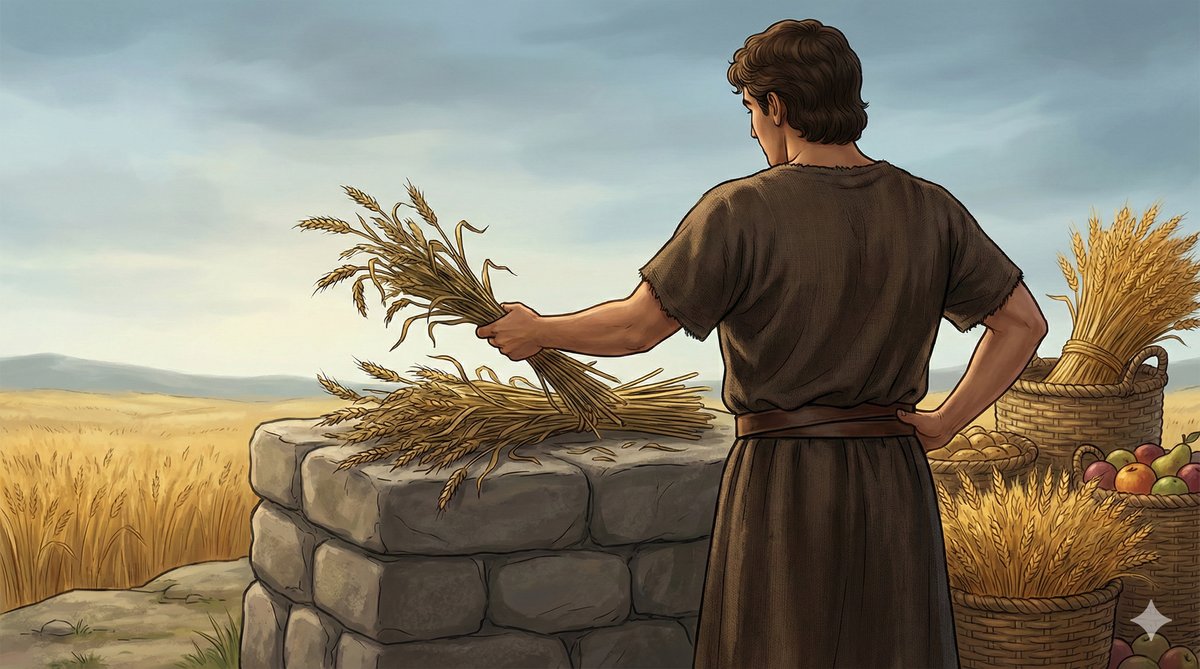
This was the truth, and deep down, Qabil knew it. But jealousy is a strange poison. It does not make you angry at yourself for your own shortcomings. Instead, it makes you angry at the person who did better. Instead of thinking, "I should try harder next time," Qabil thought, "If Habil were gone, I would never have to feel this way again."
"I will surely kill you," Qabil said, the words falling from his mouth like stones.
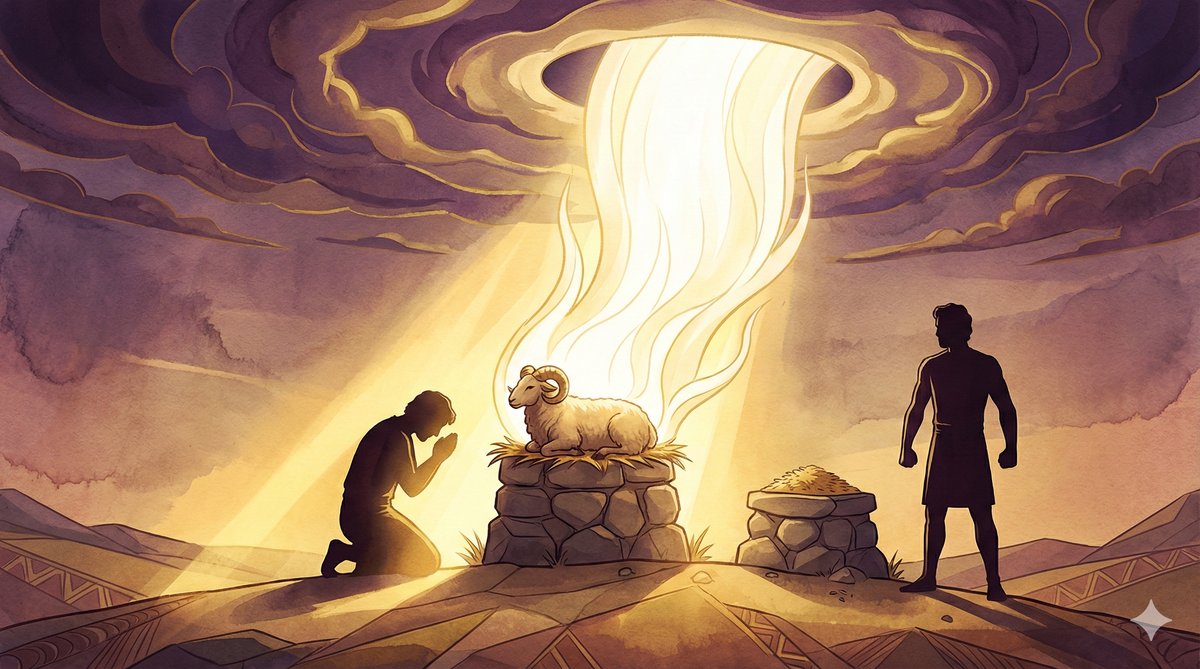
Habil's heart sank. He looked at his brother, the person he had grown up with, played with, shared meals with, and he saw a stranger staring back. But even in that terrible moment, Habil did not raise his hand in anger. He did not clench his fists or reach for a weapon.
Instead, he said something remarkable: "If you stretch your hand to kill me, I will not stretch my hand to kill you. Indeed, I fear Allah, the Lord of all the worlds."
Think about that for a moment. Habil knew what was coming. He could have fought back. He was a shepherd, strong from carrying lambs up steep hills. But he chose not to, because he understood something that Qabil did not: taking a life is not something that can ever be undone. He would rather be the one wronged than be the one who wrongs.
Habil continued, "I want you to bear my sin and your sin, and you will be among the companions of the Fire. That is the reward of the wrongdoers."
But Qabil's heart had hardened. The jealousy had grown into rage, and the rage had grown into something cold and terrible. His nafs, his lower self, as the Quran describes it, made the act of killing seem easy and acceptable to him. And so Qabil struck his brother, and Habil fell to the ground, never to rise again.
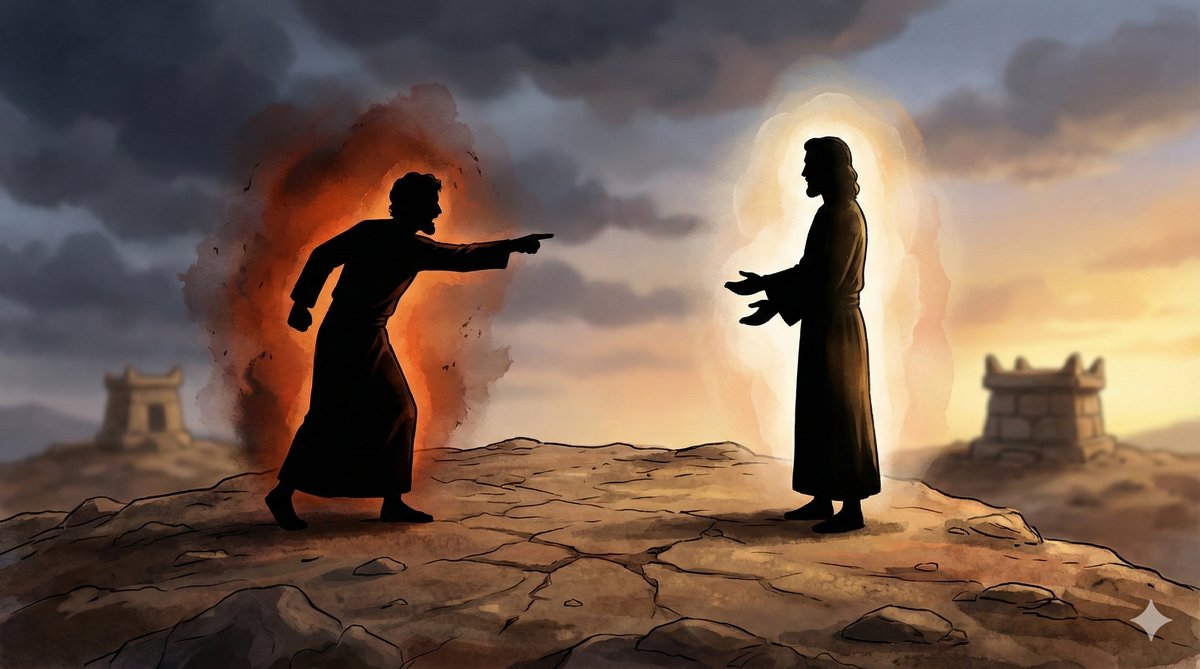
The world's first murder. The first innocent blood spilled on Earth.
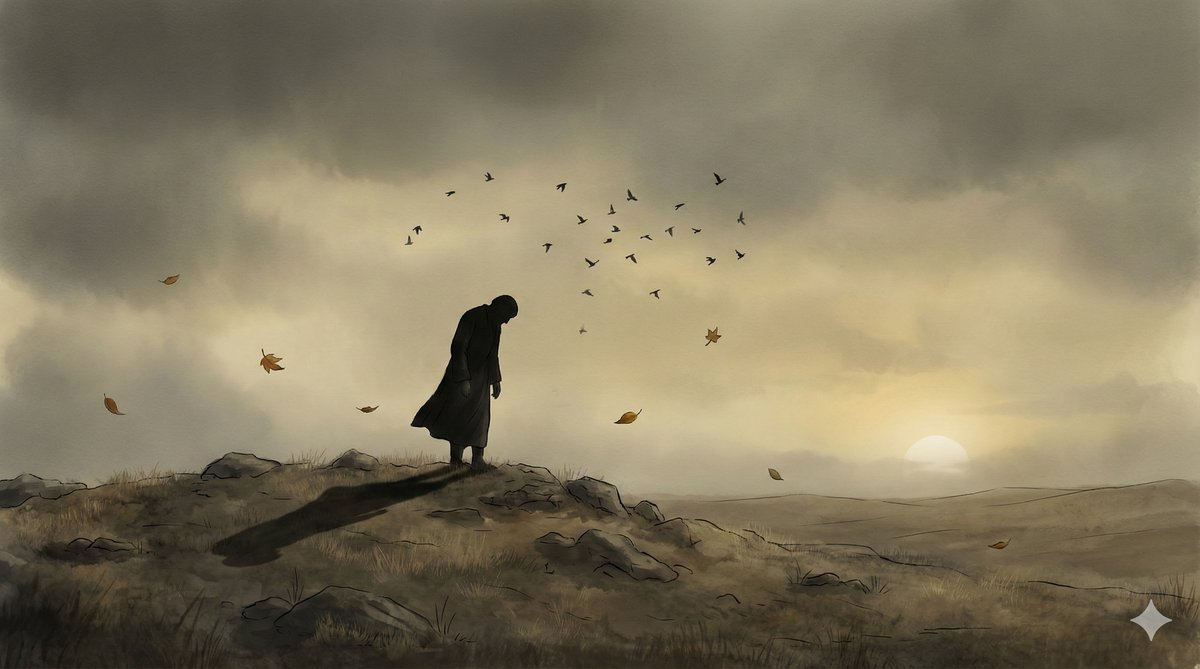
For a moment, there was silence. The birds stopped singing. The wind held its breath. And then, as Qabil stood over his brother's body, the reality of what he had done crashed over him like a wave. He felt no relief. The jealousy did not disappear. Instead, it was replaced by something even heavier: regret.
But Qabil was so lost that he did not even know what to do next. He stood there, confused and horrified, not knowing how to handle what lay before him.
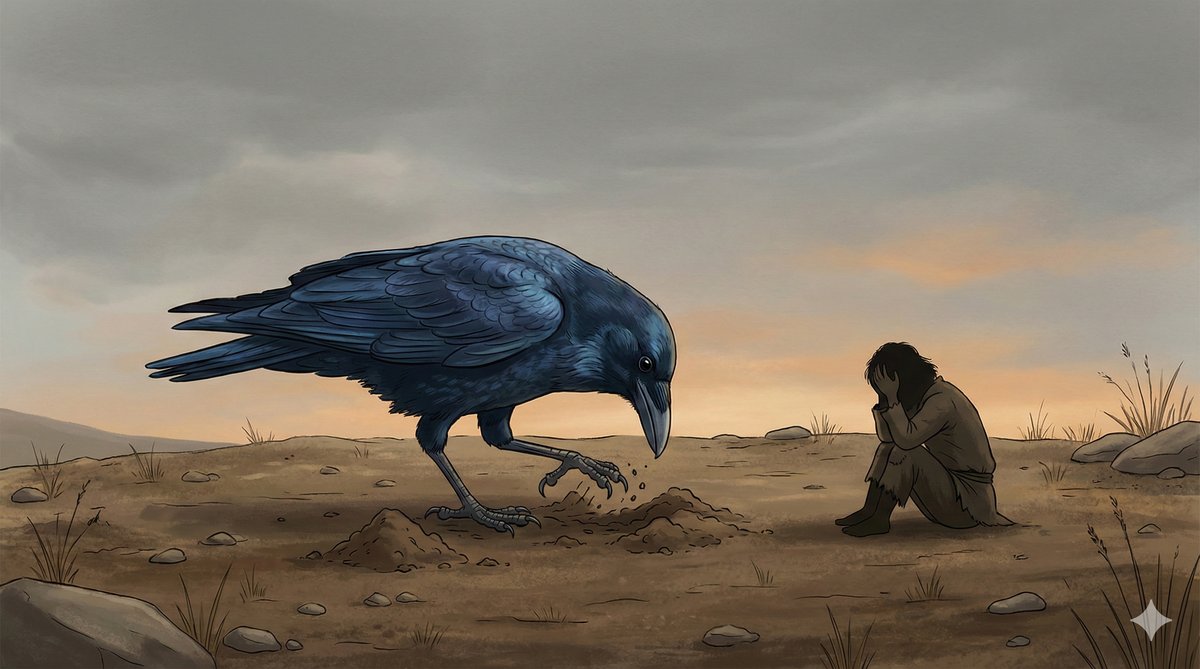
Then Allah sent a sign. A crow landed nearby and began scratching at the earth with its claws, digging into the dirt, pushing the soil aside, and then covering something beneath it.
Qabil watched, and understanding dawned. "Woe to me!" he cried out. "Am I unable to be even like this crow and hide the body of my brother?" And he became among the regretful.
But his regret was not the kind that leads to true repentance. It was not like his father Adam's repentance, which came from a heart that genuinely turned back to Allah. Qabil's regret was the regret of someone who is sorry about the consequences, not truly sorry for the act itself.
The Quran tells us that because of this act, Allah decreed for the Children of Israel (and for all humanity) a profound law: "Whoever kills a soul, unless for a soul or for corruption in the land, it is as if he had slain all of humanity. And whoever saves one, it is as if he had saved all of humanity."
One life is worth all of humanity. That is how precious each person is to Allah.
In the Shia tradition, this story carries an even deeper meaning. Imam Ali (AS) taught in Nahj al-Balagha that the first act of injustice on Earth set a pattern that would repeat throughout history: the righteous being harmed by the envious, the truthful being silenced by the powerful. Just as Habil was killed for being better, not worse, the Ahlul Bayt faced persecution not because of any fault, but because their light exposed the darkness in others' hearts.
Imam Husayn (AS), the grandson of the Prophet Muhammad (PBUH), would one day face a similar choice on the plains of Karbala. Like Habil, he stood for truth. Like Habil, he refused to submit to injustice. And like Habil, his sacrifice became a lesson that echoes through all of time.
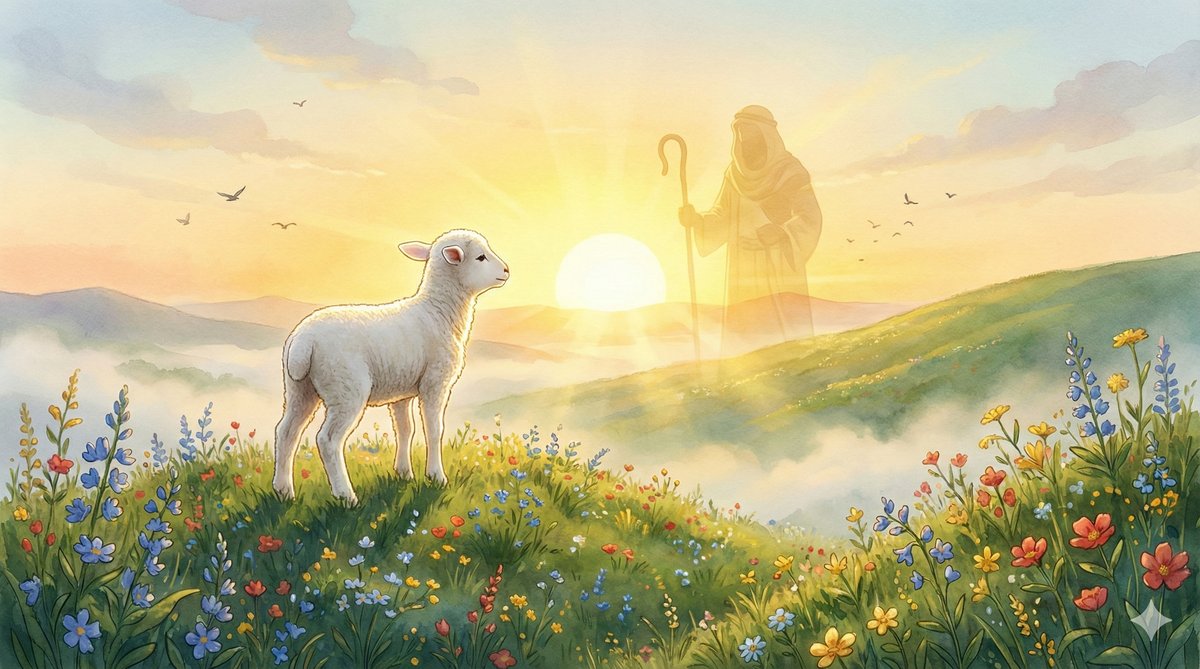
But here is what makes Habil's story one of hope, not just sadness. Habil's name is remembered with honor. His sincerity, his courage, his refusal to do wrong even when wrong was done to him, these qualities shine brighter than any harvest or flock. Qabil gained nothing from his crime. He lost his brother, his peace, and his standing before Allah.
When you feel that burning in your chest, that whisper of jealousy, remember Habil and Qabil. You always have a choice. You can let jealousy consume you, or you can look at your own heart and ask: "Am I giving my best? Am I being sincere?" Because Allah does not compare you to anyone else. He only looks at what is in your heart.
Key Verse
Min ajli dhalika katabna 'ala Bani Isra'ila annahu man qatala nafsan bi ghayri nafsin aw fasadin fil ardi fa ka'annama qatala al-nasa jami'an, wa man ahyaha fa ka'annama ahya al-nasa jami'an "Because of that, We decreed upon the Children of Israel that whoever kills a soul, unless for a soul or for corruption in the land, it is as if he had slain all of humanity. And whoever saves one, it is as if he had saved all of humanity." -- Al-Ma'idah (5:32)
Reflection Questions
- Why do you think Habil refused to fight back, even though he knew Qabil wanted to hurt him? Was that weakness or strength?
- Have you ever felt jealous of someone? What did you do with that feeling? What could you do differently next time?
- The crow taught Qabil something he didn't know. What does that teach us about learning from unexpected places, even from animals and nature?
Have you ever felt a hot, angry feeling inside when someone else got something you wanted? Maybe your brother or sister got a bigger cookie. Maybe your friend got a toy you really liked. That burning, grumpy feeling has a name. It is called jealousy. And tonight's story is about the very first time jealousy hurt someone's heart, and what happened because of it.
Adam and Hawwa, peace be upon them, had many children. Among them were two brothers named Habil and Qabil.
Habil was the younger brother. He was kind and gentle and loved to take care of his sheep. Every morning, he would walk with his fluffy sheep on the green hills. He loved every single one of them, even the little lambs that were too small and weak to walk fast. When a tiny lamb got tired, Habil would pick it up and carry it on his shoulders. That is the kind of person he was.
Qabil was the older brother. He was a farmer who grew wheat and fruits in his fields. Qabil was strong, but he had a problem. He was very, very proud. He thought that being strong and having big fields of grain made him the best. And he did not always try his hardest.
One day, Allah asked both brothers to give a special gift. This gift was called a sacrifice. It means giving something you have to show your love for Allah. It was a test, but not a test of who had more stuff. It was a test of the heart.
Habil looked at his flock of sheep. He picked his very best one. It was the most beautiful, healthiest sheep he had. He loved that sheep a lot! But he wanted to give Allah his very best, because Allah deserves the very best of everything.
Habil put his sheep on the hilltop and said quietly, "O Allah, I give You my best because You are the greatest."
Then it was Qabil's turn. Qabil looked at his big piles of wheat. He had so much of it! But did he pick the best wheat? No, he did not. He grabbed some old, dry wheat from the bottom of the pile. The pieces that were a little bit broken. The ones he did not even want.
"This is good enough," Qabil grumbled, and he put it on the hilltop too.
Then they waited to see what would happen.
A bright, beautiful fire came down from the sky! It touched Habil's sheep and took it away. This meant Allah accepted Habil's gift! But Qabil's wheat just sat there. Nothing happened. No fire came for it. Allah did not accept it.
Do you know why? Because Habil gave with all of his heart, and Qabil did not even try. Allah does not care about how big or fancy your gift is. He cares about how much love and effort you put into it.
When Qabil saw that his gift was not taken, something bad happened inside his heart. That hot, burning feeling of jealousy started to grow. It got bigger and bigger, like a fire inside his chest.
Instead of thinking, "I should try harder next time. I should give my best like Habil does," Qabil got angry at his brother! He blamed Habil instead of blaming himself. That is what jealousy does. It tricks you into being angry at the wrong person.
Qabil's face got red and his fists got tight. He looked at Habil with mean eyes and said, "I am going to hurt you!"
Poor Habil looked at his brother. He could see how angry Qabil was. It made Habil very sad, because he loved his brother. But even though Habil was scared, he said something very brave:
"If you try to hurt me, I will not hurt you back. I fear Allah, the Lord of all the worlds."
Think about how brave that is! Habil could have fought back. He was strong from carrying lambs up and down the hills every day. But he chose not to. He knew that hurting someone is always wrong, even if that person wants to hurt you first.
Habil tried to help his brother see the truth. He said, "If you had given your best with a good heart, your gift would have been taken too."
But Qabil did not listen. The jealousy in his heart had grown so big that it covered up everything good inside him. He could not hear his brother's kind words anymore. And Qabil did something very, very terrible. He hurt his brother Habil so badly that Habil died.
It was the saddest thing that had ever happened on the whole earth.
After it happened, the birds stopped singing. The wind became very quiet. And Qabil stood there, looking at what he had done. Did he feel happy? No! Not even a little bit! He felt worse than he had ever felt in his whole life. The jealousy did not go away. It was replaced by something even heavier: a terrible, sick feeling of sadness.
Qabil did not even know what to do next. He just stood there, lost and confused.
Then Allah sent a little crow, a black bird. The crow landed on the ground near Qabil. It started scratching at the dirt with its claws. It dug a little hole in the ground, then pushed the dirt back over it. The crow was showing Qabil how to bury his brother.
Qabil watched the bird and started to cry. "I cannot even do what this little crow can do!" he said.
But here is something important to understand. Qabil felt bad, but not in the right way. He was sorry that he felt bad. He was not truly sorry for what he did. Real sorry means you wish you had never done it. Real sorry means your heart turns back to Allah, the way his father Adam's heart did when Adam made his mistake in the garden. Qabil's sorry was not like that.
This story teaches us something so important that Allah put it in the Quran for everyone to know forever. Allah said: "Whoever takes the life of one person, it is as if he took the lives of all the people in the world. And whoever saves one person, it is as if he saved all of the people in the world."
Every single person is that special to Allah. Every single one!
In the Shia tradition, this story has a very deep meaning. Imam Ali (AS) taught that what happened to Habil was the first time a good person was hurt by a jealous person. And sadly, this would happen again and again throughout history. Good people would be treated badly by those who were jealous of them. The Ahlul Bayt, the family of Prophet Muhammad, peace be upon him, were treated this way too. Like Habil, they were good and kind and truthful. And like Habil, they were brave and never did wrong, even when others were mean to them.
Imam Husayn (AS), the Prophet's grandson, was like Habil in many ways. He stood up for what was right. He was brave and gentle. And his story teaches us the same lesson: being good is always worth it, even when it is hard.
But do you know what? Habil is remembered forever as the good one, the brave one, the one who did the right thing. Qabil is remembered as the one who let jealousy win. Jealousy did not make Qabil's life better. It made everything worse.
So the next time you feel that hot, angry feeling of jealousy inside, remember this story. Take a deep breath. Say "MashaAllah!" which means "Allah has willed it!" Be happy for the other person. And then ask yourself, "Am I giving my very best?" Because that is all Allah ever asks of you. He does not compare you to anyone else. He just looks at your heart and asks, "Did you try your best?"
And when you try your best with a good heart, that is always, always enough.
Key Verse
"Min ajli dhalika katabna 'ala Bani Isra'ila annahu man qatala nafsan bi ghayri nafsin aw fasadin fil ardi fa ka'annama qatala al-nasa jami'an, wa man ahyaha fa ka'annama ahya al-nasa jami'an." "Whoever hurts one person, it is as if he hurt all the people in the world. And whoever saves one person, it is as if he saved all the people in the world." -- Al-Ma'idah (5:32)
Let's Talk About It
- Why did Allah accept Habil's gift but not Qabil's? What does this teach us about doing our best?
- Have you ever felt jealous of someone? What can you do when that feeling comes?
- Habil chose to be kind even when his brother was mean to him. Why is that so brave?