The Ship of Salvation: Prophet Nuh's Ark
Patience in the face of rejection; trusting Allah's plan when no one else believes
Imagine calling out to someone, day after day, year after year, and they simply walk away. Now imagine doing that for nine hundred and fifty years. That is the story of Prophet Nuh, peace be upon him, one of the most patient human beings who ever lived.
Nuh was born into a world that had forgotten Allah. Generations had passed since Adam (AS) walked the earth, and slowly, quietly, people had begun to worship other things. It started small, as these things always do. There had been righteous people in earlier times, good men and women whose names were remembered with love: Wadd, Suwa, Yaghuth, Ya'uq, and Nasr. When these good people died, the communities missed them so much that they made statues to remember them by. "We will just look at these statues," they said, "and remember to be good like them."
But as years turned to decades and decades to centuries, people forgot why the statues were made. They began to bow to them. They began to pray to them. They began to believe that these carved stones could help them or harm them. And so, the worship of idols, what the Quran calls shirk, spread across the land like a shadow.
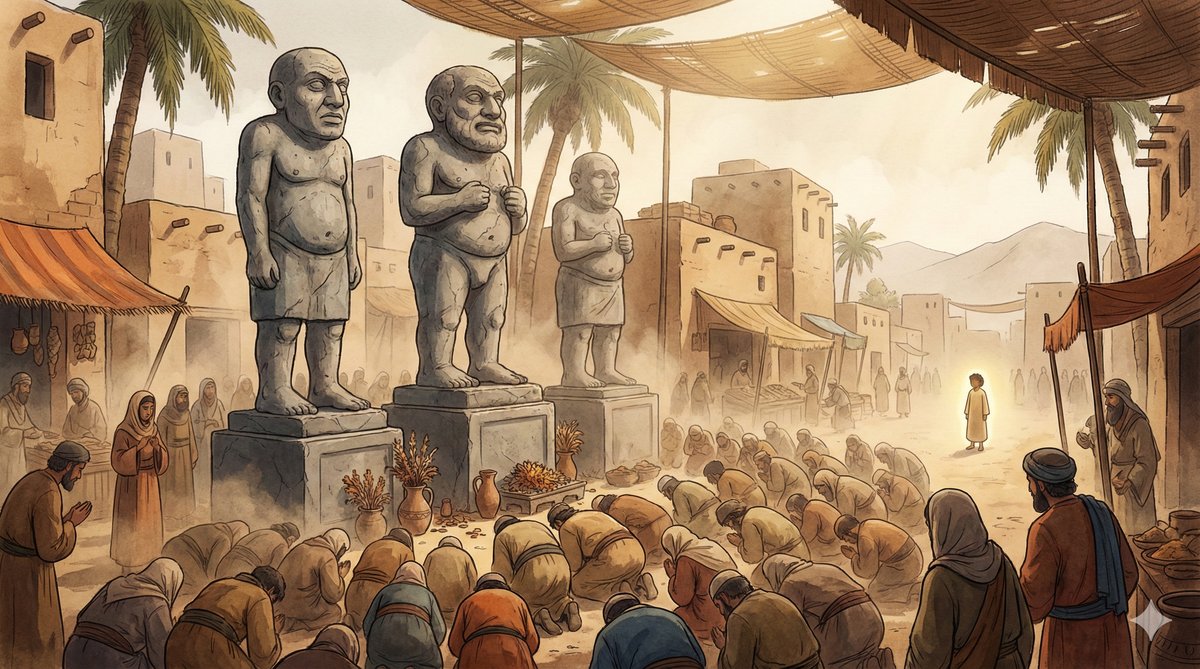
Allah, in His mercy, would not leave humanity without a guide. He chose Nuh, a man known for his honesty and kindness, and gave him a mission: call the people back to the truth.
"O my people," Nuh said, standing in the marketplace where everyone could hear, "worship Allah. You have no god other than Him. Indeed, I fear for you the punishment of a tremendous Day."
The leaders of his community, the wealthy and the powerful, looked at him with contempt. "We see you as nothing but a man like ourselves," they scoffed. "And we see that only the lowest among us have followed you, without any thought. We do not see any advantage you have over us. In fact, we think you are liars."
This was their argument: if Nuh's message were true, surely the important people would follow him first. But Nuh's followers were the poor, the forgotten, the ones society looked down upon. In the eyes of the proud leaders, this was proof that his message was worthless.
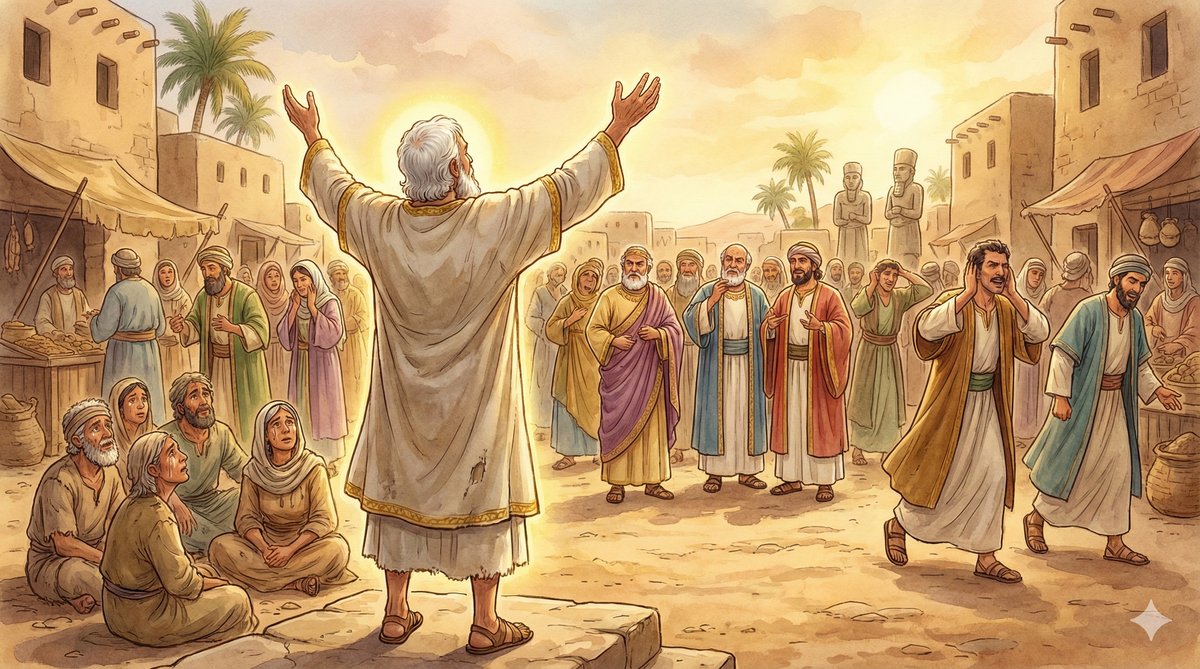
But Nuh did not give up. Not that day, not that year, not that century.
He called to them in the morning and in the evening. He spoke to them publicly in the marketplaces and privately in their homes. He pointed to the sky and said, "Do you not see how Allah has created seven heavens in layers, and made the moon a light within them and the sun a burning lamp?" He pointed to the earth and said, "Allah has caused you to grow from the earth like plants. He will return you into it and bring you out again."
But the people did not listen. They put their fingers in their ears. They covered themselves with their garments. They grew stubborn and arrogant.
Year after year, Nuh persisted. His hair turned white. His voice grew hoarse. His body aged. But his faith never weakened. Can you imagine the loneliness? Calling out to people who laugh at you, who mock you, who refuse to even hear your words, for nearly a thousand years?
Finally, after centuries of patience, Allah revealed to Nuh: "No one else from your people will believe, except those who have already believed. So do not be distressed by what they have been doing."
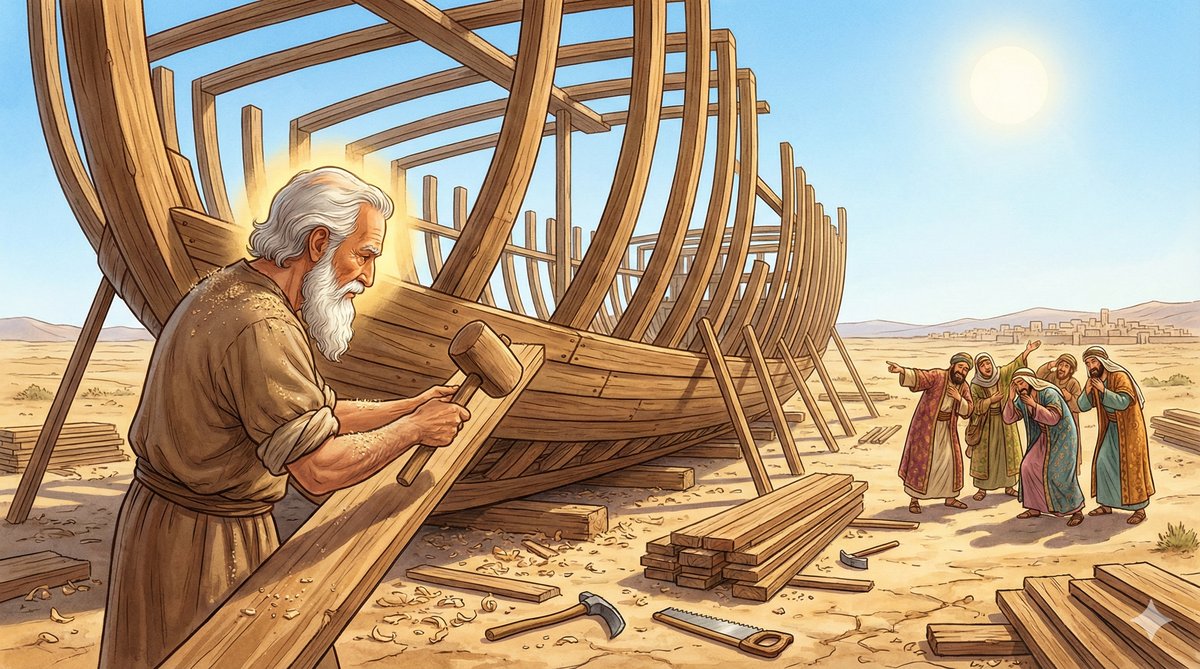
And then came the command that must have seemed the strangest thing in the world: "Build the Ark."
Nuh lived far from any ocean. There was no great river nearby. And yet, Allah told him to build a massive ship. So Nuh began.
He cut wood from the forests. He shaped planks and hammered them together. Day after day, the ark took shape, growing larger and taller on the dry land. And every day, the people passed by and laughed.
"Has the prophet become a carpenter now?" they jeered. "He is building a ship in the desert! Truly, he has lost his mind."
Nuh said nothing. He kept building. Plank by plank, nail by nail, guided by Allah's instructions. The ark was not just a boat; it was a promise. A promise that truth would be saved, even when the whole world had turned against it.
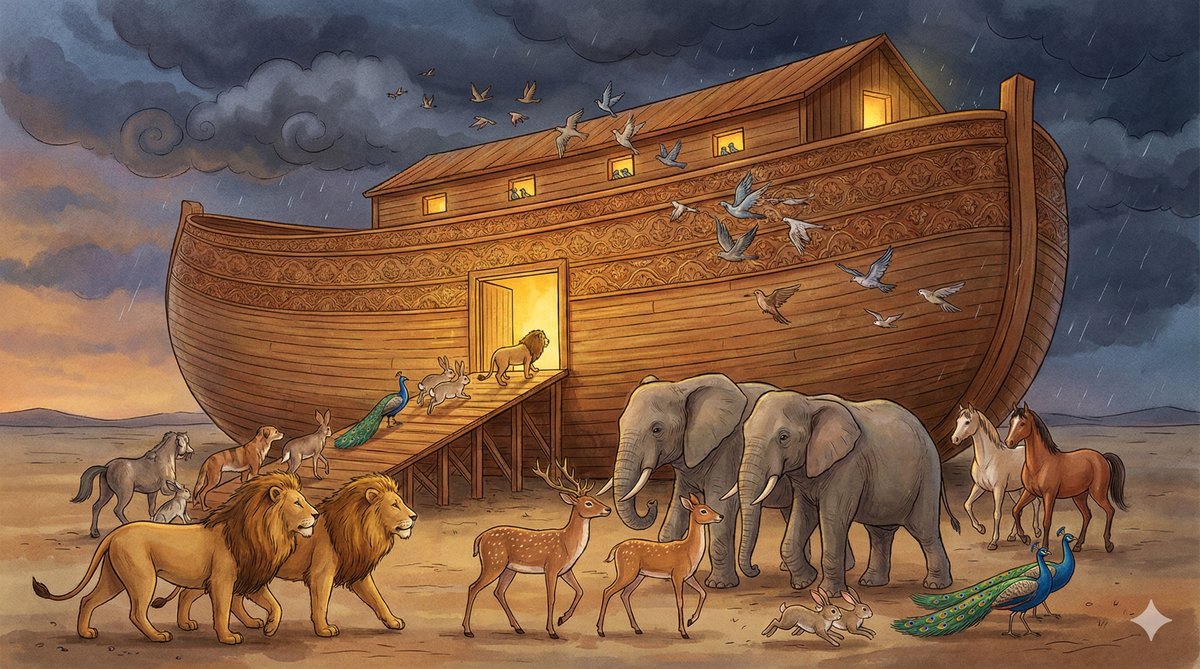
When the ark was complete, Allah gave the signal. "When Our command comes and the oven overflows with water, load onto the ark a pair of every species, and your family, except those against whom the Word has already gone forth, and those who have believed."
Then the sky opened.
Rain fell in sheets so thick you could not see your hand in front of your face. Water burst from the ground beneath their feet, from springs and cracks in the earth that had never been there before. The valleys filled. The plains flooded. The water rose with terrifying speed.
Nuh called out one last time, his voice carrying over the roar of the storm: "Board the ark! In the name of Allah it sails and it anchors. Indeed, my Lord is Forgiving and Merciful."
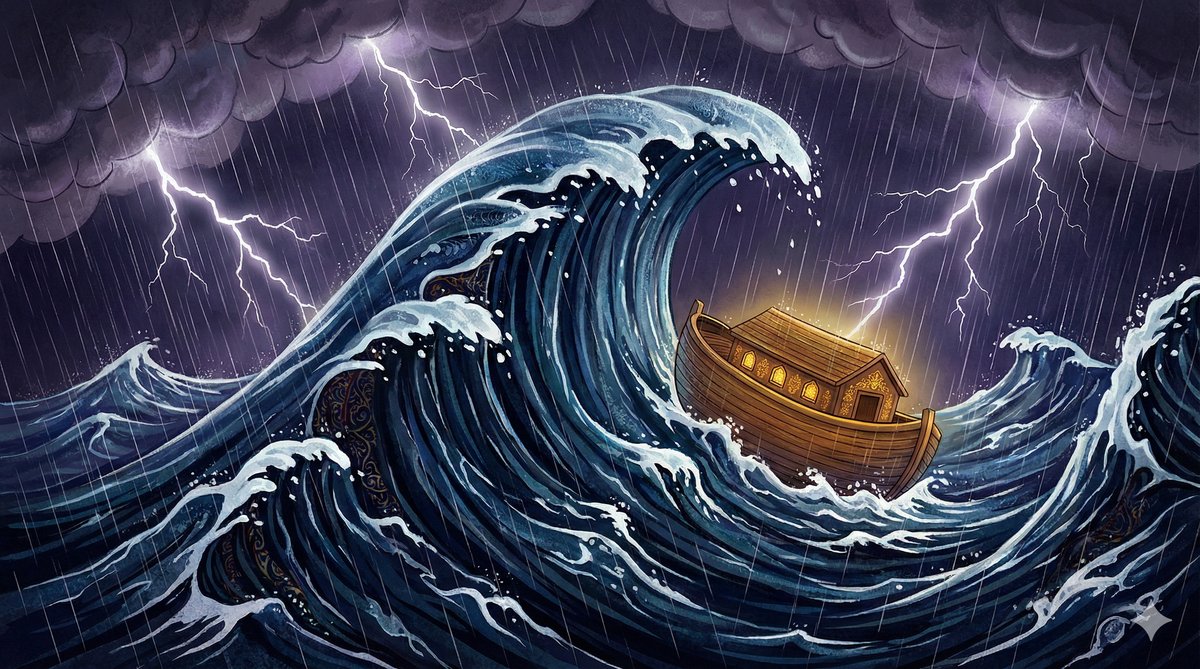
The believers climbed aboard, along with pairs of animals, two of every kind. Birds flew in through the windows. Animals walked up the ramp. The ark creaked and groaned as it lifted off the ground and began to float on the rising waters.
But not everyone chose to board.
Nuh's own son stood on a hillside, watching the water rise around his ankles, then his knees, then his waist. Nuh cried out to him from the deck of the ark, his voice breaking with a father's love: "O my son! Board with us and do not be with the disbelievers!"
His son called back, "I will take refuge on a mountain; it will protect me from the water."
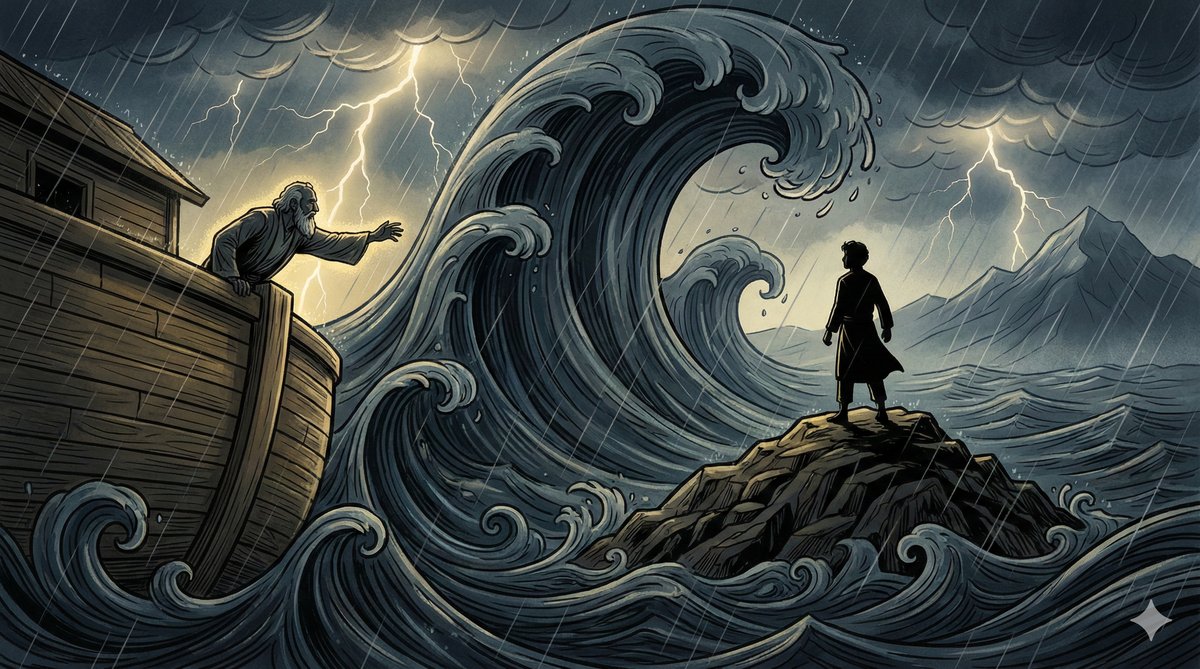
"There is no protector today from the decree of Allah," Nuh cried, "except for the one on whom He has mercy!"
A wave, as tall as a mountain, rose between them. And when it passed, his son was gone.
The Quran tells us that Nuh, heartbroken, called out to Allah: "My Lord, indeed my son is of my family, and indeed Your promise is true, and You are the most just of judges."
Allah replied gently but firmly: "O Nuh, indeed he is not of your family; indeed his actions were not righteous. So do not ask Me for that about which you have no knowledge."
This was a painful but important lesson: in Allah's eyes, family is not just about blood. It is about faith and righteous action. A person who rejects truth is not saved simply because of their family name.
Nuh bowed his head and said, "My Lord, I seek refuge in You from asking You for that about which I have no knowledge. And unless You forgive me and have mercy upon me, I will be among the losers."
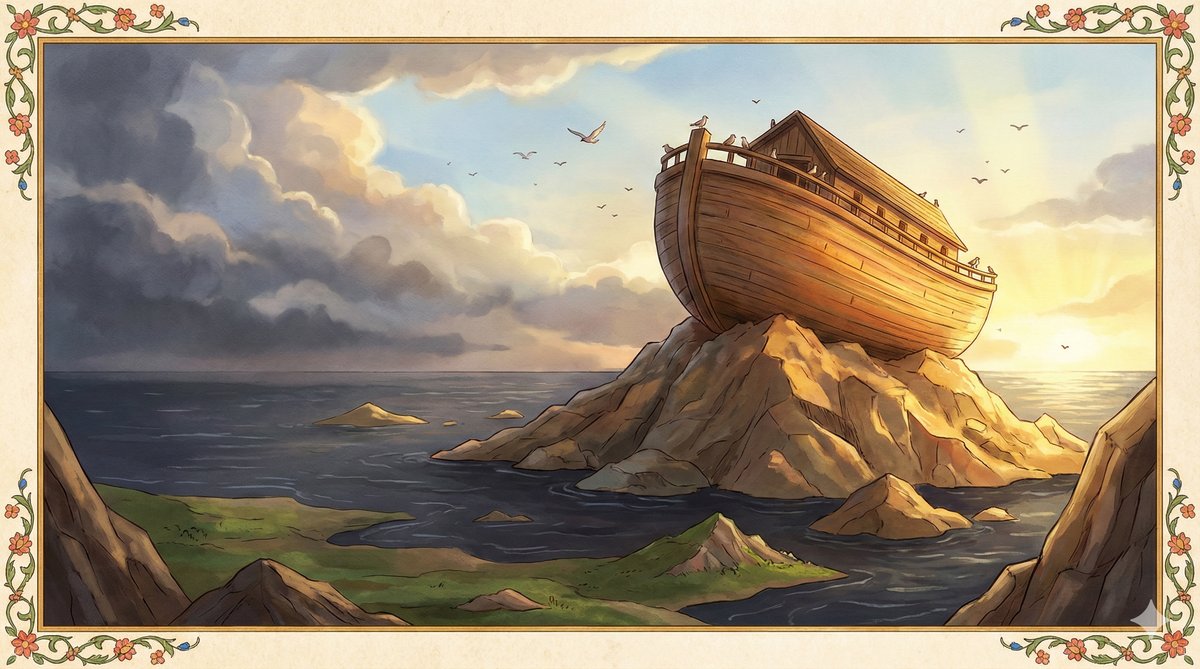
The storm raged for days. The ark sailed over waves like mountains, carrying within it the seed of a new beginning. And when at last the rain stopped and the water began to recede, the ark came to rest on Mount Judi.
"O earth, swallow your water," Allah commanded. "O sky, withhold your rain."
And it was done. The water drained away. The sky cleared. A rainbow stretched across the heavens, a sign of Allah's mercy after the storm.

In the Shia tradition, this story carries a special meaning that echoes through the centuries. The Prophet Muhammad, peace be upon him and his family, said: "The example of my Ahlul Bayt among you is like the Ark of Nuh. Whoever boards it is saved, and whoever turns away from it is drowned."
Just as Nuh's ark was the only way to safety during the flood, the Ahlul Bayt, the Prophet's family, are the vessel of guidance for the Muslim community. Holding onto their teachings, following their example, and loving them is like climbing aboard the ark. And just as some people refused to board despite Nuh's pleading, there would be those throughout history who would turn away from the Ahlul Bayt, to their own loss.
Tonight, as you close your eyes, think about Nuh standing alone against the whole world, building his ark while everyone laughed. Sometimes doing the right thing means standing alone. Sometimes faith means building something that no one else can see the purpose of yet. But if Allah tells you to build, you build. And when the storm comes, the ark will be ready.
Key Verse
Wa qala irkaboo feeha bismillahi majraha wa mursaha, inna Rabbi la Ghafoorun Raheem "And he said: Board it! In the name of Allah it sails and it anchors. Indeed, my Lord is Forgiving and Merciful." -- Hud (11:41)
Reflection Questions
- Nuh called his people to the truth for 950 years without giving up. What gives a person that kind of patience? How can we be more patient in our own lives?
- Why do you think Nuh's son refused to board the ark, even when the water was rising? What does that teach us about pride?
- The Prophet Muhammad (PBUH) compared his family (Ahlul Bayt) to Nuh's ark. What do you think that means for us today?
Tonight's story is about one of the most patient people who ever, ever lived. His name was Prophet Nuh, peace be upon him, and his story is full of rain, animals, and a very big boat!
A very long time after Adam and Hawwa lived on the earth, people started to forget about Allah. It happened slowly, little by little. You see, there were once some very good people who loved Allah a lot. When those good people died, the other people missed them. So they made statues of them. "We will look at the statues and remember to be good," they said.
But as years and years went by, people forgot why they made the statues. They started to bow down to the statues! They started to pray to the statues! They thought the statues could help them. But the statues were just rocks and wood. They could not hear. They could not help. They could not do anything at all.
Allah is so kind and merciful. He did not want people to stay lost and confused. So He chose a very good man named Nuh to help the people find their way back to the truth.
Nuh went to his people and said, "Please, worship only Allah! He is the only true God. These statues cannot help you."
But do you know what the people did? They did not listen!
Some people laughed at Nuh. "You are being silly!" they said.
Some people put their fingers in their ears. "La la la! We are not listening!" they sang.
Some people wrapped their clothes around their heads so they could not hear him.
Some people turned around and walked away.
But Nuh did not give up. Not even for one day.
He talked to them in the morning when the sun came up. He talked to them at night when the stars came out. He spoke in a loud voice in the market. He spoke in a soft, gentle voice when he visited their homes. He pointed at the sky and said, "Look! Allah made all those beautiful stars!" He pointed at the ground and said, "Look! Allah made the plants grow from the soil!"
But still, most people did not listen.
And do you know how long Nuh kept trying? Nine hundred and fifty years! Can you even imagine that? That is longer than anyone can picture in their head. That is longer than your great-great-great-great-great-grandparents could ever live! Nuh kept asking and asking and asking, because he cared about the people and he never stopped trusting Allah.
Only a few people believed in Nuh. Just a small group. But that was okay. Nuh was not trying to be popular. He was trying to do what was right.
Then one day, Allah told Nuh something very, very surprising: "Build a big ship."
Nuh looked around. There was no ocean nearby. There was no big river. There was just dry, flat land. But Nuh trusted Allah. So he picked up his tools and started building.
He cut wood from the trees. He made long, flat boards. He hammered them together with nails. Day after day, the big ship got bigger and bigger and taller and taller. It was the biggest ship anyone had ever seen!
And every single day, people walked by and laughed at him.
"A ship in the middle of dry land?" they said, pointing and giggling. "Has Nuh gone crazy? There is no water here! What a silly old man!"
But Nuh just kept building. Plank by plank. Nail by nail. He trusted Allah's plan, even when nobody else could understand it.
When the ship was all done, Allah told Nuh to bring animals onto it. Two of every kind! Two cats, two dogs, two horses, two birds, two rabbits, two lions, two turtles, two of everything! Big animals and small animals. Animals that fly and animals that crawl. Can you imagine how much noise they all made?
Nuh also brought all the people who believed in Allah onto the ship.
Then something amazing and scary happened. The sky turned dark. Very, very dark. And it started to rain. But this was not a little rain. This was the biggest rain the world had ever seen! Water poured from the sky in thick, heavy sheets. And water burst up from the ground too, from cracks and holes that had never been there before.
The water rose up, up, up. It covered the roads. It covered the fields. It covered the houses. It kept going higher and higher.
Nuh called out one last time, "Get on the ship! In the name of Allah it will sail and it will stop safely. My Lord is Most Forgiving, Most Merciful!"
The big ship lifted off the ground and started to float. It sailed over the water while the waves got bigger and bigger, as tall as mountains!
But not everyone got on the ship. And this is the saddest part of the story.
Nuh's own son did not get on. He stood on a hill, watching the water rise around his feet, then his knees, then his waist.
Nuh cried out to his son from the ship, his voice full of love: "My son! Please come with us! Get on the ship!"
But his son said, "No. I will climb up a mountain. The mountain will keep me safe."
"There is no safe place today except with Allah!" Nuh called out.
But a huge wave, as tall as a mountain itself, rose up between them. And when it passed, his son was gone.
Nuh cried and cried. His heart was broken. He said, "My Lord, my son is part of my family!"
But Allah said gently, "O Nuh, he chose not to believe. He chose his own path. In My eyes, family is not just about who your parents are. Family is about faith and doing what is right."
This was a hard lesson, but an important one.
The rain kept falling for a long time. The ship sailed on and on over the great big waves. But inside, Nuh and all the believers and all the animals were safe and warm and dry. Allah was taking care of them.
Then, one beautiful day, the rain stopped. The clouds pulled apart. The sun peeked through. And slowly, slowly, slowly, the water went down. The ship came to rest on a mountain called Judi. The door opened, and Nuh and all the believers and all the animals walked out onto fresh, clean earth.
The air smelled new. The ground was soft and clean. It was like a brand new beginning for the whole world! And a beautiful rainbow stretched across the sky, a sign of Allah's mercy after the storm.
Allah blessed Nuh and everyone who had been on the ship. He gave them a new start on a fresh, clean earth.
In the Shia tradition, this story means something very special. The Prophet Muhammad, peace be upon him and his family, said: "My Ahlul Bayt are like the Ark of Nuh. Whoever gets on it is saved, and whoever stays away from it is lost."
This means that following the Prophet's family, the Ahlul Bayt, keeps us safe and on the right path, just like Nuh's big ship kept the believers safe from the flood. When we listen to their teachings and follow their example, it is like climbing aboard the safest ship in the world.
So tonight, when you close your eyes, think about Nuh building his ship while everyone laughed at him. Sometimes doing the right thing means people might not understand you. Sometimes you might feel all alone. But if Allah is with you, that is all you need. Just keep building, keep trying, and keep trusting. Because when the storm comes, the ship will be ready.
Key Verse
"Wa qala irkaboo feeha bismillahi majraha wa mursaha, inna Rabbi la Ghafoorun Raheem" "Get on the ship! In the name of Allah it will sail and stop. My Lord is Most Forgiving, Most Merciful." -- Hud (11:41)
Let's Talk About It
- Nuh kept trying for 950 years, even when people laughed at him. What does this teach us about being patient and never giving up?
- The people thought building a ship on land was silly. But who was right in the end? Why should we trust Allah's plan even when we do not understand it?
- The Prophet Muhammad (PBUH) said the Ahlul Bayt are like Nuh's ark. What do you think that means for us today?