The Star Gazer: Ibrahim Searches for Truth
Seeking truth through reason and reflection; rejecting falsehood no matter how popular it is
Have you ever looked up at the night sky and wondered who put the stars there? Have you ever watched the sun rise and thought about where it goes when it sets? Tonight's story is about a young man who asked those very questions, and whose answers changed the world.
In the ancient land of Mesopotamia, between two great rivers, there stood a city where everyone, from the king on his throne to the child in the street, worshipped idols. Statues of stone and wood filled every temple. People bowed to the sun, the moon, and the stars. And in the middle of this city, there was a workshop that smelled of dust and chisels, where a man named Azar carved idols with his own hands and sold them in the marketplace. In some traditions, Azar was Ibrahim's uncle and guardian rather than his birth father, but Ibrahim grew up in his household all the same.
Azar raised a boy named Ibrahim (peace be upon him).
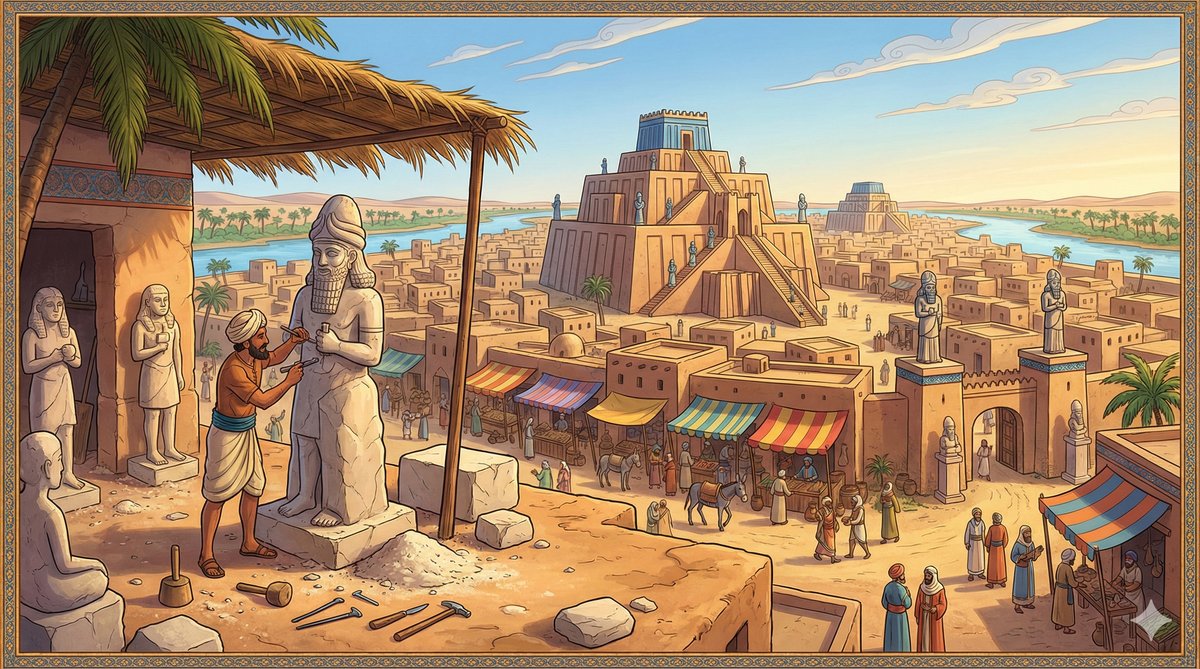
Even as a child, Ibrahim was different. While other boys played in the streets, Ibrahim would sit quietly and watch. He watched the birds build their nests and wondered who taught them how. He watched the rain fall and wondered where it came from. He watched Azar carve a block of stone into the shape of a man and then saw people bow before it, and something inside him knew, this is wrong.
"Father," young Ibrahim asked one day, watching Azar chisel a nose onto a new statue, "do you worship what you carve with your own hands?"
Azar frowned. "These are the gods of our people, Ibrahim. Do not question what everyone believes."
But Ibrahim could not stop questioning. His mind was a gift from Allah, and it would not let him accept something that did not make sense. How could a statue that could not see, could not hear, could not help itself if it fell over, how could such a thing be worthy of worship?
One evening, as the sun sank below the horizon and the sky turned from orange to deep blue, Ibrahim walked to the edge of the city. He wanted to think. He wanted to look at the world and find the truth.
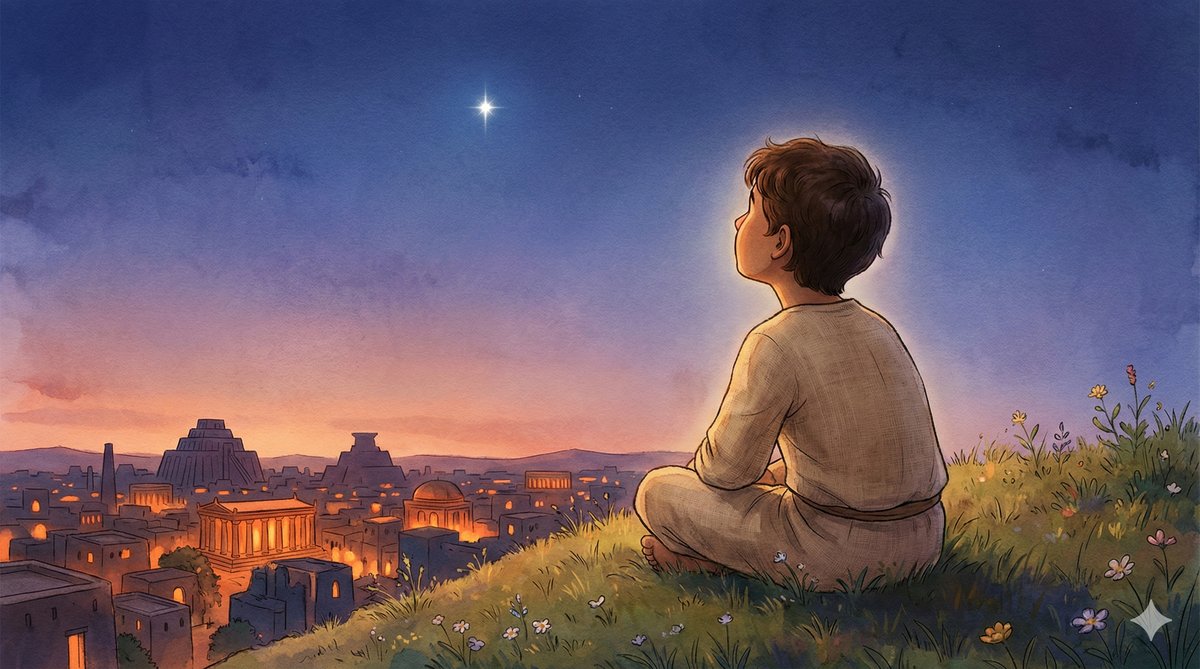
He sat on a hill and watched the sky darken. Then a star appeared, bright and brilliant, shining like a jewel against the velvet night.
"This is my Lord!" Ibrahim said, testing the idea, turning it over in his mind like a stone in his hand.
But as the hours passed, the star moved across the sky and then faded as dawn approached. It set, disappearing below the horizon.
"I do not love those that set," Ibrahim said softly. Something that disappears cannot be the ultimate truth. Something that fades cannot be the eternal Lord.
Then the moon rose, full and magnificent, flooding the landscape with silver light. It was far more impressive than any star, its glow so powerful that Ibrahim could see the shadows of trees stretching long across the ground.
"This is my Lord!" he said again, testing once more.
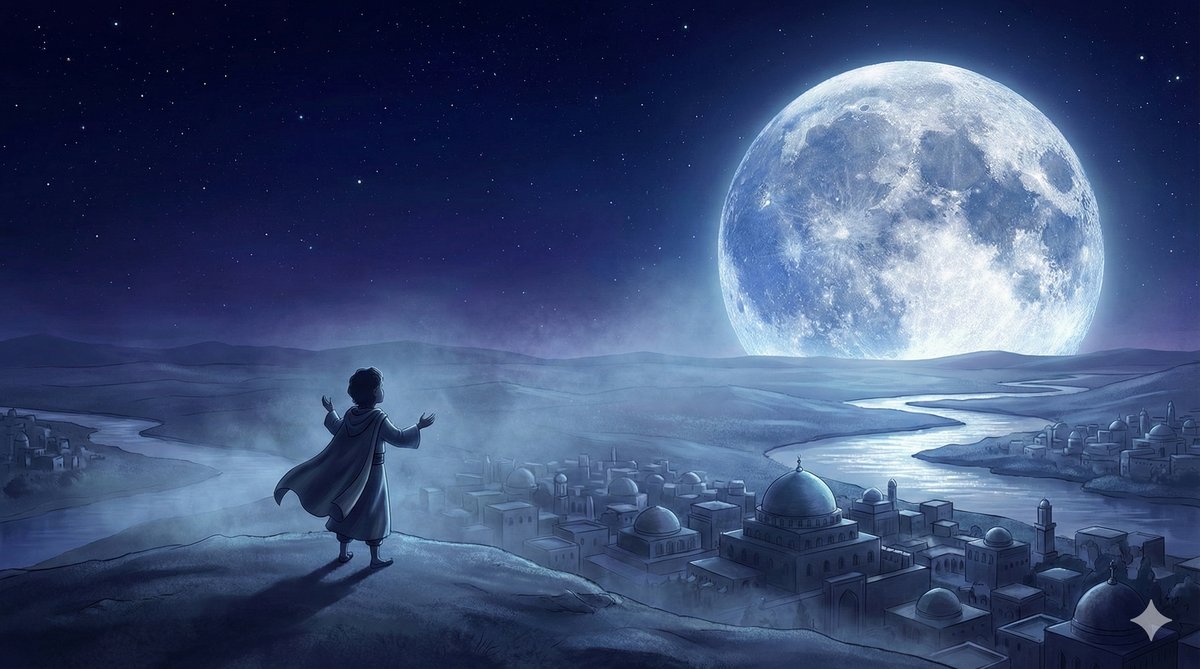
But the moon too moved across the sky, and by morning it had faded to a pale ghost, then disappeared entirely as the sun rose.
"Unless my Lord guides me, I will surely be among the people gone astray," Ibrahim murmured.
Then the sun burst over the horizon. It was grander than anything, a blazing disk of fire that lit the entire world, that made the flowers open and the birds sing and the rivers sparkle. Surely, this must be the Lord!
"This is my Lord! This is greater!" Ibrahim exclaimed.
But even the sun, mighty as it was, traced its path across the sky and then began to sink. It set, just like the star. It set, just like the moon. Everything in the sky, no matter how beautiful, no matter how powerful, followed a pattern it could not change. Everything in the sky was a servant, not a master.
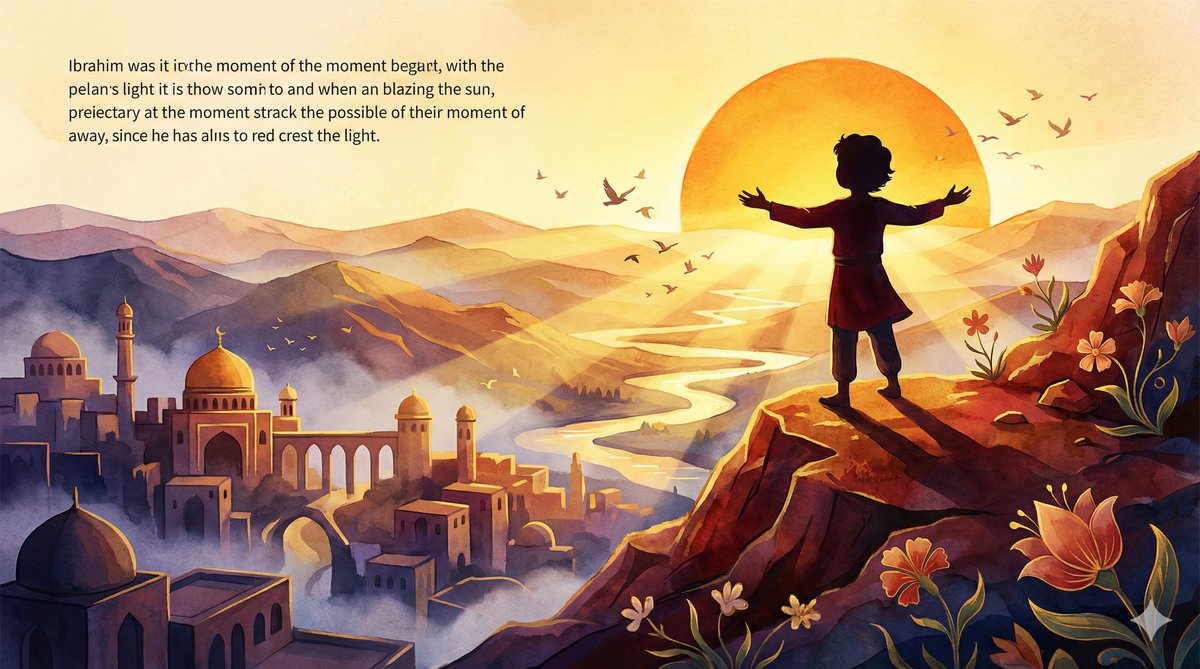
And in that moment of understanding, Ibrahim's heart opened like a door.
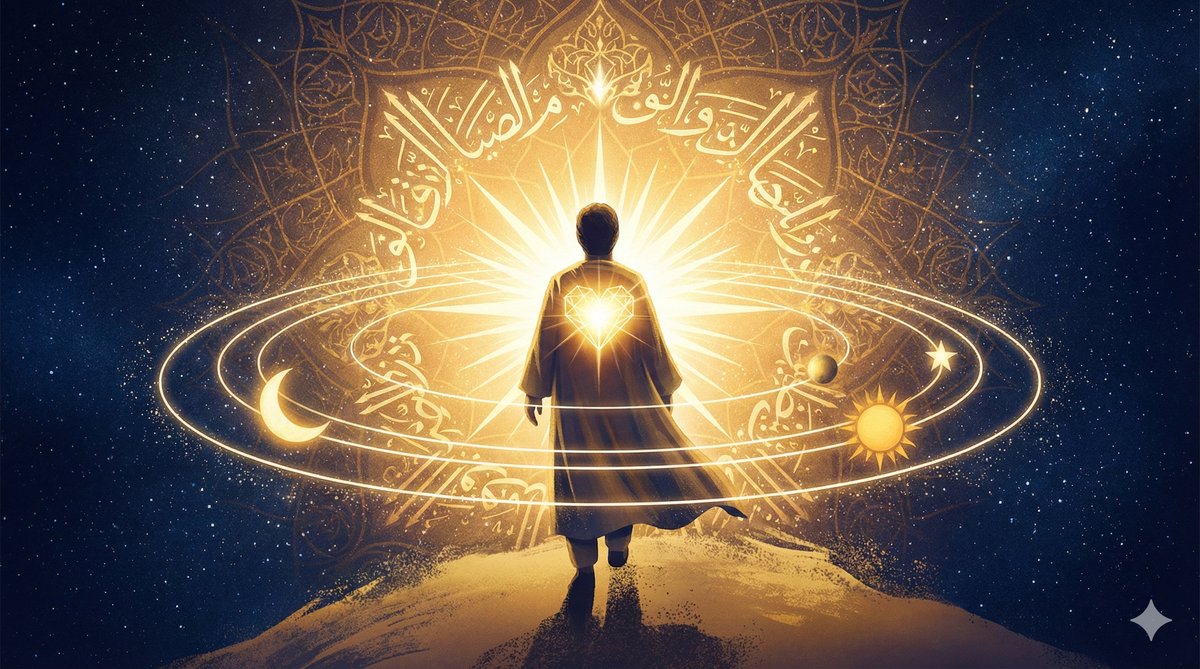
"O my people," he declared, "I am free from all that you associate with Allah! I have turned my face toward the One who created the heavens and the earth, inclining toward truth, and I am not of those who associate others with Allah."
Ibrahim had discovered what his mind and heart had been searching for: there is only One God, One Creator, One Sustainer. Not the star, not the moon, not the sun, but the One who created them all. The One who set them on their paths. The One who never sets, never fades, never disappears.
This was tawhid, the oneness of Allah, the most fundamental truth in all of existence.
But discovering the truth was only the beginning. Now Ibrahim had to share it, and that would be far more difficult.
Ibrahim went to his people and spoke clearly: "What are these statues to which you are devoted?"
They answered proudly, "We found our fathers worshipping them."
Ibrahim shook his head. "You and your fathers have been in clear error."
The people were shocked. No one had ever challenged their beliefs so directly. "Have you brought us the truth," they demanded, "or are you joking?"
"No," Ibrahim said firmly. "Your Lord is the Lord of the heavens and the earth, the One who created them. And I am to that a witness."
Then Ibrahim did something bold. One day, when everyone had left the temple for a festival, Ibrahim entered alone. He looked at the rows of stone idols, their blank eyes staring at nothing, the plates of food people had left as offerings sitting untouched before them.
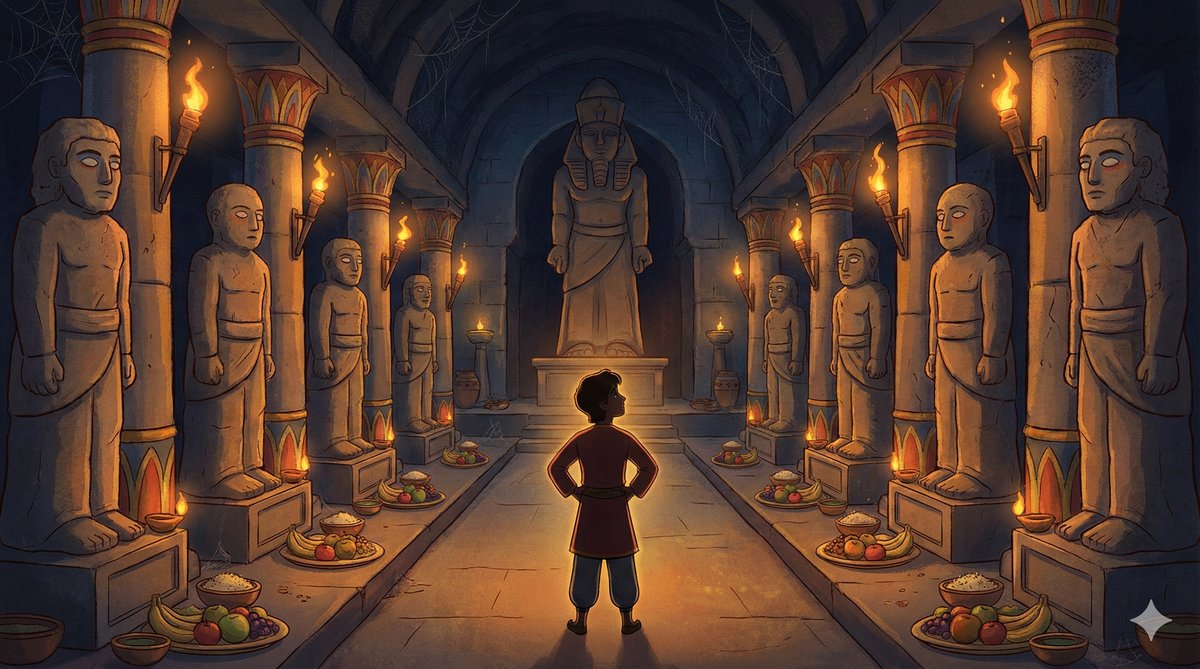
"Do you not eat?" Ibrahim asked the statues. "Why do you not speak?"
Silence. Of course, silence.
Then Ibrahim took his axe and broke every idol in the temple, every single one, except the largest. He hung the axe around the neck of the biggest statue and walked away.
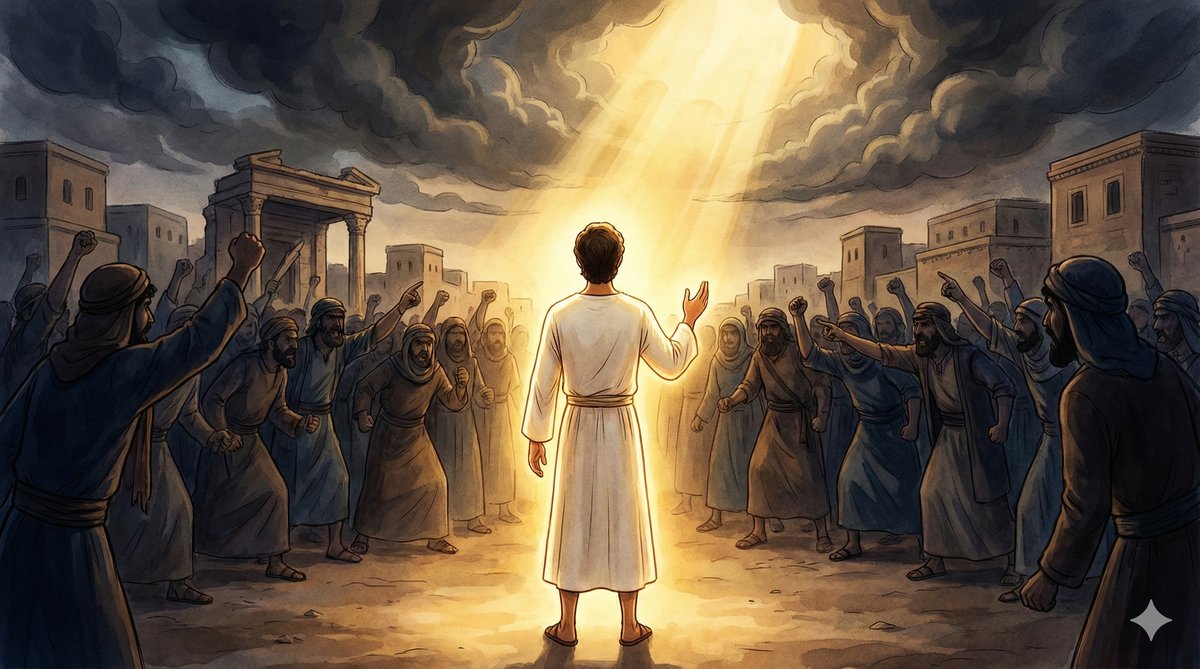
When the people returned and saw the destruction, they were furious. "Who did this to our gods?"
Someone said, "We heard a young man speak against them. His name is Ibrahim."
They brought Ibrahim before the crowd. "Did you do this to our gods, Ibrahim?"
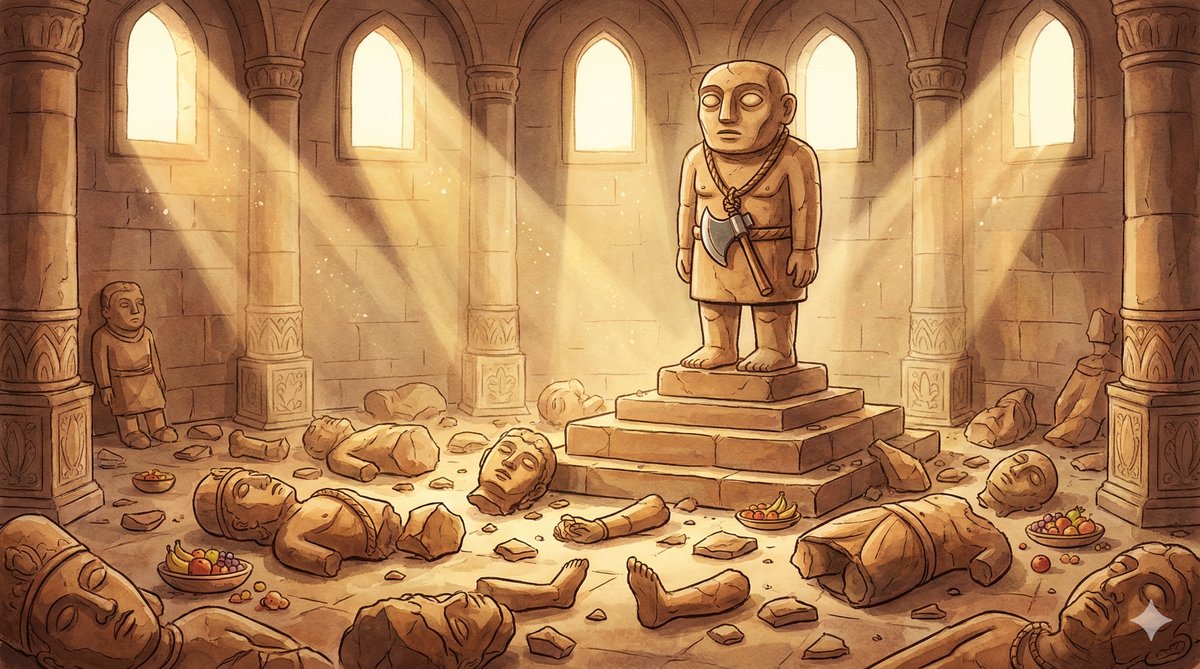
And here, Ibrahim showed both his courage and his cleverness. He pointed to the largest idol with the axe around its neck and said, "Rather, this, the largest of them, did it. So ask them, if they can speak."
The people turned to each other, embarrassed. They knew the statues could not speak. For a moment, they confronted the absurdity of worshipping things that could not even defend themselves.
But then pride overtook reason. "You know well that these do not speak!" they shouted.
"Then do you worship, instead of Allah, things that can neither benefit you nor harm you?" Ibrahim replied. "Shame on you and on what you worship instead of Allah. Will you not use reason?"
In the Shia tradition, Ibrahim holds a place of extraordinary importance. He is called Khalil Allah, the Friend of Allah, and his willingness to follow truth wherever it led, even when it meant standing against his own family and his entire society, is considered the model of true faith.
Imam Ja'far al-Sadiq (AS), the sixth Imam, taught that Allah gave human beings the gift of 'aql, reason, so that they could find their way to Him. Ibrahim used this gift perfectly. He did not accept blindly. He did not follow the crowd. He looked, he thought, he questioned, and he followed the evidence to the only conclusion that made sense: there is no god but Allah.
The Prophet Muhammad, peace be upon him and his family, is a descendant of Ibrahim. The Ka'bah that Muslims face in prayer was first built by Ibrahim and his son Ismail. The Hajj pilgrimage follows Ibrahim's footsteps. And the prophetic lineage that flows from Ibrahim through Ismail leads directly to Muhammad, and from Muhammad to the Ahlul Bayt.
So the next time you look up at the stars, remember Ibrahim. Remember that Allah gave you a mind for a reason. Ask questions. Look at the world around you. Follow the truth, even when it is not popular. Because the same sky that taught Ibrahim is still above you tonight, and the same Allah who guided him is still guiding you.
Key Verse
Inni wajjahtu wajhiya lilladhi fatara al-samawati wal arda hanifan wa ma ana minal mushrikeen "Indeed, I have turned my face toward Him who created the heavens and the earth, inclining toward truth, and I am not of those who associate others with Allah." Al-An'am (6:79)
Reflection Questions
- Ibrahim used his mind to find the truth about Allah. What are some ways you can use your own mind to understand Allah better?
- Why do you think Ibrahim's people kept worshipping idols even after he showed them the truth? What makes it hard for people to change what they believe?
- Ibrahim stood alone against everyone in his city. Have you ever had to stand up for something you believed was right, even when others disagreed?
Have you ever looked up at the sky at night and seen all the twinkling stars? Have you ever watched the moon glow so bright and round and wondered who put it there? Tonight's story is about a very smart boy named Ibrahim, peace be upon him, who asked those very same questions. And the answers he found changed the whole world!
A long, long time ago, in a faraway land between two big rivers, there was a city full of statues. Everyone in this city prayed to statues made of stone and wood. The king prayed to statues. The grown-ups prayed to statues. Even the children grew up thinking statues were gods.
And in this city, there was a man named Azar who made statues with his own hands. He would take a big block of stone, chip away at it, carve out a nose and eyes and ears, and then sell the statue in the market. People would buy it and pray to it! In some traditions, Azar was Ibrahim's uncle and the one who raised him.
Now, little Ibrahim lived in Azar's house. But even when he was a small boy, Ibrahim was different from the other children. While the other kids played and ran around, Ibrahim liked to sit quietly and watch things. He watched the birds build their nests. "Who taught them how to do that?" he wondered. He watched the rain fall from the sky. "Where does it come from?" he thought. He watched flowers open up in the morning and close at night. "How do they know when to do that?" he asked.
And when he watched Azar carve a big block of stone into a statue, and then saw people bow down to it, something inside Ibrahim said, "This is not right."
One day, young Ibrahim asked Azar, "Why do you pray to something you made with your own hands? You carved it from a rock! It cannot see. It cannot hear. It cannot talk. How can it be a god?"
Azar got angry. "Be quiet, Ibrahim! Everyone prays to these gods. Do not ask such questions!"
But Ibrahim could not stop asking questions. And that was a good thing! Because Allah gave Ibrahim a very smart mind, and that smart mind was meant to find the truth.
One evening, when the sun went down and the sky turned from orange to dark blue, Ibrahim walked to the top of a hill outside the city. He wanted to sit and think and look at the beautiful sky.
He sat down on the cool grass and waited. Then, one by one, the stars started to appear. And one star was very, very bright. It shone like a little diamond in the sky!
"Wow!" Ibrahim said, looking at the bright star. "Maybe that is God! It is so big and so beautiful!"
But as the hours went by, the star moved across the sky. It went lower and lower. And then, it went behind the mountains. It was gone!
Ibrahim shook his head. "No," he said softly. "I do not love things that go away. God should always be there. God should never disappear."
Then the moon came up. Oh, the moon was so beautiful! It was big and round and glowing white. It lit up the whole world with a soft, silver light. Ibrahim could see the trees and the hills and even his own shadow on the ground.
"Maybe the moon is God!" Ibrahim said, looking up at it with big eyes.
But the moon also moved across the sky. And when the sun started to come up in the morning, the moon got smaller and paler and then it disappeared too.
Ibrahim said, "No. Not the moon either. It went away too."
Then the sun rose. And oh my, the sun was the most amazing thing Ibrahim had ever seen! It was so big! So bright! So warm! It made the whole world light up. It made the flowers open. It made the birds sing. It made everything sparkle and glow.
"This must be God!" Ibrahim said. "It is the biggest and brightest thing of all!"
But at the end of the day, even the sun went down. It sank behind the hills, and the sky got dark again. Even the sun went away.
And that is when Ibrahim smiled the biggest smile. Because now he understood everything.
"None of these things are God," he said. "Not the star. Not the moon. Not the sun. They all come and go. They all follow a path that someone else made for them. They are like servants following orders. But God is the One who MADE them all! God is the One who tells the star where to shine and the moon where to glow and the sun where to rise! God never goes away. God is always there!"
Ibrahim stood up on that hill and said the most beautiful words: "I turn my face to the One who created the heavens and the earth. He is the only true God. And I will never pray to anything else."
Ibrahim had found the truth! He found it by using the smart mind that Allah gave him. He looked, he thought, he asked questions, and he followed the answers until he found the biggest truth of all: there is only One God, and that God is Allah.
Now Ibrahim had to tell everyone else. And that was going to be much harder than finding the truth!
Ibrahim went to the people and said, "What are these statues that you keep praying to?"
The people said proudly, "We found our parents praying to them, and their parents before them!"
Ibrahim shook his head. "Just because your parents did something does not make it right. You and your parents have been making a mistake."
The people were very angry. Nobody had ever talked to them like this before! "Are you joking with us?" they shouted.
"No," Ibrahim said bravely. "I am telling you the truth. Your Lord is the Lord of the heavens and the earth. He is the One who made everything. Not these statues."
Then Ibrahim did something very clever. One day, when everyone left the temple to go to a big party, Ibrahim went inside by himself. He looked at all the stone statues standing in rows. Their blank eyes stared at nothing. People had left plates of food in front of them as gifts.
Ibrahim looked at the food and asked the statues, "Are you not going to eat? Why do you not talk?"
Of course, the statues just sat there. They did not eat. They did not move. They did not say a word. Because they were just rocks!
Then Ibrahim picked up a tool and broke all the statues. He broke every single one, except the biggest statue in the room. He put the tool next to the big statue and walked away.
When the people came back and saw all their broken statues, they were so angry! "Who did this?" they screamed.
Someone said, "It was probably that boy Ibrahim. He is always saying bad things about our gods."
They brought Ibrahim in front of everyone. "Did you break our gods?" they asked.
And Ibrahim said something very, very clever. He pointed to the big statue with the tool next to it and said, "Maybe the big one did it. Why do you not ask him?"
The people looked at each other, feeling a little silly. They knew the statue could not talk. They knew it could not move. They said, "You know it cannot speak!"
Ibrahim said, "Then why do you pray to things that cannot talk, cannot hear, and cannot help you? Think about it! Use your minds!"
For just a moment, the people knew Ibrahim was right. But they were too proud to say so.
In the Shia tradition, Ibrahim is very, very important. He is called Khalil Allah, which means "the close friend of Allah." Allah loved Ibrahim so much because Ibrahim used his mind to find the truth and was brave enough to tell everyone about it, even when they got angry.
Imam Ja'far al-Sadiq (AS), one of the great teachers from the Ahlul Bayt, taught that Allah gave every person a special gift called reason. That means the power to think and figure things out. Ibrahim used this gift better than anyone! And the family of Prophet Muhammad, peace be upon him, who are the grandchildren of Ibrahim, always told people to use their minds and ask good questions, just like Ibrahim did.
So remember this: Allah gave you a wonderful brain. Use it! Ask questions. Think about things. Look at the world around you. When you see a beautiful sunset or a tiny little ant carrying food, ask yourself, "Who made all this?" And like Ibrahim, you will find the answer. It is Allah, the One who made the heavens and the earth, the One who never goes away.
Key Verse
"Inni wajjahtu wajhiya lilladhi fatara al-samawati wal arda hanifan wa ma ana minal mushrikeen" "I turn my face to the One who created the heavens and the earth. I worship only Him." -- Al-An'am (6:79)
Let's Talk About It
- Ibrahim looked at the star, the moon, and the sun. How did he figure out that none of them were God?
- Why is it important to ask questions and think about things? What good questions can you ask about the world around you?
- Ibrahim was brave enough to be different from everyone else. Have you ever had to stand up for something true, even when others did not agree?