The Fire That Would Not Burn
Courage to stand alone for truth; Allah protects the faithful
Last night, we left Ibrahim (AS) standing before the angry people of his city. He had broken their idols, proven that the statues could not defend themselves, and declared the truth of one Allah. The people were furious. But Ibrahim was not afraid. Tonight, we learn what happened next, and it is one of the most astonishing miracles in the entire Quran.
The leaders of the city gathered in their grand hall to decide what to do with this troublesome young man. The stone floor echoed with their angry voices. Their finest robes swished as they paced back and forth.
"He insulted our gods!" one shouted, pounding his fist on the table.
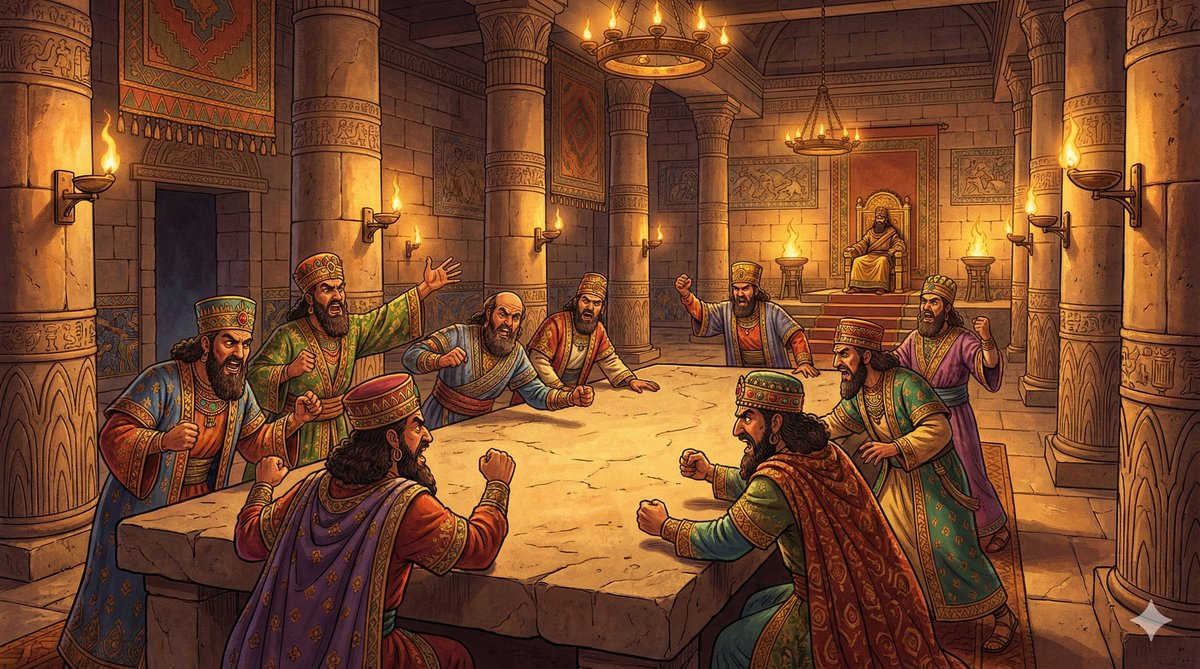
"He destroyed the sacred statues that our forefathers worshipped!" another cried.
"We must make an example of him," the chief priest declared, his voice cold as iron. "If we let this go unpunished, others might start questioning the gods too."
They debated for hours. Some wanted to banish Ibrahim. Some wanted to imprison him. But the king, a tyrant named Nimrod who believed himself to be the most powerful being on earth, had an idea that he thought would silence Ibrahim forever.
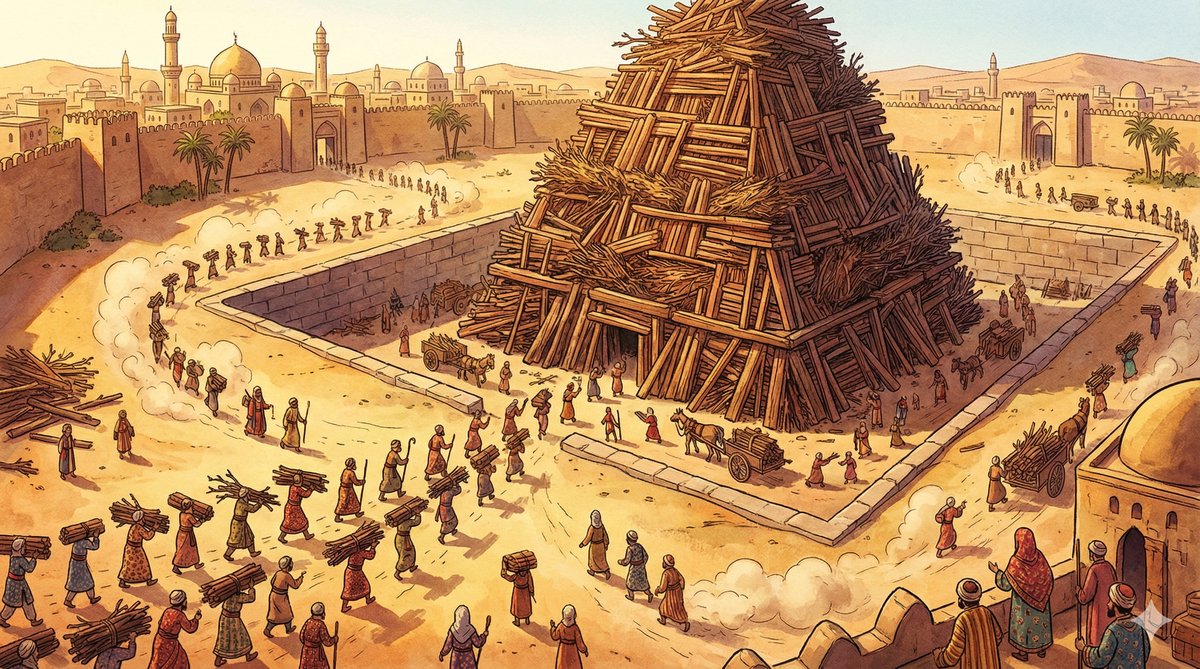
"Build a fire," Nimrod commanded. "Build the largest fire the world has ever seen. And throw Ibrahim into it."
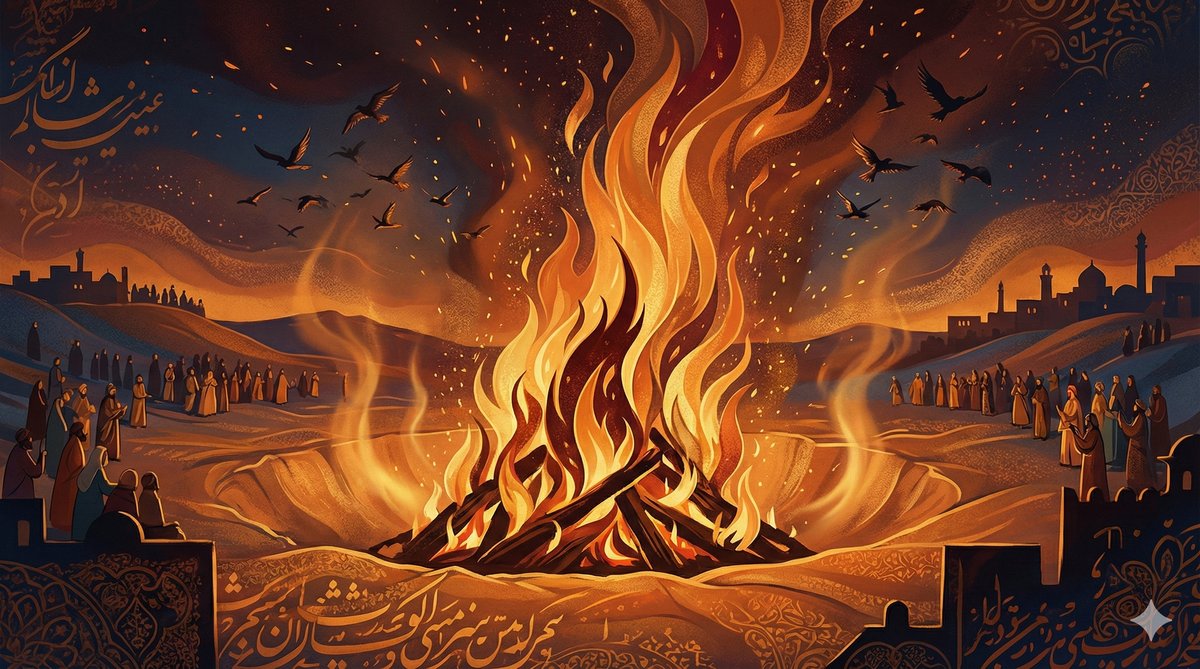
The order went out across the land. Every household was commanded to gather wood. For days, people brought logs and branches, stacking them higher and higher in a great pit outside the city walls. The pile grew so enormous that it looked like a mountain of wood. When they finally lit it, the flames roared so high that birds flying overhead changed their course to avoid the heat. The fire was so intense that no one could approach it. The air itself seemed to ripple and shimmer for a great distance in every direction.
The people came from all around to watch. They climbed to rooftops and hilltops. Children pointed at the towering flames with wide eyes. The ground trembled with the power of the blaze.
Now came the problem the executioners had not considered: the fire was so hot that no one could get close enough to throw Ibrahim into it. They could not carry him to the edge; their own clothes would catch fire long before they reached the pit.
So they built a catapult, a great wooden machine with a long arm, and they bound Ibrahim's hands and feet and placed him in it.
Imagine Ibrahim in that moment. Bound. Unable to move. Facing a fire so massive it could be seen from miles away. The heat pressing against his skin. The crowd jeering. Everything in the physical world screaming at him to be afraid.
But Ibrahim was not afraid. His heart was calm, because his heart was full of something stronger than fire: faith.
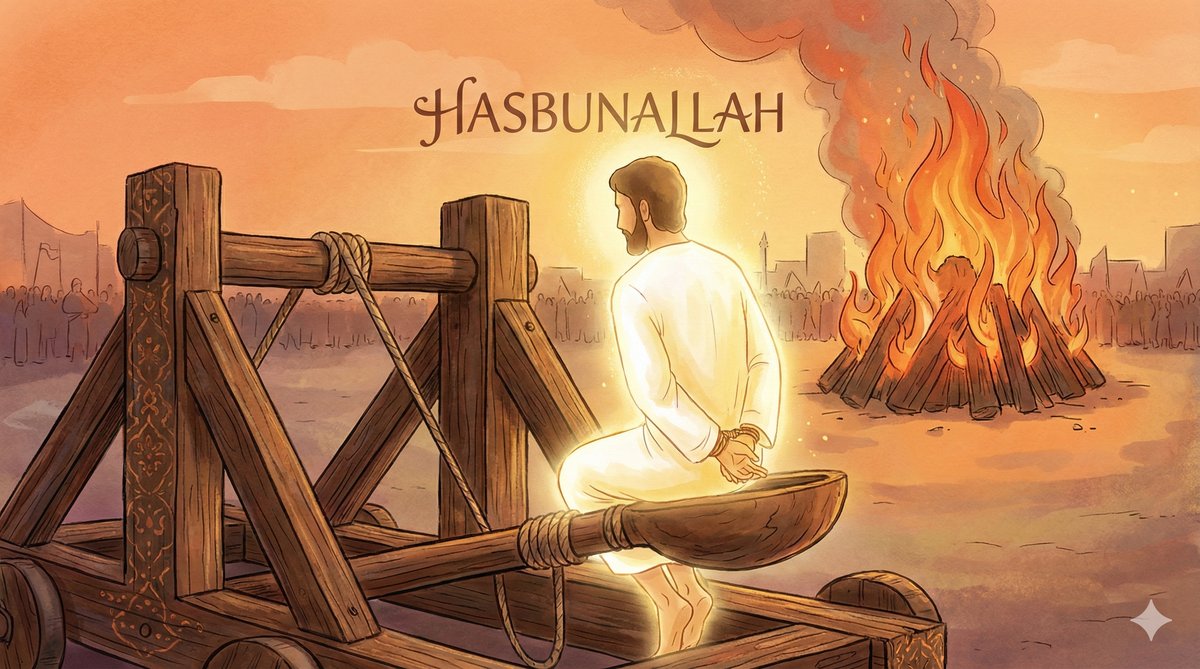
As the catapult was about to release, launching Ibrahim through the air toward the inferno, the angel Jibril (AS) appeared to him. "O Ibrahim," Jibril asked, "do you need anything?"
Ibrahim's answer has echoed through history: "From you, nothing. From Allah, everything."
Then Ibrahim spoke the words that every believer should carry in their heart: "Hasbunallahu wa ni'mal wakeel," which means, "Allah is sufficient for us, and He is the best Disposer of affairs."
He did not beg. He did not negotiate. He did not ask for the fire to be put out. He simply placed his trust entirely in Allah, the One who created fire, the One who created heat and cold, the One who sets the rules of nature and can change them whenever He wills.
The catapult released. Ibrahim soared through the air, the wind rushing past him, the heat of the fire drawing closer. And in that instant, Allah spoke.
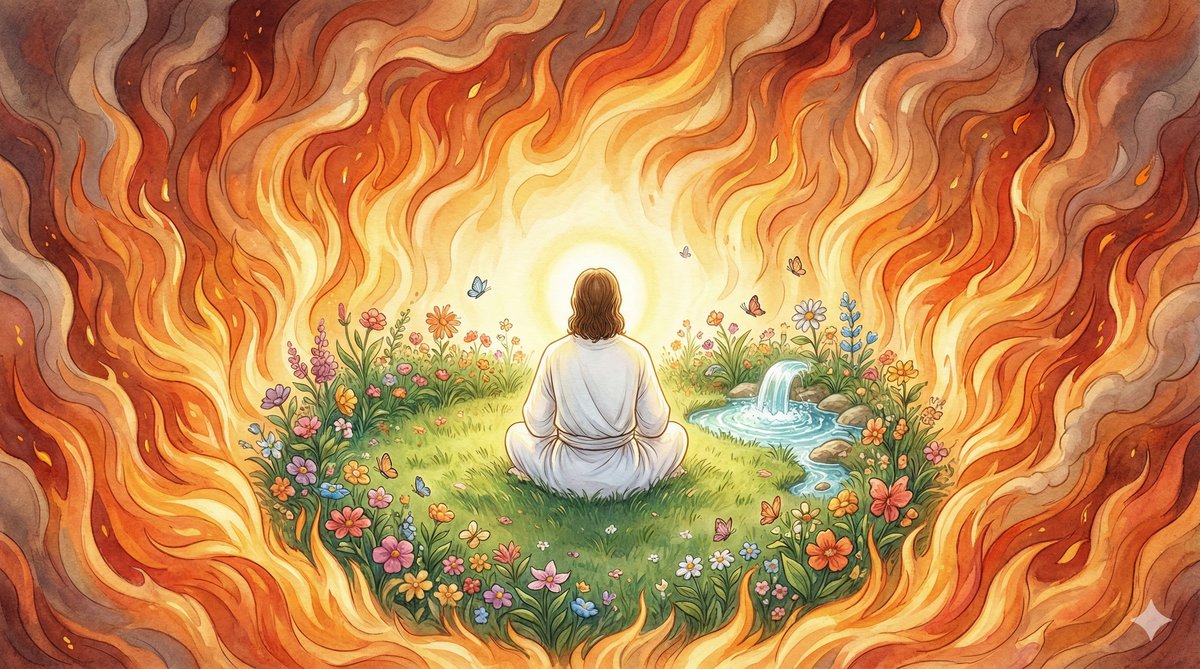
"Ya naru kooni bardan wa salaman 'ala Ibrahim."
"O fire, be cool and safe for Ibrahim."
And the fire obeyed.
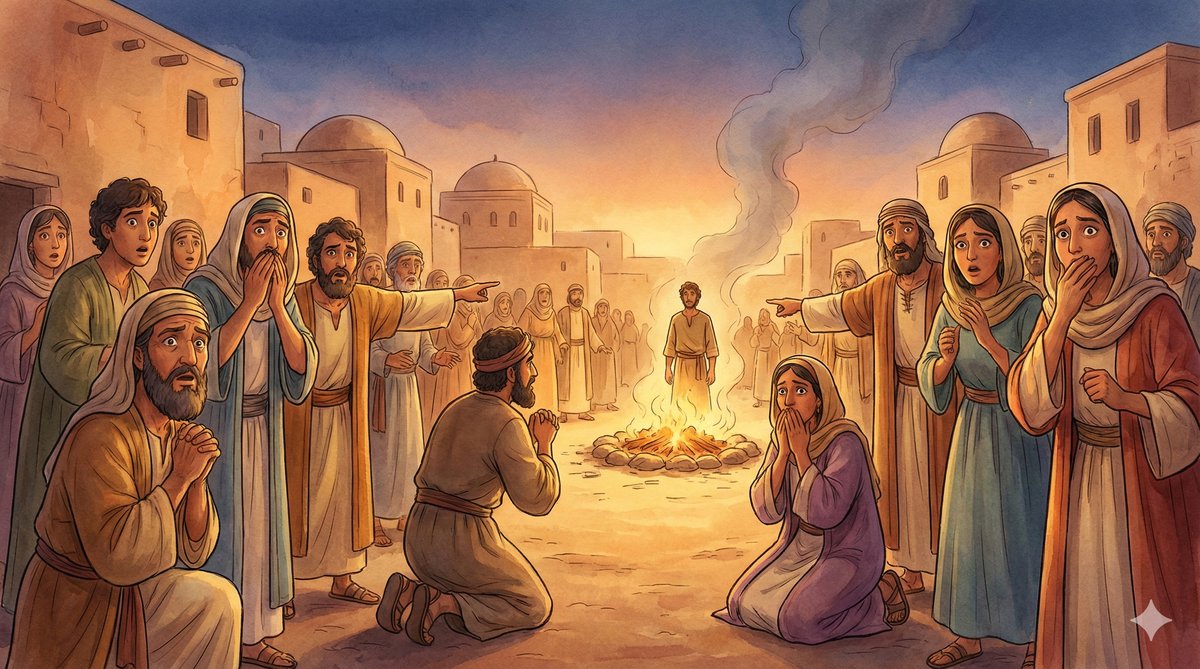
The fire that could melt iron became as cool as a garden breeze. The flames that reached the sky parted around Ibrahim like water around a stone. He landed gently in the center of the great blaze, and where his body touched the ground, flowers bloomed. Green grass spread beneath him. A small spring of cool water bubbled up beside him.
Ibrahim sat in the middle of the fire as if he were sitting in the most beautiful garden in the world. The flames danced around him but could not touch him. The heat raged but could not reach him. He was surrounded by coolness and peace, while the greatest fire ever built burned uselessly around him.
The people watched in stunned silence. Their mouths hung open. Some dropped to their knees. The fire that was supposed to destroy the one who challenged the idols had become the very proof that his message was true. If their stone gods were real, they would have punished Ibrahim themselves. Instead, the only real power, Allah, had protected him.
Nimrod was shaken but too proud to admit the truth. His arrogance was like that of Iblis, the same arrogance that had refused to bow to Adam. He could see the miracle with his own eyes, but his heart refused to accept what it meant.
When the fire finally died down and Ibrahim walked out, unburned, with not a single hair singed, the people could only stare. Some began to whisper among themselves. The truth was standing right in front of them, untouched by the flames they had built.
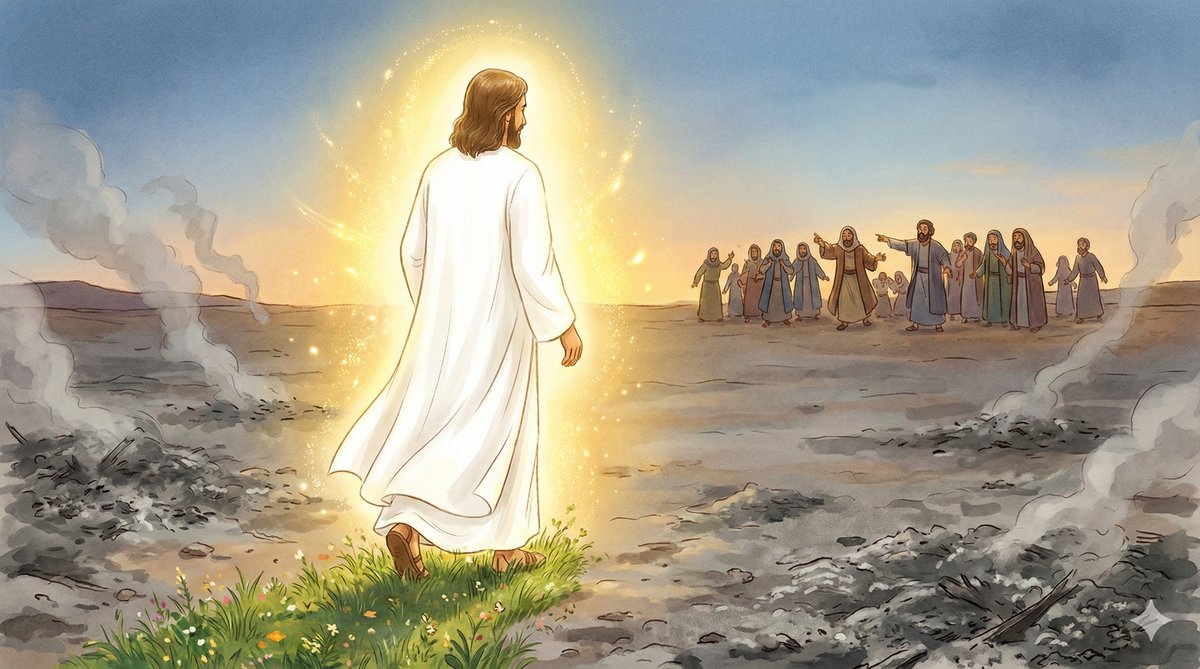
The Quran tells us: "They wanted to harm him, but We made them the greatest losers." Their plan to destroy Ibrahim had backfired completely. Instead of ending his message, the fire had amplified it. Instead of proving him wrong, the miracle had proven him right.
In the Shia tradition, Ibrahim's courage in the face of the fire is held as a model for all who stand for truth against overwhelming odds. Imam Ali ibn Abi Talib (AS), the first Imam and the cousin and son-in-law of the Prophet Muhammad (PBUH), showed the same kind of courage throughout his life. When the entire political establishment turned against him, when armies gathered to fight him, Ali stood firm in justice, never compromising the truth for the sake of power or comfort.
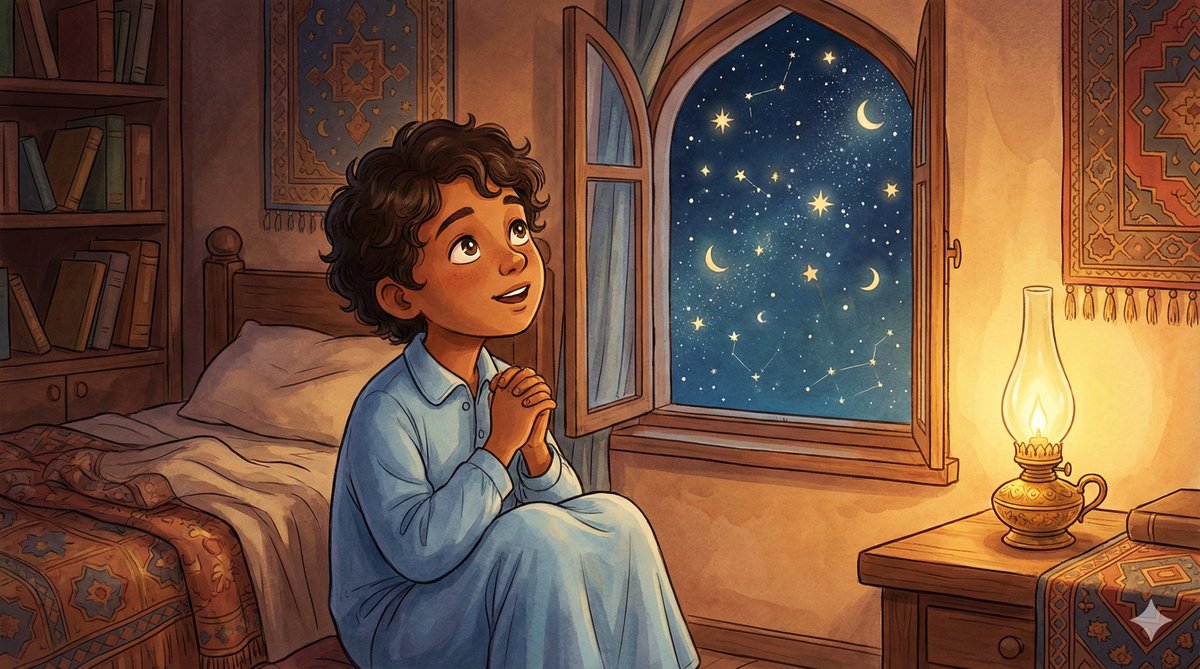
There is a famous saying attributed to Imam Ali (AS): "Even if all the people of the world gathered together to fight against truth, truth would still prevail." Ibrahim proved this in the fire. Ali proved it on the battlefield. And every person who stands for what is right, even when they stand alone, proves it again.
So if you ever face a moment where doing the right thing feels like walking into a fire, remember Ibrahim. Remember that the fire only burns what Allah allows it to burn. Remember that when you have Allah on your side, nothing in this world can truly harm you. And remember those beautiful words: "Hasbunallahu wa ni'mal wakeel." Allah is sufficient for us, and He is the best Disposer of affairs.
Key Verse
Qulna ya naru kooni bardan wa salaman 'ala Ibrahim "We said: O fire, be cool and safe for Ibrahim." Al-Anbiya (21:69)
Reflection Questions
- When Ibrahim was about to be thrown into the fire, the angel Jibril offered to help, but Ibrahim said he only needed help from Allah. Why do you think he said that?
- Have you ever been in a situation where doing the right thing felt scary or dangerous? What gave you the courage to do it anyway?
- What does it mean to say "Hasbunallahu wa ni'mal wakeel" (Allah is sufficient for us)? How can you use this in your own life when things get difficult?
Do you remember what happened last night in our story? Ibrahim, peace be upon him, broke all the statues in the temple and showed the people that their idols were not real gods. The people were very, very angry. But tonight, we find out what happened next. And it is one of the most amazing things in the whole Quran!
The leaders of the city all got together in a big hall to decide what to do with Ibrahim. They were so mad that their faces were red and their voices were loud.
"He broke our gods!" one man shouted, hitting the table with his fist.
"He made fun of our statues!" another cried. "The statues that our grandfathers and their grandfathers prayed to!"
"We must do something terrible to him," the chief priest said in a cold, scary voice. "If we let him get away with this, other people might start asking questions too."
They talked and argued for a long time. Some wanted to throw Ibrahim out of the city. Some wanted to lock him up. But the king, a very mean man named Nimrod who thought he was the most powerful person in the world, had a different idea.
"Build a fire," Nimrod said. "Build the biggest fire anyone has ever seen. And throw Ibrahim into it."
So the people started gathering wood. Lots and lots of wood. Every family in the city had to bring big logs and branches. For days and days, they kept piling the wood higher and higher. The pile of wood got so big it looked like a mountain!
Then they lit it on fire.
The flames went up so high that they touched the sky! The fire was so hot that birds flying above had to go a different way because it was too hot to fly near it. The fire was so strong that no one could even get close to it. If you tried to walk toward it, the heat would push you back, even from very far away.
All the people from the city came to watch. They stood on the rooftops and the hilltops. Children held onto their parents' hands and stared at the huge, blazing fire with wide eyes. The ground shook from how powerful the fire was.
But now the people had a problem. The fire was SO hot that no one could walk close enough to throw Ibrahim in! They would get burned before they even got near it.
So they built a big machine called a catapult. It was like a giant seesaw that could throw things very far through the air. They tied Ibrahim's hands and feet and put him in the catapult.
Now, think about Ibrahim for a moment. His hands were tied. His feet were tied. He could not move. In front of him was the biggest, hottest fire anyone had ever made. All the people in the city were watching and waiting. Everything around him was telling him to be scared.
But Ibrahim was not scared. Do you know why? Because his heart was full of something stronger than any fire in the world. His heart was full of faith in Allah.
Just before the catapult threw Ibrahim toward the fire, the angel Jibril came to him. Jibril is a very important angel, and he asked Ibrahim, "Do you need anything? Do you want me to help you?"
And Ibrahim gave the most amazing answer. He said, "From you, I need nothing. From Allah, I need everything."
Then Ibrahim said some very special words that every Muslim should remember: "Hasbunallahu wa ni'mal wakeel."
This means: "Allah is enough for us, and He is the best One to take care of us."
Ibrahim did not cry. He did not beg. He did not ask anyone to save him. He just trusted Allah completely, with all of his heart. Because he knew that Allah is the One who made fire, and Allah is the One who decides what fire can do. If Allah wants the fire to burn, it burns. And if Allah wants the fire to stop, it stops.
The catapult went flying! Ibrahim flew through the air, up, up, and then down toward the giant, roaring fire. The hot air rushed around him. The flames reached up toward him.
And right at that moment, Allah said two beautiful, powerful words to the fire:
"O fire, be cool and safe for Ibrahim."
And the fire listened! Because everything in the world listens to Allah. The sun listens to Allah. The moon listens to Allah. The wind listens to Allah. And the fire listened to Allah too.
The flames that were hotter than anything suddenly became cool. Not cold, but cool and comfortable, like a nice breeze on a warm day. The fire parted around Ibrahim the way water goes around a rock in a river. Ibrahim landed gently right in the middle of the huge fire.
And where he landed, something beautiful happened. Instead of burning, the ground turned green! Soft grass grew under him. Pretty flowers popped up around him. A little stream of cool, fresh water appeared next to him. Ibrahim was sitting in the middle of the biggest fire in the world, and it was like sitting in the most beautiful garden you could ever dream of!
The flames danced around him, but they could not touch him. The heat raged and roared, but it could not reach him. He was perfectly safe. Not even one tiny hair on his head was burned. Not even his clothes were warm!
The people stared with their mouths wide open. They could not believe what they were seeing. The fire that was supposed to hurt Ibrahim had turned into a garden! Their plan had completely failed. Instead of showing that Ibrahim was wrong, the fire had shown that Ibrahim was right. The real God, Allah, had protected him.
King Nimrod was shaking. He could see the miracle with his own eyes. But he was so proud, so stubborn, that he refused to believe. His pride was like the pride of Iblis, who had refused to bow to Adam. Even when the truth is right in front of some people, their pride keeps them from seeing it.
When the fire finally, finally went out and all the wood turned to ashes, Ibrahim walked out. He was completely fine. He was smiling. He did not have a single burn or scratch on him. His clothes were clean. He looked like he had just been taking a nice walk in a park.
The Quran tells us: "They wanted to harm him, but We made them the greatest losers." Their big plan to stop Ibrahim did not work at all. Instead of ending his message, the fire made his message even stronger! Instead of showing he was wrong, the miracle showed everyone that he was right.
In the Shia tradition, Ibrahim's bravery in the face of the fire is held up as a lesson for all of us. Imam Ali ibn Abi Talib (AS), the first Imam and the cousin of Prophet Muhammad, peace be upon him, showed the same kind of bravery throughout his whole life. When powerful people tried to stop him from telling the truth, Ali stood firm. He never backed down. He never gave up. He was brave like Ibrahim.
There is a saying from Imam Ali (AS): "Even if all the people of the world got together to fight against the truth, the truth would still win." Ibrahim proved this when he walked out of the fire. And every single person who stands up for what is right, even when they stand all alone, proves it again.
So if you ever feel scared to do the right thing, if the right thing feels hard and scary, remember Ibrahim. Remember that Allah is always with you. Remember that the fire only burns what Allah allows it to burn. And say those beautiful words: "Hasbunallahu wa ni'mal wakeel." Allah is enough for us, and He is the best One to take care of us.
Key Verse
"Qulna ya naru kooni bardan wa salaman 'ala Ibrahim" "We said: O fire, be cool and safe for Ibrahim." -- Al-Anbiya (21:69)
Let's Talk About It
- The people tried to burn Ibrahim in a huge fire, but Allah made the fire cool and safe. What does this teach us about Allah's power?
- When Ibrahim was about to be thrown into the fire, the angel Jibril asked if he needed help. Ibrahim said he only needed Allah. What does it mean to trust Allah that much?
- Can you think of a time when you were scared but did the right thing anyway? How did it feel afterwards?