The Great Sacrifice: Ibrahim's Ultimate Test
Submission to Allah's will; trust and obedience even when it seems impossible
Of all the tests that Allah has ever given a human being, tonight's story is about the hardest one. It is a story about a father and a son, about love and trust, and about what it truly means to submit your heart completely to Allah. If you thought Ibrahim's (AS) test with the fire was difficult, tonight you will learn that Allah had an even greater test waiting for him.
After leaving the city of the idol worshippers, Ibrahim (AS) traveled far. He crossed deserts and mountains, always guided by Allah, until he settled in a new land. He had grown older now, his beard white, his steps slower, but his faith only stronger with the passing years.
There was one sorrow that Ibrahim carried quietly in his heart. For years and years, he had prayed for a child. He and his wife Hajar had waited with patience that only the faithful can understand. "My Lord," Ibrahim had prayed, "grant me a righteous child."
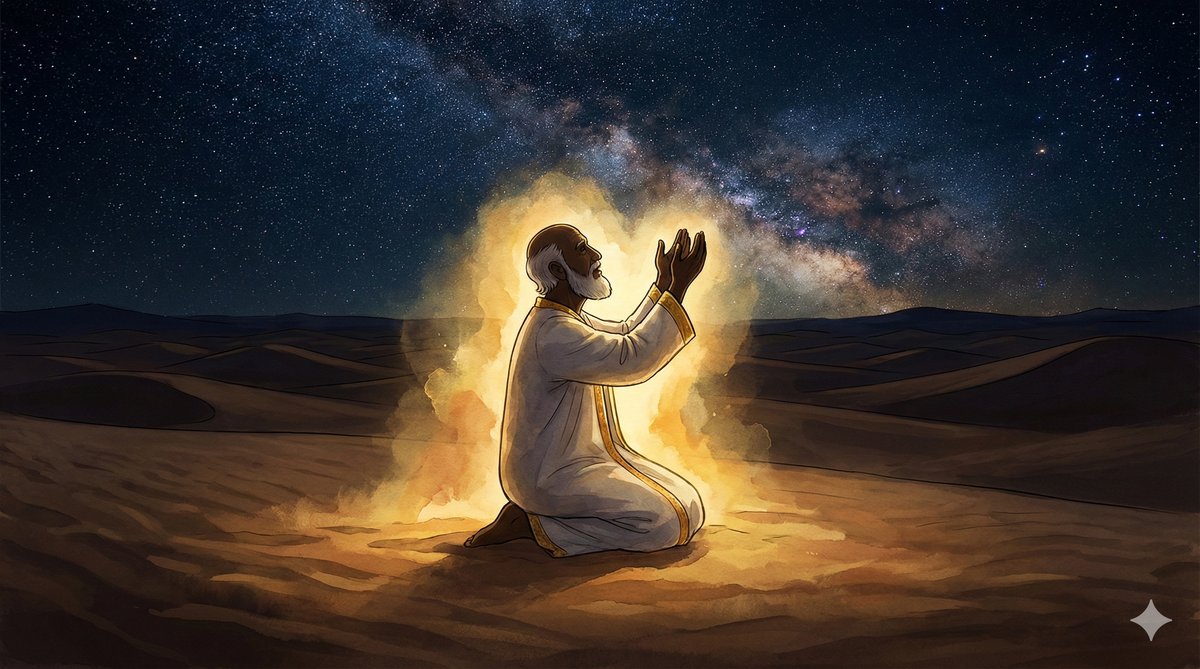
And Allah answered.
When Ibrahim was already an old man, long past the age when most people have children, Allah blessed him with a son. They named him Ismail (AS). Imagine the joy. After a lifetime of waiting, the sound of a baby's cry in their home, the tiny fingers wrapping around Ibrahim's weathered hand. Ismail was not just a child; he was an answer to decades of prayer. He was a miracle.

Ismail grew. He learned to walk on the same paths his father walked. He learned to speak the same words of truth. He was everything Ibrahim had hoped for: kind, brave, and deeply faithful. The Quran describes him as a "forbearing boy," a child whose patience and gentleness were extraordinary.
Then came the dream.
Ibrahim saw in his sleep a vision that shook him to his core. In the dream, he was sacrificing his beloved son Ismail. Now, for a prophet, a dream is not just a dream. It is a form of revelation, wahiy, a message from Allah. Ibrahim woke in the darkness, his heart pounding. He had the same dream a second night. Then a third.
There was no question about what Allah was asking. But try to feel the weight of it. This was not like breaking idols. This was not like facing a fire. This was his son, the child he had waited a lifetime for, the light of his old age, the answer to his deepest prayer. And Allah was telling him to give up the most precious thing in his life.
Ibrahim did not hide the test from his son. He went to Ismail and spoke to him honestly, as one believer to another: "O my son, I have seen in a dream that I am sacrificing you. So see what you think."
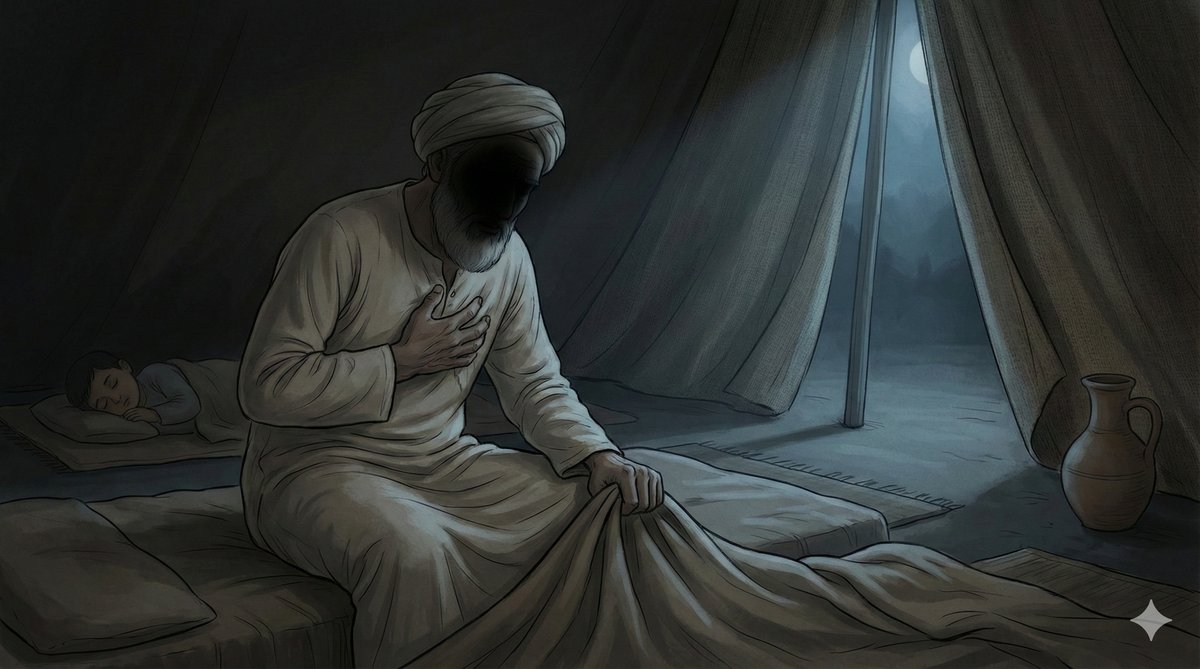
He did not command. He did not force. He shared, and he asked.
And Ismail's answer was one of the most beautiful things a child has ever said to a parent:
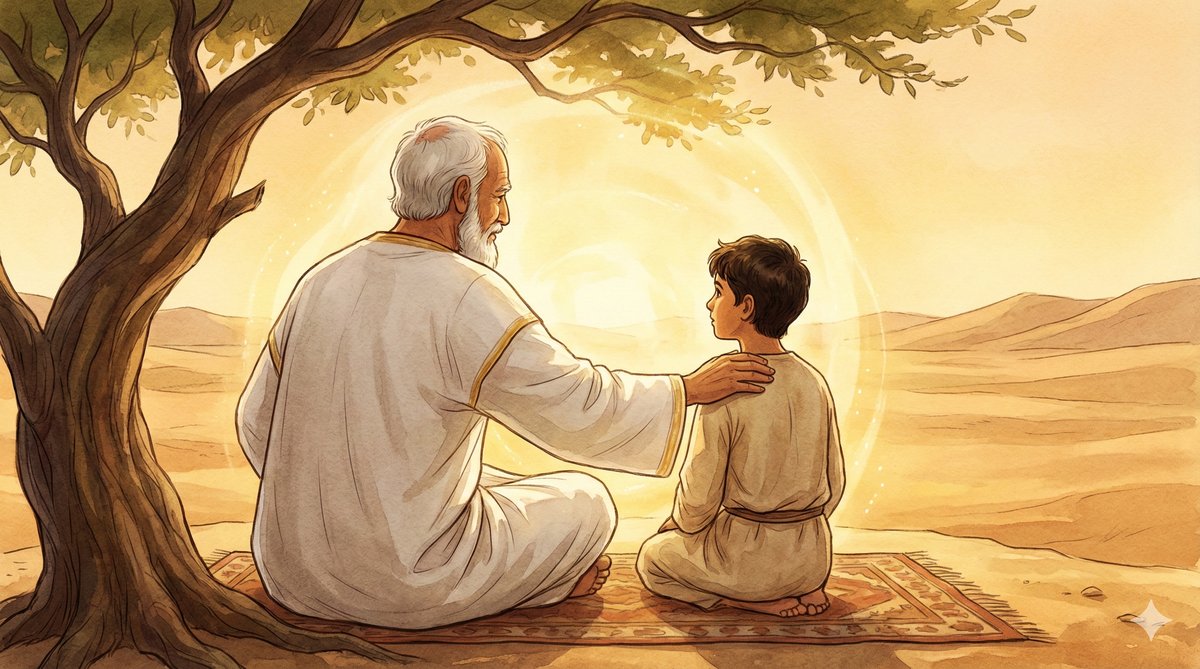
"O my father, do what you are commanded. You will find me, if Allah wills, among the patient."
If Allah wills. Among the patient. This was a boy, young and full of life, who loved his father and loved his life, choosing to trust Allah's wisdom over his own desire to live. Not because he did not value life, but because he valued Allah's command more.
Together, father and son walked to the place of sacrifice. Each step must have felt like a mountain. Ibrahim's hands, the same hands that had smashed the idols, the same hands that had built a life of faith, now trembled. But his heart did not waver.
They reached the place. Ismail lay down. The Quran tells us that Ibrahim placed his son's forehead on the ground, so he would not have to look at his son's face and lose his resolve. Both of them had submitted, aslama, to Allah's will. This is the true meaning of Islam, submission, not a passive giving up, but an active, conscious, courageous choice to trust the One who knows what we do not know.
Ibrahim raised the blade.
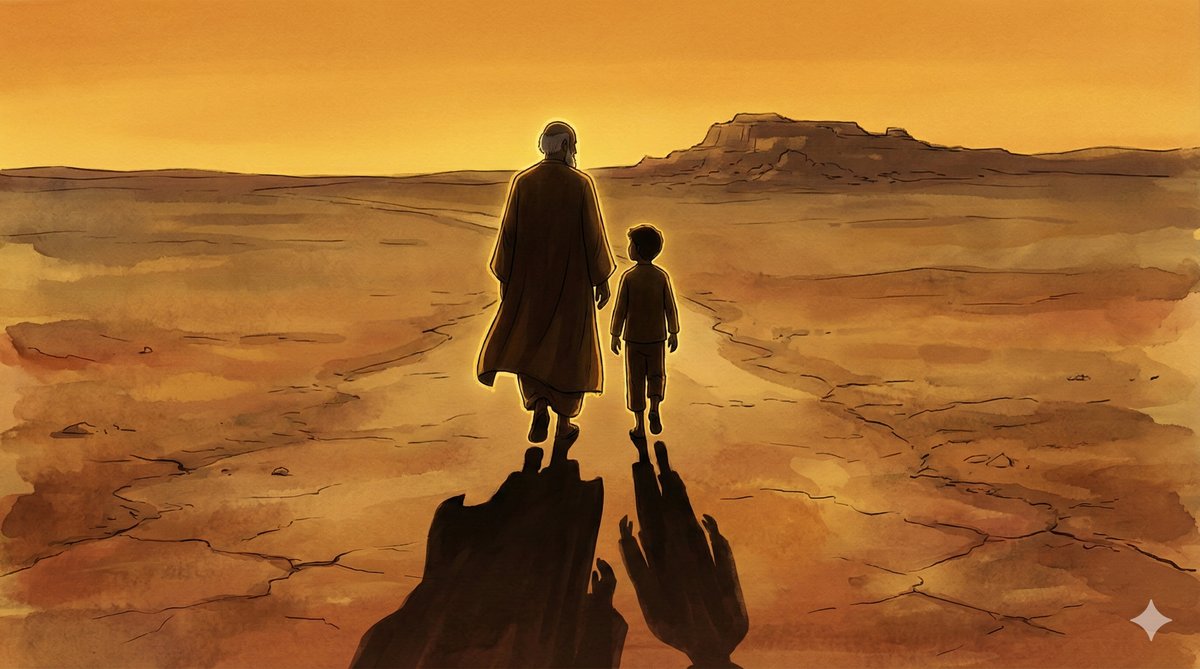
And in that instant, at the very edge of the impossible, the moment when Ibrahim had proven beyond any doubt that there was nothing, nothing, in all of creation that he would place above Allah, the call came.
"O Ibrahim, you have fulfilled the vision!"
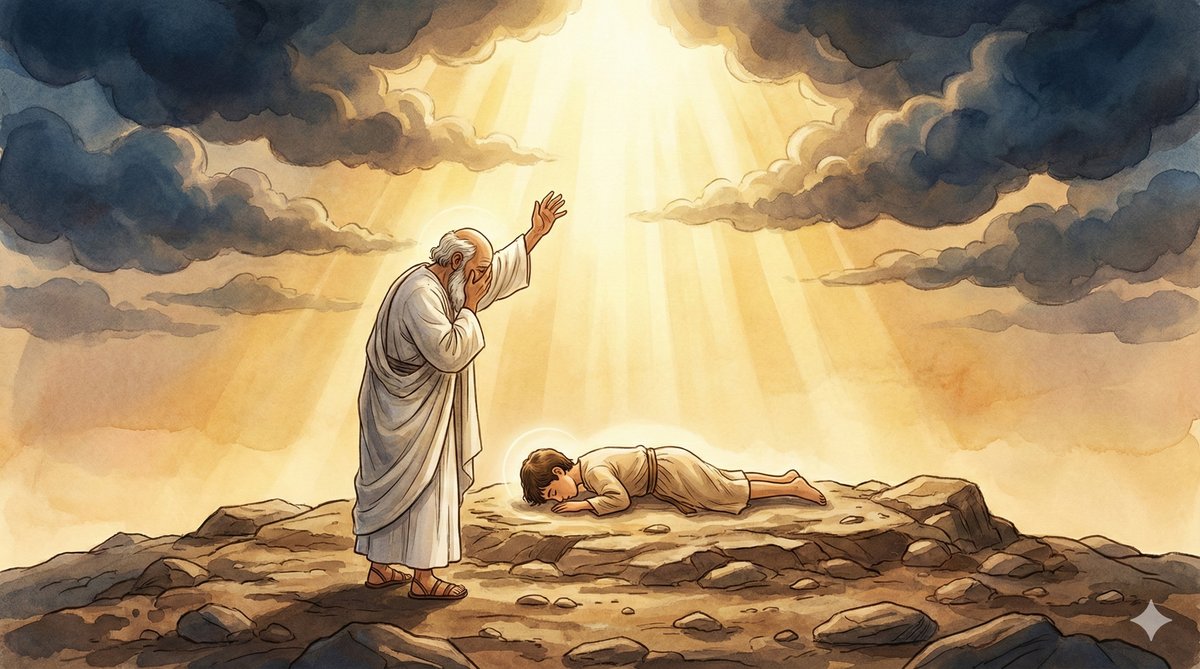
The test was never about taking Ismail's life. It was about Ibrahim's willingness. It was about showing that his love for Allah was complete, that his submission was total, that his trust was absolute. Allah does not desire suffering. He desires sincerity.
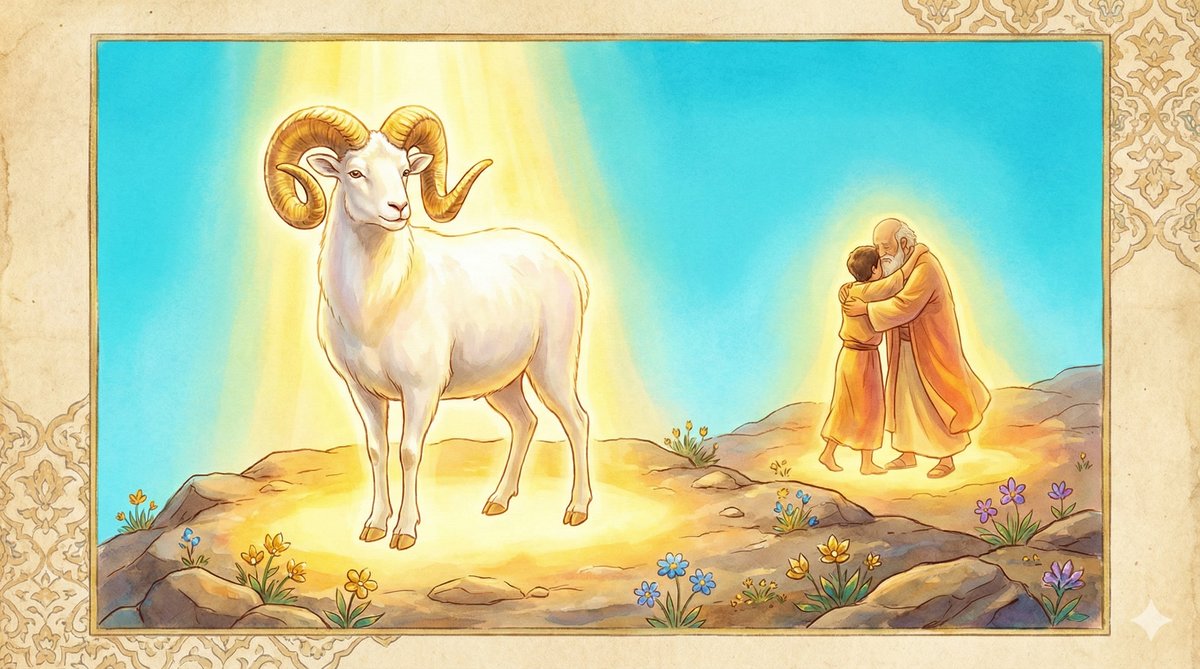
A ram appeared, sent by Allah from Jannah, and it was sacrificed in Ismail's place. Ibrahim and Ismail held each other, tears of relief and gratitude streaming down their faces, their faith deeper than ever before.
The Quran says: "Indeed, this was the clear trial. And We ransomed him with a great sacrifice."
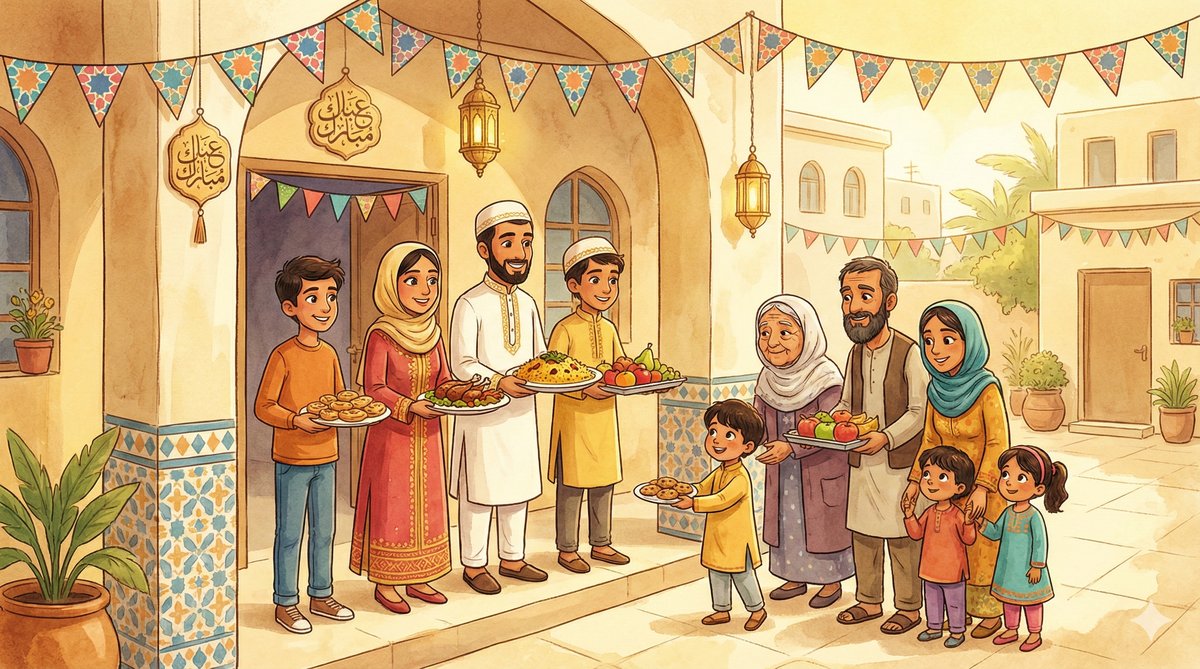
Every year, during the days of Eid al-Adha, Muslims around the world remember this moment. When families sacrifice an animal and share the meat with the poor, they are remembering Ibrahim and Ismail. They are remembering that true faith sometimes asks for the hardest thing you can imagine, and that when you trust Allah completely, He will never abandon you.
In the Shia tradition, this story resonates with a particular depth because of its parallel to Karbala. Centuries after Ibrahim and Ismail, Imam Husayn (AS), the grandson of the Prophet Muhammad (PBUH), would face his own moment of sacrifice on the plains of Karbala. Like Ibrahim, Husayn knew what was being asked of him. Like Ismail, Husayn's young son Ali Asghar and his companions showed patience and courage in the face of the unthinkable.
But there is a crucial difference that Shia scholars often highlight: Ibrahim was told at the last moment that the sacrifice was not required. Husayn received no such reprieve. His sacrifice was completed. And in that completion, Husayn preserved the message of Islam for all time.
Imam Ja'far al-Sadiq (AS) said: "Allah tested Ibrahim with the sacrifice, and He tested Husayn with giving his life. And both of them passed."
Tonight, as you think about Ibrahim and Ismail, think about what "submission to Allah" really means. It does not mean giving up. It means trusting so deeply that even when you cannot see the wisdom behind what is asked, you move forward knowing that the One who asks is the Most Wise, the Most Merciful, and the Most Loving.
Key Verse
Fa lamma aslama wa tallahu lil jabeen, wa nadaynahu an ya Ibrahim, qad saddaqta al-ruya, inna kadhalika najzi al-muhsineen "And when they had both submitted and he put him down upon his forehead, We called to him: O Ibrahim, you have fulfilled the vision. Indeed, We thus reward the doers of good." As-Saffat (37:103-105)
Reflection Questions
- Why do you think Allah asked Ibrahim to sacrifice his son, even though He never intended for it to actually happen? What was the real purpose of the test?
- Ismail was young, but he agreed to follow Allah's command with patience. What does his response teach us about trust between a child and their parent, and between a person and Allah?
- How is Imam Husayn's sacrifice at Karbala similar to Ibrahim's test, and how is it different? What do both teach us about standing for truth?
Of all the tests that Allah has ever given anyone, tonight's story is about the hardest one. It is a story about a father and his son, about love and trust, and about what it truly means to put Allah first in your heart. If you thought Ibrahim's test with the fire was hard, this test was even harder.
After Ibrahim, peace be upon him, left the city where the people prayed to statues, he traveled very far. He walked across deserts and over mountains. He was getting older now. His hair turned white and his beard grew long. But his love for Allah grew stronger and stronger every single day.
There was one thing that made Ibrahim's heart a little bit sad. For years and years and years, he had wanted a child. He prayed to Allah so many times: "My Lord, please give me a good child."
And he waited. And waited. And waited some more. Ibrahim was patient, because he trusted Allah. But still, he wished so much for a little baby.
Then, when Ibrahim was already a very old man, much older than most grandpas, something wonderful happened. Allah answered his prayer! Ibrahim and his wife Hajar had a baby boy!
They named him Ismail, peace be upon him.
Oh, you cannot imagine how happy Ibrahim was! After waiting his whole life for a child, here was a tiny baby with little fingers and little toes, crying and laughing and holding onto Ibrahim's big, old hand. Ismail was not just a baby. He was a gift from Allah. He was the answer to all those years of prayer. He was a miracle.
Ismail grew up day by day. He learned to walk, taking his first wobbly steps on the same paths his father walked. He learned to talk, saying the same beautiful words about Allah that his father said. He was kind and brave and gentle. The Quran calls him a "forbearing boy," which means he was patient and calm, even when things were hard.
Ibrahim loved Ismail more than he loved anything in the whole world. They did everything together. They prayed together. They walked together. They talked about Allah together. They were the best father-and-son team you could ever imagine.
Then one night, Ibrahim had a dream.
In the dream, he saw himself doing something very, very hard. He saw himself sacrificing his beloved son Ismail. Now, for a prophet, a dream is not just a regular dream like the ones you and I have. A dream for a prophet is a message from Allah. It is like Allah is telling him something important.
Ibrahim woke up in the dark night, and his heart was beating fast. He felt confused and sad. Could this really be what Allah wanted?
The next night, he had the same dream again. And the night after that, the same dream came a third time.
Three times. There was no mistake. Allah was asking Ibrahim to give up the most precious, most beloved thing in his entire life: his son Ismail.
Now, think about how hard this was. This was not like breaking statues. That was hard, but this was a thousand times harder. This was not like being thrown into a fire. Ibrahim had trusted Allah through that too, and Allah had saved him. But this? This was his son! The child he had waited his whole life for! The little boy who called him "father" and held his hand and looked at him with big, trusting eyes.
But Ibrahim trusted Allah. Even when he did not understand why, Ibrahim trusted that Allah had a reason. Allah always has a reason, even when we cannot see it.
And here is something beautiful about Ibrahim. He did not hide what was happening from Ismail. He did not try to trick him. Instead, he went to his son and told him the truth, honestly and gently:
"O my dear son, I have seen in a dream that I must sacrifice you. What do you think?"
He asked his son what he thought. He treated him with respect, even though Ismail was young.
And do you know what Ismail said? Did he run away? Did he scream? Did he cry and say, "No, no, no!"?
No. Brave, wonderful Ismail looked at his father and said the most amazing words a child has ever said:
"O my father, do what Allah has asked you to do. You will find me patient, if Allah wills."
If Allah wills. Patient. This was a young boy who loved his life. He loved playing in the fields. He loved the warm sun and the cool breeze and the taste of sweet dates. He loved his mother and his father. But he loved Allah even more. And he trusted that if Allah was asking for this, there must be a good reason.
Together, father and son walked to the place. Every step felt heavy. Ibrahim's hands were shaking. Tears ran down his old, wrinkled face. But he kept walking, because he trusted Allah.
On the way, Shaytan came creeping up to them. That tricky Shaytan tried to whisper to Ibrahim: "Do not do this! This is too hard! Turn back!"
But Ibrahim was not going to listen to Shaytan. He picked up little stones from the ground and threw them at Shaytan. "Go away!" he said. "I will not listen to you! I obey only Allah!"
Shaytan tried again, whispering to Ismail: "Your father is going to hurt you! Run away!"
But Ismail was brave too. He also threw stones at Shaytan. "Go away! We trust Allah!"
Shaytan tried one more time, whispering to Ibrahim's wife Hajar: "Stop them! Do not let this happen!"
But Hajar also trusted Allah. She also threw stones at Shaytan. "We belong to Allah, and we trust His plan!"
Three times Shaytan tried, and three times the family sent him away. What a brave, strong family!
When they reached the place, Ibrahim laid Ismail down very, very gently. He put Ismail's forehead on the ground so he would not have to look at his son's face and feel too sad to go through with it. Both of them had submitted to Allah's will. Both of them had said "yes" to Allah, even though it was the hardest "yes" anyone had ever said.
Ibrahim raised his hand. His whole body was shaking. Tears were falling like rain from his eyes.
And right at that very moment, right at the very last second, a voice called out from the sky:
"O Ibrahim! You have passed the test! You have made the dream come true!"
Ibrahim stopped. He could not believe his ears! He looked up.
Allah had never wanted Ismail to be hurt! Not even a little bit! The test was never about hurting anyone. The test was about Ibrahim's heart. Allah wanted to see if Ibrahim loved Allah enough to give up the most precious thing in his life. And Ibrahim had shown that yes, yes he did. His love for Allah was complete. His trust was total.
A beautiful ram, a big, fluffy sheep, appeared right there. It was sent by Allah from heaven to take Ismail's place. Ibrahim sacrificed the ram instead.
Then Ibrahim and Ismail hugged each other so tight. They were crying, but these were happy tears, the happiest tears in the whole world. Tears of relief. Tears of joy. Tears of love for each other and love for Allah.
The Quran says: "Indeed, this was the clear test. And We ransomed him with a great sacrifice."
Every year, during the special holiday called Eid al-Adha, Muslims all around the world remember this story. When families share meat with the poor, they are remembering Ibrahim and Ismail. They are remembering that real faith sometimes means being willing to give up the thing you love the most, and that when you trust Allah completely, He will never, ever let you down.
In the Shia tradition, this story has a very deep and special meaning. Many, many years after Ibrahim and Ismail, Imam Husayn (AS), the grandson of Prophet Muhammad, peace be upon him and his family, faced his own moment of sacrifice. Like Ibrahim, Husayn knew what Allah was asking. Like Ismail, Husayn's family showed amazing bravery and patience.
But there is something different that Shia scholars point out: Ibrahim was told at the very last moment that the sacrifice was not needed. Husayn did not get that same message. Husayn gave everything he had, his whole life, to save the message of Islam. And because of his sacrifice, the truth was kept alive forever.
Imam Ja'far al-Sadiq (AS) said: "Allah tested Ibrahim with the sacrifice, and He tested Husayn with giving his life. And both of them passed the test."
So tonight, as you think about Ibrahim and Ismail, think about what it means to trust Allah with your whole heart. It does not mean giving up. It means believing so deeply that even when you cannot understand why something is happening, you know that Allah is the Most Wise, the Most Merciful, and the Most Loving. And He always, always has the best plan.
Key Verse
"Fa lamma aslama wa tallahu lil jabeen, wa nadaynahu an ya Ibrahim, qad saddaqta al-ruya, inna kadhalika najzi al-muhsineen" "When they both submitted to Allah and Ibrahim laid his son down, We called out: O Ibrahim, you have made the dream come true! This is how We reward those who do good." -- As-Saffat (37:103-105)
Let's Talk About It
- Ismail said, "Do what Allah has asked you to do. You will find me patient." Why was that so brave for a young boy to say?
- Allah did not really want Ibrahim to hurt Ismail. What was the real test about? What was Allah looking for in Ibrahim's heart?
- During Eid al-Adha, we remember this story. What does it teach us about trusting Allah, even when things are very hard?