The Baby in the River: Musa's Miraculous Beginning
Allah's protection of the chosen; a mother's faith
Tonight's story begins with a baby, a river, and a mother's impossible choice. It is the story of how the mightiest king on earth tried to stop a child from being born, and how Allah used the very palace of that king to raise the boy who would one day bring him down.
In the land of Egypt, a tyrant sat on the throne. His name was Fir'awn, the Pharaoh, and he ruled with an iron hand. He had made an entire people, Bani Isra'il, the Children of Israel, his slaves. They built his palaces, paved his roads, and carried his stones until their backs bent and their hands bled. They had no say, no rights, and no hope, or so the Pharaoh believed.
One night, the Pharaoh had a dream that terrified him. He saw a fire rising from among the dwellings of Bani Isra'il, a fire that consumed his palace and everything he had built. His sorcerers and advisors interpreted the dream: "A boy will be born among the Children of Israel who will overthrow your kingdom."
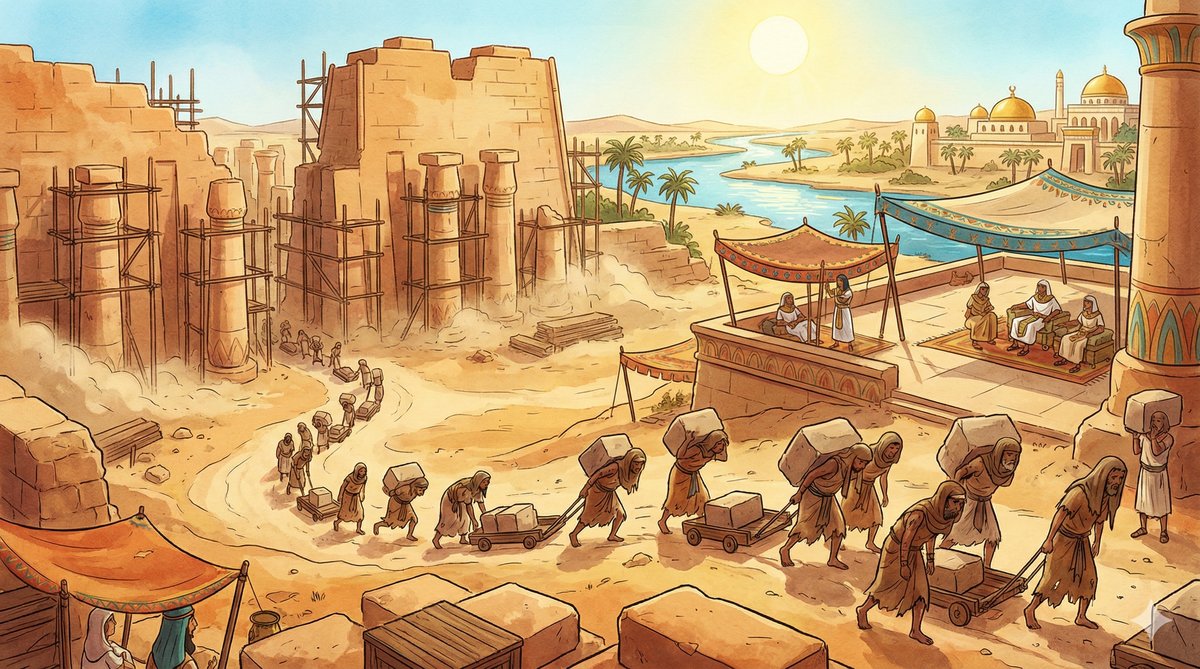
The Pharaoh's solution was monstrous. He ordered his soldiers to kill every newborn boy of Bani Isra'il. Imagine that: soldiers going door to door, searching homes, and any baby boy they found would be taken. The screams of mothers echoed through the streets. It was a time of unspeakable cruelty.
But Allah had a plan. And when Allah plans something, no pharaoh, no army, and no amount of cruelty can stand in the way.
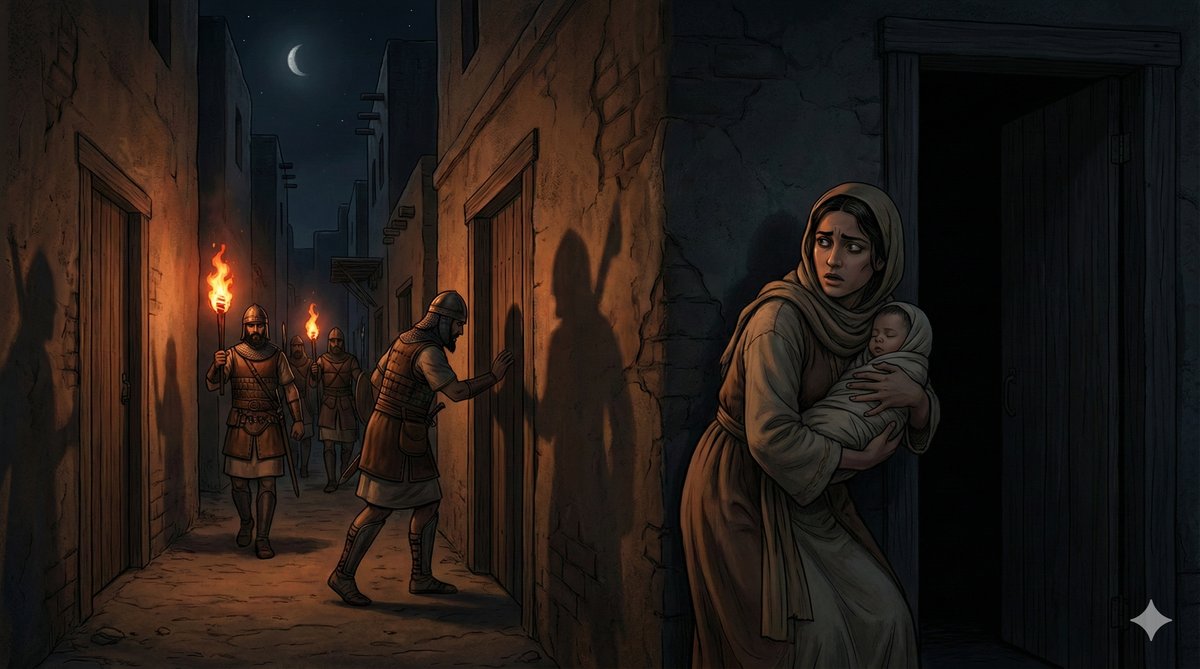
In a humble home, far from the palace, a woman from Bani Isra'il gave birth to a baby boy. The moment she saw his face, she felt something she could not explain: a warmth, a certainty, a light. This child was special. But the soldiers were coming. She could hear their footsteps in the streets, the banging on doors, the crying of other mothers.
Then Allah inspired her heart. Not with the voice of an angel, not with a dream, but with a direct revelation, wahiy, placed into her chest: "Suckle him. But when you fear for him, cast him into the river and do not fear and do not grieve. Indeed, We will return him to you and will make him one of the messengers."
Think about what Allah was asking. Put your baby, your newborn, into a river. Let the current carry him away. Trust that the same water that could swallow him would instead save him. This was not an easy instruction. But the mother of Musa (AS) had a faith that was stronger than her fear.
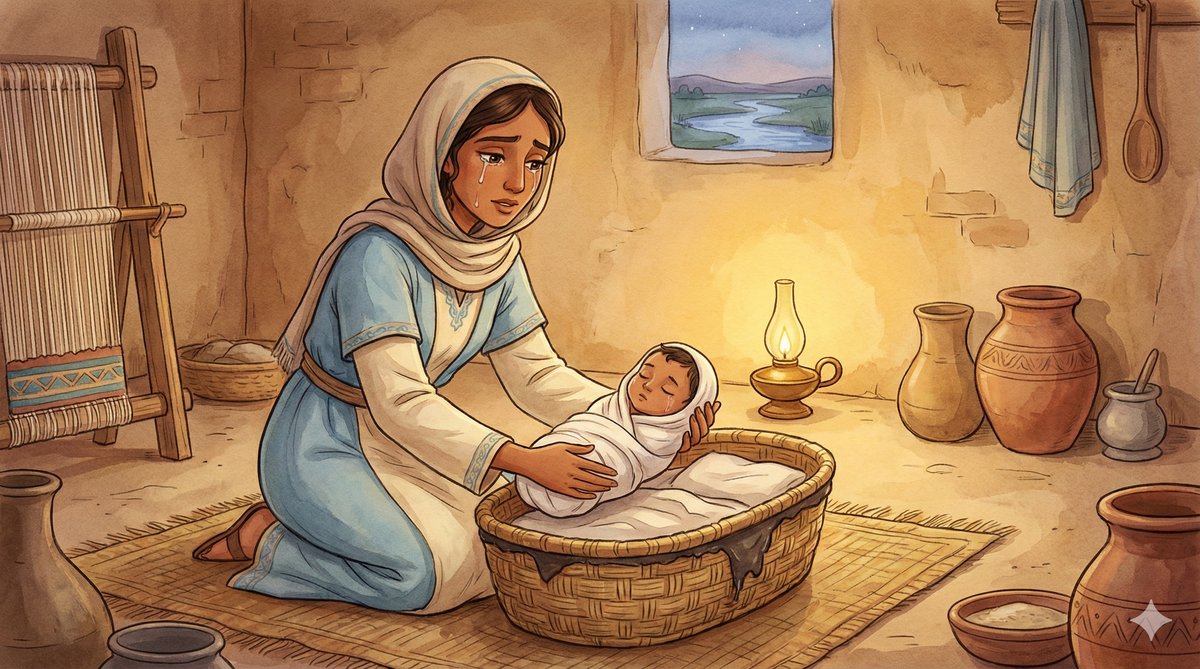
She nursed her baby, kissed his forehead, and placed him in a small basket that she had woven with her own hands. She sealed it carefully so no water could enter. Then, with tears streaming down her face but trust filling her heart, she placed the basket in the waters of the Nile.
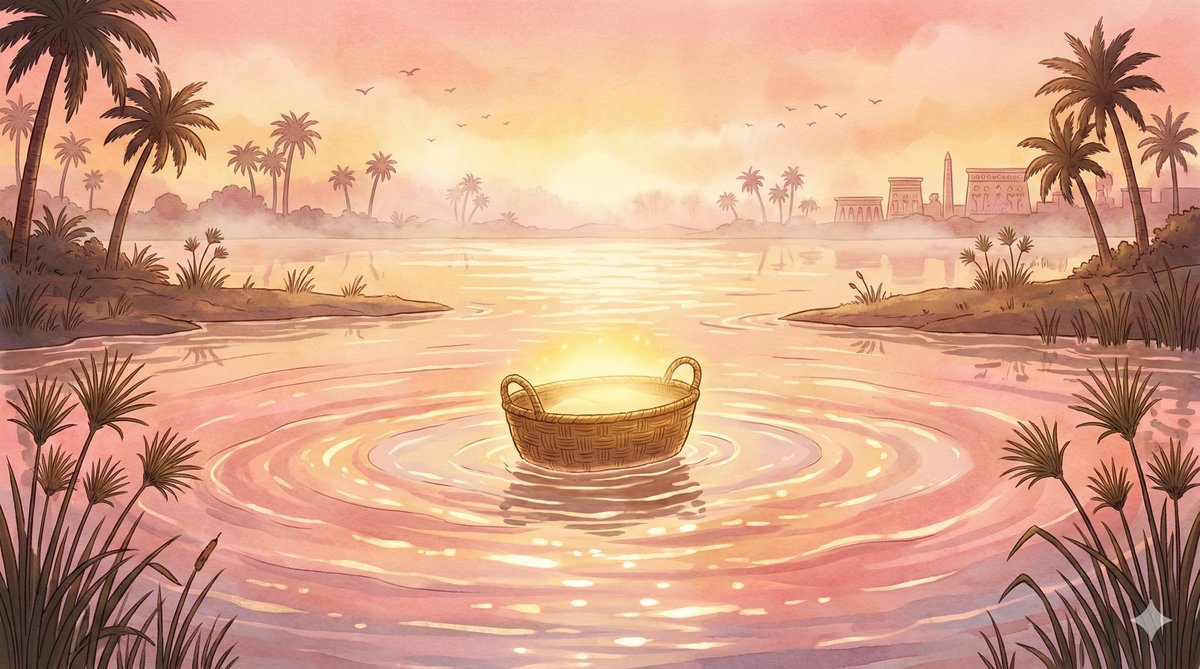
The river carried the basket gently, as if it knew what precious cargo it held. The current did not pull the baby under. The waves did not tip the basket over. The Nile, the great river of Egypt, became a cradle rocking a sleeping child toward the very place no one would have expected: the palace of the Pharaoh himself.
Now, the Pharaoh had a wife named Asiya. She was nothing like her husband. While he was cruel, she was kind. While he oppressed the weak, she quietly helped them. She was a believer in her heart, living in the most dangerous place a believer could live, right beside the worst tyrant of her age.
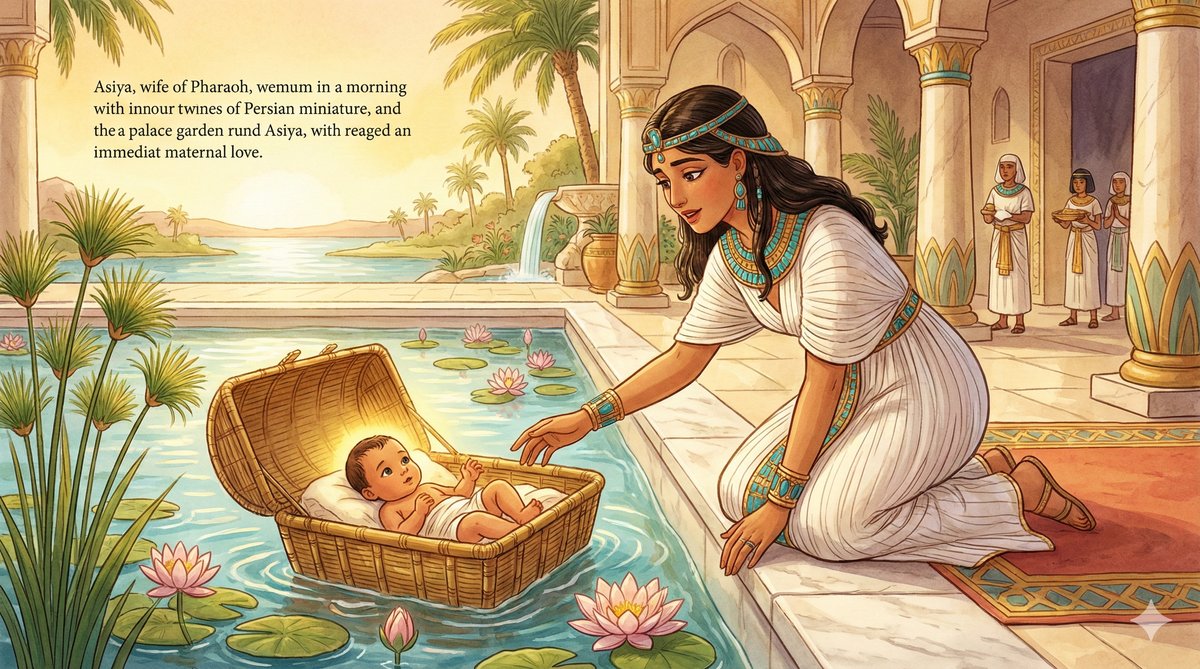
That morning, Asiya was by the river when she saw the little basket floating toward the palace garden. She reached in and pulled it out. When she opened it and saw the baby inside, her heart melted. The baby Musa looked up at her with bright, calm eyes, and something happened that the Quran describes beautifully: "I cast upon you love from Me," Allah says to Musa in Surah Taha, "so that you would be brought up under My eye."
Allah placed love for this baby in the hearts of everyone who saw him. Even Pharaoh, the man who had ordered the killing of every baby boy, looked at this child and could not bring himself to harm him.
Asiya said: "He will be a comfort of the eye for me and for you. Do not kill him. Perhaps he may benefit us, or we may adopt him as a son." And the Pharaoh agreed.
Think about the irony. The boy that the Pharaoh was trying to prevent from being born was now being raised in the Pharaoh's own home, eating from his table, sleeping under his roof, protected by his guards. Allah had turned the tyrant's own palace into a nursery for the one who would challenge him.
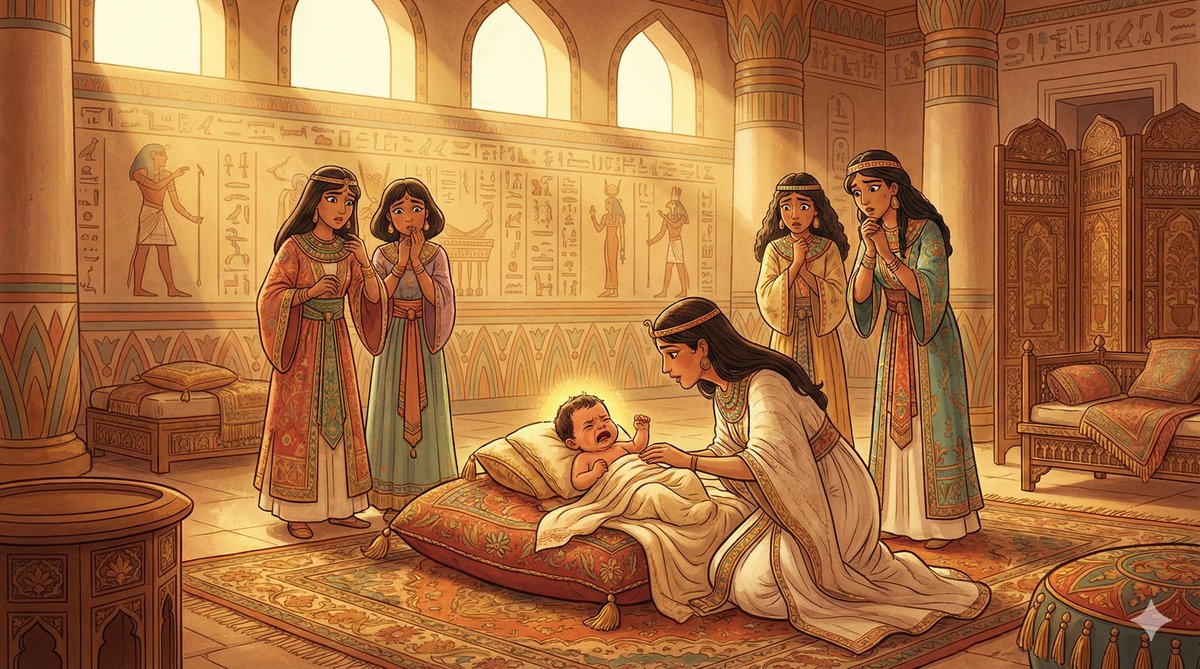
But Allah's plan had one more beautiful detail. Baby Musa refused to nurse from any woman in the palace. They brought wet nurse after wet nurse, and the baby turned his head away from all of them. He cried and cried, hungry but refusing everyone.
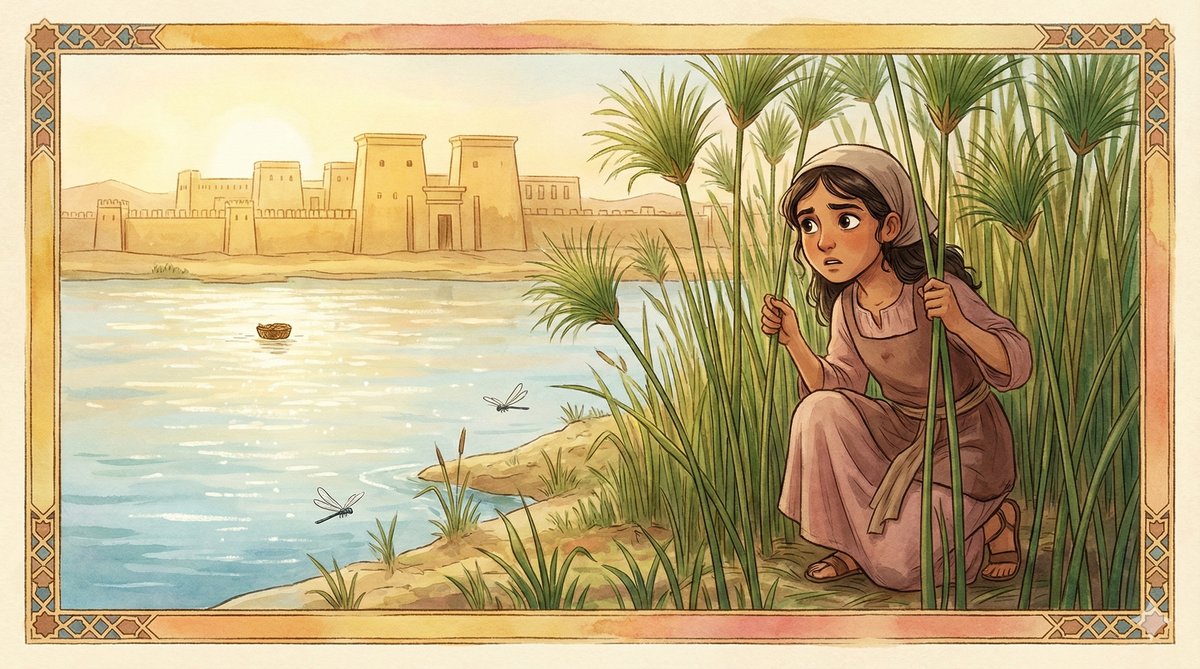
Musa's older sister had been following the basket along the riverbank all morning, watching from a distance, her heart pounding. When she heard that the baby in the palace was refusing all the nurses, she approached carefully and said: "Shall I direct you to a household that will nurse him for you and look after him?"
They agreed, desperate. And so she brought the one person baby Musa would accept: his own mother.
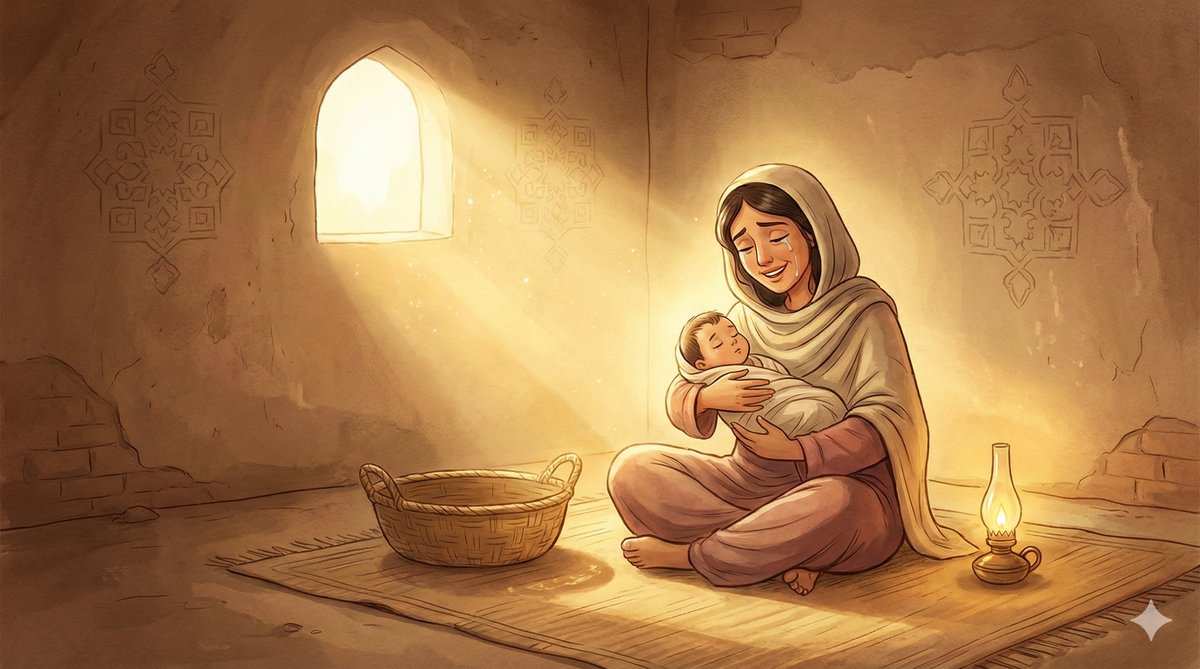
Allah had promised: "We will return him to you." And He did. The mother who had placed her baby in the river now held him in her arms again, this time being paid by the Pharaoh himself to nurse her own child. Her tears of sorrow had become tears of joy. Her faith had been rewarded in a way she never could have imagined.
The Quran says: "So We returned him to his mother that she might be content and not grieve, and that she might know that the promise of Allah is true."
Every promise Allah makes is true. Not approximately true. Not sometimes true. Always, completely, without exception, true.
In the Shia tradition, the story of baby Musa carries a deep lesson about how Allah protects those He has chosen for a purpose. Just as no pharaoh could stop Musa from fulfilling his mission, no tyrant in history has been able to extinguish the light of guidance that Allah sends into the world. Imam Ali (AS) once said: "Allah never leaves His earth without a proof, whether apparent or hidden."
The birth of Musa also reminds us of another miraculous protection: the birth of Imam al-Mahdi (may Allah hasten his reappearance), the twelfth Imam in Shia belief. Like Musa, he was born in a time when the ruling powers sought to prevent his existence. Like Musa, he was hidden and protected by Allah's plan. And like Musa, his mission, to establish justice on earth, cannot be stopped by any human power.
Tonight, remember the mother of Musa. She was not a prophet. She was not a warrior. She was a woman who trusted Allah when every part of her wanted to hold her baby tighter and never let go. Her faith was her strength, and Allah honored that faith with a miracle.
And remember: sometimes Allah asks us to let go of what we love most, not because He wants to take it from us, but because He wants to return it to us in a way that is far better than anything we could have planned ourselves.
Key Verse
Wa awhayna ila ummi Musa an ardhihi, fa idha khifti alayhi fa alqihi fil yammi wa la takhafi wa la tahzani, inna raddoohu ilayki wa ja'iloohu minal mursaleen "And We inspired the mother of Musa: Suckle him, but when you fear for him, cast him into the river and do not fear and do not grieve. Indeed, We will return him to you and will make him one of the messengers." Al-Qasas (28:7)
Reflection Questions
- Musa's mother had to let go of her baby to save him. Have you ever had to trust that something difficult was happening for a good reason? What helped you be patient?
- Asiya, the wife of the Pharaoh, was a good person living in a bad place. What can we learn from her about being kind and faithful even when the people around us are not?
- The Pharaoh tried everything to prevent Musa from being born, but Allah's plan could not be stopped. What does this teach us about trusting in Allah's power?
Are you ready for a really special story tonight? Come sit close, because this is a story about a baby, a river, and a very brave mama. It is the story of how Allah saved a tiny baby from the meanest king in the whole world. This baby's name was Musa, peace be upon him.
A long, long time ago, in the land of Egypt, there was a king called Fir'awn. That is another word for Pharaoh. Fir'awn was not a good king at all. He was mean and scary and cruel. He made a whole group of people, called Bani Isra'il, work as his slaves. Every day, these poor people had to carry heavy rocks and build huge buildings for Fir'awn. Their hands got sore and their backs got tired. Did Fir'awn say thank you? No. He did not care about them at all.
One dark night, Fir'awn had a bad dream. He saw a big fire coming from the homes of Bani Isra'il, and this fire grew until it burned up his whole palace! Fir'awn woke up shaking.
"Tell me what this dream means!" he yelled to his helpers.
They said, "O king, one day a baby boy from Bani Isra'il will grow up and take away your power."
So Fir'awn did something terrible. He sent his soldiers into the streets. "Find every new baby boy born to Bani Isra'il, and take him away!" The soldiers marched through the streets, bang, bang, bang on the doors! The mamas were crying. The babas were trying to hide their little ones. It was a very sad time.
But Allah had a plan. And when Allah makes a plan, nobody can stop it. Not the biggest army. Not the strongest king. Nobody!
In a small, quiet house, a woman from Bani Isra'il was holding her brand new baby boy. He was so tiny and so soft! When she looked at his sweet little face, she felt something warm in her heart. She knew this baby was very special. But she could hear the soldiers getting closer, closer, closer.
Then something amazing happened. Allah put a message right into her heart. It was a warm, gentle feeling that told her exactly what to do. Allah said: "Feed your baby. But when you are afraid the soldiers will find him, put him in the river. Do not be scared and do not be sad. I promise I will bring your baby back to you. And one day, he will be one of My special messengers."
Allah was asking this mama to put her baby in a river! That sounds so scary, does it not? But Allah also gave her a beautiful promise: "I will bring him back to you."
Musa's mama loved Allah and trusted Him with all her heart. She took a basket and made it into a tiny boat. She closed up every hole so no water could get in. She made it soft and cozy inside. She fed her baby one more time, kissed his soft forehead, and held him tight. Tears were rolling down her cheeks, but her heart was full of trust in Allah.
Then, very gently, she placed the basket with baby Musa into the big River Nile. And the river took the basket.
That big river was so gentle! The water did not splash inside. The waves did not tip it over. The basket floated softly, rocking back and forth like a cradle. It was as if the river knew it was carrying the most precious baby in the world.
Now, where do you think the river took baby Musa? You will never guess! Right to the palace of Fir'awn! The very king who was trying to hurt the babies!
At the palace, there was a woman named Asiya. She was Fir'awn's wife, but she was nothing like him. Fir'awn was mean, but Asiya was kind. Deep in her heart, she believed in Allah.
That morning, Asiya was walking near the river. She saw something floating toward her. "Oh! What is that?" She reached out and pulled the basket to the shore. When she peeked inside, she gasped.
There was the most beautiful baby she had ever seen! Baby Musa looked up at her with big, calm eyes. Asiya's heart filled up with so much love! Allah tells us in the Quran that He put special love for baby Musa into the hearts of everyone who saw him. Allah said, "I put love on you from Me, so that you would grow up under My watch."
Asiya held the baby close and said to Fir'awn, "Look at this beautiful child! Please, let us not hurt him. Maybe we can raise him like our own son."
And even mean old Fir'awn looked at baby Musa and his heart got soft! He said yes! So the very baby Fir'awn wanted to find was now living safe in Fir'awn's own palace! Allah turned the scary palace into a cozy home for baby Musa. What an amazing plan!
But wait, there is more! Baby Musa was hungry. The people in the palace tried to find a woman to feed him. They brought one woman. Baby Musa turned his little head away. Hmph! They brought another woman. Baby Musa closed his tiny mouth tight. Hmph! They brought another and another and another. But baby Musa would not eat from any of them!
He cried and cried and cried. His little face got all red. He was so hungry, but he just did not want any of these strangers. The people in the palace were so worried! "This poor baby will not eat!" they said. "What should we do?"
Now, do you remember that Musa had a big sister? She was a brave, clever girl. When her mama put the basket in the river that morning, the big sister walked along the riverbank, watching from far away. Her heart was beating so fast, thump, thump, thump! She kept her eyes on that basket the whole way.
When she heard that the baby in the palace would not eat, she had a smart idea. She walked up to the palace people and said, "I know a woman who is very good with babies. Should I bring her?"
"Yes, please!" they said.
So the big sister ran as fast as she could and brought back, guess who? Their own mama! When the mama reached out her arms, baby Musa stopped crying right away. He could smell his mama. He could feel her warm, loving arms. He started eating, happy as can be.
Remember what Allah had promised? "I will bring your baby back to you." And He did! The mama who had put her baby in the river that very morning was now holding him in her arms again. And the best part? Fir'awn himself was paying her to take care of her own baby! Is that not wonderful? Her tears of sadness turned into tears of joy. Her worried heart became a happy heart.
The Quran tells us: "So We brought him back to his mother, so she would be happy and not sad, and so she would know that Allah's promise is always, always true."
Every single promise Allah makes comes true. Not sometimes. Not maybe. Always, always, always.
In our tradition of the Ahlul Bayt, the family of Prophet Muhammad, peace be upon him and his family, we learn something very beautiful from this story. Just like nobody could stop baby Musa from being safe, nobody can ever stop Allah's plan. Imam Ali, peace be upon him, taught us that Allah always keeps someone special on this earth to guide people to what is right. And just like baby Musa was hidden and kept safe from the mean king, our twelfth Imam, Imam al-Mahdi, may Allah bring him back soon, is also hidden and kept safe by Allah. One day, he will come and fill the world with kindness and fairness, and no one can stop that, just like no one could stop baby Musa.
So tonight, before you close your eyes, remember Musa's brave mama. She was not a prophet. She was not a soldier. She was a mama who loved Allah and trusted Him, even when she was very scared. And Allah kept His beautiful promise to her.
And remember this: sometimes things feel scary and hard, and we do not understand why. But Allah has a plan for you too, and His plan is always, always good.
Key Verse
Wa awhayna ila ummi Musa an ardhihi, fa idha khifti alayhi fa alqihi fil yammi wa la takhafi wa la tahzani, inna raddoohu ilayki wa ja'iloohu minal mursaleen "We told Musa's mama: Feed your baby, but when you are scared for him, put him in the river. Do not be scared and do not be sad. We promise We will bring him back to you, and he will be a great messenger." -- Surah Al-Qasas (28:7)
Let's Talk About It
- Musa's mama was very scared, but she trusted Allah. Can you think of a time when you were scared but someone you love helped you feel brave?
- Asiya was a very kind woman even though she lived with the mean king. How can we be kind to people even when others around us are not being nice?
- Allah promised to bring baby Musa back to his mama, and He did! What does this teach us about Allah's promises?