A Father's Wisdom: Luqman's Advice to His Son
Wisdom, gratitude, humility, kindness to parents
Not all heroes carry staffs or part seas. Not all of Allah's greatest servants are prophets. Tonight's story is about a man whose gift was not miracles but something that, in many ways, is even more valuable: wisdom. His name was Luqman, and Allah loved him so much that an entire surah of the Quran is named after him.
Luqman was not a king. He was not a general. In many traditions, he was a humble man, possibly from Abyssinia, with dark skin and a quiet manner. The world did not look at him and see someone powerful. But Allah looked at him and saw a heart so full of gratitude and understanding that He chose to grant him hikmah, wisdom, the ability to see the truth of things that others miss.
The Quran tells us: "And We had certainly given Luqman wisdom, saying: Be grateful to Allah. And whoever is grateful, it is only for his own benefit. And whoever denies, then indeed, Allah is Free of need and Praiseworthy."
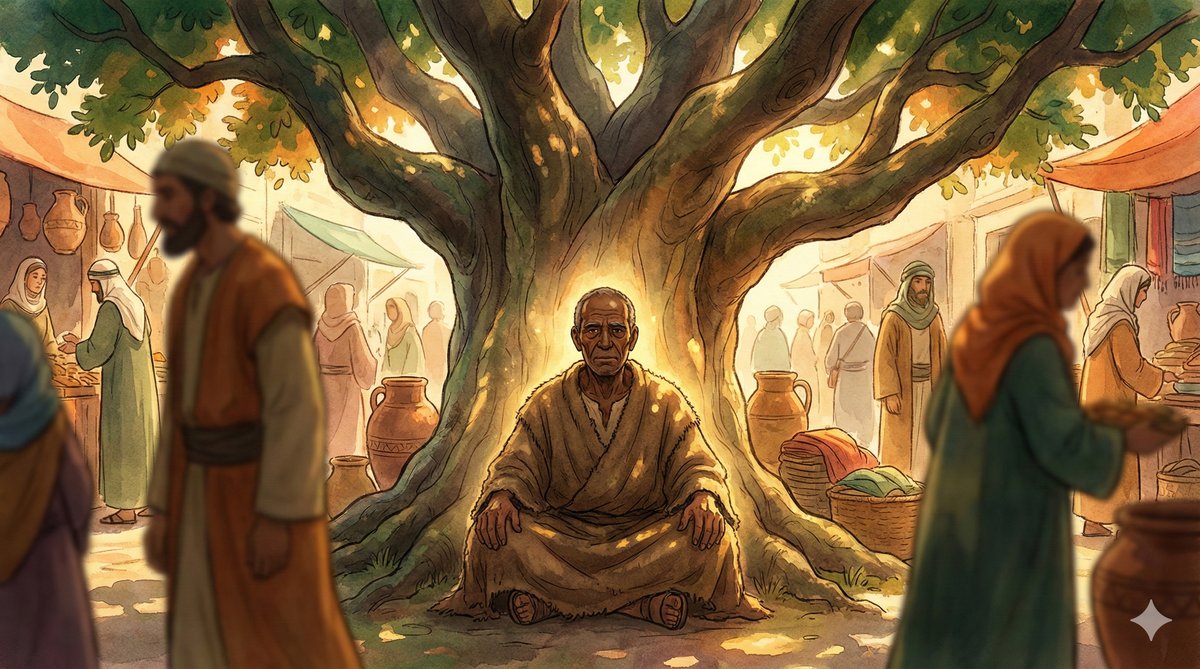
Wisdom begins with gratitude. Not the kind of gratitude you say quickly before a meal, but the deep kind that changes how you see the world. When you are truly grateful, you stop complaining about what you do not have and start noticing all that you do. You stop wishing you were someone else and start understanding why Allah made you exactly who you are.
Now, Luqman had a son. And like every loving father, Luqman wanted to give his child something that would protect him when his father was no longer around. He could not leave him a palace or an army. Instead, he left him something far more durable: advice so true and so deep that Allah chose to preserve it in the Quran for every child until the Day of Judgment.
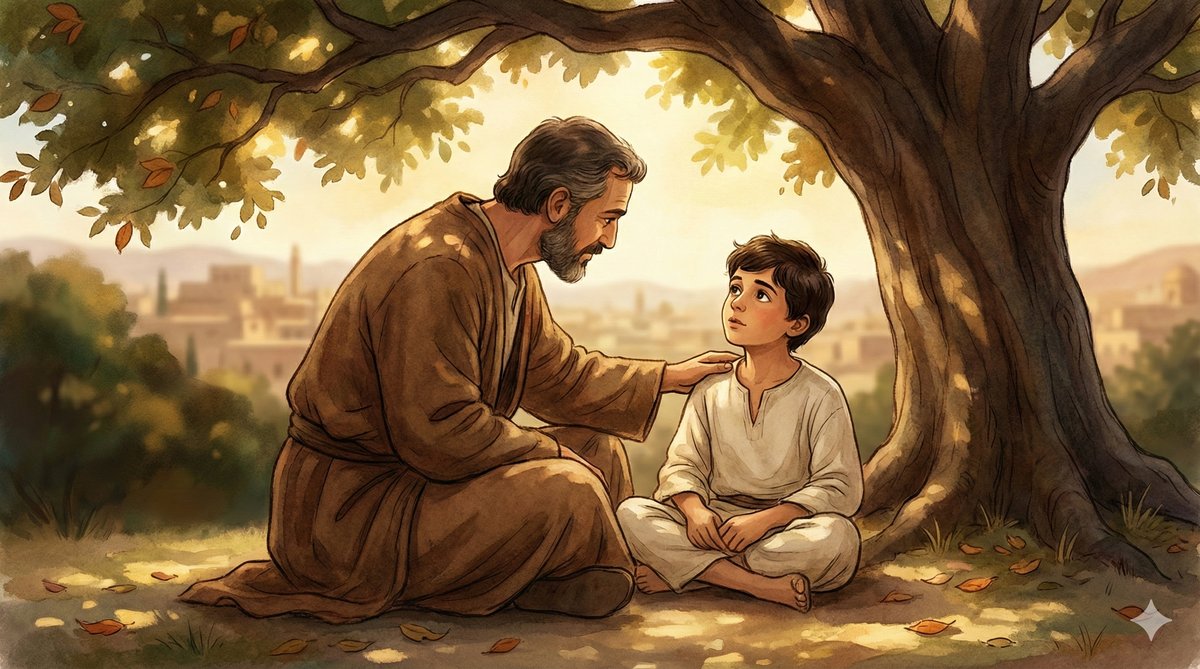
Imagine the scene. Father and son sitting together, perhaps under the shade of a tree, perhaps in their simple home after a meal. The father leaning close, his voice gentle but firm, the way a father's voice becomes when he is about to say the most important things he knows.
"O my dear son," Luqman began, "do not associate anything with Allah. Indeed, associating others with Allah is a great injustice."
This was the first lesson, and the most important. Tawhid, the oneness of Allah. Everything else in life depends on getting this right. If you understand that there is only one Creator, one Source of all power, one Being worthy of worship, then nothing in the world can truly enslave you. No dictator, no trend, no peer pressure, no fear. Your heart belongs to Allah alone.
Then the Quran pauses in Luqman's advice to add its own reminder: "And We have enjoined upon mankind goodness toward parents. His mother carried him in weakness upon weakness, and his weaning takes two years. Be grateful to Me and to your parents. To Me is the final destination."
Luqman continued: "O my dear son, indeed if a deed should be the weight of a mustard seed, and it should be within a rock or in the heavens or in the earth, Allah will bring it forth. Indeed, Allah is Subtle and All-Aware."
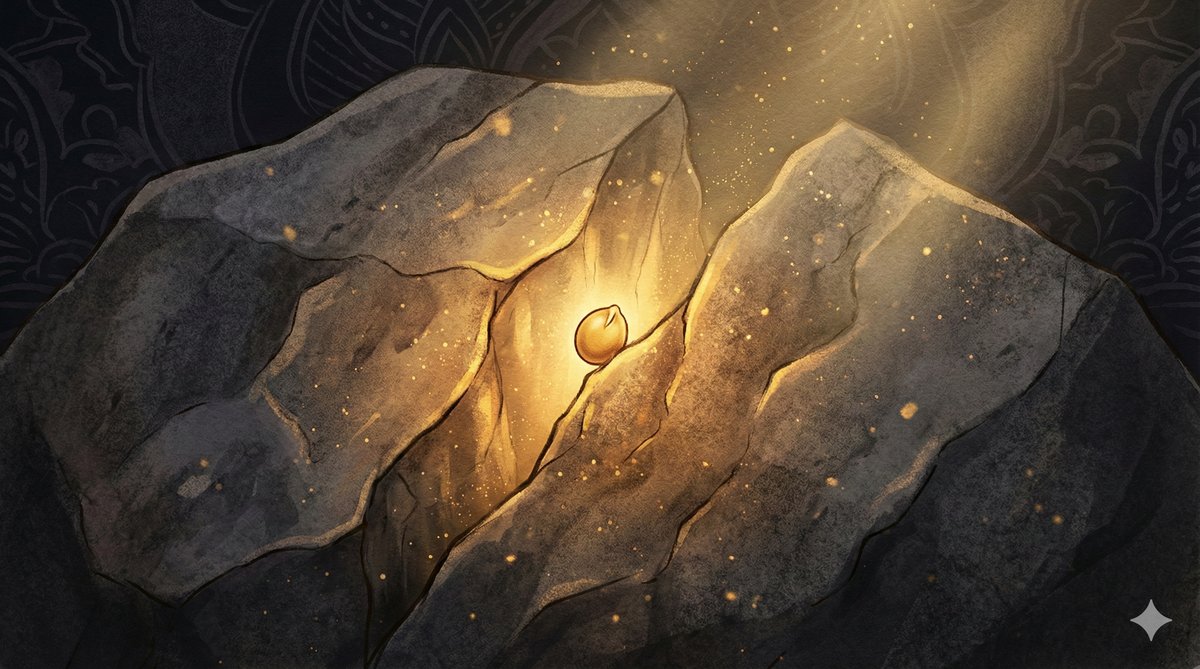
Think about that. A mustard seed is one of the tiniest seeds in the world. You can barely see it between your fingers. Yet Luqman tells his son that even a deed that small, hidden inside a solid rock, buried in the darkest place where no one could ever find it, Allah sees it and will bring it to light. Nothing escapes Him. Not the smallest act of kindness you do when no one is watching, and not the smallest cruelty you think no one noticed.
This is not meant to frighten you. It is meant to free you. It means that every good thing you do, no matter how small, counts. That time you helped someone and no one thanked you? Allah saw it. That moment you stopped yourself from saying something hurtful, even though you were angry? Allah knows. Nothing is wasted.
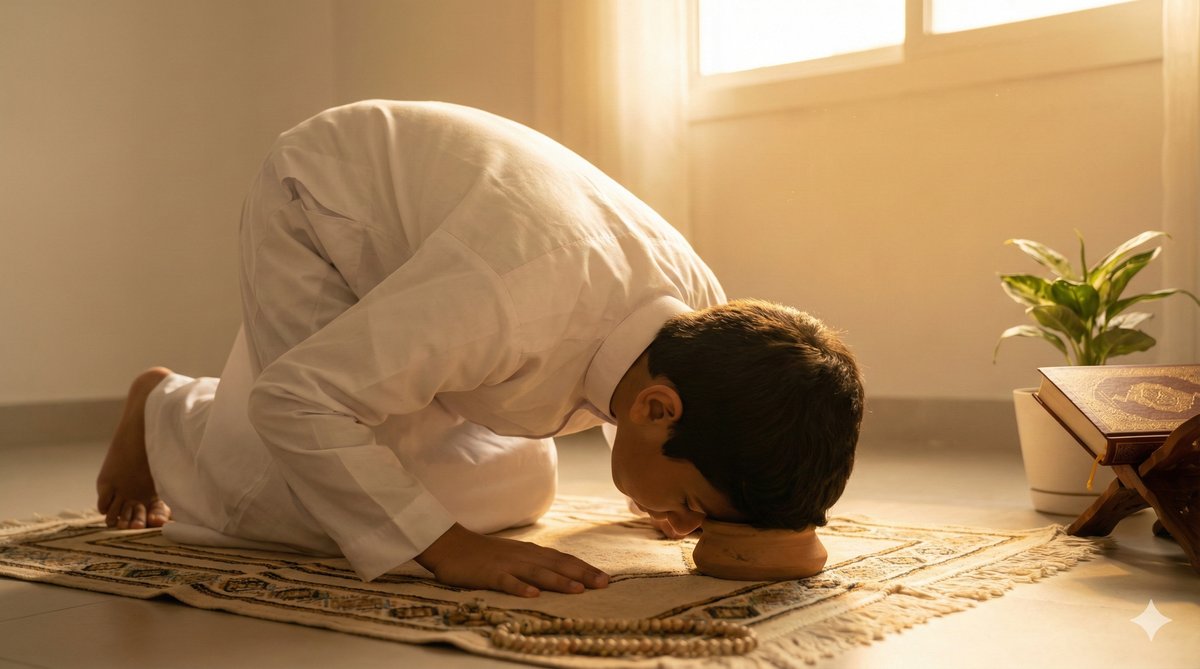
Then Luqman's advice turned practical: "O my dear son, establish prayer, and enjoin what is right and forbid what is wrong, and be patient over what befalls you. Indeed, that is of the matters requiring resolve."
Prayer is your daily connection to Allah. Enjoining good means speaking up when you see a chance to encourage kindness. Forbidding wrong means having the courage to say "this is not right" when you see injustice. And patience, sabr, is the glue that holds all of it together, because doing the right thing is rarely easy.
Finally, Luqman taught his son about how to carry himself in the world: "And do not turn your cheek in contempt toward people, and do not walk through the earth exultantly. Indeed, Allah does not like every self-deluded and boastful person. And be moderate in your pace and lower your voice. Indeed, the most disagreeable of sounds is the voice of the donkey."
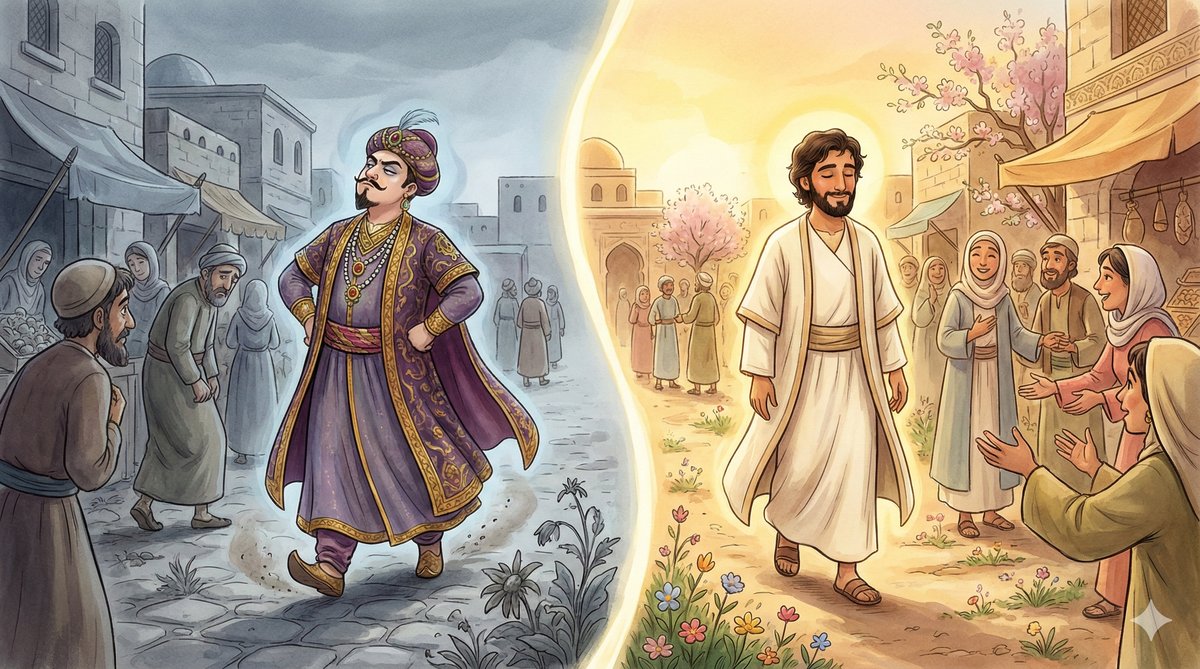
This last part often makes children smile, and that is fine. But the wisdom is real. Luqman was saying: do not look down on anyone. Do not walk as if you own the earth. Be moderate, be humble, be quiet in your confidence. The person who truly has something, knowledge, strength, faith, does not need to shout about it. The one who shouts the loudest often has the least.
What an incredible gift from a father to a son. No gold, no land, no title. Just truth, wrapped in love.
In the Shia tradition, Luqman's advice echoes powerfully through the words of Imam Ali ibn Abi Talib (AS). In his famous letter to his son Imam Hasan (AS), preserved in Nahj al-Balagha, Imam Ali wrote counsel that mirrors Luqman's wisdom: advice about faith, patience, humility, and how to live in a world full of distraction and falsehood.
Imam Ali (AS) wrote to his son: "I advise you to fear Allah, to obey His commands, to fill your heart with remembrance of Him, and to cling to His rope. For what connection is more reliable than the one between you and Allah, if you take hold of it?"
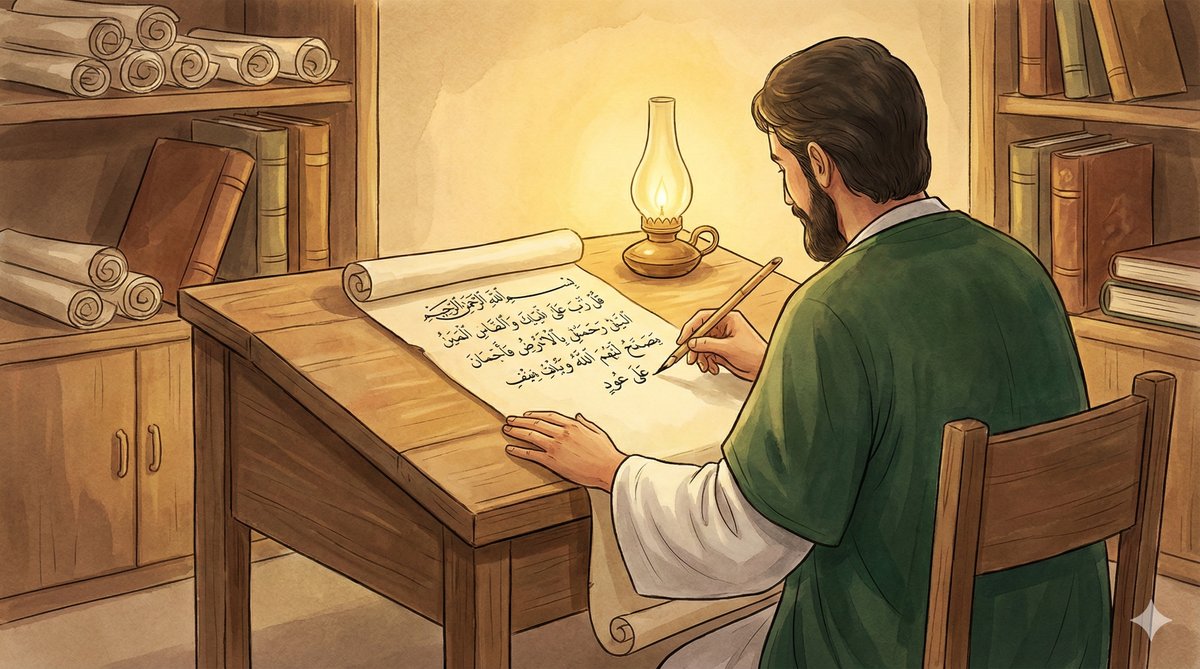
Both Luqman and Imam Ali understood the same truth: the greatest inheritance a parent can give a child is not wealth but wisdom, not comfort but character. Money can be lost, power can be taken, but a heart that knows Allah and a mind that understands right from wrong is armor that lasts a lifetime.

So tonight, think about the wisdom that has been passed down to you, from parents, from teachers, from the Quran itself. And the next time you hear advice from someone who loves you, even if it is difficult to hear, remember Luqman's son. He listened. He took his father's words into his heart. And those words became part of the Quran, alive and breathing, still teaching children fourteen hundred years later.
Key Verse
Ya bunayya la tushrik billah, innash shirka la zhulmun azheem "O my dear son, do not associate anything with Allah. Indeed, associating others with Allah is a great injustice." Luqman (31:13)
Reflection Questions
- Luqman said that even a deed the size of a mustard seed, hidden inside a rock, will be brought forth by Allah. How does knowing this change the way you think about the small good things you do every day?
- What is the difference between being confident and being arrogant? How can you be strong in your faith without looking down on others?
- If you could pass on one piece of advice to someone younger than you, what would it be and why?
Tonight we are going to hear about a very special man. He was not a king. He was not a soldier. He did not have a big palace or piles of gold. But Allah loved him so much that He named a whole chapter of the Quran after him! Can you guess his name? His name was Luqman, and his gift was something called wisdom.
Now, what is wisdom? Wisdom is when you understand things deeply, not just with your head but with your heart. It is knowing the right thing to do and the right thing to say. It is being able to see what really matters, even when everyone else is confused. And Allah gave Luqman so much wisdom that his words are still teaching people today, more than a thousand years later!
Luqman was a humble man. Some people say he came from a faraway land called Abyssinia. He had dark skin and a quiet voice. When people looked at him, they did not see someone fancy or powerful. But when Allah looked at Luqman, He saw a heart so full of love and thankfulness that He said, "I am going to give this man a very special gift." And that gift was hikmah, which means wisdom.
The Quran tells us that Allah said to Luqman: "Be grateful to Allah." And that is where wisdom starts, with saying thank you to Allah. Not just a quick "thank you" before dinner, but a deep, real, warm thankfulness. The kind where you look around and think, "Wow, Allah gave me eyes to see the sky! Allah gave me ears to hear the birds! Allah gave me a family who loves me!" When you feel that kind of thankfulness, it changes everything.
Now, Luqman had a son. He loved his son so, so much. And like every loving baba, Luqman wanted to give his child something that would help him for his whole life. He could not give him a treasure chest full of gold. He could not give him a magic shield. But he could give him something even better: advice so beautiful and so true that Allah put it right into the Quran for all the children in the whole world to hear.
Can you picture it? Maybe they were sitting together under a big, shady tree. The sun was warm, and a gentle breeze was blowing. Luqman looked at his son with loving eyes. He leaned in close, and his voice was gentle but very serious, the way a baba's voice gets when he is about to say something really, really important.
"O my dear son," Luqman began. His voice was so soft and kind. "Never, ever pray to anyone except Allah. Only Allah made the sky and the earth and you and me. Only Allah deserves our prayers. Praying to anything else instead of Allah is very, very wrong."
This was the first lesson, and the most important one of all. It is called Tawhid, which means that Allah is One. There is only one God, only one Creator, only one who made everything. When you know this in your heart, you never have to be scared of anyone or anything, because the One who made the whole universe is taking care of you!
Then the Quran adds something beautiful. It says: "Be kind to your parents. Your mama carried you when you were growing in her tummy. She was tired and she was sore, but she kept going because she loved you. Be thankful to Allah, and be thankful to your mama and baba."
Did you hear that? Allah put being kind to your parents right next to being thankful to Him! That is how important mamas and babas are. When you give your mama a hug, when you listen to your baba, when you say "thank you" to them, it makes Allah happy too.
Luqman leaned closer to his son and said something that might surprise you. "O my dear son, listen carefully. Even if you do something as tiny as a mustard seed, and it is hidden inside a big, hard rock, or lost somewhere far away in the sky, or buried deep, deep under the ground where nobody could ever find it, Allah will still see it. Allah will still know about it. Allah knows everything, and nothing is hidden from Him."
Do you know what a mustard seed is? It is one of the tiniest, tiniest seeds in the whole world. You can barely see it on the tip of your finger! And Luqman was telling his son that even something that small, hidden in the most secret place, Allah sees it.
But do not be scared! This is actually really, really good news! It means that every good thing you do counts. That time you shared your snack with your friend and nobody saw? Allah saw it. That time you wanted to say something mean but you stopped yourself? Allah knows. That time you helped your little brother tie his shoes and nobody thanked you? Allah noticed, and He is so proud of you. Nothing good that you do is ever wasted.
Then Luqman's advice became very practical. He said, "O my dear son, pray your salah. That is your special time to talk to Allah every single day. And when you see someone doing something good, tell them they are doing great! When you see something wrong happening, be brave enough to say, 'This is not right.' And when hard things happen, because sometimes hard things do happen, be patient. Hold on tight to your faith. Being patient is one of the bravest things you can do."
Luqman was not done yet. He had one more piece of advice, and this one might make you smile. He said, "My dear son, do not walk around acting like you are better than everyone else. Do not stick your nose up in the air and look down on people. Do not stomp around like you own the whole earth. Allah does not like people who show off and brag."
Then Luqman said, "Walk in a nice, gentle way. And keep your voice calm and soft. Do you know what the ugliest sound in the world is? It is the sound of a donkey braying!" He was saying that when people are loud and rude and always shouting, it is not a pretty sound at all!
Is that not funny? But it is also very wise. Luqman was teaching his son that the strongest people are not the ones who shout the loudest. The strongest people are the ones who are quiet and gentle and kind. The person who really knows something does not need to brag about it. The person who is truly brave does not need to act tough.
So let us count all the beautiful lessons Luqman gave his son. Are you ready? One: Only pray to Allah. Two: Be thankful, really, truly thankful. Three: Be kind to your mama and baba. Four: Remember that Allah sees everything, even the tiny things. Five: Pray your salah every day. Six: Encourage people to do good. Seven: Speak up when something is wrong. Eight: Be patient when things are hard. Nine: Do not show off or brag. Ten: Be gentle and keep your voice soft.
Ten whole lessons! And every single one of them is in the Quran for you.
Now, in our tradition of the Ahlul Bayt, the family of Prophet Muhammad, peace be upon him and his family, there was another very wise father who gave beautiful advice to his sons. His name was Imam Ali, peace be upon him. Imam Ali loved his sons Hasan and Husayn so much, and he would sit with them and teach them, just like Luqman sat with his son.
Imam Ali wrote a famous letter to his son Imam Hasan. In that letter, he said things just like Luqman: love Allah, be kind, be humble, be patient, and always do what is right. He said, "Hold on to your connection with Allah, because there is no rope stronger than that."
Both Luqman and Imam Ali knew the same truth: the best gift a baba can give his child is not toys or money or candy. It is wisdom. It is teaching them right from wrong. It is filling their heart with love for Allah. Toys can break and money can be lost, but a heart that knows Allah and understands right from wrong? That is a treasure that lasts forever.
So tonight, before you go to sleep, maybe you can do something special. Go to your mama or baba and give them a big, big hug. Say, "Thank you for everything you do for me. Thank you for teaching me." That would make Luqman smile. That would make Imam Ali smile. And most of all, that would make Allah so, so happy.
Key Verse
Ya bunayya la tushrik billah, innash shirka la zhulmun azheem "O my dear son, do not pray to anyone except Allah. Praying to others instead of Allah is very, very wrong." -- Surah Luqman (31:13)
Let's Talk About It
- What was your favorite piece of advice from Luqman? Why do you like that one the most?
- Luqman said that Allah sees everything, even something tiny hidden inside a rock. How does that make you feel about the good things you do when nobody is watching?
- Why do you think Allah put "be kind to your parents" right next to "be thankful to Allah"? How can you be extra kind to your mama and baba today?