The Well and the Palace: Young Yusuf's Journey Begins
Patience when wronged; Allah is always watching
The Quran calls this story "the best of stories." Not one of the best. The best. It is the only story in the Quran that is told completely from beginning to end in a single surah, like a film that starts with the opening scene and carries you all the way through to a conclusion so beautiful it will bring tears to your eyes. Tonight, we begin the first part of this extraordinary story. Tomorrow night, we will continue it.
In a green, fertile land far from Egypt, there lived a prophet named Yaqub (AS), also known as Israel, the father of twelve sons. Among these twelve brothers, there was one who shone differently. His name was Yusuf (AS), and he was still a boy, perhaps eleven or twelve years old.
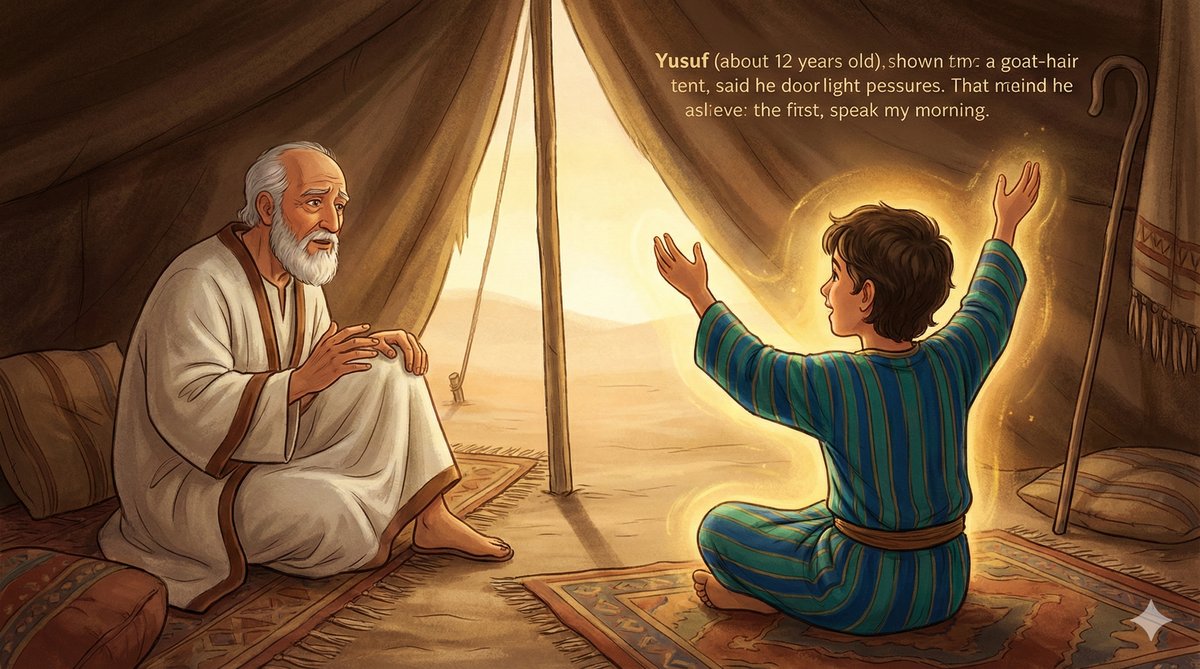
One morning, young Yusuf woke up trembling with excitement. He ran to his father and said: "O my father, I saw in my dream eleven stars and the sun and the moon; I saw them prostrating to me."

Yaqub's face changed. He was a prophet himself, and he understood immediately that this dream was not ordinary. It was a vision from Allah, a sign that Yusuf would one day rise to a position of such honor that even his own family would bow before him. But Yaqub also knew something else: this dream, if shared, would be dangerous.
"O my dear son," Yaqub said gently but urgently, "do not relate your vision to your brothers, or they will plan against you a plan. Indeed, Shaytan is to man a clear enemy."
Why would brothers plan against their own brother? Because jealousy is a poison that can turn love into hatred, and closeness into cruelty. Yusuf's brothers had noticed that their father loved Yusuf and his younger brother Binyamin more than the rest of them. Whether this was true or not, the feeling had taken root in their hearts like a thorn, growing sharper each day.
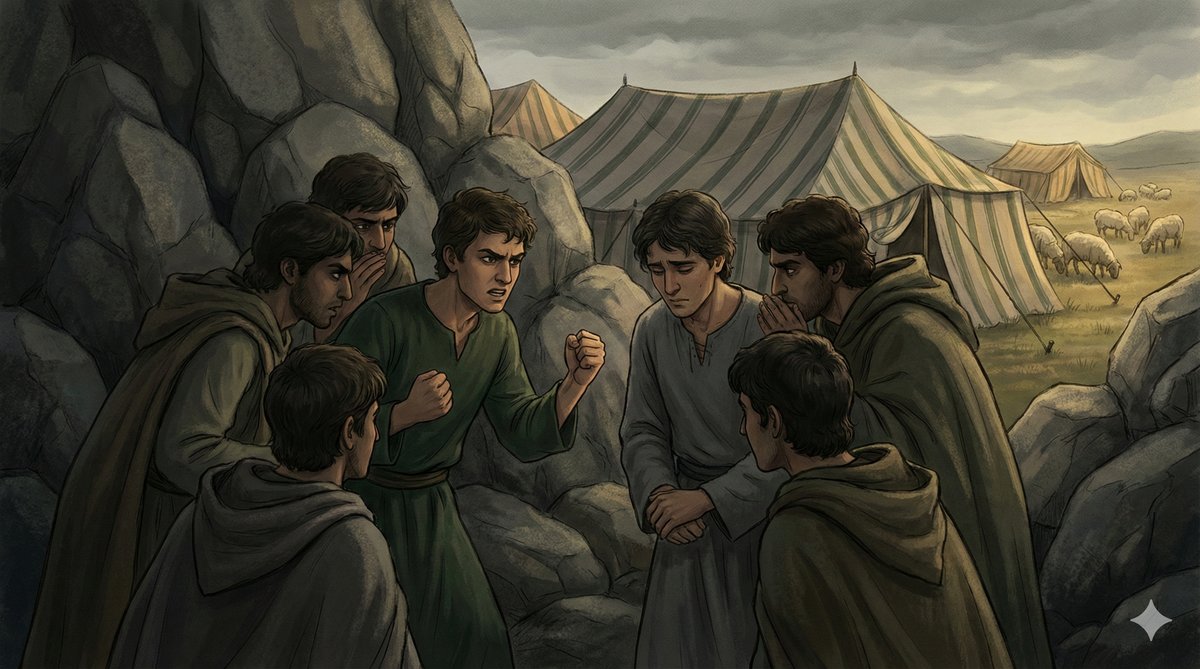
"Indeed, Yusuf and his brother are more beloved to our father than we," they whispered among themselves, "even though we are a strong group. Indeed, our father is clearly in error."
The discussions grew darker. Some of the brothers said: "Kill Yusuf or cast him out to some distant land, so that your father's attention will be only for you, and you can be righteous people after that."
One of the brothers, who still had some mercy in his heart, spoke up: "Do not kill Yusuf, but if you must do something, throw him into the bottom of a well. Some caravan of travelers will pick him up."
They settled on this plan. Now they needed to get Yusuf away from their father's watchful eyes.
"O our father," they said, putting on their most innocent voices, "why do you not trust us with Yusuf? We are indeed his well-wishers. Send him with us tomorrow so he may enjoy himself and play, and we will surely guard him."
Yaqub's heart was uneasy. "It saddens me that you should take him," he said, "and I fear that a wolf may eat him while you are not paying attention."
"If a wolf should eat him while we are a strong group," they replied, "then indeed we would be losers."
And so Yaqub, against his deepest instincts, let his beloved son go with his brothers.
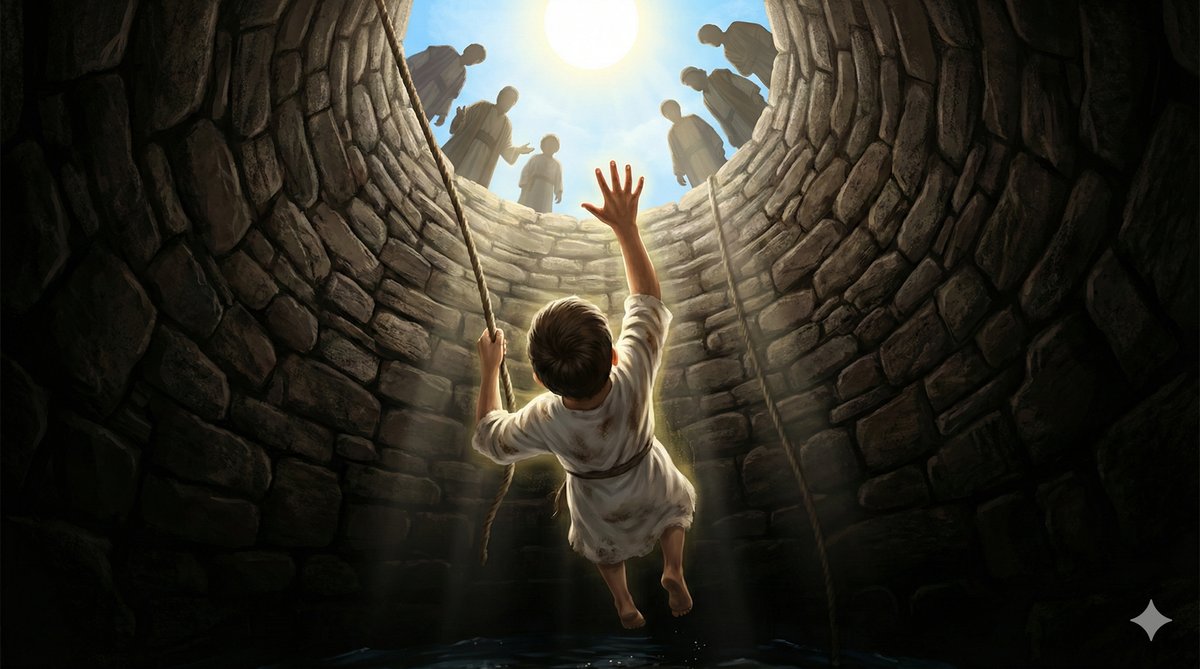
Imagine young Yusuf walking happily with his older brothers, excited to spend the day with them, not knowing what they were planning. Imagine his confusion when their faces changed, when their hands grabbed him, when they dragged him toward the dark mouth of an empty well. Imagine his voice calling out, his small hands reaching up, and then the fall into the cold, dark water at the bottom.
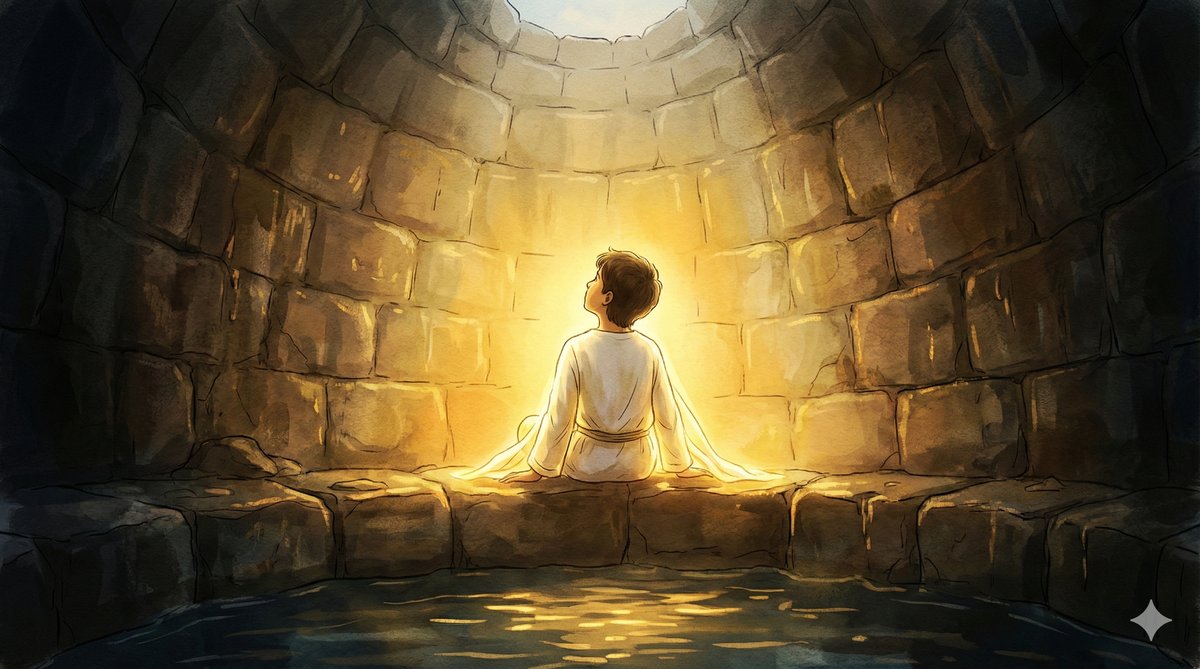
But even in that darkness, Yusuf was not alone. The Quran tells us something remarkable: as Yusuf fell into the well, Allah sent him a revelation. "You will surely inform them about this affair of theirs while they do not perceive." In his darkest moment, alone, cold, betrayed by his own family, Allah whispered to this young boy's heart: you will survive this. You will rise. And one day, you will face them again, and they will not even recognize you.
The brothers returned home that night. They had taken Yusuf's shirt and stained it with false blood, the blood of a sheep, not of their brother. They came to their father weeping.
"O our father," they cried, making their voices tremble, "we went racing and left Yusuf with our belongings, and a wolf ate him. But you would not believe us, even if we were truthful."
Yaqub took the shirt. He looked at it. And he knew. A father knows. The shirt was covered in blood, but it was not torn. If a wolf had truly attacked Yusuf, the shirt would be in shreds. The blood told one story, but the fabric told another.
Yaqub said: "Rather, your souls have enticed you to something. So patience is most beautiful. And Allah is the one sought for help against what you describe."
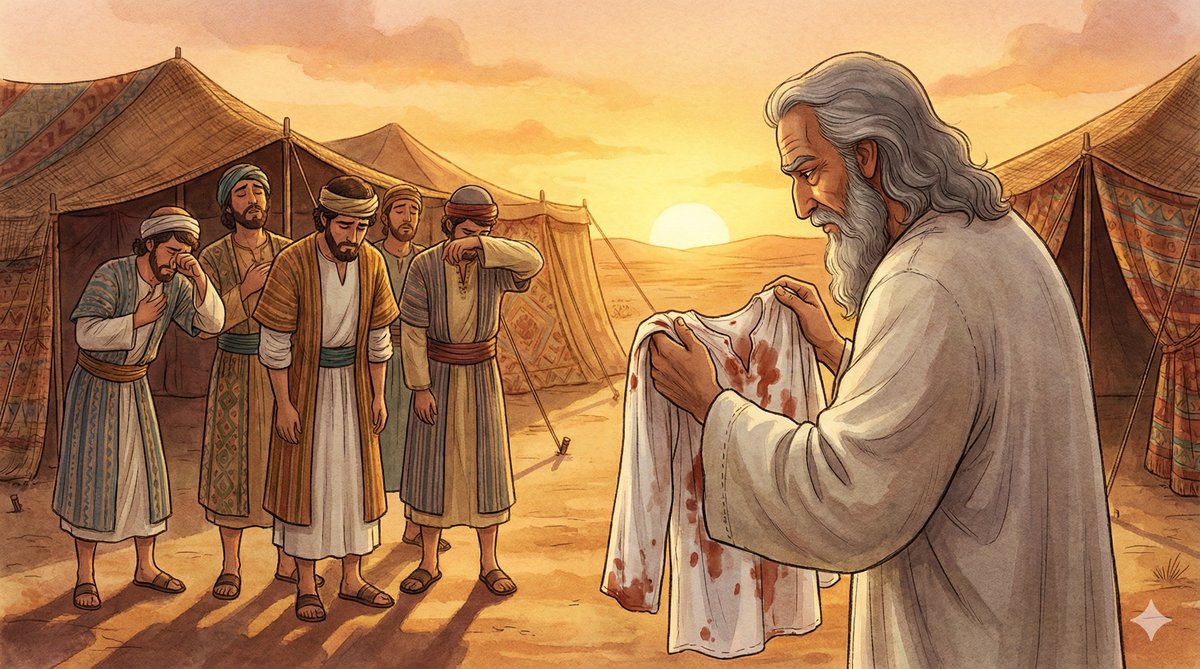
"Sabr jameel." Beautiful patience. Not the patience of giving up, but the patience of a heart that trusts Allah even as it breaks. Yaqub did not curse his sons. He did not collapse in despair. He held the pain inside his chest like a burning coal and said, "I will be patient, and I will ask Allah for help."
Meanwhile, Yusuf sat in the bottom of the well, a boy alone in the dark, waiting. He did not know for how long. He did not know who would come. But he had Allah's promise in his heart, and that was enough.
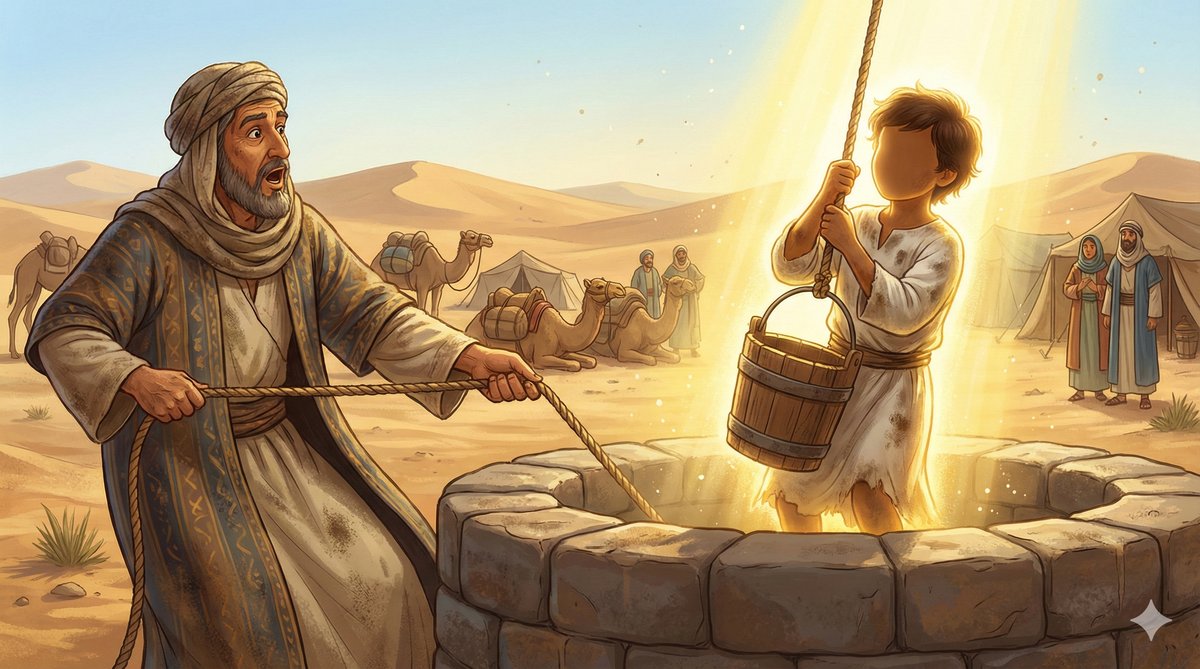
Then, a caravan passed by the well. A man lowered his bucket to draw water, and when he pulled it up, there, clinging to the rope, was a boy with the most beautiful face he had ever seen.
"Good news!" the man called to his companions. "Here is a boy!"
They pulled Yusuf out and, seeing his beauty and health, decided he was too valuable to simply set free. They took him with them to Egypt and sold him in the marketplace like a piece of merchandise, "for a few coins, a miserable price."
And so began Yusuf's long journey through the land of Egypt, a journey that would take him from slavery to prison to a palace, a journey we will continue tomorrow night.
In the Shia tradition, the story of Yusuf holds a special place. Just as Yusuf was wronged by those closest to him, the Ahlul Bayt (AS) were wronged by those within the Muslim community. Just as Yusuf's brothers could not stop his rise, no amount of opposition could extinguish the light of the Prophet's family. And just as Yusuf trusted in Allah through every trial, the Imams (AS) demonstrated that same sabr jameel, that same beautiful patience, through every hardship.
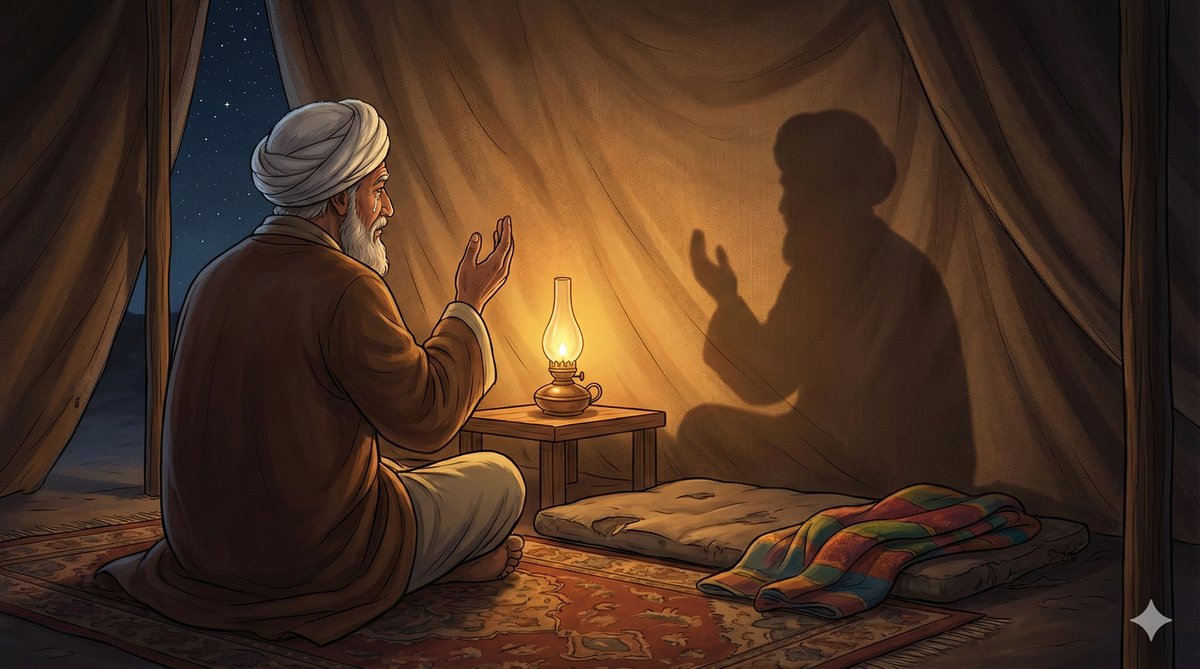
Imam al-Sadiq (AS) said about this surah: "Whoever recites Surah Yusuf every day or every night, Allah will raise them on the Day of Judgment with beauty like the beauty of Yusuf."
Tonight, hold this in your heart: when the world is dark and unfair, when the people who should protect you let you down, Allah does not forget you. He is with you in the well. He is with you in the darkness. And His plan for you is greater than anything you can imagine from where you stand right now.
Key Verse
Fa lamma dhahabu bihi wa ajma'u an yaj'aluhu fi ghayabatil jubb, wa awhayna ilayhi la tunabbi'annahum bi amrihim hadha wa hum la yash'urun "So when they took him and agreed to put him into the bottom of the well, We inspired to him: You will surely inform them about this affair of theirs while they do not perceive." Yusuf (12:15)
Reflection Questions
- Why do you think Yaqub told Yusuf not to share his dream with his brothers? What does this teach us about being careful with good news?
- Even in the darkest moment, when Yusuf was thrown into the well, Allah sent him comfort. Have you ever felt alone but then realized you were not?
- What does "sabr jameel" (beautiful patience) mean to you? How is it different from just waiting?
Did you know that Allah calls this story "the best of stories" in the whole Quran? Not just a good story. The very best! Tonight we start telling it, and tomorrow night we will hear the rest. So listen carefully.
A long, long time ago, in a green and beautiful land far from Egypt, there lived a prophet named Yaqub, peace be upon him. Yaqub had twelve sons. That is a very big family!
Among all twelve brothers, there was one special boy. His name was Yusuf, peace be upon him, and he was still very young. Yusuf had a kind heart and something special about him that everyone could see.
One morning, Yusuf woke up feeling so excited that he jumped right out of bed. He had seen the most wonderful dream! He ran to find his father as fast as his legs could carry him.
"Father! Father!" Yusuf called out. "I had the most amazing dream! I saw eleven stars in the sky, and the sun, and the moon, and they were all bowing down to me!"
Now, Yaqub was a prophet himself. He was very wise. When he heard this dream, his eyes opened wide. He knew right away that this was not just any dream. This was a special message from Allah! It meant that one day, little Yusuf would grow up to be a very, very important person. So important that even his own family would bow before him one day.
But Yaqub also felt worried. He took Yusuf's small hands in his big hands and spoke very softly and gently. "My dear, dear son," he said, "please do not tell your brothers about this dream. If they hear about it, they might feel jealous. And jealousy can make people do bad things. Shaytan uses jealousy to make people hurt each other."
Why was Yaqub so worried about the brothers? Because some of them were already feeling jealous. They thought their father loved Yusuf and his little brother Binyamin more than he loved them. This angry feeling had been growing in their hearts like a prickly thorn, getting sharper and more painful every single day.
The brothers would whisper to each other when no one was listening. "Father always talks about Yusuf. He always wants to be near Yusuf. It is not fair! What about us?"
The more they talked, the angrier they got. Their jealousy grew bigger and bigger, like a fire that gets hotter every time you add wood. Some of them even said terrible things.
"Let us get rid of Yusuf!" they said. "If he is gone, Father will pay attention to us instead."
But one brother was a little kinder than the others. He said, "No, no, do not hurt him! If you must do something, just put him in an old well. Some travelers will come by and find him and take him far away."
So the brothers made a very awful plan. They needed to get Yusuf away from their father.
They went to Yaqub and put on their biggest, most innocent smiles. "Dear Father," they said in their sweetest voices, "please let Yusuf come with us tomorrow! We want to play with him and have fun. We promise we will take very good care of him."
Yaqub did not feel right about it. His heart was telling him something was wrong. "I am worried," he said. "What if a wolf comes and eats him while you are not watching?"
"A wolf?" the brothers said, trying not to laugh. "There are so many of us! If a wolf could eat him while all of us big, strong brothers are standing right there, then we would be the most foolish brothers in the whole world!"
So Yaqub said yes. He let Yusuf go, even though deep down in his heart, something was telling him to keep his son close.
Little Yusuf walked happily with his big brothers. He was skipping and smiling, so excited to spend the whole day playing with them! He did not know about their terrible plan. He thought they all loved him. He thought this was going to be the best day ever.
But then something awful happened. The brothers stopped smiling. Their faces changed. They got mean and rough. They grabbed Yusuf and pulled him toward a deep, dark, empty well. Yusuf was so scared! He cried and called out. His little hands tried to hold on. But they pushed him down into the darkness.
Down, down, down Yusuf fell, into the cold, dark bottom of the well. He was all alone. It was so dark he could not see his own hand. It was cold and scary. He could hear the drip, drip, drip of water.
But here comes the most beautiful part of the whole story. Listen carefully!
Even in that dark, scary, lonely place, Yusuf was NOT alone. Allah was right there with him! And Allah sent a special message straight into Yusuf's heart. Allah told him: "Do not be afraid, Yusuf. You are going to be okay. One day, a long time from now, you will see your brothers again. You will tell them what they did. And they will not even know it is you!"
Can you imagine? In the darkest, scariest moment of his life, Allah whispered hope into Yusuf's heart. Allah was saying, "I see you. I have not forgotten you. I have a wonderful plan for your life."
Now, the brothers had to go home and face their father. But what would they say? They took Yusuf's shirt and put animal blood on it, the blood of a sheep, not Yusuf's blood. They needed it to look like something bad had happened. Then they walked home, pretending to cry and making their voices shake.
"Oh Father!" they wailed, rubbing their eyes. "Something terrible happened! We were running and playing, and we left Yusuf with our things. When we came back, a wolf had eaten him! Look at his shirt!"
They held up the bloody shirt. But Yaqub was very wise. He looked at that shirt so carefully. Yes, it was covered in blood. But wait. It was not ripped! It was not torn at all! If a real wolf had attacked Yusuf, the shirt would be ripped to pieces! You cannot eat someone without tearing their clothes. The brothers had forgotten about that little detail.
Yaqub knew his sons were not telling the truth. His heart was breaking into tiny pieces. But do you know what he did? He did not scream. He did not yell. He did not throw things. Instead, he said something very, very brave and very, very beautiful.
He said: "No. Your story is not true. But I will have beautiful patience. I will ask Allah to help me."
Beautiful patience. In Arabic, it is called "sabr jameel." It is a very special kind of patience. It does not mean you stop being sad. Oh no, Yaqub was very, very sad! It means that even when your heart is hurting so much, you still trust Allah. You take all your sadness and you give it to Allah, because He is the only one who can truly help you.
Back at the well, little Yusuf was still sitting in the dark, waiting. He did not know how long he would have to wait. He did not know who would come. But he held on to Allah's promise in his heart, and that made him brave.
Then one day, a group of travelers came walking near the well. They needed water for their long journey. A man took his bucket and dropped it down into the well on a long rope. When he pulled the bucket back up, he got the biggest surprise of his life! There, holding on to the rope, was a boy!
"Everyone, come look!" the man shouted to his friends. "There is a boy in the well!"
They pulled Yusuf out into the warm sunshine. When they saw how beautiful and healthy he was, they decided to take him with them to Egypt. But sadly, when they got to Egypt, they sold him like he was a thing and not a person. They sold him for just a few small coins. That was not right at all.
And that is how little Yusuf's big journey began. From his father's warm home, to a dark cold well, and then all the way to the faraway land of Egypt. But Allah was with him every single step. Tomorrow night, we will find out what happened to Yusuf in Egypt!
In our tradition, the story of Yusuf is very important. Just like Yusuf was hurt by people in his own family, the Ahlul Bayt, the blessed family of Prophet Muhammad, peace be upon him and his family, were also treated badly by people who should have been kind to them. And just like Yusuf, the Ahlul Bayt showed beautiful patience. Imam al-Sadiq (AS) said about this story: "Whoever reads about Yusuf every day, Allah will raise them on the Day of Judgment with beauty like the beauty of Yusuf." And the Ahlul Bayt always taught us to be like Yusuf: hold on to Allah's promise and never, ever give up hope.
So tonight, remember this: when everything feels dark and scary, like you are sitting at the bottom of a deep, dark well, Allah is right there with you. He never forgets about you. Not even for one second. And His plan for you is good, even when you cannot see it yet.
Key Verse
"Wa awhayna ilayhi la tunabbi'annahum bi amrihim hadha wa hum la yash'uroon." "And We told Yusuf: One day you will tell them about what they did, and they will not even realize it is you." -- Yusuf (12:15)
Let's Talk About It
- The brothers were jealous of Yusuf. What did their jealousy make them do? Why is jealousy such a dangerous feeling?
- Even in the dark well, Allah sent a message to Yusuf's heart. When do you feel like Allah is close to you?
- Yaqub said he would have "beautiful patience." What do you think beautiful patience means? How is it different from just sitting and waiting?