The Reunion: Yusuf Forgives His Brothers
The power of forgiveness; Allah's plan unfolds
Remember the dream? Eleven stars, the sun, and the moon, all bowing to a single light. Tonight, that dream comes true. But the road to its fulfillment passes through tears, through blindness, and through the most powerful act of forgiveness in the entire Quran. Tonight we finish the best of stories.
The seven years of abundance had passed. Egypt's granaries were full, just as Yusuf (AS) had planned. Now the famine arrived, and it did not only strike Egypt. It spread across the lands, reaching the very valleys where Yaqub (AS) and his remaining sons lived.
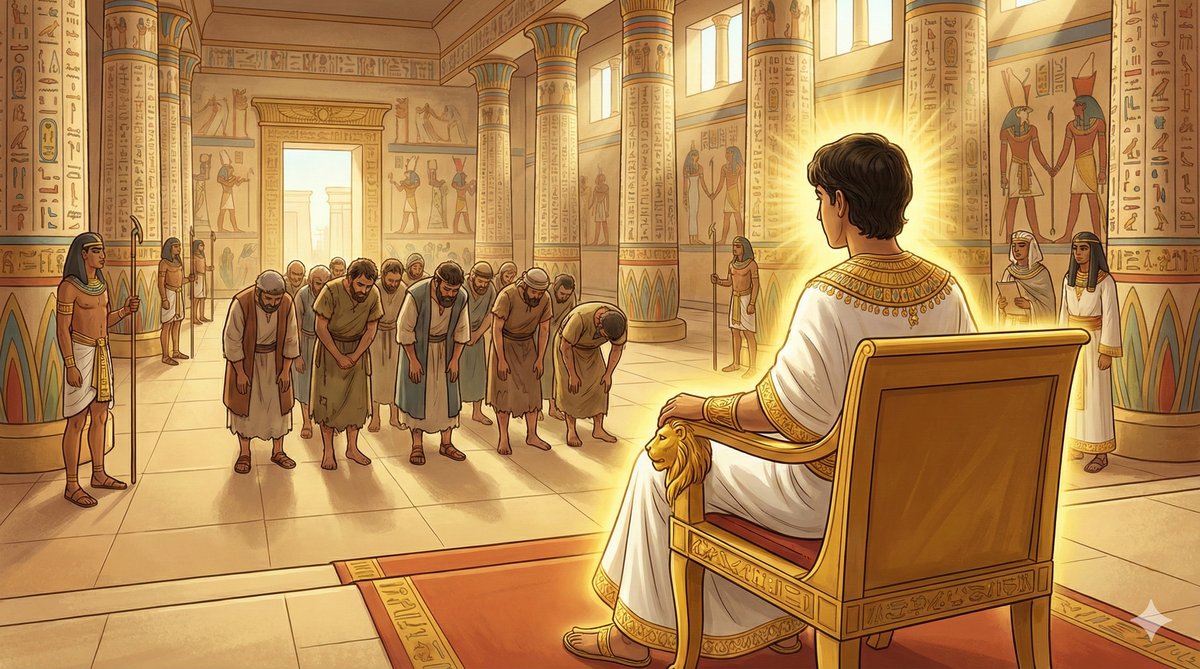
The brothers traveled to Egypt to buy grain, like hundreds of other families from distant lands. They entered a grand hall and stood before the powerful minister who controlled the food supply. They bowed. They asked for provisions.
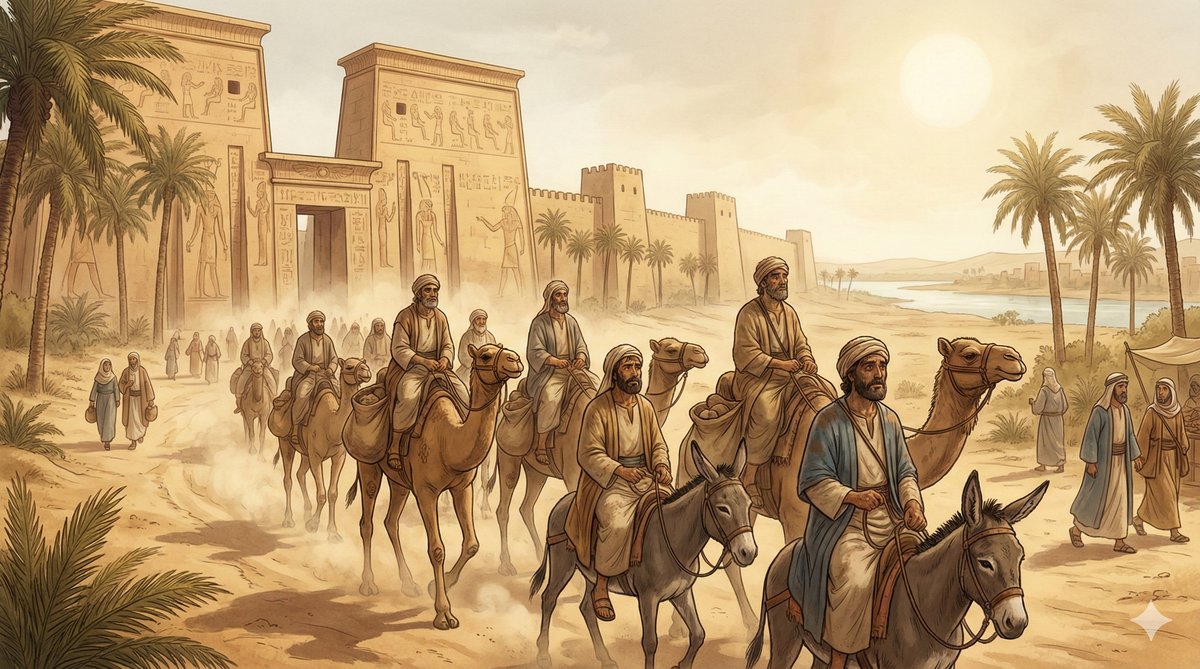
The minister looked at them. He recognized them instantly: his own brothers, the same ones who had thrown him into a well years ago. But they did not recognize him. The young boy they had discarded was now a man of authority, dressed in Egyptian finery, speaking the language of the palace. They saw a stranger.
Yusuf gave them their grain but made one condition: "Bring me your youngest brother, the one you say stayed with your father. If you do not bring him, there shall be no grain for you, and do not approach me."
They returned home and begged their father to send Binyamin, the only full brother Yusuf had. Yaqub's heart clenched. "Shall I trust you with him," he said quietly, "as I once trusted you with his brother before?"
The pain in those words could fill an ocean.
But the family needed grain, and the brothers swore an oath. Yaqub let Binyamin go, saying, "May Allah protect him." He told his sons to enter the city through different gates, not out of strategy alone, but as a father who had learned that the world is unpredictable and caution is a form of prayer.
When the brothers returned to Egypt with Binyamin, Yusuf took his younger brother aside privately and whispered: "I am your brother. Do not be distressed by what they used to do." Binyamin's eyes widened. His lost brother, alive, powerful, standing before him. But Yusuf had a plan. He was not ready to reveal himself to everyone. Not yet.
Yusuf placed a golden measuring cup in Binyamin's saddlebag without anyone seeing. When the brothers set off to leave, a royal announcer cried out: "O caravan! Indeed, you are thieves!" The brothers protested. But when the bags were searched, the cup was found with Binyamin.
The brothers were horrified. Under Egyptian law, Binyamin would have to stay. They tried to negotiate, offering one of themselves in his place, but the law was clear. They returned home without Binyamin, just as they had once returned without Yusuf.
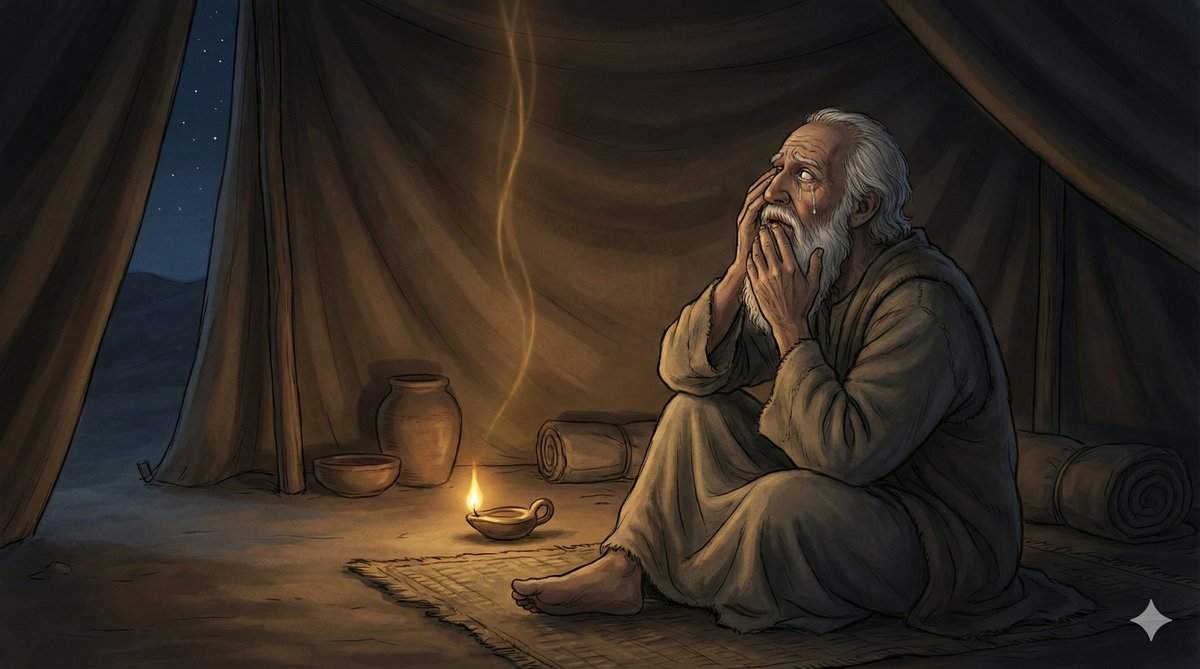
When Yaqub heard the news, his grief, buried for years but never gone, erupted. He wept so much and so long that his eyes turned white. He went blind from crying. His sons said, "By Allah, you will not cease remembering Yusuf until you become fatally ill."
And Yaqub said words that should be carved into the heart of every person who has ever suffered: "I only complain of my suffering and my grief to Allah, and I know from Allah that which you do not know."
He did not complain to people. He did not blame his sons, though they deserved blame. He took his broken heart and placed it before the only One who could mend it. This is the highest form of tawakkul, trust in Allah: not the absence of pain, but the direction of that pain.
The famine continued. The brothers had no choice but to return to Egypt once more. This time they arrived broken and humble. "O Aziz," they said, "adversity has touched us and our family. We have brought only a small amount of goods, so give us full measure and be charitable to us."
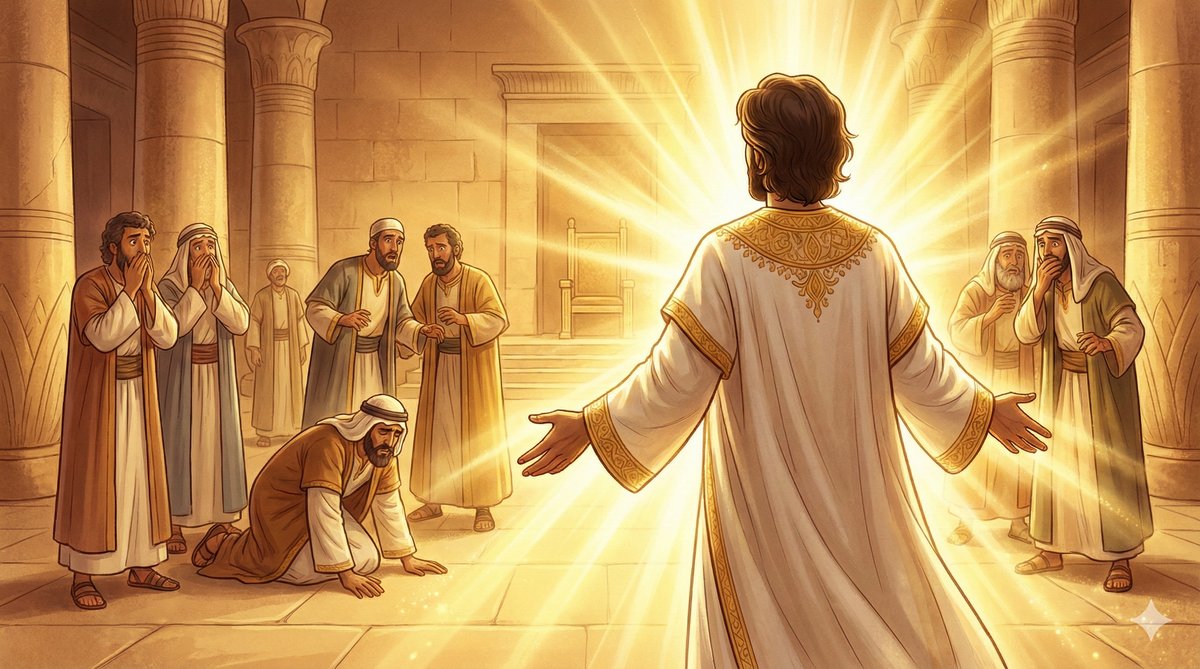
And then Yusuf could hold it no longer.
"Do you know what you did with Yusuf and his brother, when you were ignorant?"
The brothers froze. Their blood went cold. How could this Egyptian minister know about Yusuf?
"Are you indeed Yusuf?" they whispered, hardly daring to believe.
"I am Yusuf, and this is my brother. Allah has certainly been gracious to us. Indeed, whoever fears Allah and is patient, then Allah does not allow the reward of the doers of good to be lost."
They dropped their heads. The guilt of years crashed over them. Every lie, every cruel moment, every night their father cried, all of it was right there in the room.
Then came the words that make this story immortal:
"La tathreeba alaykumul yawm."
"No blame upon you today. May Allah forgive you, and He is the most merciful of the merciful."
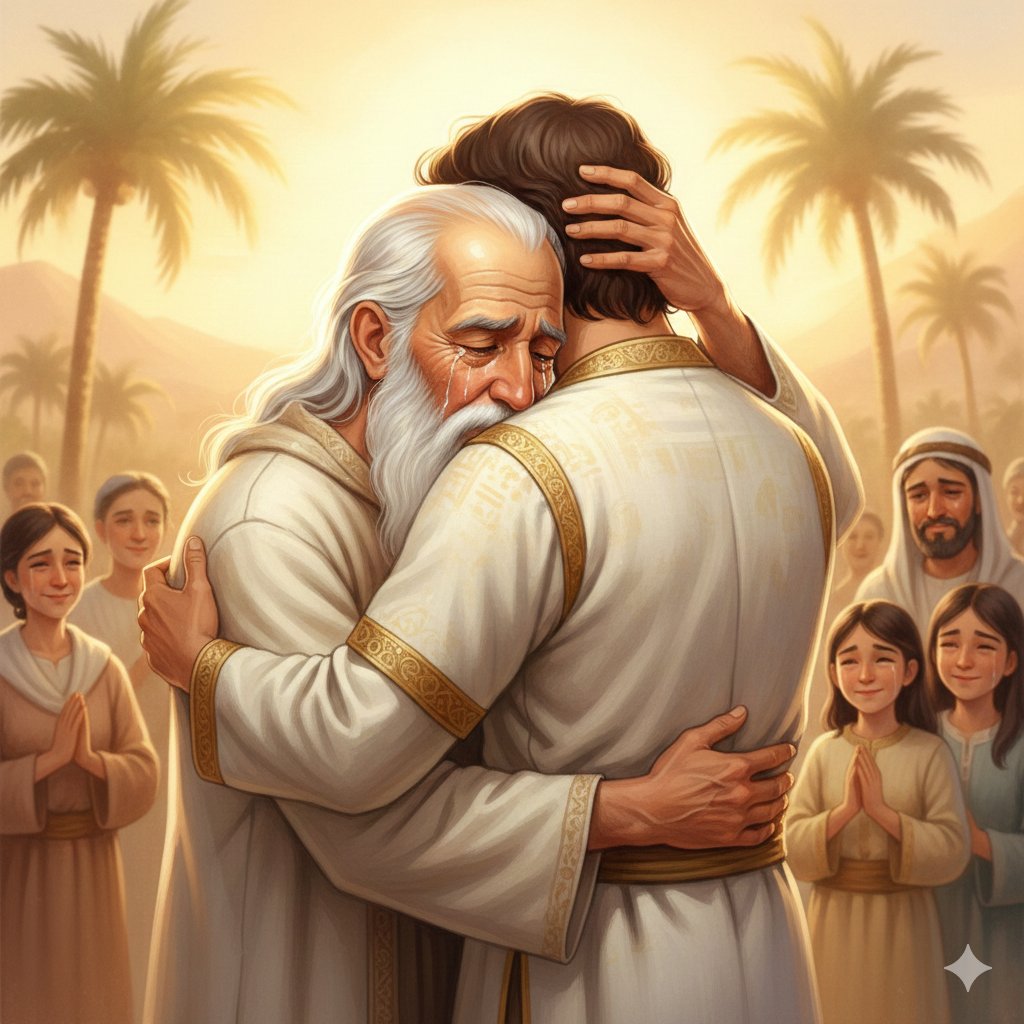
No blame. After everything they did, after the well, the lies, the blood on the shirt, the years of his father's blindness, Yusuf chose forgiveness. Not because they deserved it. Not because they asked for it well enough. But because forgiveness was what his heart, filled with Allah, wanted to give.
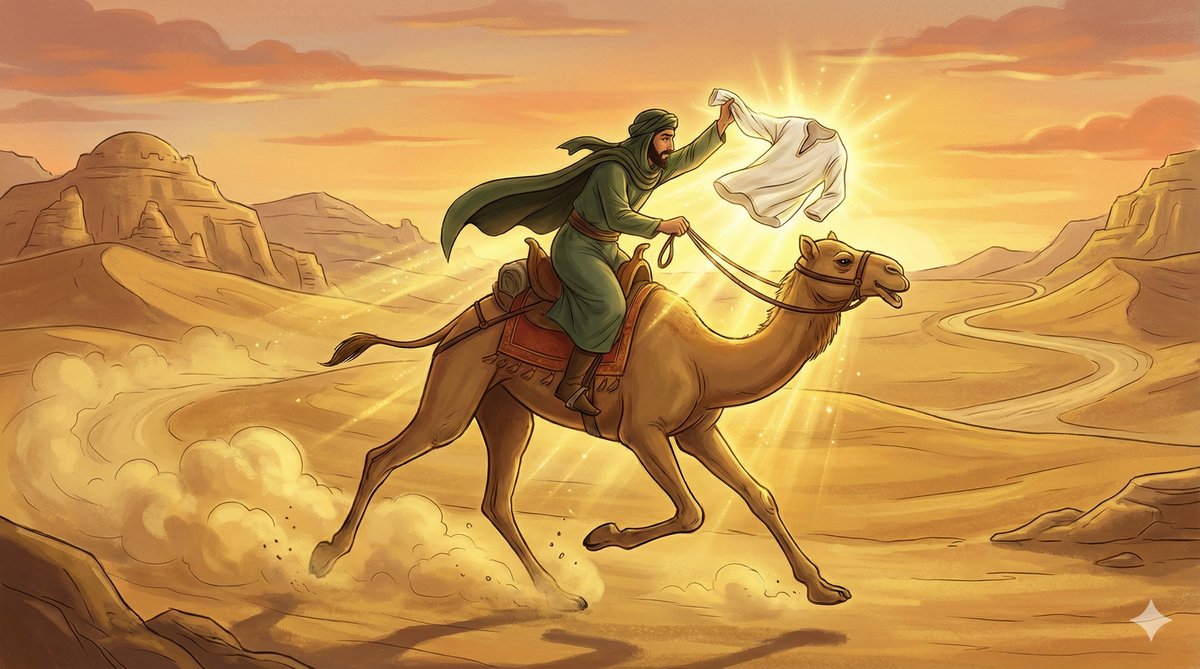
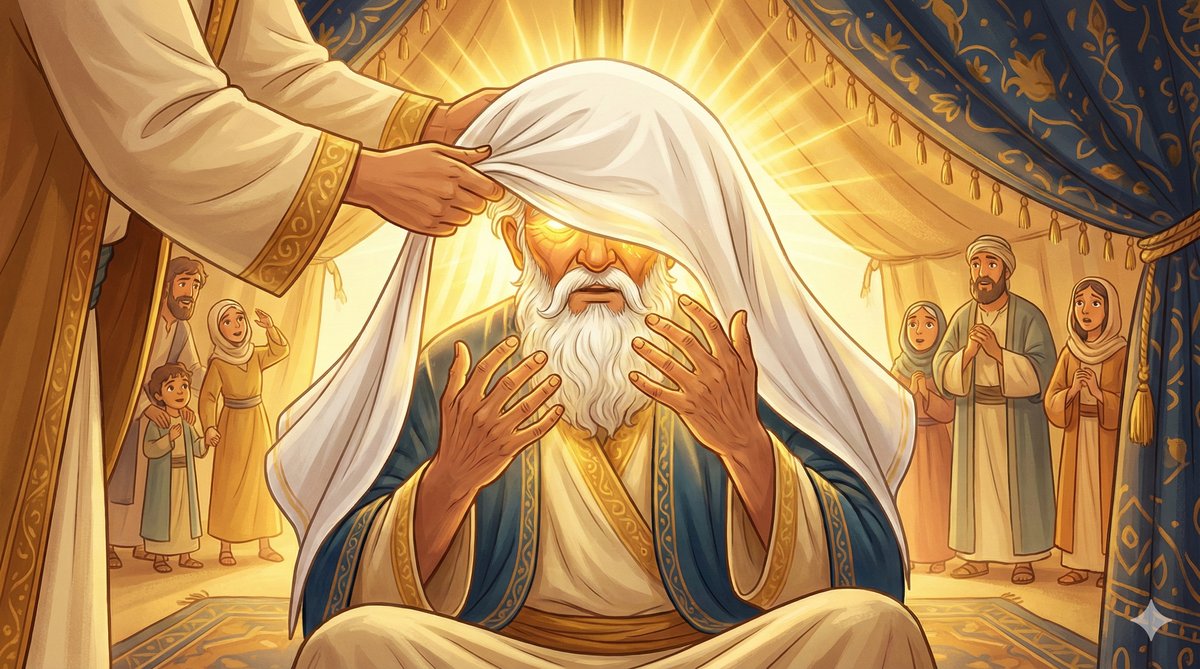
He took off his own shirt and said: "Take this shirt of mine and cast it over my father's face; he will recover his sight. And bring me your family, all of them."
When the caravan carrying the shirt reached the edge of their homeland, something beautiful happened. Old Yaqub, blind and frail, lifted his head and said: "Indeed, I find the scent of Yusuf, even if you think me senile."
Those around him shook their heads sadly. But when the shirt was placed over his face, his sight returned. Light flooded back into eyes that had been darkened by grief. And with the light came the truth.
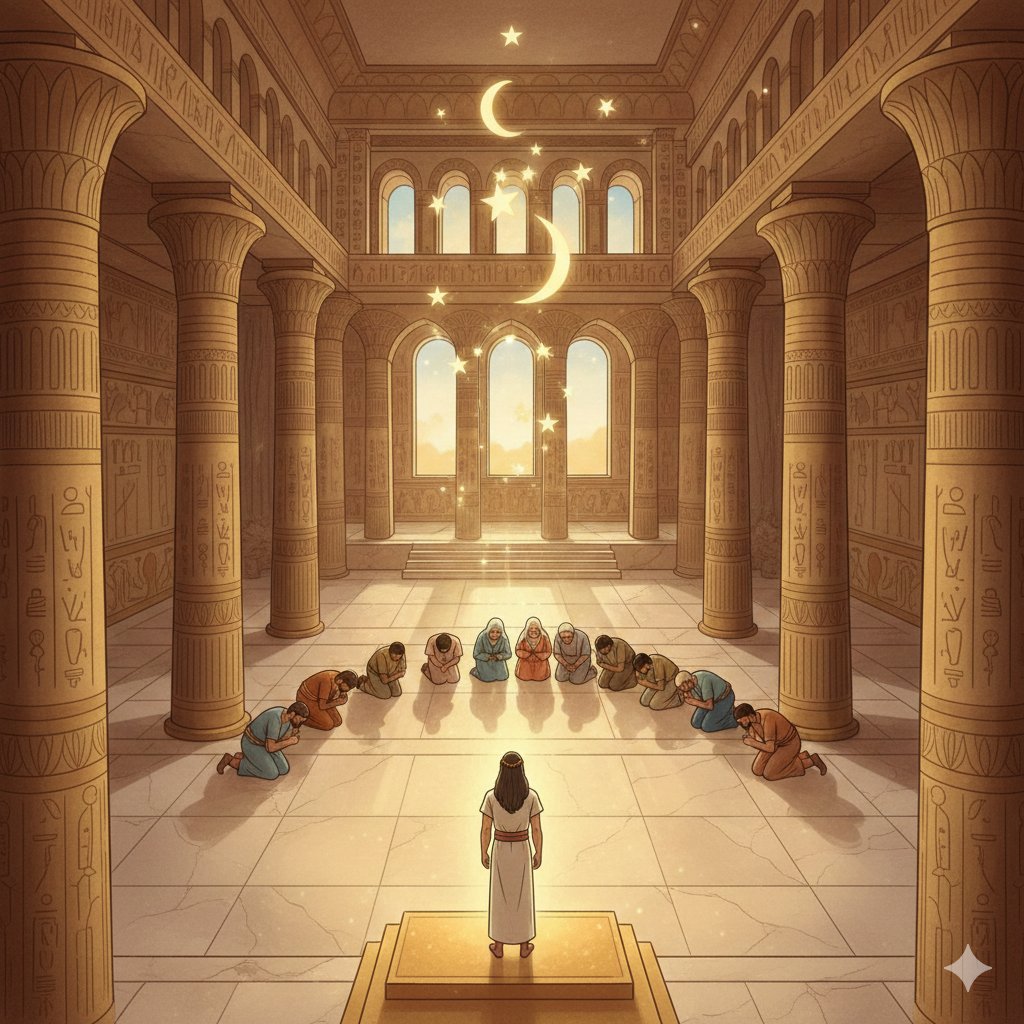
The entire family traveled to Egypt. When they entered the court of Yusuf, they fell into prostration before him: father, mother, and eleven brothers. And Yusuf said: "O my father, this is the interpretation of my dream from before. My Lord has made it reality."
Eleven stars. The sun. The moon. All bowing.
Then Yusuf raised his hands to heaven and spoke the prayer that closes the most beautiful story ever told: "My Lord, You have given me authority and taught me the interpretation of dreams. Creator of the heavens and earth, You are my protector in this world and in the Hereafter. Cause me to die as a Muslim and join me with the righteous."
In the Shia tradition, the forgiveness of Yusuf is seen as one of the highest human virtues. Imam Ali (AS) said: "The best deed of a great person is to forgive and forget." And the Ahlul Bayt consistently demonstrated this: even when wronged by those who should have been their allies, they chose mercy when they had the power to choose revenge.
Imam Husayn (AS) on the day of Ashura, even as he was surrounded by enemies, offered them water from his camp and called them to truth rather than cursing them. This is the legacy of Yusuf's forgiveness: that true strength is not in punishment, but in the courage to say, "No blame upon you today."
Key Verse
Qala la tathreeba alaykumul yawm, yaghfirullahu lakum, wa huwa arhamur rahimeen "He said: No blame upon you today. May Allah forgive you, and He is the most merciful of the merciful." Yusuf (12:92)
Reflection Questions
- Yusuf had the power to punish his brothers, but instead he forgave them. What does his example teach us about what true strength looks like?
- Yaqub said, "I only complain of my suffering to Allah." What does it mean to bring your pain to Allah instead of complaining to people?
- The dream that young Yusuf had at the very beginning came true many years later. What does this teach us about being patient with Allah's plan, even when we cannot see the outcome?
Do you remember the dream that little Yusuf had a long time ago? He dreamed that eleven stars, the sun, and the moon were all bowing down to him. Tonight, we find out how that dream finally came true. But first, there will be tears, and sadness, and then the most beautiful forgiveness you have ever heard about. Are you ready? Here we go!
Many years had passed since Yusuf's brothers threw him into that dark well. Yusuf was not a little boy anymore. He had grown up to be a very important man in the land of Egypt. Allah had blessed him with wisdom, and the king put him in charge of all the food in the whole country. That is a very, very big job!
Yusuf had a very smart plan. During seven good years, when the farms grew lots of food, Yusuf saved the extra grain in big buildings. He filled them to the top! And that was a very good thing. Because after those seven good years, the rain stopped. The plants stopped growing. People everywhere got hungry. This is called a famine, when there is not enough food for anyone.
The famine spread far away, all the way to where Yusuf's father Yaqub (AS) lived with his other sons. Their food was running out. They were getting very hungry.
So Yaqub told his sons, "Go to Egypt. I have heard there is a wise man there who has food."
The brothers walked a long way to Egypt. They came into a grand hall with tall pillars. And there, sitting on a big chair, was the man in charge of all the food. They bowed down and asked, "Please, sir, may we have some grain for our family?"
Now, here is the amazing part. That man was Yusuf! Their own brother! But they did not know it was him. The last time they saw Yusuf, he was a small boy crying in a well. Now he was a tall, grown man wearing Egyptian clothes and speaking the Egyptian language. They had no idea.
But Yusuf knew exactly who they were. He remembered everything, the dark well, being so scared, calling out for help. But he did not say anything. Not yet.
Yusuf gave them their grain, but he said, "I see you are many brothers. But you are missing one. Next time you come, you must bring your youngest brother. If you do not bring him, I will not give you any more food."
He was talking about Binyamin, his little brother. Binyamin and Yusuf had the same mother, and Yusuf missed him so, so much.
The brothers went home and told their father what the Egyptian man said. Yaqub's heart felt so heavy, like a big stone sitting on his chest. "You want me to trust you with another son?" he said sadly. "I trusted you with Yusuf before, and you know what happened."
Oh, those words were so full of pain. But the family needed food badly. The brothers promised and promised, "We will take care of Binyamin, we promise!" So Yaqub kissed Binyamin on the forehead and prayed, "May Allah protect you, my dear son."
When the brothers came back to Egypt with Binyamin, Yusuf was so happy! He pulled Binyamin aside to a quiet corner where no one else could hear. And he whispered, "Binyamin, it is me! I am your brother Yusuf! I am alive!"
Binyamin's eyes went wide. His mouth fell open. He could hardly believe it. "Yusuf? Is it really you?"
"Yes, it is me," Yusuf smiled, and a tear rolled down his cheek. "But do not tell the others yet. I need to see something first."
Yusuf had a secret plan. He put a special golden cup into Binyamin's bag when no one was looking. Then, when the brothers were getting ready to leave, a royal guard shouted, "Stop! Someone has stolen the king's golden cup!"
The brothers said, "We did not steal anything!" But when the guards searched all the bags, one by one, they found the golden cup in Binyamin's bag. Now, by the law of Egypt, Binyamin had to stay behind. The other brothers went home without him, just like long ago they had gone home without Yusuf.
When old Yaqub heard the news, his heart broke all over again. He cried and cried and cried. He had already lost Yusuf years ago. Now he had lost Binyamin too. He cried so much, for so many days, that his eyes turned cloudy and white. He could not see anymore. He became blind from all the crying.
His sons said, "Father, please stop crying about Yusuf. You are going to make yourself very sick."
But Yaqub said something so beautiful and so important. He said, "I only tell my sadness to Allah. I only cry to Him. And I know something from Allah that you do not know."
Yaqub did not complain to other people. When his heart was broken, he talked to Allah about it. And that is something we can all learn. When you feel sad or scared, you can always talk to Allah. He is always listening.
Time passed, and the famine got worse and worse. The brothers had to go back to Egypt one more time. This time, they walked in looking tired, sad, and hungry. They said, "Please, sir, we are so poor now. We have almost nothing. Please be kind to us."
And that is when Yusuf could not hold his secret inside anymore. His eyes filled up with tears, and he said, "Do you know what you did to Yusuf and his brother a long time ago?"
The brothers looked at each other. Their faces turned white. Their knees started shaking. How did this Egyptian man know about Yusuf? How did he know their secret?
"Are... are you... Yusuf?" they whispered.
"Yes! I am Yusuf! And this is my brother Binyamin right here. Allah has been so good to us."
The brothers felt terrible. They felt so ashamed. They remembered everything bad they had done. The well. The lies. The fake blood on the shirt. Their poor father crying for all those years. All of that guilt came falling on them like a big, heavy wave.
But then Yusuf said the most wonderful, most beautiful words. Listen carefully, because these words are so, so special:
"La tathreeba alaykumul yawm."
That means: "No blame on you today."
Can you believe it? After everything they did to him, after the dark well and all those years alone, Yusuf forgave them! He did not yell. He did not punish them. He said, "I forgive you. And I pray that Allah forgives you too. He is the most kind and merciful."
That is what true strength looks like. Yusuf was powerful. He was in charge of all of Egypt's food. He could have locked his brothers up. He could have sent them away hungry. But instead, he chose kindness. He chose love. He chose forgiveness. And that takes more courage than being angry ever could.
Then Yusuf took off his own shirt and said, "Take this shirt to my father. Put it on his face, and by Allah's power, he will be able to see again! Then bring my whole family here to live with me!"
The brothers hurried home as fast as they could. And when they got close, something truly amazing happened. Old Yaqub, who was blind and could not see anything, lifted his head and sniffed the air. "I can smell Yusuf!" he said. "I can smell my son!"
The people around him shook their heads sadly. They thought the old man was imagining things. But then the brothers arrived and placed Yusuf's shirt gently on their father's face. And suddenly, Yaqub opened his eyes wide. He could see! Light came flooding back! He could see the blue sky, the green trees, and his sons' faces. Allah had healed his eyes!
The whole family packed up everything and traveled to Egypt. When they walked into Yusuf's beautiful hall, they all bowed down before him. Father, mother, and all eleven brothers. Just like in the dream! And Yusuf looked up with tears of happiness and said, "Oh my father! This is my dream come true! The eleven stars, the sun, and the moon, all bowing! Allah made it happen, just like He promised!"
Then Yusuf raised his hands to the sky and prayed: "My Lord, You gave me so much. You taught me so many things. You made everything work out. Please let me always be good, and let me be with the good people in the end."
In our tradition, the family of Prophet Muhammad, peace be upon him and his family, called the Ahlul Bayt, taught us the same lesson as Yusuf. Imam Ali (AS) said, "The best thing a great person can do is to forgive and forget." And Imam Husayn (AS), even on the saddest day called Ashura, when people were being very mean to him, still offered them water and was kind to them. He was gentle even when others were not. That is the way of the Ahlul Bayt.
So tonight, remember Yusuf's story. When someone hurts you, and you have the power to hurt them back, the bravest and strongest thing you can do is to say, "I forgive you." That is not being weak. That is being the strongest person in the room. Just like Yusuf. Just like the Ahlul Bayt.
Key Verse
"Qala la tathreeba alaykumul yawm, yaghfirullahu lakum, wa huwa arhamur rahimeen." "He said: No blame on you today. May Allah forgive you. He is the most kind and merciful." -- Yusuf (12:92)
Let's Talk About It
- Yusuf forgave his brothers even though they were very mean to him. Can you think of a time when you forgave someone? How did it make your heart feel?
- Yaqub talked to Allah when he was sad instead of complaining to people. What do you like to say to Allah when you feel sad or scared?
- Yusuf's dream came true after many, many years of waiting. What does that teach us about being patient and trusting Allah's plan?