The Whale and the Darkness: Prophet Yunus's Repentance
Repentance; never losing hope in Allah's mercy
Tonight's story is about what happens when even a prophet makes a mistake, and about a prayer so powerful that it can reach Allah from inside the belly of a whale at the bottom of a dark sea. It is the story of Yunus (AS), and it carries a message that every person, no matter how far they feel they have fallen, needs to hear: it is never too late to turn back to Allah.
Yunus was sent as a prophet to the people of Nineveh, a great city that had turned away from Allah. Its people were steeped in sin and idol worship. Yunus delivered the message faithfully. He called them to truth. He warned them of the consequences of their actions. Day after day, he spoke. And day after day, they refused.
Yunus grew frustrated. He had done his duty. They were not listening. So he made a decision: he left. He walked away from the city and its stubborn people. He went to the sea and boarded a ship, heading anywhere but Nineveh.

But here is the lesson, and it is a difficult one: leaving was not his choice to make. Allah had assigned him to those people, and Yunus departed without Allah's permission. He was not running from danger. He was running from a task that felt hopeless. And that distinction matters.
A storm arose at sea. The waves grew monstrous. The ship tossed and rolled. The sailors, experienced men of the ocean, knew that something was wrong. They believed that someone on the ship had brought this calamity. They drew lots to determine who it was. The lot fell on Yunus. They drew again. It fell on Yunus again. And a third time, the same.

Yunus understood. He had run from his responsibility, and the consequences had followed him onto the sea. He told the sailors to throw him into the water. They hesitated. He was a good man; they could see that. But the storm raged, and finally, they cast him into the waves.
The moment Yunus hit the water, the storm stopped. But Yunus did not sink to a simple death. Allah had prepared something else. From the depths of the dark sea, an enormous whale rose and swallowed Yunus whole.
Imagine that darkness. Not the darkness of a room where you can still feel the walls. Not the darkness of night where stars might appear. This was the darkness of the inside of a whale, inside the depths of the ocean, at the bottom of the sea. Three darknesses layered upon each other: the darkness of the whale's belly, the darkness of the deep sea, and the darkness of the night. Total, absolute, suffocating darkness.
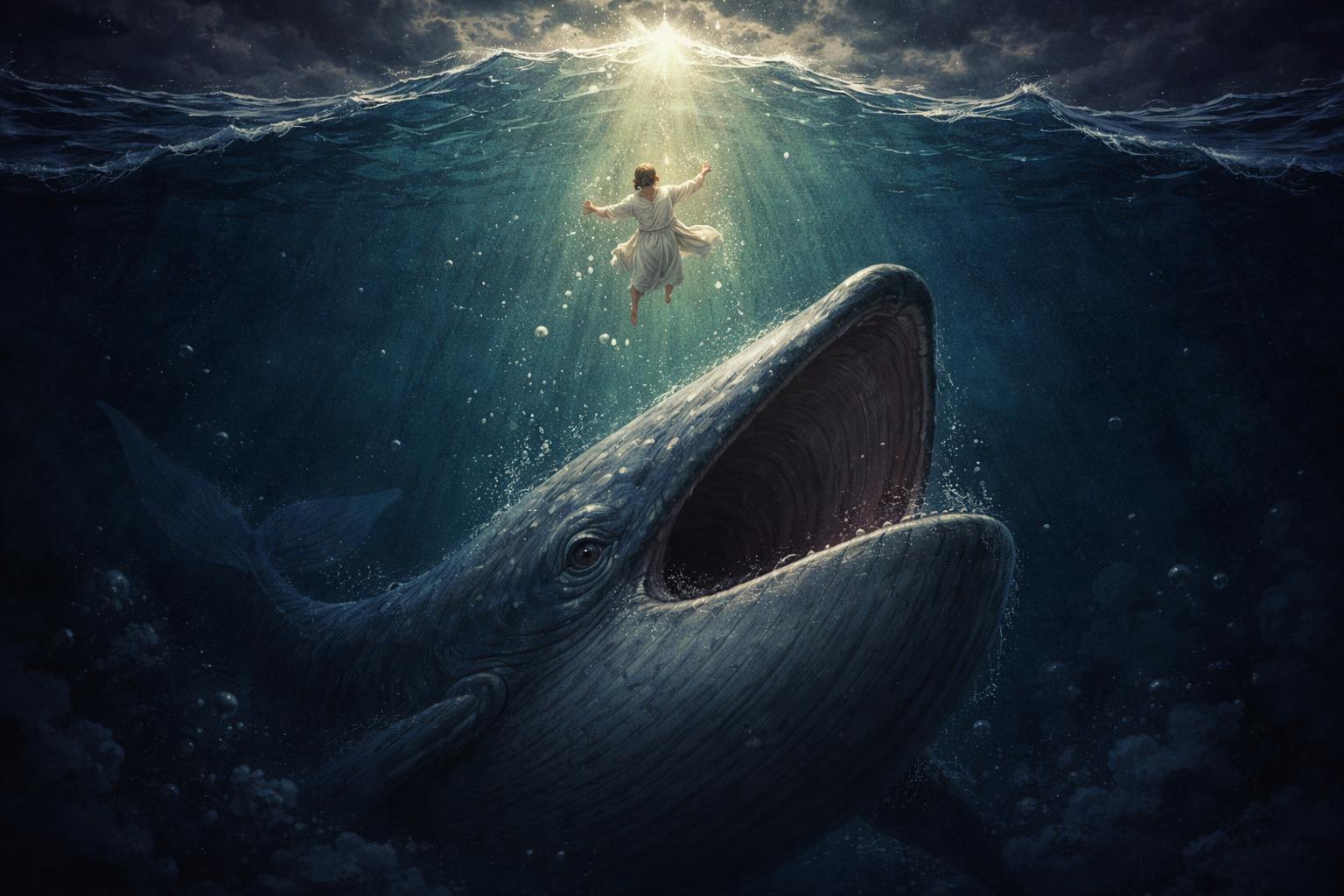
In that darkness, Yunus could have given up. He could have decided that it was too late, that he was too far gone, that no prayer could reach Allah from inside the belly of a creature at the bottom of the ocean. Many people, when they feel they have made a terrible mistake, give up at that very point. They tell themselves: "I have gone too far. Allah will not forgive me now."
But Yunus did not give up. In the deepest darkness he had ever known, he raised his voice, or perhaps just his heart, and spoke the words that would become one of the most beloved prayers in all of Islam:
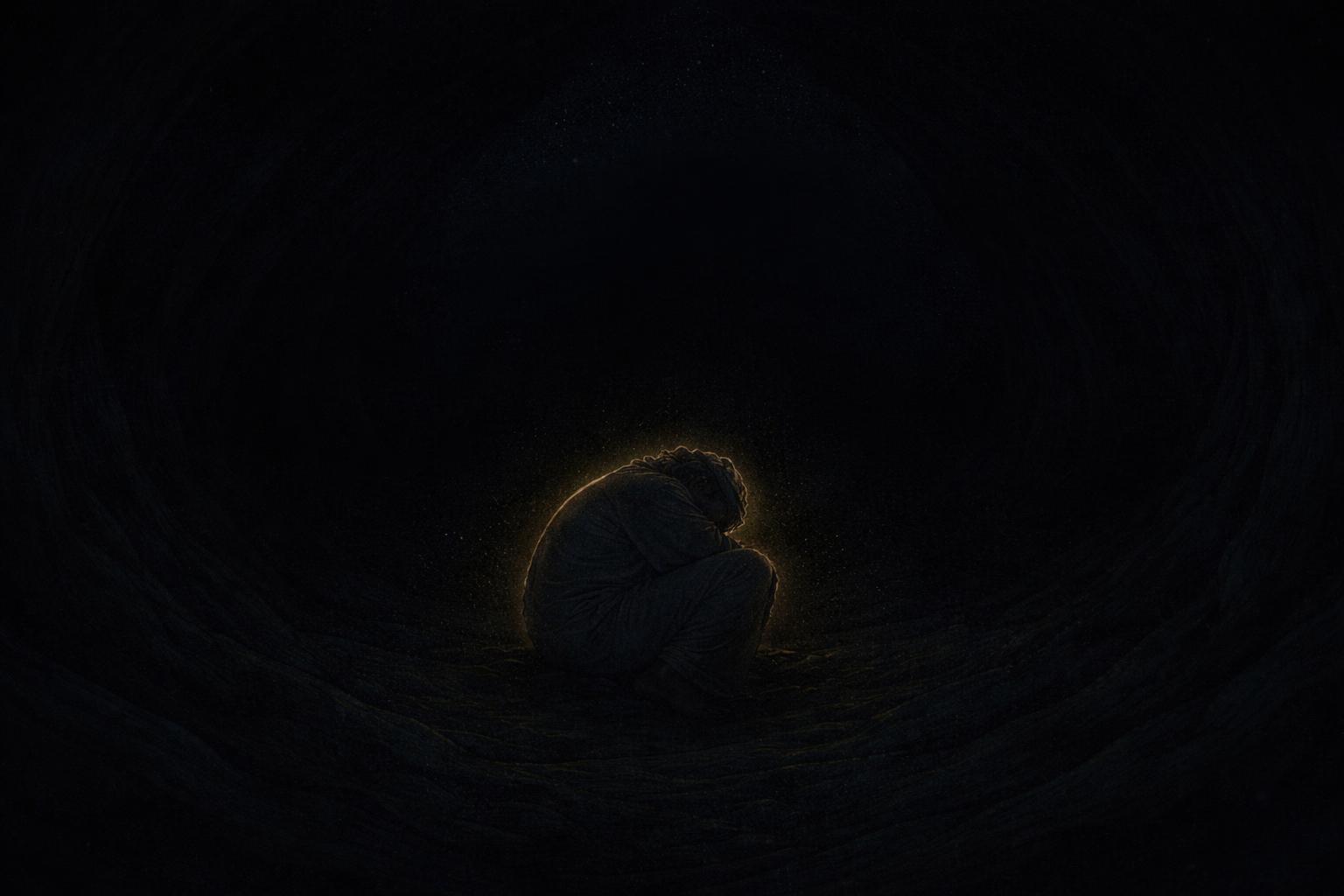
"La ilaha illa Anta, Subhanaka, inni kuntu minaz-zhalimeen."
"There is no deity except You. Glory be to You. Indeed, I have been of the wrongdoers."
He did not make excuses. He did not blame the people of Nineveh. He did not say, "But I tried my best." He acknowledged his error with total honesty: "I have been of the wrongdoers." And he turned to the only One who could save him.

The Quran says: "So We responded to him and saved him from the distress. And thus do We save the believers."
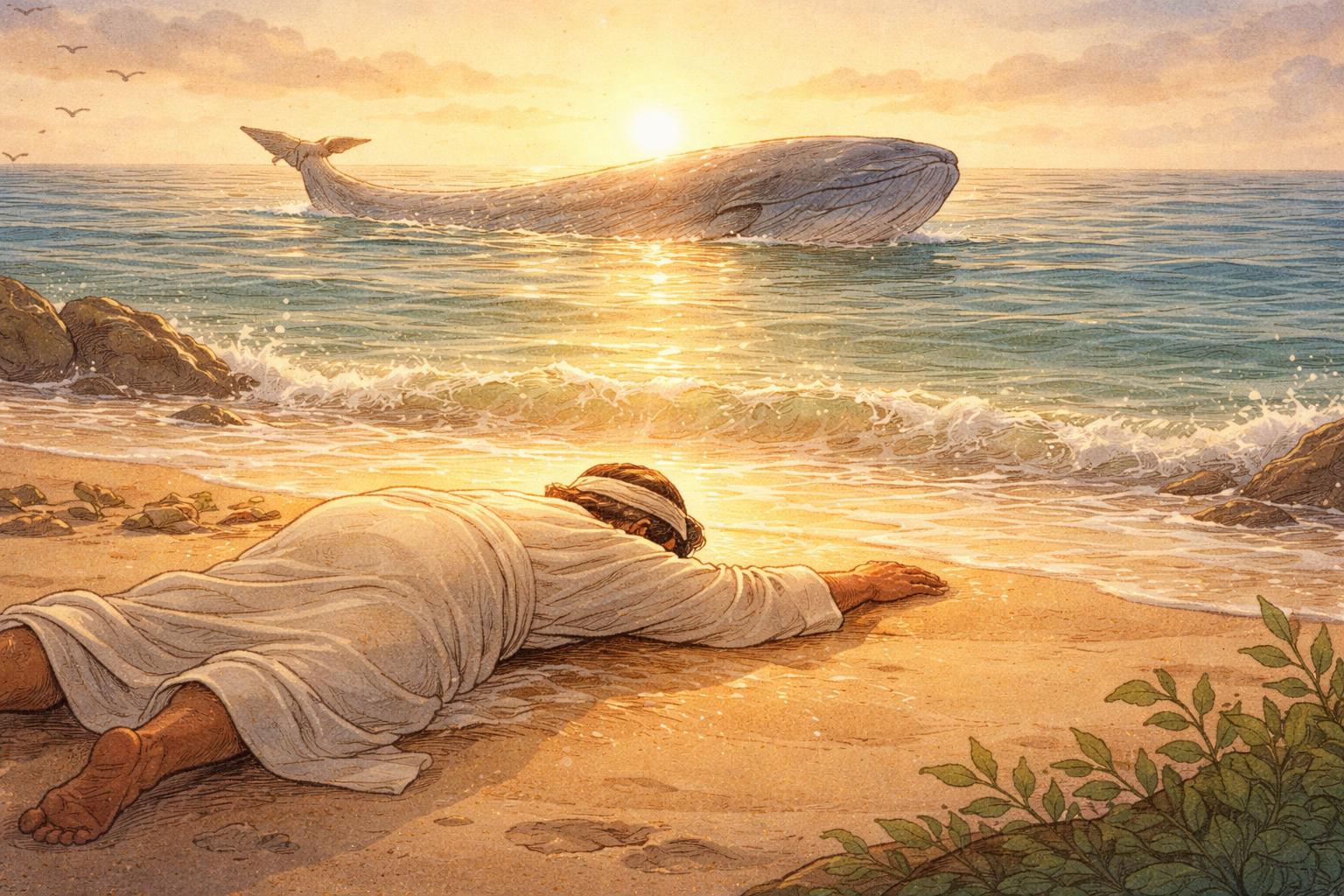
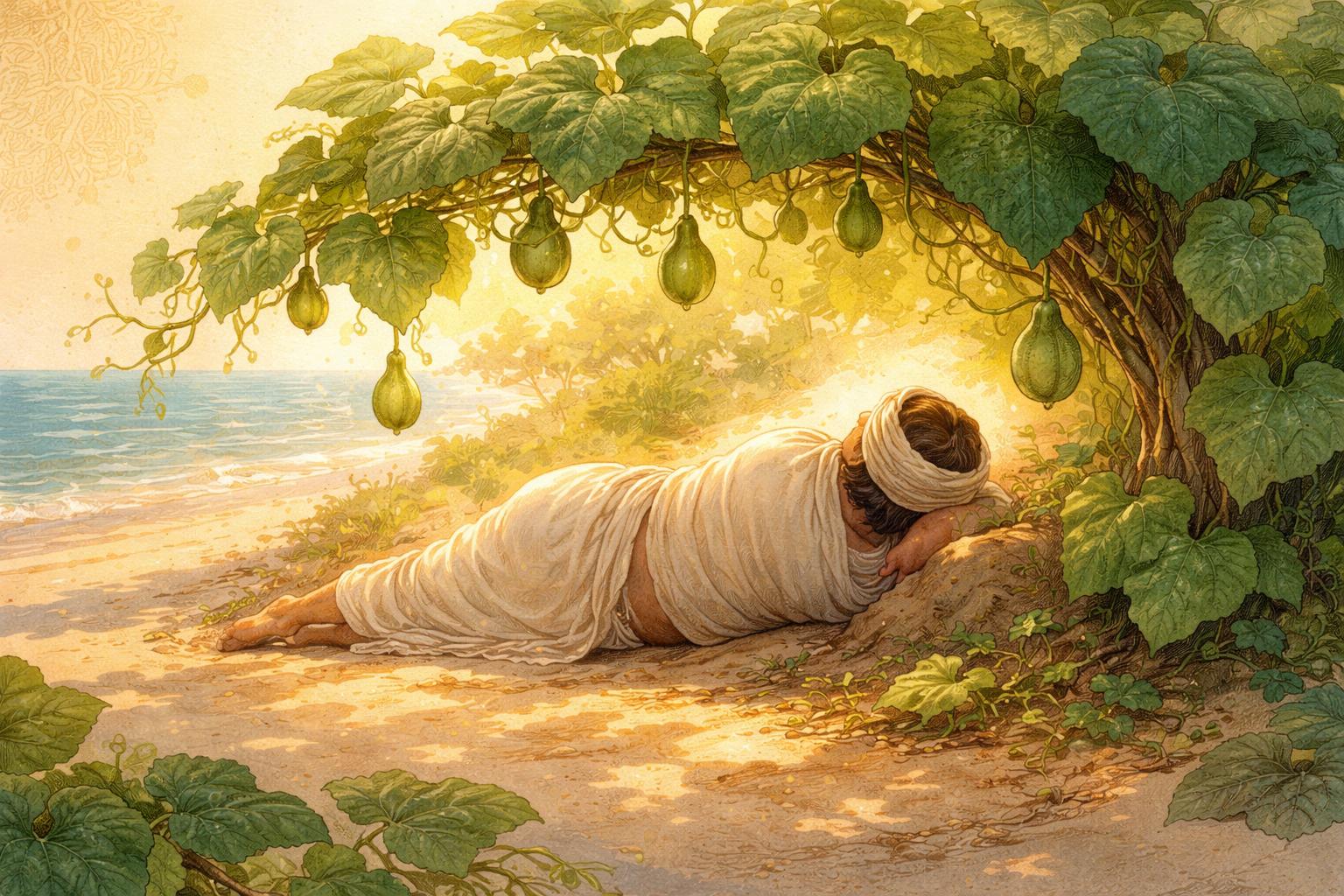
The whale rose to the surface and cast Yunus out onto the shore. He was weak, exhausted, his skin sensitive from the whale's interior. The Quran describes it beautifully: "And We caused to grow over him a gourd vine." Allah did not just save him; He nursed him back to health. A shading vine grew over his bare body to protect him from the sun while he recovered.
And then Allah sent him back to Nineveh. But this time, the ending was different. The people of Nineveh, perhaps shaken by the signs they had seen, perhaps finally ready to hear the message they had been rejecting, repented. The entire city turned to Allah and believed. The Quran mentions them as the only community that believed as a whole and was saved from punishment as a result.
The Prophet Muhammad (PBUH) said about Yunus's prayer: "The supplication of Dhun-Nun which he made when he was in the belly of the whale: 'La ilaha illa Anta, Subhanaka, inni kuntu minaz-zhalimeen.' No Muslim ever prays to his Lord with these words for anything but that Allah will answer him."
Think about that. This prayer, born in the darkest place imaginable, has the power to reach Allah from anywhere. From a hospital bed. From a moment of shame. From a place where you feel no one can hear you. If it can reach Allah from inside a whale at the bottom of the sea, it can reach Him from wherever you are.
In the Shia tradition, the story of Yunus is a powerful reminder that tawbah, repentance, is always available. Imam Ali (AS) said: "The most helpless of all people is the one who is unable to pray." And Imam al-Sajjad (AS), the fourth Imam, composed entire collections of supplications, the Sahifah al-Sajjadiyyah, teaching that no matter how heavy your burden of mistakes, the door of Allah's mercy is always open.
The only person who cannot be forgiven is the one who does not ask for forgiveness. And Yunus, from the belly of a whale, taught the whole world how to ask.

Key Verse
Fa nada fiz-zhulumati an la ilaha illa Anta, Subhanaka, inni kuntu minaz-zhalimeen. Fastajabna lahu wa najjaynahu minal ghamm, wa kadhalika nunjil mu'mineen "And he called out within the darknesses: There is no deity except You. Glory be to You. Indeed, I have been of the wrongdoers. So We responded to him and saved him from the distress. And thus do We save the believers." Al-Anbiya (21:87-88)
Reflection Questions
- Yunus left his people because he felt frustrated and hopeless. Have you ever wanted to give up on something hard? What is the difference between taking a break and running away from a responsibility?
- Even from inside the belly of a whale, Yunus's prayer reached Allah. What does this teach us about how close Allah always is, no matter where we are?
- The dua of Yunus begins with acknowledging his own mistake: "I have been of the wrongdoers." Why is it important to be honest with ourselves about our errors when we ask for forgiveness?
Tonight, we are going to hear about what happens when even a prophet makes a mistake. And we are going to learn about a prayer so powerful that it reached Allah from the darkest place you can imagine: the belly of a giant whale at the bottom of the sea! This is the story of Prophet Yunus (AS), and it has a message for everyone: it is never, ever too late to say sorry to Allah. Are you ready? Let's go.
A long time ago, there was a big city called Nineveh. The people there had forgotten about Allah. They were not praying. They were not being kind to each other. They worshipped statues made of stone and wood instead of the one true Allah who made everything.
So Allah chose a good man named Yunus to go to Nineveh and teach the people. Yunus went to the city and said, "Please, listen to me! There is only one God, and that is Allah! Stop doing bad things. Start being good."
But the people would not listen. They turned their backs on him. They covered their ears. They laughed at him. Day after day, week after week, Yunus kept trying. But nobody changed. Yunus began to feel very frustrated. He felt tired and sad. He thought, "What is the point? They are never going to listen."
So Yunus made a decision. He decided to leave. He walked away from Nineveh and went to the seashore. There, he found a ship that was about to sail across the water, and he climbed on board. He just wanted to get as far away from those stubborn people as possible.
But here is the thing: leaving was not Yunus's choice to make. Allah had given him a job, and Yunus left before Allah said he could go. He was not running from danger. He was running from a job that felt too hard. Sometimes when things are difficult, we want to quit. But we have to keep trying, especially when Allah has given us something important to do.
The ship sailed out onto the big, blue sea. At first, the waves rocked the boat gently. But then, dark clouds gathered. The wind blew harder and harder. A terrible storm came roaring across the water! The waves got huge, as tall as houses! The ship went up and down, rocking and tipping. Water splashed over the sides.
The sailors said to each other, "Someone on this ship has done something wrong. That is why this storm is here." They picked names to find out who it was. The name they pulled was Yunus. They tried again. Yunus. A third time. Yunus again!
Yunus understood. He knew this storm was because of him. He had run away from his job, and the storm had followed him. He told the sailors, "It is me. Throw me into the water, and the storm will stop."
The sailors did not want to do it. Yunus was a good man, and they could tell. They liked him. They tried to row the ship to shore instead, but the waves were too strong. Finally, they had no choice. They gently put Yunus into the raging, churning water.
The moment Yunus touched the sea, the storm stopped. Just like that! The clouds parted, the wind calmed down, and the waves became smooth again. The sailors looked at each other in wonder.
But what about Yunus? He was in the water now, sinking down, down, down into the dark sea. And then, from the deep, deep water below, something enormous came swimming up toward him. Something with a mouth as wide as a cave. A giant whale! It opened its huge jaws and swallowed Yunus whole. GULP! Yunus went sliding down into the belly of the whale.
Imagine where Yunus was now. He was inside the belly of a whale. It was completely dark. He could not see his own hand in front of his face. The whale was deep under the water, at the bottom of the sea, where no sunlight reaches. And it was nighttime too.
Three kinds of darkness, all on top of each other: the darkness inside the whale, the darkness of the deep ocean, and the darkness of the night. The darkest, loneliest place anyone has ever been.
If you were there, you might think, "Nobody can hear me. It is too late." Many people, when they make a big mistake, feel this way. They think, "I have gone too far. Allah will never forgive me now."
But Yunus did not give up. Even inside the belly of a whale at the bottom of the ocean, Yunus remembered that Allah is everywhere. Allah can hear you no matter where you are. There is no place too dark or too far for Allah to reach.
So, from deep inside that whale, Yunus opened his mouth and prayed. He said the most beautiful words:
"La ilaha illa Anta, Subhanaka, inni kuntu minaz-zhalimeen."
Do you know what that means? It means: "There is no God but You, Allah. You are perfect and wonderful. And I am sorry. I was wrong."
Listen to how honest Yunus was. He did not say, "But the people of Nineveh would not listen to me, so it was their fault!" He did not make excuses. He did not blame anyone else. He looked into his own heart and said, "I was wrong." That takes real courage. Saying sorry and really meaning it is one of the bravest things you can ever do.
And guess what happened? Allah heard him! From inside a whale, at the bottom of the ocean, in the middle of the darkest night, Allah heard every single word of Yunus's prayer. Because Allah always hears. Always.
The Quran tells us, "So We answered him and saved him from his trouble. And that is how We save the believers."
Allah told the whale to swim up to the top of the water. The whale rose to the surface and opened its big mouth and gently placed Yunus on the sandy shore. Plop! There he was, lying on the warm sand, safe and alive.
But Yunus was very weak. He was tired. His skin was tender and sore from being inside the whale. He needed to rest and heal. So Allah, who is so kind and caring, made a special plant grow right over Yunus. It was a big, leafy gourd vine that spread out like an umbrella, giving Yunus cool shade from the hot sun. Allah did not just save Yunus. He took care of him gently, like a loving parent taking care of a sick child.
When Yunus was strong again, Allah sent him back to Nineveh. "Go back to your people, Yunus. Try again."
And this time, something amazing happened. When Yunus went back to the city and told the people about Allah, they listened! Every single person in the whole city believed! Men, women, old people, young people, children, everyone! The whole city of Nineveh turned to Allah and was saved. In the entire Quran, Nineveh is the only city where every single person believed together. All of them!
Our Prophet Muhammad (peace be upon him and his family) told us something special about this prayer. He said that whenever anyone prays with the words of Yunus, Allah will answer them. That means this prayer works for all of us! If it can reach Allah from inside a whale at the bottom of the sea, it can reach Allah from your bedroom, from your school, from anywhere.
In our Shia tradition, the Ahlul Bayt teach us that it is never too late to come back to Allah. Imam Ali (AS) said, "The most helpless person is the one who cannot even pray." As long as you can open your heart and say, "Allah, I am sorry," you are never truly lost. And Imam al-Sajjad (AS), the fourth Imam, wrote the most beautiful prayers called the Sahifah al-Sajjadiyyah. He taught us that no matter how many mistakes you have made, the door to Allah's mercy is always open. It never closes. It is always there, waiting for you.
The only person who cannot be forgiven is the person who never asks. And Yunus, from the belly of a whale, taught the whole world how to ask.
So tonight, before you close your eyes, try saying Yunus's prayer: "La ilaha illa Anta, Subhanaka, inni kuntu minaz-zhalimeen." No matter where you are, Allah is listening. He is closer than you can imagine.
Key Verse
Fa nada fiz-zhulumati an la ilaha illa Anta, Subhanaka, inni kuntu minaz-zhalimeen. Fastajabna lahu wa najjaynahu minal ghamm, wa kadhalika nunjil mu'mineen "He called out in the darkness: There is no God but You. You are perfect. I was wrong. So We answered him and saved him from his trouble. That is how We save the believers." -- Surah Al-Anbiya (21:87-88)
Let's Talk About It
- Yunus prayed to Allah from inside a whale, and Allah still heard him! What does that tell you about how close Allah always is, no matter where you are?
- When Yunus made a mistake, he said, "I was wrong," and he did not blame anyone else. Why is it important to be honest about our mistakes when we say sorry?
- Can you learn Yunus's special prayer? Try saying it tonight: "La ilaha illa Anta, Subhanaka, inni kuntu minaz-zhalimeen." How does it feel to say those words?