The Patient Prophet: Ayyub's Unwavering Faith
Patience in suffering; Allah tests those He loves
Have you ever had a really bad day? Maybe you were sick, or you lost something important, or a friend was unkind. Now imagine that bad day lasted not just a day, not a week, not a month, but years and years. Imagine losing everything you loved, one by one, and still saying, "Alhamdulillah." That is the story of Prophet Ayyub, peace be upon him, the most patient man who ever lived.
Ayyub (AS) was a prophet of Allah who lived in a fertile land blessed with green fields and flowing streams. Allah had given him many gifts: a large, loving family, fields of golden wheat, herds of healthy animals, and the respect of everyone who knew him. But more than all of these, Ayyub (AS) had something far more precious: a heart that was always grateful to Allah, and a tongue that never stopped praising Him.
He would wake before dawn to pray. He would share his wealth with the poor, the orphans, and the travelers who passed through his land. When his neighbors were in need, Ayyub (AS) was the first to help. His wife, Rahma, was just as generous and faithful. Together, they made their home a place where anyone was welcome, where kindness flowed as freely as water.

Then the tests began.
One day, a terrible storm destroyed Ayyub's crops. The golden fields turned to mud. He said quietly, "Allah gave, and Allah has taken. He knows best." His neighbors whispered among themselves. Some shook their heads. But Ayyub (AS) did not complain.

Then his animals fell sick, one herd after another, until none were left. His wealth, which he had always shared so freely, was gone. The merchants who once praised him now avoided his gaze. He said, "These were never truly mine. They were a trust from Allah." And he praised Allah still.
Then, one by one, his children were taken from him. This was the hardest test of all. The grief was like an ocean pressing on his chest. Rahma wept, and Ayyub (AS) wept too, for prophets feel pain just as deeply as anyone. But even through his tears, he whispered, "To Allah we belong, and to Him we return."
And then, as if the tests were not enough, Ayyub (AS) himself fell terribly ill. His body, once strong and healthy, became weak and covered in painful sores. The illness was so severe that he could barely move. He had to lie on the ground outside his home, unable to care for himself.
Now the people who had once admired him began to turn away. "Perhaps he did something wrong," they whispered. "Perhaps Allah is angry with him." They stopped visiting. They stopped helping. Even some of his relatives kept their distance, afraid of his illness or uncomfortable with his suffering.

But there was one person who never left his side: his wife, Rahma. She worked day and night, carrying water, preparing whatever little food she could find, cleaning his wounds. When there was no money left, she sold her own belongings. When those were gone, she worked for others just to bring him bread. She would return exhausted, her hands rough from labor, and still she would sit beside Ayyub (AS) and say, "We will get through this. Allah has not forgotten us."
Years passed. The sickness did not leave. Ayyub (AS) lay on the ground, his body broken, but his heart remained whole. He never once blamed Allah. He never once said, "Why me?" He never once asked for the test to end. He simply continued to praise his Lord, morning and evening, with whatever strength he had left.
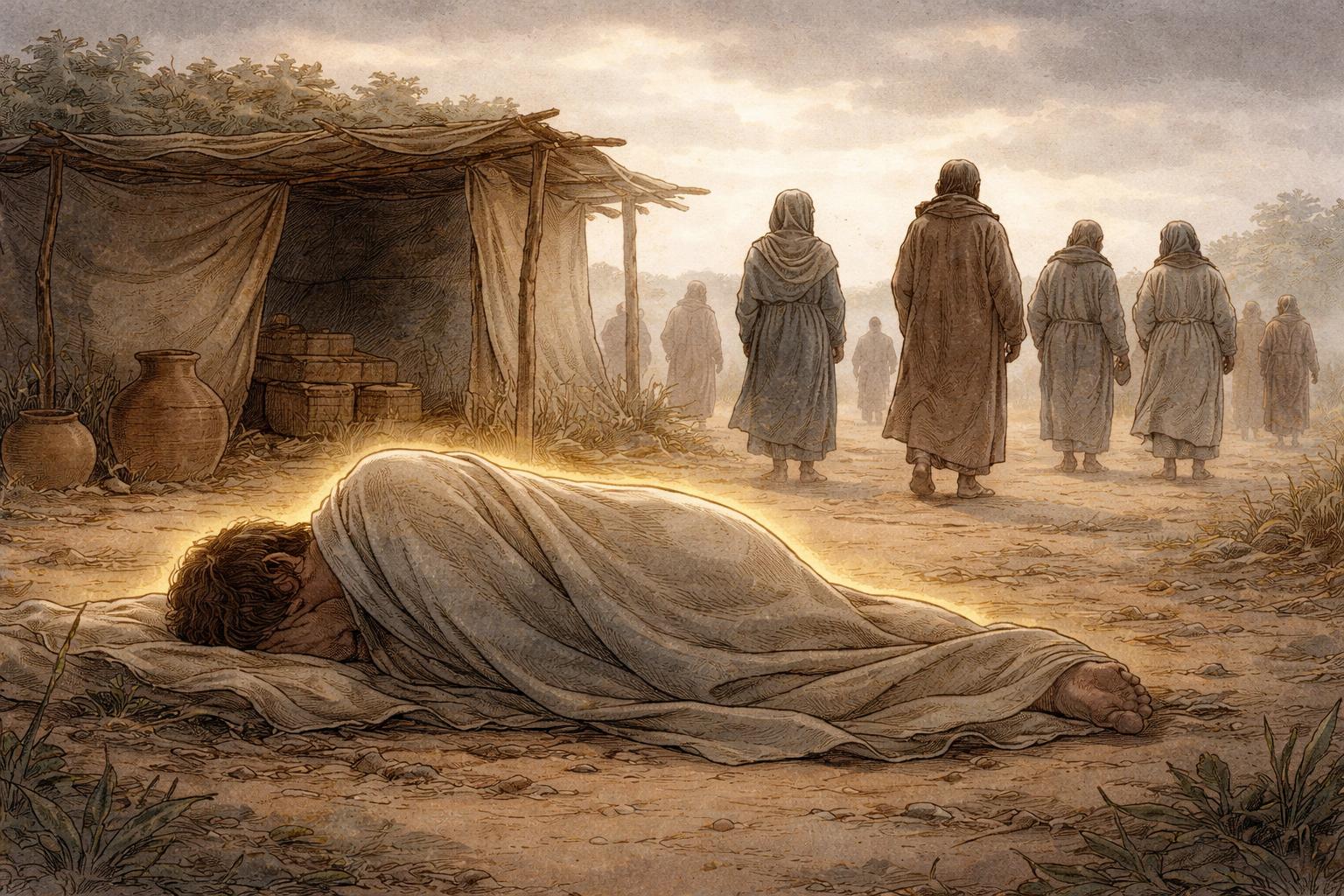
Shaytan could not understand it. He whispered to the people around Ayyub, "Look at him. What good is his faith? It has brought him nothing but ruin." He whispered to Rahma, trying to plant doubt in her heart. But Rahma's faith was as strong as her husband's. She would brush away the whispers like dust from her shoulders.
Then one day, after years of patience so complete that the angels themselves marveled at it, Ayyub (AS) turned to Allah with a prayer. It was not a prayer of complaint. It was not a demand. It was simply the truth of his situation, spoken with the humility of a servant who knows his Lord is listening.
He called out: "Rabbi, anni massaniyad-durru wa Anta arhamur-rahimeen." "My Lord, harm has truly afflicted me, and You are the Most Merciful of the merciful."
That was all. He did not list his sufferings. He did not ask for his wealth back, or his health, or even his children. He simply said: I am hurting, and You are the Most Merciful. He placed his trust entirely in Allah's mercy and wisdom.

And Allah answered.

The response was immediate and magnificent. Allah told him: "Strike the ground with your foot!" Ayyub (AS) gathered his remaining strength and struck the earth beneath him. And from that very spot, a spring of cool, clear water burst forth from the ground. When he washed in it and drank from it, his illness left his body like a shadow fleeing from sunlight. His skin became clean and healthy. His strength returned. He stood upright for the first time in years, tears streaming down his face as he praised Allah.
But Allah's mercy did not stop there. The Quran tells us: "And We restored to him his family, and the like of them with them, as a mercy from Us and a reminder for those who understand." Allah gave him back more than he had lost. His fields grew green again, his health was restored, and he was blessed with a new family. The years of patience were not wasted; they were an investment in something far greater than anything this world could offer.
Rahma, who had stood by him through every dark day, now stood beside him in the light. Her faithfulness was rewarded too, for the Quran honors those who support the righteous through their trials.
The story of Ayyub (AS) teaches us something that every person needs to hear: patience is not just about gritting your teeth and waiting for the pain to stop. Real patience, the kind Ayyub (AS) showed, is about trusting that Allah's plan is good even when you cannot see it. It is about praising Allah in the darkness, not just in the light.

Imam Ali (AS) once said in Nahj al-Balagha: "Patience is of two kinds: patience over what pains you, and patience against what tempts you." Ayyub (AS) had mastered both. He was patient through his suffering, and he was patient against the temptation to blame or question his Lord.
Imam Husayn (AS), the grandson of the Prophet Muhammad (PBUH), showed this same patience at Karbala. When he had lost his companions, his family, and even his infant son, he still turned to Allah and said, "I am satisfied with Your decree." This is the patience of the prophets and the Ahlul Bayt, a patience that transforms suffering into something beautiful.

The next time you face a difficulty, whether it is something small like a bad grade, or something bigger like losing someone you love, remember Ayyub (AS). Remember that he did not ask "Why me?" He asked "Who is the Most Merciful?" And the answer was always the same: Allah.
Key Verse
"Rabbi anni massaniyad-durru wa Anta arhamur-rahimeen" "My Lord, harm has truly afflicted me, and You are the Most Merciful of the merciful." -- Al-Anbiya (21:83)
Reflection Questions
- Why do you think Ayyub (AS) never complained to anyone except Allah? What does that teach us about who we should turn to when we are hurting?
- Rahma stayed with Ayyub through his hardest years. Who in your life helps you stay strong when things are difficult, and how can you be that person for someone else?
- Imam Ali (AS) said patience has two kinds. Can you think of a time when you showed patience over something painful, and a time when you showed patience against something tempting?
Have you ever had a really bad day? Maybe you felt sick, or you lost your favorite toy, or someone was not nice to you. That does not feel good at all, does it? Now imagine having a bad day that lasted not just one day, but many, many years. That is what happened to Prophet Ayyub, peace be upon him. And what he did during all those hard times teaches us one of the most important lessons in the whole world.
Ayyub was a very special man. Allah had given him so many wonderful things. He had a big, loving family with lots of children. He had green fields full of golden wheat that waved in the wind like a golden ocean. He had sheep and cows and camels, so many that you could not count them all. He had a beautiful home with plenty of room for everyone. And all the people in his town liked him because he was so kind and helpful.
But the best thing about Ayyub was not his money or his animals or his big house. The best thing about Ayyub was his heart. He loved Allah so, so much. Every morning, before the sun even came up, he woke up to pray. He shared his food with people who were hungry. When a traveler passed through his town, Ayyub invited him in for a meal. When a neighbor was having a hard time, Ayyub was always the first one to help. And he always, always said "Alhamdulillah," which means "thank you, Allah!"
His wife, whose name was Rahma, was just as kind as he was. Rahma means "mercy" in Arabic, and she truly lived up to her name. Together, they made their home a warm, happy place where everyone felt welcome. If you came to their door, you would always find a smile, a kind word, and something to eat.
Then something very hard started to happen.
One day, a terrible storm came and destroyed all of Ayyub's beautiful crops. The rain poured down so hard that it washed everything away. His fields of golden wheat turned to mud. Everything he had planted was ruined. But Ayyub said quietly, "Allah gave me these things, and He knows what is best." He did not get angry. He did not complain. He kept trusting Allah.
Then his animals started to get sick. First a few sheep, then more and more. One by one, all his sheep, his cows, his camels, they all got sick and could not be saved. Now Ayyub had no crops and no animals. All his money was gone. The neighbors who used to smile at him now looked the other way when they saw him. But Ayyub said, "These things were never really mine. They were gifts from Allah. He gave them to me, and He can take them back." And he thanked Allah still.
Then, the saddest thing of all happened. Ayyub lost his children. This hurt his heart more than anything else in the whole world. There is nothing harder than losing the people you love most. Ayyub cried. His wife Rahma cried too. Prophets feel pain just like we do. Their hearts break just like ours. But even through his tears, Ayyub whispered, "To Allah we belong, and to Him we return."
And then, as if things could not get any harder, Ayyub himself got very, very sick. His whole body hurt. He had painful sores all over his skin. He was so weak that he could not even stand up. He could not walk. He could not feed himself. He had to lie down on the ground outside his house because he was too sick to do anything else.
Now the people who used to be his friends started to go away. They whispered to each other, "Maybe Allah is angry with Ayyub. That is why all these bad things are happening." But they were wrong! Allah was not angry with Ayyub. Sometimes Allah tests the people He loves the most. It is not a punishment. It is a way to show everyone how strong and beautiful their faith is. They stopped coming to visit. They stopped helping. Almost everyone left.
But there was one person who never, ever left. Do you know who it was? His wife, Rahma! She stayed by his side every single day. She carried water from the well for him to drink. She found food for him, even when there was very little to find. She cleaned his sores gently and carefully, and made sure he was as comfortable as she could make him. When she ran out of money, she worked hard doing jobs for other people just to bring Ayyub some bread to eat.
Sometimes Rahma was so tired that her hands hurt and her back ached. Her feet were sore from walking. But every evening, she would sit beside Ayyub and say, "We will get through this. Allah has not forgotten us. I believe in you, and I believe in Allah." What a wonderful, brave woman she was!
Years went by. A long, long time passed. Ayyub was still sick. His body was broken and weak. But do you know what? His heart was still strong! He never once blamed Allah. He never once said, "This is not fair!" He never once stopped praying. Every morning and every evening, he would praise Allah with whatever little bit of strength he had left. Even when he could only whisper, he whispered praises to Allah.
Shaytan tried very hard to make Ayyub give up. He whispered mean thoughts to the people around Ayyub. He tried to make Rahma lose hope too. He said things like, "Look at all you have lost. Your God does not care about you." But it did not work! Ayyub's faith was like a big, strong mountain that nothing could push over. No wind, no storm, no trick of Shaytan could shake it.
Then one day, after all those years of being so patient, Ayyub turned to Allah and said the most gentle, humble prayer. He did not scream. He did not shout. He did not say, "It is not fair!" He simply said:
"My Lord, harm has touched me, and You are the Most Merciful of all."
That was it. Just one simple sentence. He told Allah how he was feeling, and he reminded himself that Allah is the Most Merciful. He did not even ask for anything special. He did not say "give me back my money" or "make me healthy." He just trusted that Allah, the Most Merciful, would know exactly what to do.
And Allah answered him right away!
Allah told Ayyub, "Strike the ground with your foot!" Ayyub used all his strength and stamped his foot on the ground. And from that very spot, a spring of cool, clean, beautiful water came bubbling up out of the earth! It sparkled in the sunlight like tiny diamonds.
Ayyub washed himself in that water and drank from it. And something amazing happened. His sickness went away! All the sores on his skin disappeared. His body became strong and healthy again. His skin was clean and smooth. He could stand up! He could walk! He could stretch his arms up to the sky! He was better! Tears of joy ran down his face as he praised Allah.
But Allah did not stop there. Oh no! Allah gave Ayyub back everything he had lost, and even more! His fields grew green again, greener than before. He had animals again, more than he ever had. He was blessed with a new family. And Rahma, his wonderful, faithful wife who had stayed by his side through all those hard, dark years, now stood beside him in the sunshine, smiling and crying happy tears.
The Quran says: "And We gave him back his family, and the same again with them, as a mercy from Us and a reminder for those who understand."
The years of being patient were not wasted. Not even one single day. Because Ayyub showed the whole world what real patience looks like. Real patience is not just waiting for the hard time to end. Real patience is trusting that Allah's plan is good, even when you cannot see why things are happening. It is saying "Alhamdulillah" even when your eyes are full of tears.
Imam Ali (AS) said: "Patience is to faith what the head is to the body." That means without patience, our faith cannot stand! Just like your body cannot work without a head, your faith cannot be strong without patience. And Imam Husayn (AS), the grandson of the Prophet Muhammad (peace be upon him and his family), showed the same kind of beautiful patience at Karbala. Even when things were very, very hard, he turned to Allah and said, "I am happy with what Allah has chosen for me." The Ahlul Bayt were the most patient people who ever lived, and they learned it from stories like the story of Ayyub.
So the next time something hard happens to you, remember Ayyub. Remember that being patient does not mean you cannot cry. It does not mean you cannot feel sad. It means you keep trusting Allah, you keep praying, and you know in your heart that the hard time will not last forever. But the reward for being patient? That lasts forever and ever.
Key Verse
"Wa Ayyub idh nada Rabbahu anni massaniyad-durru wa Anta arhamur-rahimeen. Fastajabna lahu fa kashafna ma bihi min durr." "And Ayyub, when he called out: My Lord, harm has touched me, and You are the Most Merciful. So We answered him and removed his suffering." -- Al-Anbiya (21:83-84)
Let's Talk About It
- Ayyub lost his health, his money, and his family, but he never stopped trusting Allah. What do you think made him so strong?
- Ayyub's wife Rahma stayed with him when everyone else left. Why is it important to be there for people when they are having a hard time?
- When something hard happens to you, like feeling sick or losing something you love, how can you be patient like Ayyub?