The Psalms of Praise: Dawud's Gift
Gratitude and worship; just leadership
Close your eyes for a moment and imagine a voice so beautiful that when it sang praises to Allah, the mountains themselves would join in. The birds would stop mid-flight to listen. The wind would carry the melody across valleys and hills, and every creature that heard it would turn toward Allah in worship. This was the gift of Prophet Dawud, peace be upon him, the king with the voice of heaven.
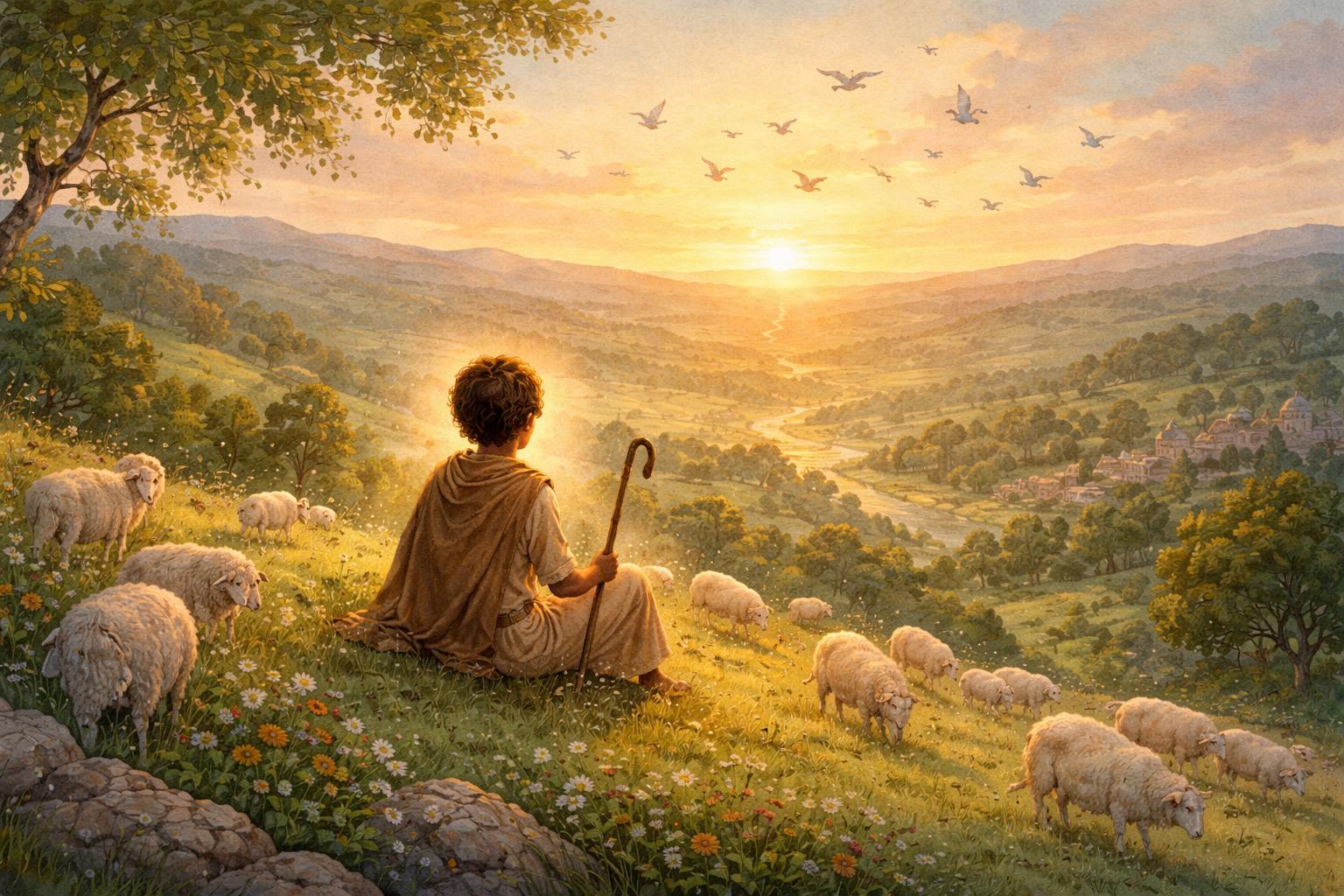
Dawud (AS) was not always a king. He began as a young shepherd boy in the hills of ancient Palestine, tending his father's sheep. He was small for his age, and no one would have guessed that this quiet boy would one day be chosen by Allah for something extraordinary. But Allah sees what people cannot see. He looks not at the outside, but at the heart.
While the other boys played and boasted, young Dawud (AS) would sit among his sheep on the hillside and sing. He sang praises to Allah, hymns of gratitude that came from somewhere deep in his soul. And something miraculous happened when he sang: the mountains around him would echo his praise, as if they too were alive and worshipping. The Quran tells us: "We subjected the mountains to glorify with him, at evening and sunrise." The birds would gather in flocks above him, each one adding its own voice to the chorus. It was as if all of creation recognized what this young boy was doing and wanted to join in.
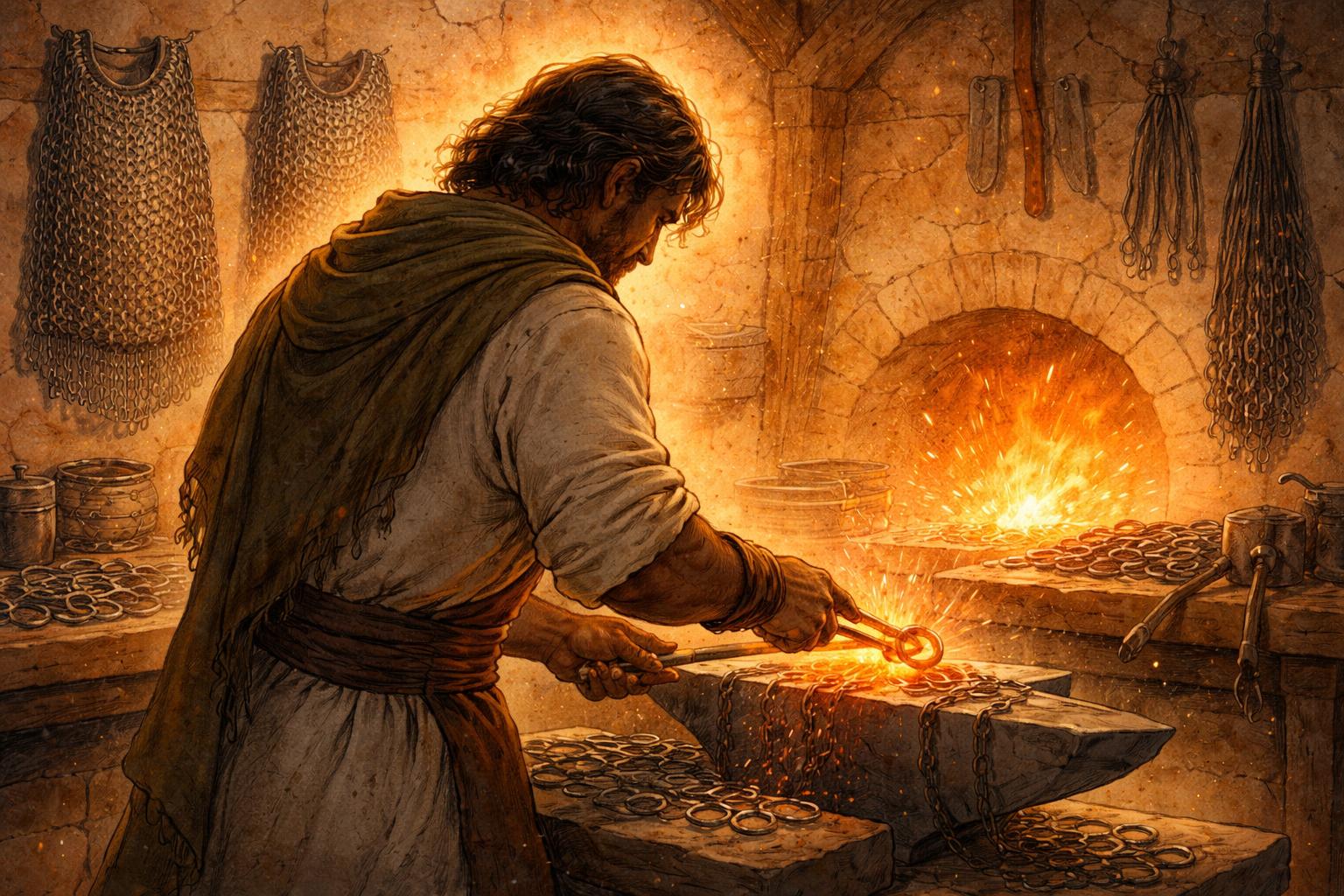
Allah gave Dawud (AS) another gift as well. He taught him to work with iron, to soften it with his hands and shape it into coats of armor. The Quran says: "We made iron soft for him." This was not just a craft; it was a mercy for his people, because the armor would protect them from those who wished to harm them. Dawud (AS) would work the iron with skill and care, shaping each ring of the armor with precision, and even this work became an act of worship, for he did everything seeking Allah's pleasure.

As Dawud (AS) grew, Allah elevated him. He was given not just prophethood, but also kingship. He became the ruler of his people, and here is where his story carries its deepest lesson: Dawud (AS) was a just king. In a world where kings often grew proud and cruel, Dawud (AS) ruled with fairness, humility, and constant awareness of Allah.
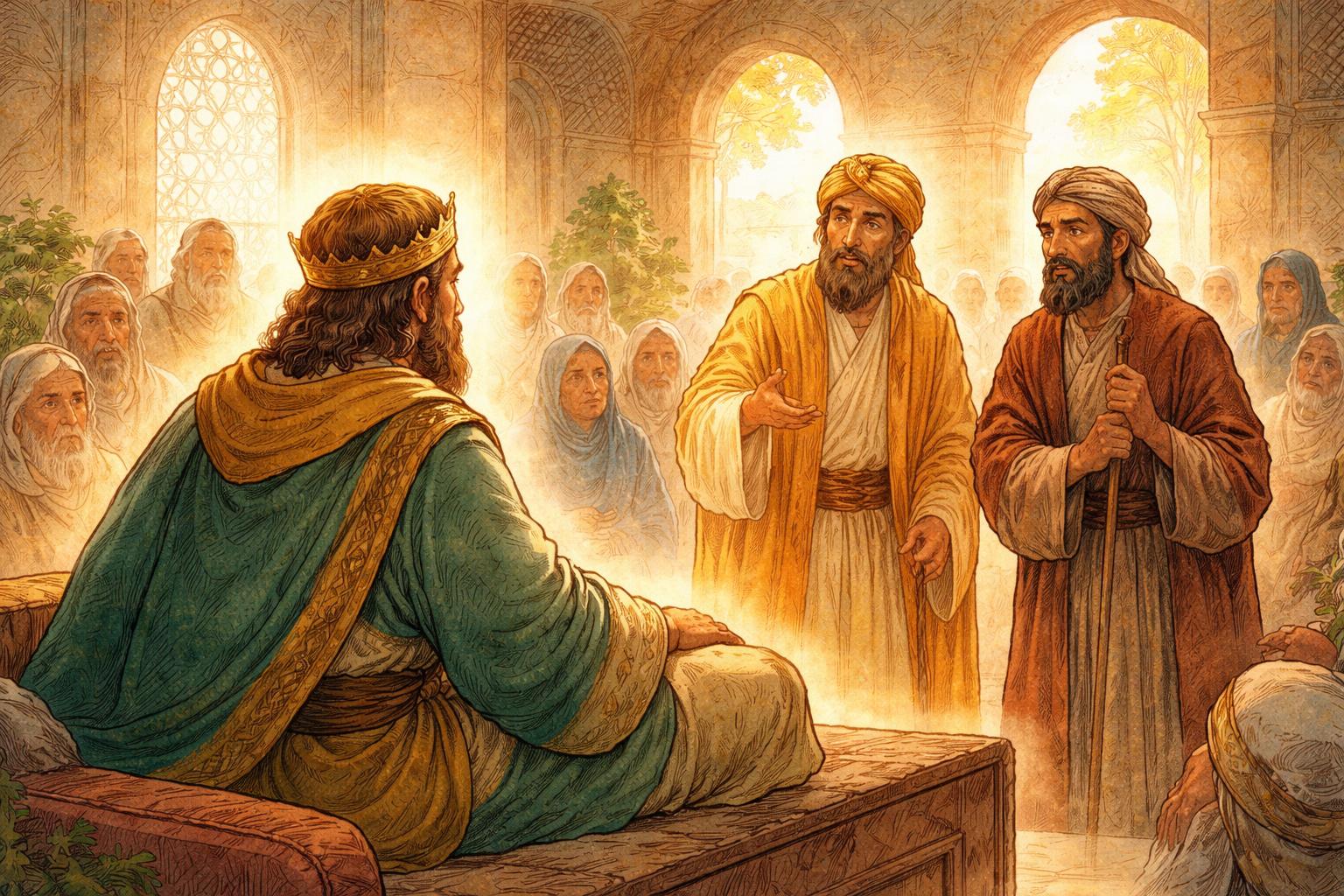
The Quran tells us about a test that came to Dawud (AS), a test of his judgment. One day, two men came to him with a dispute. One said, "This man has ninety-nine sheep, and I have only one. Yet he demands that I give him my one sheep so he can add it to his flock." Dawud (AS) listened carefully, and at first he judged quickly, saying the man with ninety-nine was wrong.
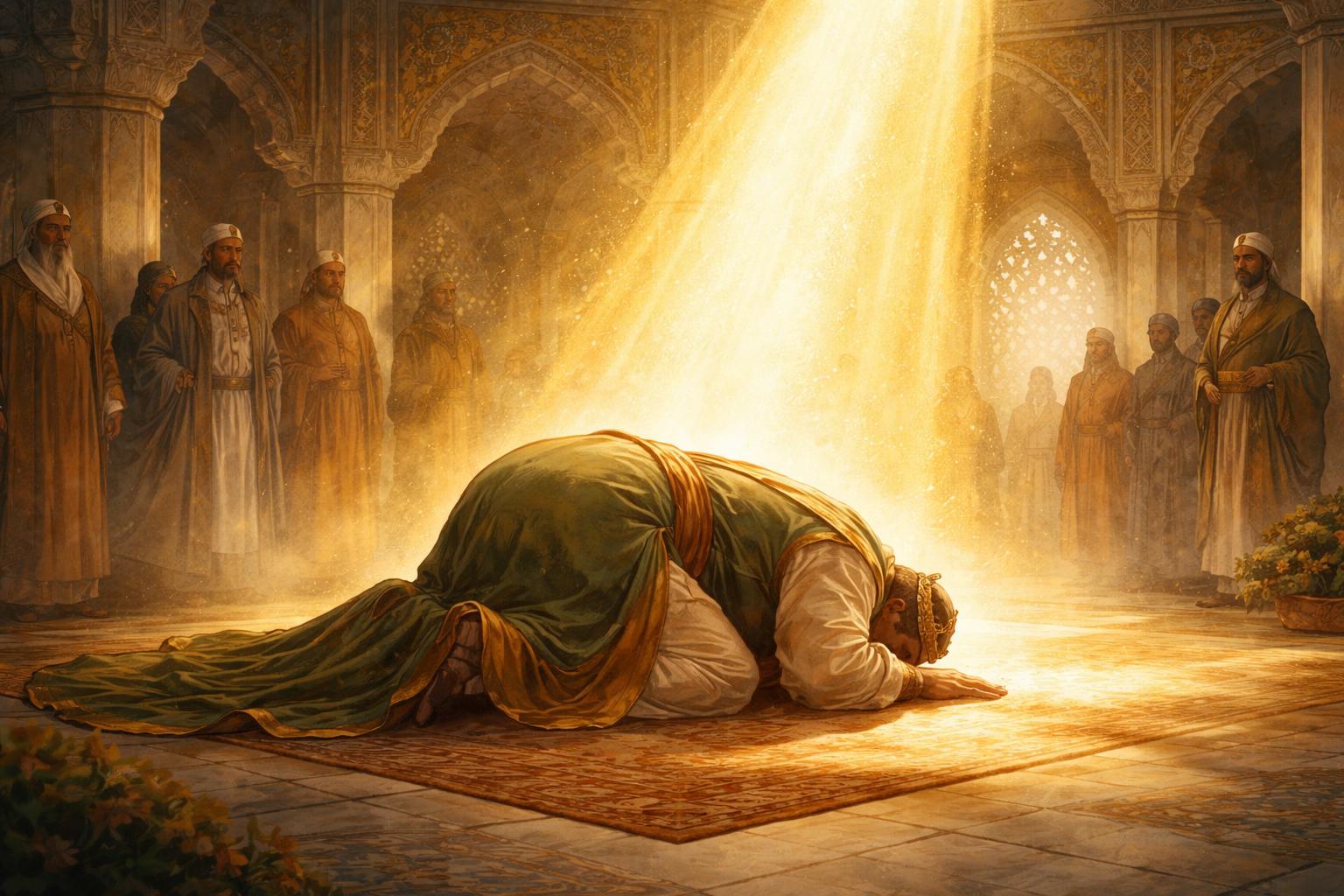
But then he paused. He realized that he had judged too quickly, without hearing both sides fully. The Quran says: "And Dawud realized that We had tested him, so he asked forgiveness of his Lord, and he fell down bowing in prostration, and he turned to Allah in repentance." This moment is powerful because it shows us that even a prophet, even a king chosen by Allah, must be careful about justice. He must hear all sides. He must not rush.
Allah forgave him immediately, and the Quran adds: "And indeed, he had nearness to Us and a beautiful place of return." Dawud (AS) was not diminished by this moment of self-correction. He was made greater by it, because the willingness to recognize your own mistake and turn back to Allah is one of the most beautiful qualities a person can have.
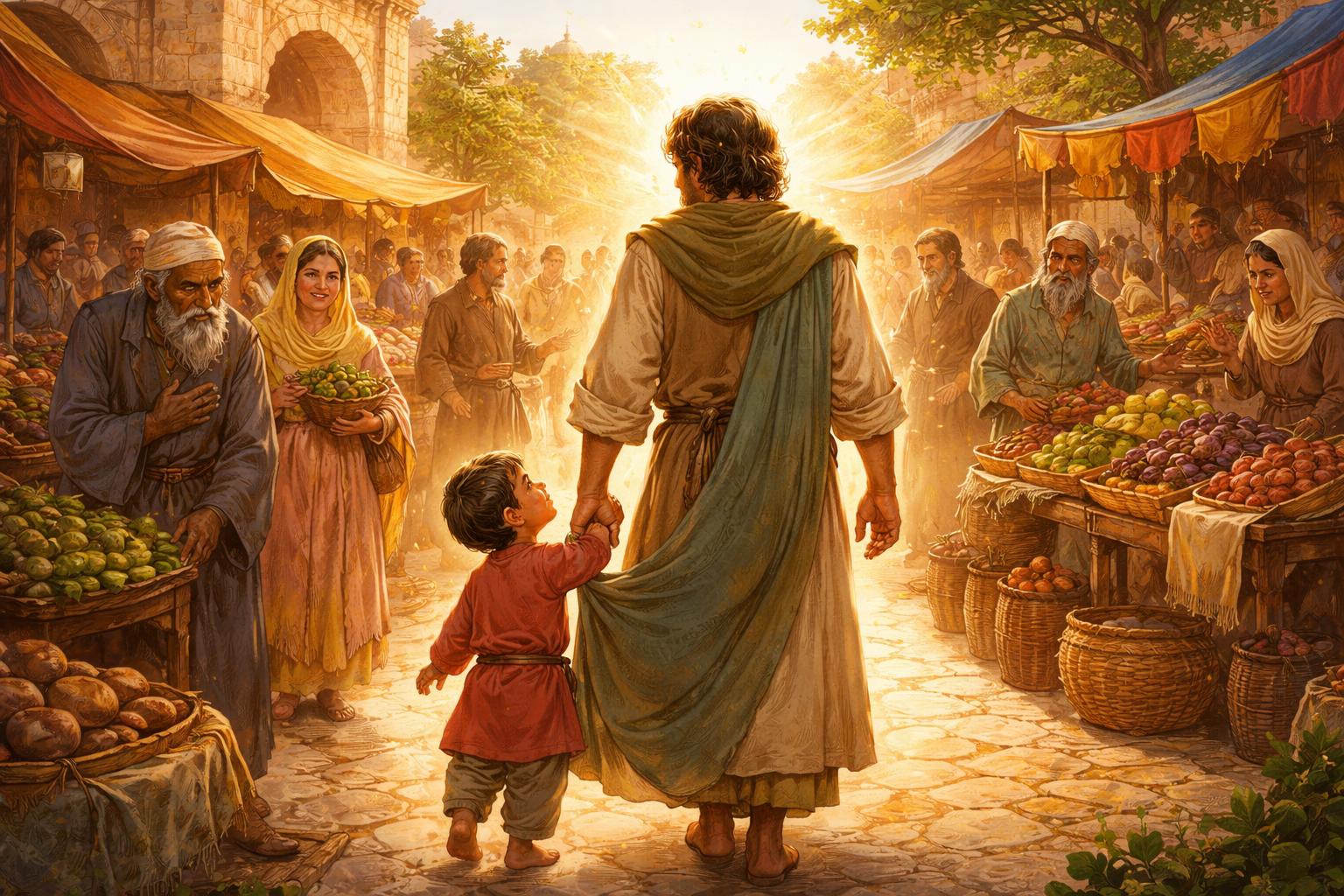
From that day forward, Dawud (AS) became even more careful in his judgments. He would sit among his people, not on a high throne behind walls, but where they could reach him. Anyone, rich or poor, could come to him with a dispute, and he would listen patiently, weighing each side with care before speaking. The people loved him, not because he was powerful, but because he was fair.
And always, morning and evening, Dawud (AS) would sing his psalms. The Zabur, the book of psalms that Allah revealed to him, was filled with praises, supplications, and wisdom. When Dawud (AS) recited the Zabur, the sound was so magnificent that all of nature would respond. The mountains would tremble with glorification. The birds would form circles in the sky, each species singing its own tasbih. Even the iron in his workshop seemed to become softer, more willing to be shaped.
Imam Ali (AS), the cousin and son-in-law of Prophet Muhammad (PBUH), was known for his own beautiful recitation of the Quran. It is said that when Ali (AS) recited, people would weep, for his voice carried the same sincerity and love for Allah that Dawud's voice had carried centuries before. And like Dawud (AS), Ali (AS) was famous for his justice. In Nahj al-Balagha, he wrote: "Be an enemy to the oppressor and a helper to the oppressed." This was the same principle that guided Dawud (AS) in his judgments.

Ali (AS) also said: "The value of a person is in their good deeds." Dawud (AS) lived this truth every day. His kingship was not about power or luxury. He would fast every other day, worshipping Allah with his body. He would spend his nights in prayer, singing the Zabur until the stars began to fade. And during the day, he would work with his own hands, making armor, earning his bread through honest labor even though he was a king.
The lesson of Dawud (AS) is threefold. First, gratitude: he used every gift Allah gave him, his voice, his strength, his craft, his authority, in the service of Allah and His creation. He never took credit for his talents, knowing they were all from Allah. Second, justice: he showed that a true leader listens before judging, admits mistakes, and treats every person's concerns as worthy of attention. Third, humility: despite being both a prophet and a king, he worked with his hands, fasted regularly, and never placed himself above his people.
The next time you hear a beautiful sound in nature, a bird singing at dawn, wind rustling through trees, rain tapping on a rooftop, remember Dawud (AS). Remember that all of creation is singing praises to Allah, and you are part of that chorus. Use whatever gift Allah has given you, whether it is a talent for art, for kindness, for listening, for math, for anything, and use it to make the world more just, more beautiful, and more grateful.

Key Verse
"Wa sakhkharna ma'a Dawud al-jibala yusabbihna wal-tayr" "And We subjected the mountains to glorify [Allah] with Dawud, and [also] the birds." -- Al-Anbiya (21:79)
Reflection Questions
- Dawud (AS) realized he judged too quickly and immediately turned to Allah in repentance. Why is it important to admit when we make mistakes, and how does it actually make us stronger?
- Even though Dawud (AS) was a king, he worked with his own hands making armor. What does this teach us about the value of honest work, no matter who we are?
- All of creation joined Dawud's praise of Allah. What talents or gifts has Allah given you, and how can you use them to serve others and praise Allah?
Close your eyes and imagine something wonderful. Imagine a voice so beautiful that when it sang, the mountains started singing along. The birds stopped flying and listened. The wind carried the song across green valleys and tall hills. Every animal, every tree, every rock seemed to lean in close to hear. That was the voice of Prophet Dawud, peace be upon him, and tonight we are going to learn about his amazing story.
When Dawud was young, he was just a shepherd boy. He was not big or tall or strong. He was actually quite small for his age. His job was to take care of his father's sheep out in the hills. He would walk them to green grass in the morning and bring them home safely at night. Nobody looked at little Dawud and thought he was going to be anything special. He was just a quiet boy with his sheep.
But Allah saw something that nobody else could see. Allah does not look at how big or strong or rich a person is. Allah looks at the heart. And when Allah looked at Dawud's heart, it was beautiful. It was full of love, full of thankfulness, full of light.
Because while the other boys played and showed off, young Dawud would sit on the hillside with his sheep and sing. He sang songs of praise to Allah. He thanked Allah for the blue sky above him. He thanked Allah for the green grass under his feet. He thanked Allah for the soft wool of his sheep and the cool breeze on his face. He thanked Allah for the sunrise and the sunset, for the rain and the stars.
And then something magical started to happen. When Dawud sang, the mountains around him began to echo his words! The big, tall mountains, made of heavy rock and stone, would repeat the same praises, over and over, like they were singing along! The birds would fly down from the sky and gather around him in big circles, each bird adding its own little song to the music. Sparrows and eagles, robins and doves, all singing together! It was like a huge choir of the whole world praising Allah together, with Dawud leading the song!
The Quran tells us: "We made the mountains sing praises with Dawud, at evening and at sunrise." Can you imagine that? Mountains singing! Big, giant, heavy mountains, singing praises to Allah! And birds joining in! All because of one boy with a heart full of love for Allah.
Allah also gave Dawud a very special book called the Zabur, which means the Psalms. It was full of beautiful prayers and songs praising Allah. When Dawud read from the Zabur, everyone who heard him felt peace and love filling up their hearts. Sad people felt happy again. Worried people felt calm. It was the most beautiful sound in the whole world.
But Dawud was not just a singer. He was also very, very brave! Even when he was a small boy, Dawud protected his sheep from wolves and lions. He was not afraid, because he knew that Allah was always with him. And one day, because Dawud was so brave and so good, Allah chose him for something even bigger.
As Dawud grew up, Allah gave him amazing gifts. He made Dawud a king! But not just any king. Dawud was the most fair and just king his people had ever known. He did not sit in a faraway palace behind tall walls where nobody could find him. He sat where everyone could come to him. Rich people and poor people, old people and young people, anyone at all could walk right up to King Dawud and tell him about their problem, and Dawud would listen carefully and patiently to every word.
Allah also gave Dawud a very special ability. He could make iron soft in his hands! He could shape metal like it was soft clay or play dough! Dawud used this gift to make strong armor, shirts made of metal rings, that would protect his people and keep them safe in battle. Even though he was the king, he worked with his own two hands every single day. He did not think that work was below him. He knew that honest work is something to be proud of.
One day, Allah tested Dawud to teach him an important lesson about being fair. Two men came to Dawud with a problem. One man had ninety-nine sheep. The other man had only one little sheep, just one, and that little sheep was like a pet to him. He loved it very much. And the man with ninety-nine sheep wanted to take the other man's one sheep too!
Dawud said right away, "That is not fair at all! He should not take your one sheep when he already has so many!"
But then Dawud stopped and thought carefully. He realized that he had answered too quickly, without listening to both sides of the story first. A good judge always listens to everyone before making a decision. He had not been as careful as he should have been. So what did Dawud do? He did not try to hide his mistake. He did not pretend he was right. He turned to Allah right away and asked for forgiveness. He bowed down and said sorry to Allah.
The Quran tells us that Allah forgave him right away, because the best people are not the ones who never make mistakes. The best people are the ones who say sorry quickly and try to do better the next time. That is what real goodness looks like.
From that day on, Dawud was even more careful when people came to him with problems. He always listened to both sides. He always took his time. He always made sure his answer was truly fair. He became an even better king because of the mistake he learned from.
And through it all, morning and evening, Dawud kept singing his beautiful psalms. The mountains kept echoing. The birds kept joining in. The whole world sang praises to Allah along with Dawud, day after day, year after year.
Imam Ali (AS), from the family of the Prophet Muhammad (peace be upon him and his family), was a lot like Dawud. Imam Ali was known for his beautiful voice when he read the Quran. People would cry when they heard him because his voice was so full of love for Allah. And just like Dawud, Imam Ali was the most fair and just leader. He said, "Be an enemy to the one who hurts others, and a helper to the one who is being hurt." That is the same fairness that Dawud showed every single day when he sat with his people and listened to their problems.
Imam Ali also said, "The value of a person is in their good deeds." Dawud lived this every day of his life. He used every gift Allah gave him, his beautiful voice, his strong hands, his kind heart, his fairness, to help others and to praise Allah. He never used his gifts to show off or to make others feel small.
Do you know what is really wonderful? Allah has given each of us our own special gifts too! Maybe you are good at drawing beautiful pictures. Maybe you are good at being kind to others. Maybe you are good at sharing, or helping, or making people smile when they feel sad. Whatever your gift is, big or small, you can use it just like Dawud did, to make the world a better, kinder place and to thank Allah for everything He has given you.
The next time you hear a bird singing outside your window, or the wind blowing gently through the trees, or rain tapping softly on the roof, remember Dawud. Remember that all of creation is praising Allah in its own special way. And you are part of that beautiful song too.
Key Verse
"Wa sakhkharna ma'a Dawud al-jibala yusabbihna wal-tayr" "And We made the mountains sing praises with Dawud, and the birds too." -- Al-Anbiya (21:79)
Let's Talk About It
- The mountains and birds sang along with Dawud when he praised Allah! What is your favorite way to thank Allah for all the good things He has given you?
- When Dawud made a mistake in his judging, he said sorry to Allah right away and tried to do better. Why is it important to say sorry quickly when we make a mistake?
- Even though Dawud was a king, he worked with his own hands every day. What does this teach us about the importance of working hard, no matter who we are?