The Queen Who Chose Truth: Bilqis and Sulayman
Seeking truth over pride; wisdom in leadership
Do you remember last night's story, when a little hoopoe bird flew with a letter from Prophet Sulayman (AS) to a faraway land called Saba? Tonight, we find out what happened when that letter arrived. This is the story of Queen Bilqis, one of the most intelligent and courageous leaders mentioned in the Quran, a woman who chose truth over pride, and wisdom over stubbornness.
In the land of Saba, far to the south in what is now Yemen, there ruled a queen whose name was Bilqis. She was no ordinary ruler. The Quran tells us that she had been given "from all things," meaning her kingdom was rich with everything: wealth, power, a strong army, and a magnificent throne encrusted with gold and precious jewels. She was wise and careful, and her advisors respected her judgment.
But there was one thing missing from her kingdom. Bilqis and her people worshipped the sun instead of Allah, the Creator of the sun. They bowed to the creation rather than the Creator. It was this that had troubled the little hoopoe bird so much that it flew back to report to Sulayman (AS).

When the hoopoe arrived in Saba carrying Sulayman's letter, it dropped the small scroll before the queen. Bilqis picked it up and read: "In the name of Allah, the Most Merciful, the Especially Merciful. Do not be arrogant toward me, but come to me in submission to Allah."
Now, many rulers receiving such a letter might have been offended. They might have thrown it away, or sent their army to teach the sender a lesson. But Bilqis was different. She was wise enough to take it seriously.
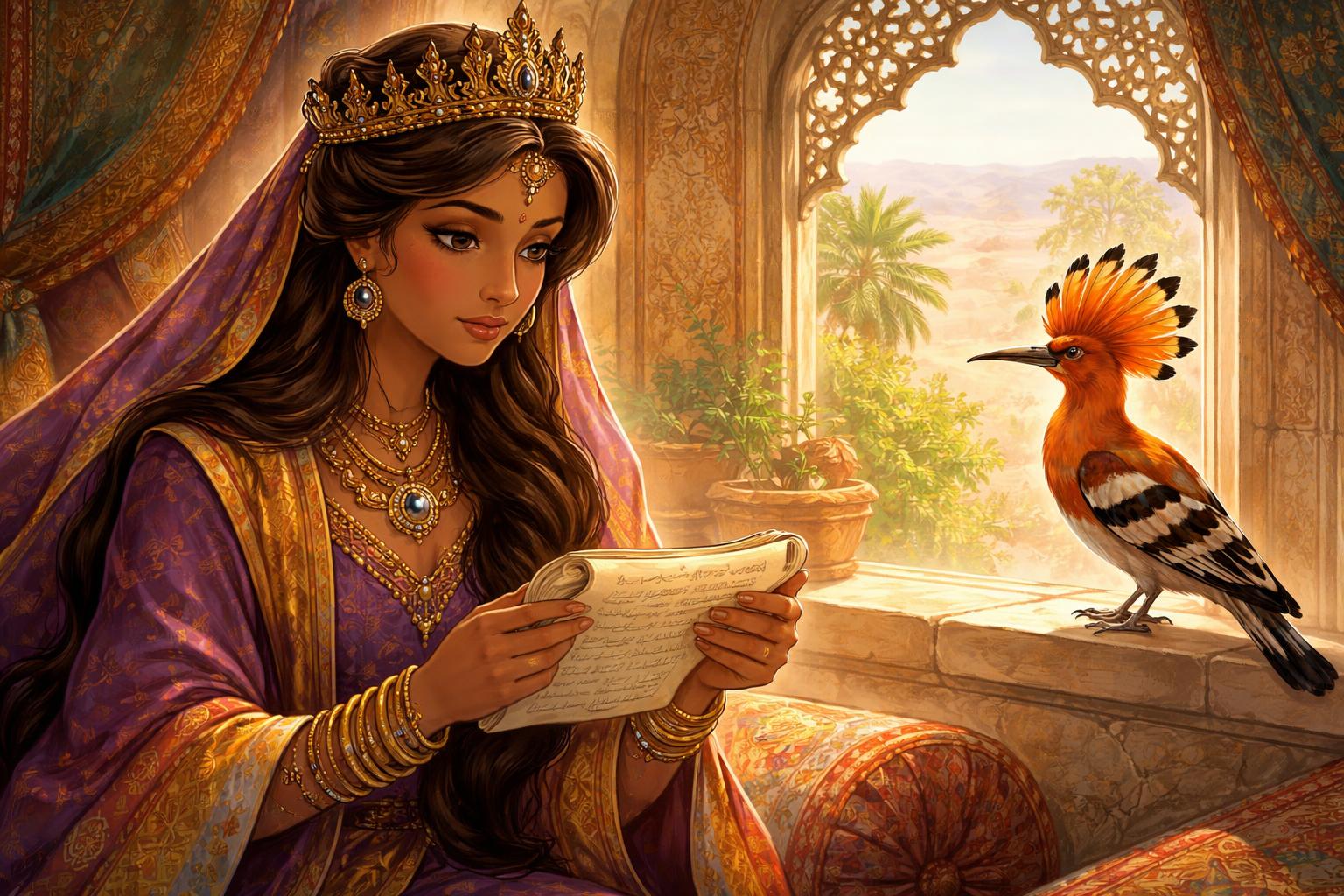
She called her advisors together. "O chiefs," she said, "an important letter has been delivered to me. Indeed, it is from Sulayman, and indeed it reads: 'In the name of Allah, the Most Merciful.' Advise me in my affair. I would not decide any matter until you are present with me."
Her advisors puffed up their chests. "We are people of strength and great military might," they said. "The decision is yours, so look into what you will command." In other words, they were ready for war. They wanted to fight.
But Bilqis was wiser than that. She said something remarkable: "Indeed, when kings enter a city, they ruin it and render the most honored of its people humiliated. And thus do they do." She understood that war would bring only destruction, no matter who won. She chose diplomacy.
"I will send them a gift," she decided, "and see with what answer the messengers return." This was a clever strategy. By sending a rich gift, she would test Sulayman's intentions. Was he a king hungry for wealth? Or was he something more?
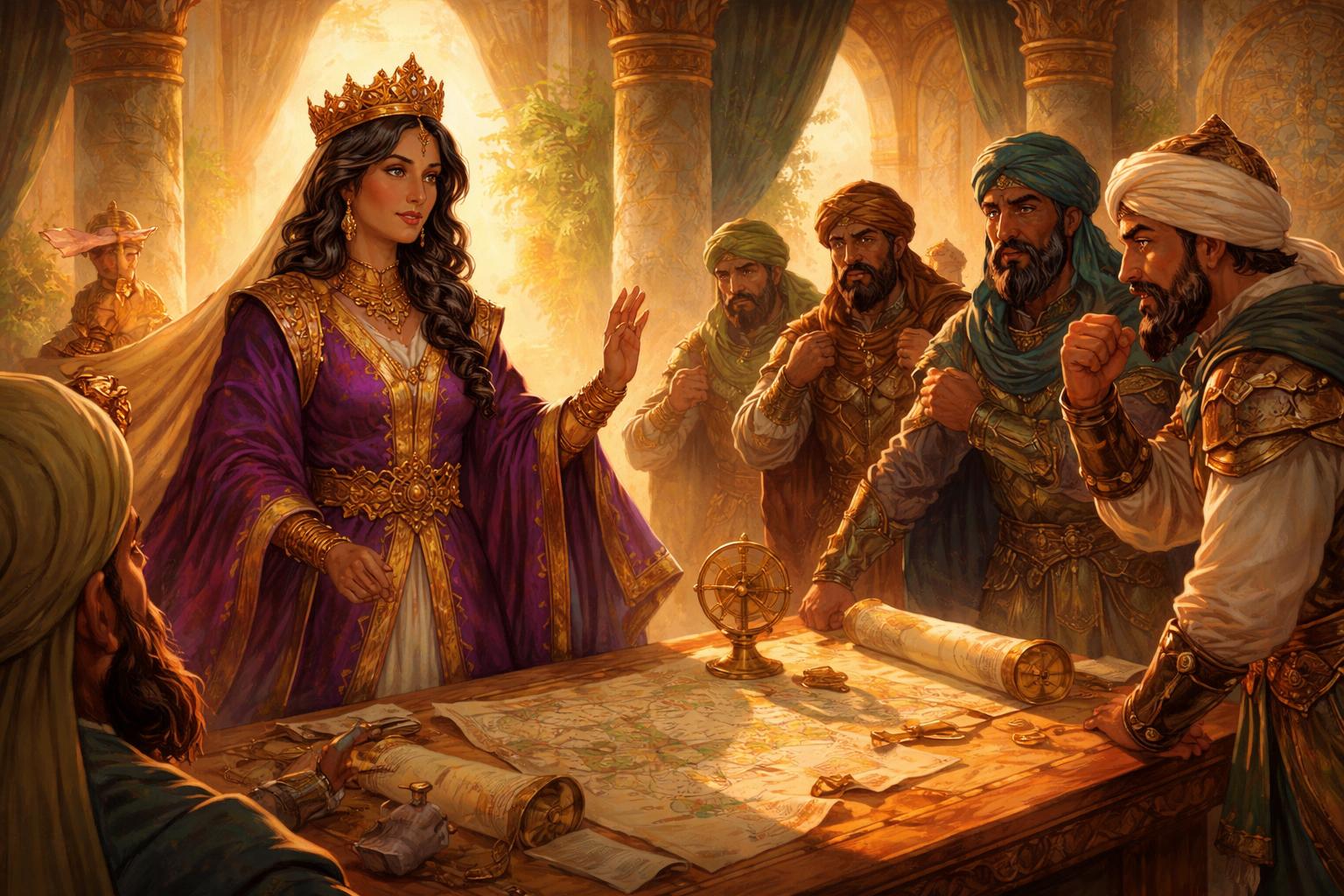
When the gift arrived, carried by a grand delegation with treasures of gold and jewels, Sulayman (AS) was not impressed. He turned to the messengers and said: "Do you provide me with wealth? But what Allah has given me is better than what He has given you. Rather, you rejoice in your gift!" He was not a king who could be bought with gold. He sent the delegation back with a message: come to me, or face an army the likes of which you have never seen.
Bilqis understood now that this was no ordinary king. She decided to go herself, to see this Prophet Sulayman with her own eyes and judge his claim for herself. This decision took courage. She was leaving her throne, her comfort, and her familiar world behind.

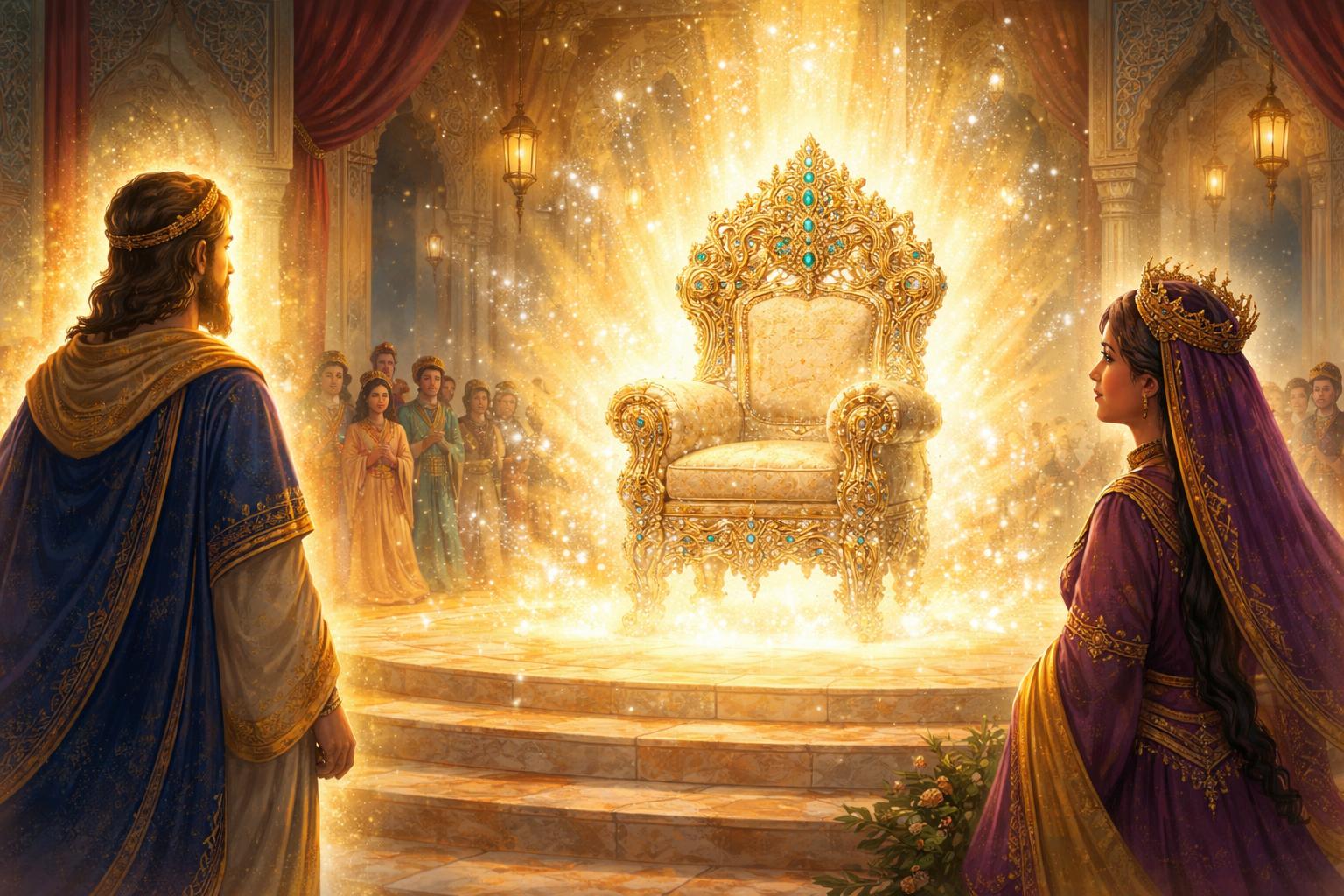
While she was on her way, Sulayman (AS) decided to demonstrate the power Allah had given him. He turned to his court and asked, "Which of you can bring me her throne before they arrive?"
An ifrit, a powerful jinn, said, "I will bring it to you before you rise from your place. Indeed, I am strong and trustworthy for it." But one who had knowledge from the Book said, "I will bring it to you before your glance returns to you." And in the blinking of an eye, the throne of Bilqis, that massive, jewel-encrusted seat of power from hundreds of miles away, appeared before Sulayman.
When Sulayman (AS) saw it, he said, "This is from the bounty of my Lord, to test me whether I am grateful or ungrateful. And whoever is grateful, his gratitude is only for himself; and whoever is ungrateful, then indeed, my Lord is Free of need and Generous." Even in this moment of astonishing power, he turned to Allah in humility.
He then had the throne disguised, altered slightly, to test Bilqis's intelligence. When she arrived and was shown the throne, they asked her, "Is your throne like this?" She looked at it carefully and gave a brilliant answer: "It is as though it were the very one." She did not say yes outright, because it looked different. She did not say no, because she recognized it. Her answer showed remarkable intelligence and careful observation.
Then came the final test. Bilqis was invited to enter a magnificent palace. When she approached the entrance, she saw what appeared to be a vast pool of water covering the floor. She lifted her garment to wade through it, as anyone would.
But Sulayman (AS) told her, "Indeed, it is a palace made smooth with glass." The floor was not water at all. It was crystal-clear glass with water flowing beneath it, creating the perfect illusion. What she had taken for reality was not what it seemed.
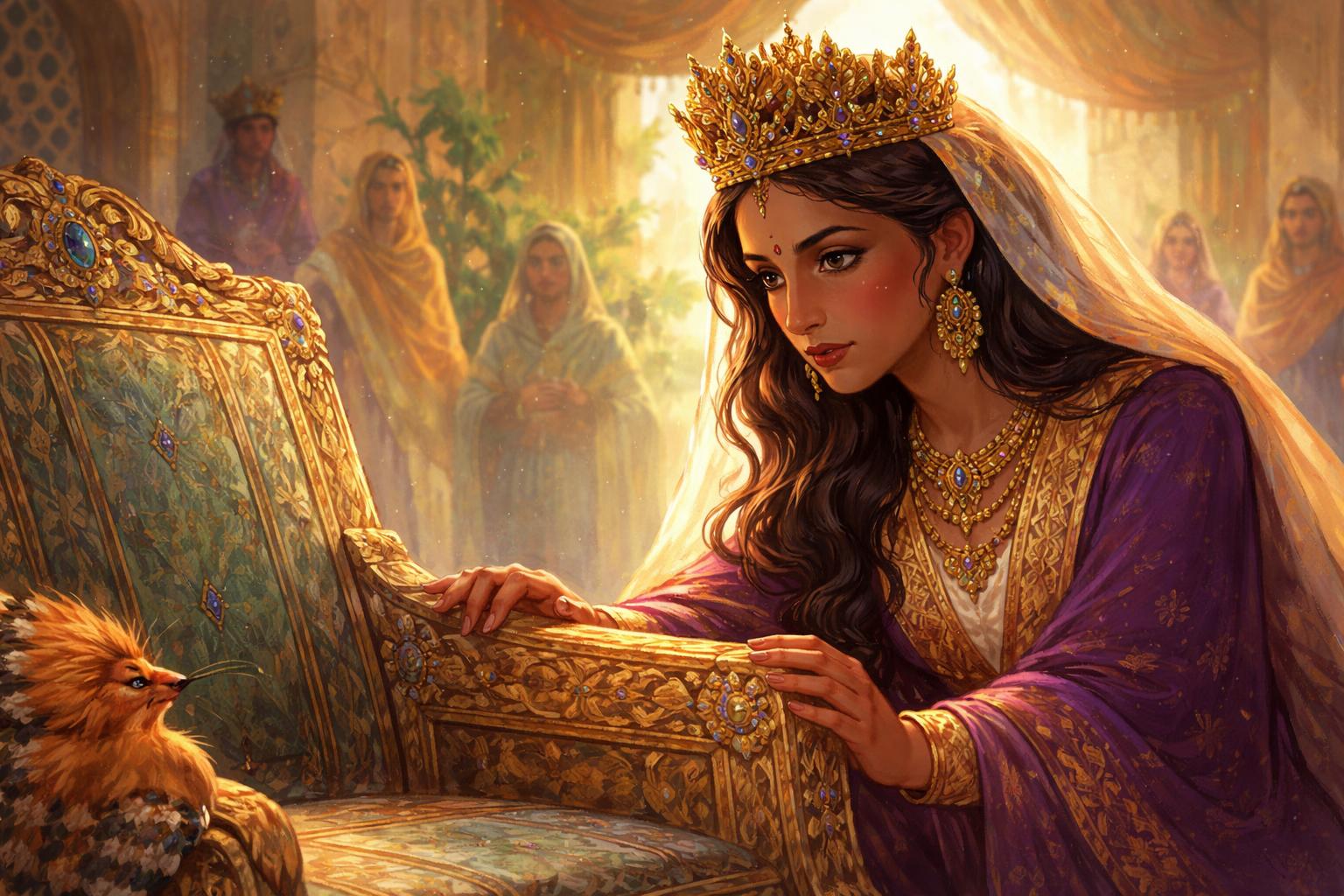
And in that moment, something shifted inside Bilqis. She realized that all along, she had been like someone looking at a glass floor and thinking it was water. She had been looking at the sun and thinking it was God. The reality was different from what it appeared to be. The sun was a creation; Allah was the Creator.
The Quran records her words: "My Lord, indeed I have wronged myself, and I submit with Sulayman to Allah, Lord of the worlds."
She did not say she submitted to Sulayman. She said she submitted with Sulayman to Allah. She was not giving up her dignity or her intelligence. She was recognizing the truth and having the courage to embrace it, even though it meant changing everything she had believed.
This is what makes Bilqis's story so powerful. She was a queen, a ruler of a great kingdom, and yet she had the humility to say: "I was wrong." She did not cling to falsehood out of pride. She did not refuse the truth because accepting it meant changing her ways. She chose truth over everything.

In the Shia tradition, this quality of recognizing truth when you see it, regardless of where it comes from, is deeply valued. Imam Ali (AS) said: "Look at what is said, not at who says it." Bilqis did exactly this. She did not judge the truth based on who was delivering it. She judged it on its own merit.
Imam Sadiq (AS) taught that seeking knowledge and truth is a duty that knows no borders, no gender, and no social rank. Bilqis, a woman and a queen, made her own decision about faith. No one forced her. She reasoned, she investigated, she tested, and when she saw the truth, she embraced it willingly.

The next time you learn something new that challenges what you used to believe, remember Bilqis. It takes more courage to change your mind when you discover the truth than it does to stubbornly hold onto what is comfortable. That is the courage of a queen.
Key Verse
"Qalat rabbi inni zalamtu nafsi wa aslamtu ma'a Sulaymana lillahi Rabbil-'alamin" "She said, 'My Lord, indeed I have wronged myself, and I submit with Sulayman to Allah, Lord of the worlds.'" -- An-Naml (27:44)
Reflection Questions
- Bilqis chose to send a gift and investigate before fighting. When you disagree with someone, do you try to understand their perspective first, or do you jump to arguments? What can you learn from her approach?
- Bilqis said "I submit with Sulayman to Allah," not "to Sulayman." Why is this important? What does it tell us about how she viewed her faith?
- The glass floor made Bilqis realize things are not always what they seem. Can you think of a time when you believed something was true, but later discovered the reality was different? How did you handle it?
Do you remember last night's story? The little Hoopoe bird flew all the way to a faraway land called Saba and found a queen named Bilqis. Her kingdom was very rich, but her people prayed to the sun instead of Allah. Prophet Sulayman, peace be upon him, wrote a letter to Queen Bilqis and gave it to the Hoopoe to carry. Tonight, we are going to find out what happened when that letter arrived!
The Hoopoe bird flew and flew and flew until it reached the land of Saba, far away in what we now call Yemen. It found Queen Bilqis and dropped the small letter right in front of her.
Bilqis picked up the letter and read it. It said: "In the name of Allah, the Most Merciful, the Especially Merciful. Do not be proud, but come to me as believers in Allah."
Now, most kings and queens would have gotten very angry if they received a letter like that. They might have torn it up. They might have said, "How dare someone tell me what to do!" But Bilqis was different. She was very, very smart, and she wanted to think about it carefully.
She called all her helpers and advisors together. "Listen everyone," she said. "I have received a very important letter from King Sulayman. What do you think we should do?"
Her advisors puffed up their chests and said, "We are strong! We have a big army! We can fight him!"
But Bilqis shook her head. She was wiser than that. She said, "When kings fight and enter a city by force, they ruin it. They hurt the people who live there. I do not want that." See how smart she was? She did not want war. She wanted to find a better way.
"I have an idea," Bilqis said. "I will send Sulayman a very fancy gift. Lots of gold, beautiful jewels, and expensive treasures. If he takes the gift and is happy, then he is just a regular king who wants money. But if he does not care about the gold, then he must be something special."
So Bilqis sent her messengers with a huge, beautiful gift. They carried golden plates, sparkling jewels, and all kinds of expensive things across the land to Sulayman's palace.
When the messengers arrived with all the treasure, do you know what Sulayman said? He was not excited at all! He looked at the gold and jewels and said, "Do you think you can make me happy with money? What Allah has given me is much, much better than what you have brought!" And he sent all the gifts right back!
Sulayman did not care about gold and jewels. He only cared about one thing: helping people learn about Allah, the one true God.
When Bilqis heard this, she knew that Sulayman was not just any king. He was something special. So she made a brave decision. She would go and visit Sulayman herself. She wanted to see him with her own eyes and find out the truth.
This was a very courageous thing to do. She was leaving her beautiful palace, her comfortable throne, and her familiar home to travel far, far away to meet someone she had never seen before. But Bilqis was brave, and she wanted to find the truth, no matter what.
While Bilqis was on her way, Sulayman decided to show what Allah had given him. He asked everyone in his court, "Who can bring me Queen Bilqis's throne before she gets here?"
Now, Bilqis's throne was hundreds and hundreds of miles away. It was huge and heavy, covered in gold and sparkling jewels. How could anyone bring it?
A powerful jinn said, "I can bring it before you stand up from your seat!" That was fast! But then another servant, one who had special knowledge from Allah, said, "I can bring it in the blink of an eye!" And just like that, before Sulayman could even blink, the enormous throne of Bilqis appeared right in front of him!
When Sulayman saw it, did he brag? Did he say, "Look how powerful I am"? No! He said, "This is from the bounty of my Lord, to test me whether I will be grateful or ungrateful." Even with such amazing power, Sulayman remembered to thank Allah.
Then Sulayman had the throne changed a little bit. He wanted to test how smart Bilqis was. When Bilqis finally arrived at the palace and saw the throne, they asked her, "Does this look like your throne?"
Bilqis looked at it very carefully. She noticed it looked a lot like hers, but something was a little different. So she gave a very clever answer: "It looks as if it is the same one." She did not say yes, because something was different. She did not say no, because she could see it was hers. What a smart answer!
Then came the most important part of the whole story. Bilqis was invited to walk into Sulayman's beautiful palace. When she got to the entrance, she looked down and saw what looked like a big pool of water covering the whole floor. She lifted her dress so it would not get wet, just like any of us would do!
But Sulayman smiled and said, "It is not water. It is a floor made of smooth, clear glass."
Bilqis looked again. He was right! The floor was made of glass so clear and smooth that it looked exactly like water, but it was not water at all. What she thought was real was not what it seemed.
And in that moment, something wonderful happened inside Bilqis's heart. She understood something very important. All her life, she had been praying to the sun. She thought the sun was God. But the sun was not God! The sun was just something that Allah created, just like the glass floor looked like water but was not really water. Things are not always what they seem. The real truth is that Allah is the Creator of everything, including the sun.
Bilqis's heart opened up like a flower. She stood tall and said the most beautiful words: "My Lord, I have wronged myself, and I submit with Sulayman to Allah, Lord of all the worlds."
Did you notice something special about what she said? She did not say she was following Sulayman. She said she was following Allah, with Sulayman. She was not giving up who she was. She was not being weak. She was being the strongest and bravest she had ever been, because she was choosing the truth, even though it meant changing everything she used to believe.
That is what makes Bilqis so wonderful. She was a powerful queen, but she was not too proud to say, "I was wrong." She did not hold on to her old beliefs just because it was easier. When she saw the truth, she was brave enough to follow it.
Imam Ali (AS) said: "Look at what is said, not at who says it." That means we should care about whether something is true, not about who is telling us. Bilqis did exactly that. She looked at the truth and followed it.
Imam Sadiq (AS) taught that looking for truth and knowledge is something everyone should do, no matter if you are young or old, a boy or a girl, a king or a regular person. Bilqis was a queen, and she made her own choice about what was true. Nobody forced her. She thought about it, she tested it, and when she saw the truth, she chose it with all her heart.
The next time you learn something new that is different from what you used to think, remember Bilqis. It takes a lot of courage to change your mind when you find out the truth. That is not being weak. That is being strong, just like a queen.
Key Verse
"Qalat Rabbi inni zalamtu nafsi wa aslamtu ma'a Sulaymana lillahi Rabbil 'alameen." "She said: My Lord, I have wronged myself, and I submit with Sulayman to Allah, the Lord of all the worlds." -- An-Naml (27:44)
Let's Talk About It
- Bilqis was wise because she chose to think carefully instead of fighting. Why is thinking and talking better than fighting?
- When Bilqis learned the truth about Allah, she was brave enough to change her mind. Is it easy or hard to say "I was wrong"? Why is it important?
- The glass floor looked like water but was not really water. Can you think of a time when something was not what it seemed at first?