The Table from Heaven: Isa's Miracles
Faith in the unseen; Allah provides
Last night, we heard about the miraculous birth of Prophet Isa, peace be upon him, how he spoke from the cradle as a baby and declared himself a servant of Allah. Tonight, we follow Isa (AS) as he grows up and begins his mission, a mission filled with extraordinary miracles that pointed to one truth: there is no power except Allah's.
Isa (AS) grew up under the care of his mother Maryam, and from his earliest years, it was clear that he was no ordinary child. He was filled with wisdom, compassion, and a deep connection to Allah that showed in everything he did. When he reached manhood, Allah sent him as a messenger to the Children of Israel, to call them back to the straight path they had strayed from.
But Isa (AS) did not come with just words. Allah gave him miracles that left people breathless with wonder.
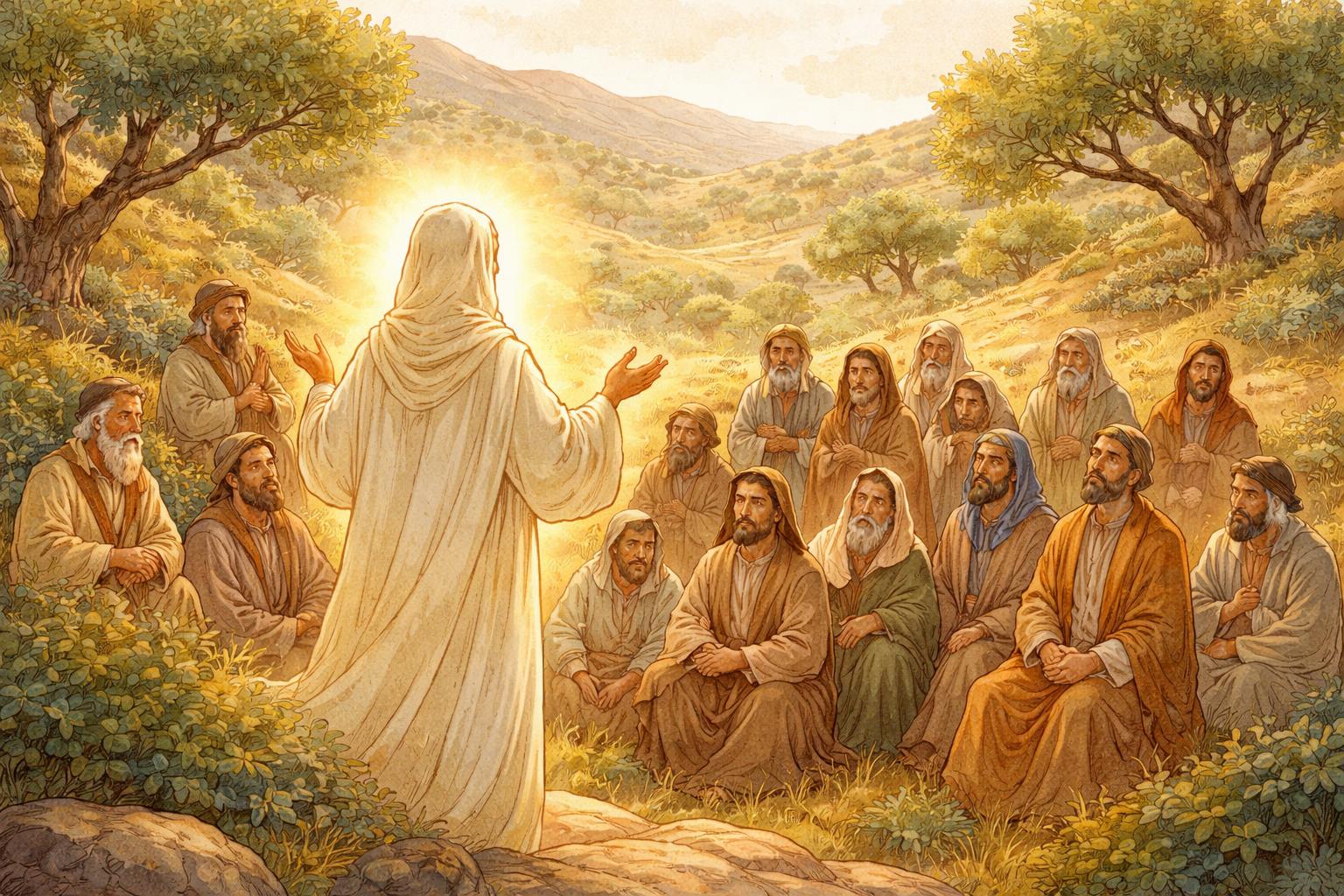
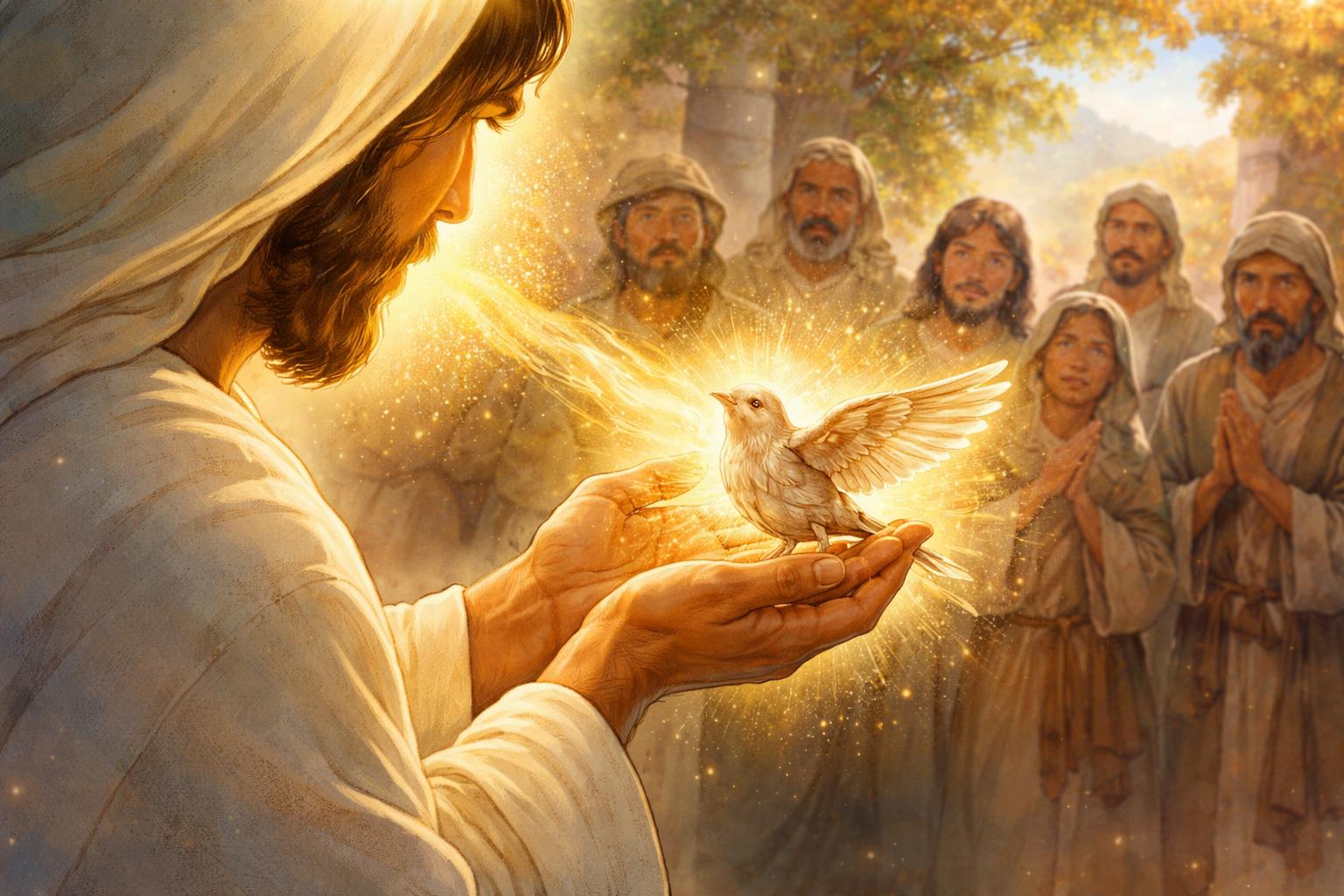
The Quran tells us that Isa (AS) said to his people: "Indeed, I have come to you with a sign from your Lord. I design for you from clay the form of a bird, then I breathe into it and it becomes a bird by the permission of Allah." Imagine watching a man take a handful of clay, shape it into the form of a bird with careful hands, then breathe upon it, and watch as the clay transforms into a living, breathing creature that spreads its wings and flies away. This was not magic or illusion. It was a miracle from Allah, granted to Isa (AS) to prove that his message was true.
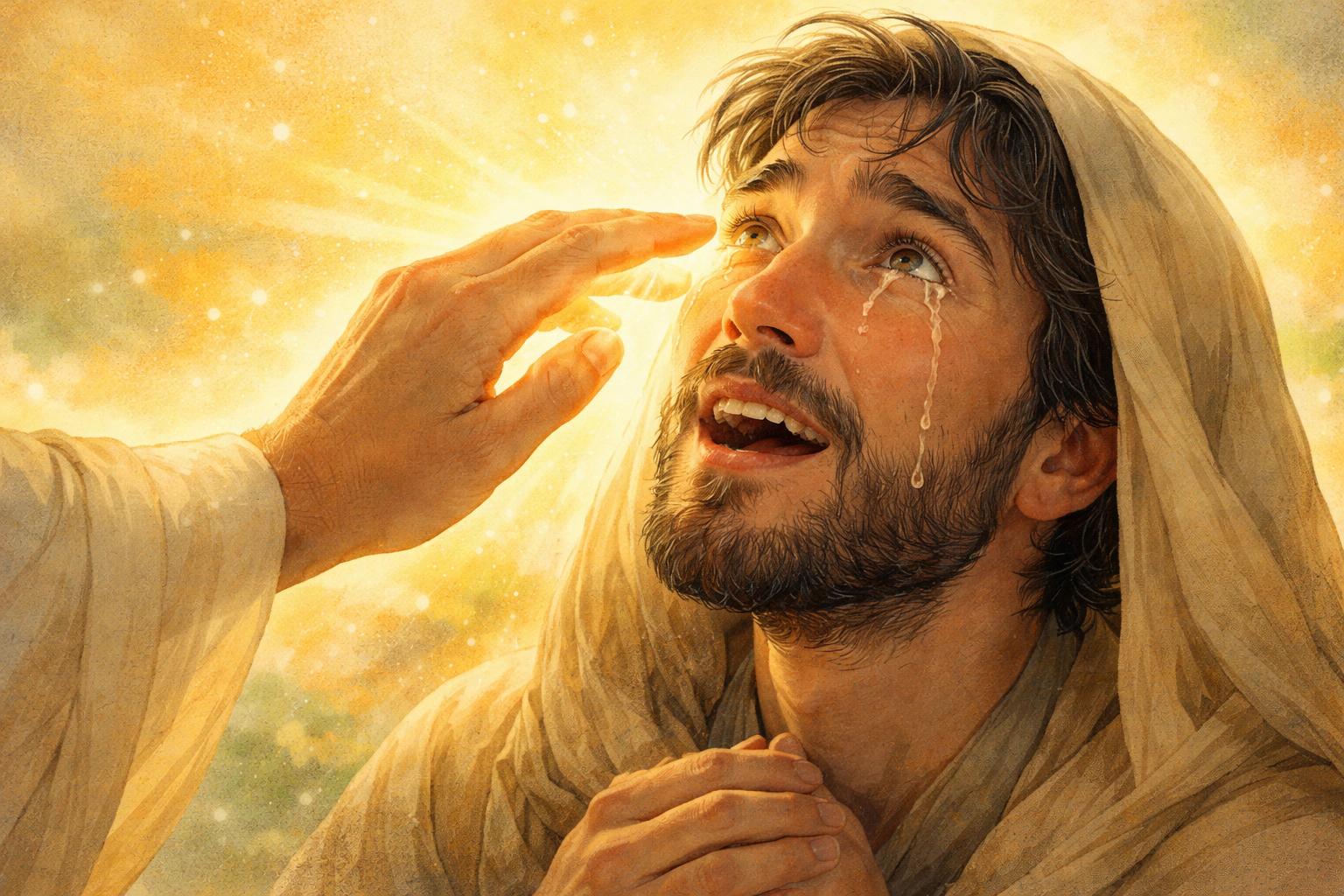
He continued: "And I cure the blind and the leper, and I give life to the dead, by the permission of Allah." People who had been blind from birth would come to Isa (AS), and by the power Allah gave him, their eyes would open and they would see the world for the first time. Those suffering from leprosy, a disease that in those days made people outcasts, would be healed at his touch. And those who had died would, by Allah's permission, return to life.
But notice how Isa (AS) always added those crucial words: "by the permission of Allah." He never claimed these powers were his own. He never said, "I can do these things." He always said, "Allah does these things through me." This is the mark of a true prophet, always pointing people back to the One who truly has power over all things.
He also said: "And I inform you of what you eat and what you store in your houses." He could tell people what they had eaten for breakfast and what they had hidden away in their cupboards. This was not to show off but to prove that his knowledge came from Allah, and that if Allah could grant him such intimate knowledge, then the message he brought was also from Allah.
Despite all these miracles, many of the Children of Israel refused to believe. They had become so set in their ways, so attached to the power of their religious leaders and the comfort of their traditions, that even witnessing miracles with their own eyes was not enough. They accused Isa (AS) of sorcery. They plotted against him. They tried to silence his message.
But Isa (AS) had faithful followers too. The Quran calls them the Hawariyyun, the disciples. These were people who recognized the truth in his words and devoted themselves to his mission. They said: "We are supporters of Allah. We have believed in Allah and testify that we are Muslims," meaning those who submit to Allah's will.
And now comes the story that gives tonight its title: the table from heaven.
One day, the disciples came to Isa (AS) with an unusual request. "O Isa, son of Maryam, can your Lord send down to us a table spread with food from heaven?"
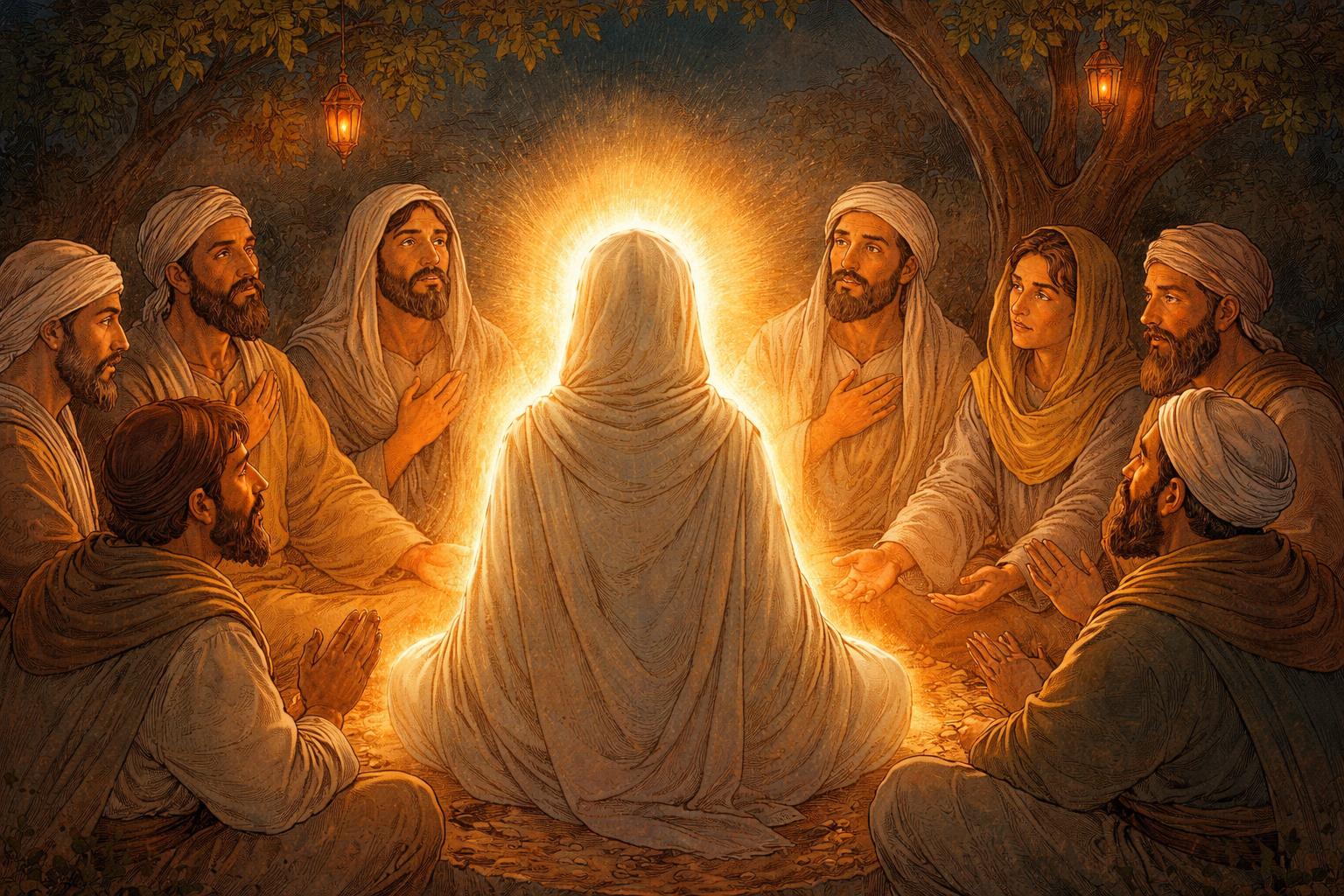
Isa (AS) was concerned by this question. "Fear Allah, if you should be believers," he told them. In other words, true faith should not need constant physical proof.
But the disciples explained: "We wish to eat from it and let our hearts be reassured and know that you have been truthful to us and be among its witnesses." They were not asking out of doubt in the way that stubborn people demand proof they plan to reject anyway. They wanted their faith strengthened. They wanted to experience Allah's generosity directly. And they wanted to be witnesses to this miracle so they could tell others.
Isa (AS) then raised his hands to the sky and made one of the most beautiful prayers in the Quran:
"O Allah, our Lord, send down to us a table spread with food from heaven to be for us a festival for the first of us and the last of us and a sign from You. And provide for us, and You are the best of providers."
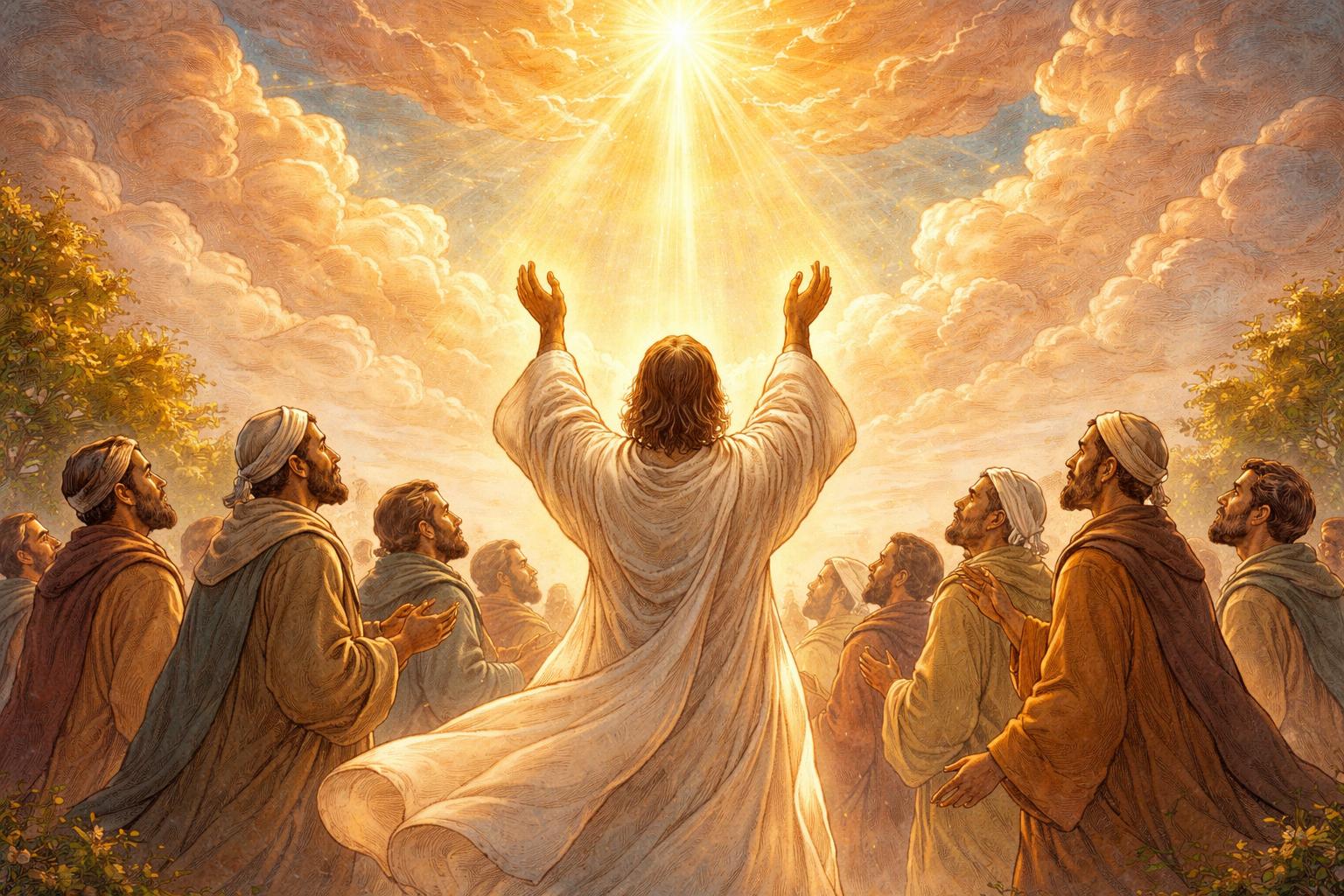
Allah answered: "Indeed, I will send it down to you. But whoever disbelieves afterward from among you, then indeed will I punish him with a punishment by which I have not punished anyone among the worlds."
And the table descended from the heavens. The Quran does not describe exactly what was on it, but the scholars tell us it was laden with food more magnificent than anything human hands could prepare, a feast sent directly from Allah's generosity. The disciples gathered around it, ate from it, and their hearts were filled with faith and certainty.
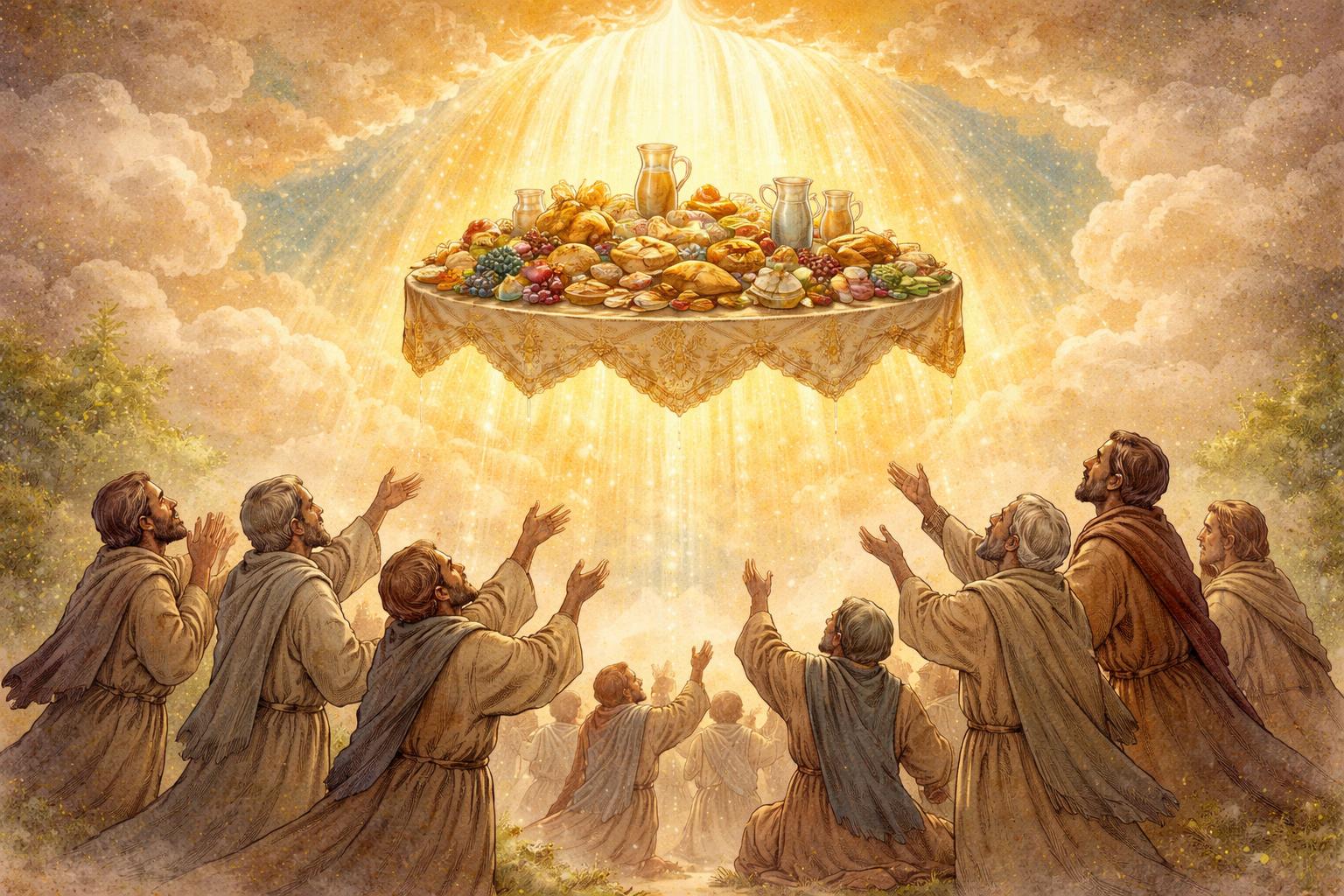
This miracle of the Ma'idah, the table, is so important that the entire fifth surah of the Quran is named after it: Surah Al-Ma'idah.
The story of the Ma'idah teaches us something profound about the relationship between humans and Allah. Allah is the ultimate provider. Every meal you eat, every glass of water you drink, every breath you take, all comes from Allah. The table from heaven was a dramatic, visible demonstration of what happens invisibly every single day.
Isa (AS) also taught his followers to care for the poor, to heal the sick, and to treat every person with dignity. His message was fundamentally about justice and compassion, the same values that run through every prophetic message from Adam to Muhammad, peace be upon them all.
In the Shia tradition, the faithful disciples of Isa (AS) are seen as models for the faithful companions of the Imams. Just as the Hawariyyun stood by Isa (AS) when most people turned against him, the loyal companions of Imam Ali (AS), Imam Husayn (AS), and the other Imams stood by truth when the majority chose convenience over principle.
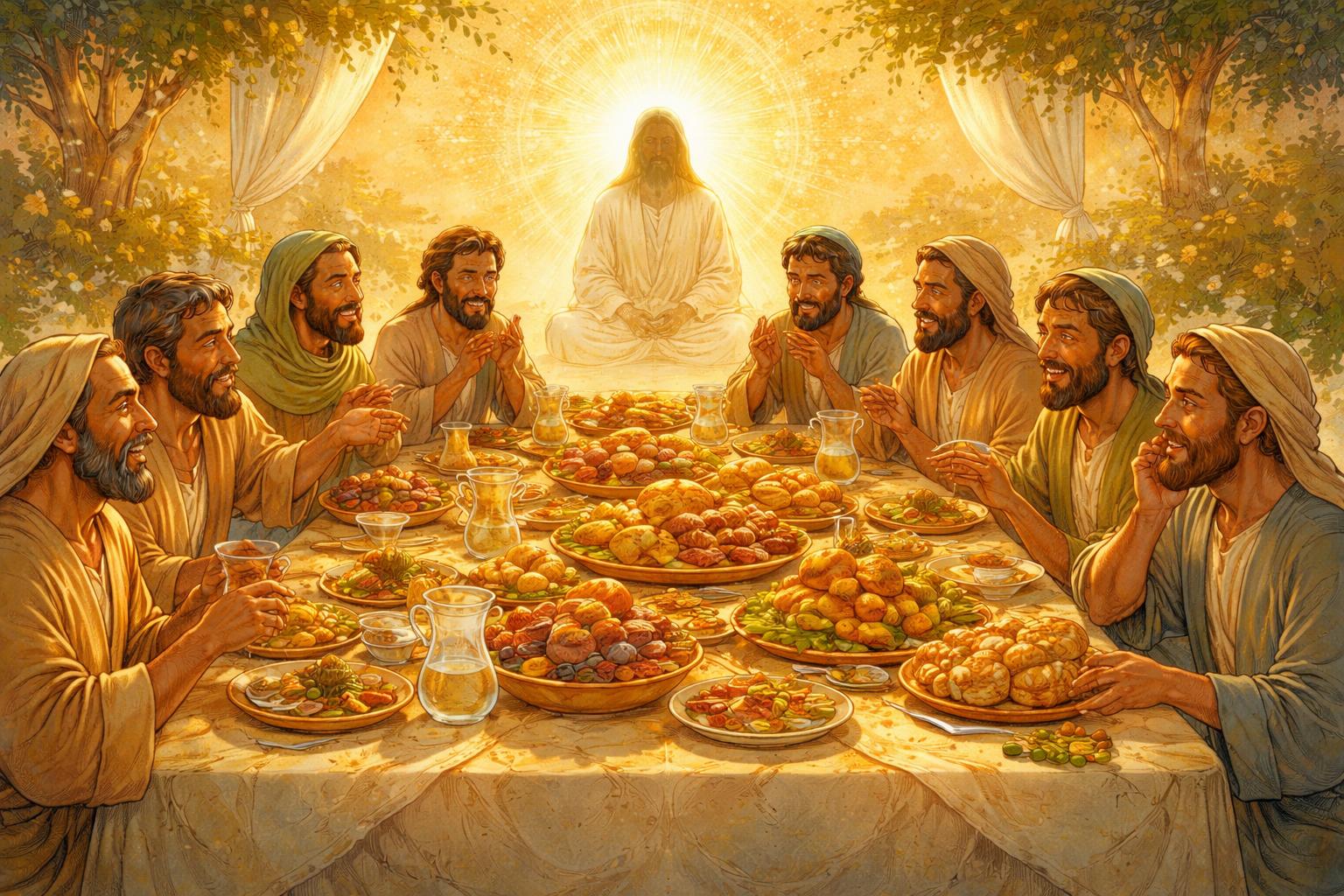
Imam Ali (AS) spoke beautifully about Isa (AS) in Nahj al-Balagha: "Isa, son of Maryam, used a stone for his pillow, wore rough clothes, and ate coarse food. His lamp at night was the moonlight. His shade in winter was the eastern and western regions of the earth. His fruits and herbs were what grows from the earth for cattle. He had no wife to tempt him, no child to grieve for, no wealth to distract him, and no greed to disgrace him. His two feet were his mount, and his two hands were his servants." This description emphasizes Isa's simplicity and devotion, qualities valued deeply in the Shia tradition.
The miracles of Isa (AS) were not parlor tricks or magic shows. They were signs, ayat, pointing people toward Allah. The clay bird showed Allah's power to create life. The healing showed Allah's power over illness. The table showed Allah's power to provide. Every miracle said the same thing: "Turn to Allah. Trust Allah. Submit to Allah."
As you eat your iftar tonight, remember the table from heaven. Remember that every meal is, in its own way, a provision from Allah. And remember that true faith is not about demanding miracles but about recognizing the miraculous in the everyday.
Key Verse
"Qala 'Isa ibnu Maryama Allahumma Rabbana anzil 'alayna ma'idatan minas-sama'i takunu lana 'idan li-awwalina wa akhirina wa ayatan mink, warzuqna wa Anta khayrur-raziqeen" "Isa, son of Maryam, said, 'O Allah, our Lord, send down to us a table from heaven to be for us a festival for the first of us and the last of us, and a sign from You. And provide for us, and You are the best of providers.'" -- Al-Ma'idah (5:114)
Reflection Questions
- Isa (AS) always said his miracles were "by the permission of Allah." Why is it important to give credit to Allah for our abilities and achievements rather than claiming them as our own?
- The disciples asked for the table not from disbelief but to strengthen their faith. Is it okay to ask Allah for signs that strengthen your faith? How is this different from demanding proof?
- Imam Ali (AS) described Isa (AS) as someone who lived with extreme simplicity. What can we learn from this about what really matters in life?
Last night, we heard the beautiful story of how baby Isa spoke from his cradle. Tonight, we follow Isa (peace be upon him) as he grows up and does the most amazing things you have ever heard of. Are you ready? Because this story is full of miracles!
Isa grew up with his mother Maryam, and from the very beginning, everyone could see that he was a very special child. He was wise, he was gentle, and he loved Allah so much. When he became a grown man, Allah gave him a very important job. He was to be a prophet, a messenger of Allah, sent to teach people to be good and to worship only Allah.
But Allah did not just give Isa words to say. He also gave him the most incredible miracles. These miracles were like gifts from Allah to show people that Isa was telling the truth.
Here is the first miracle, and it is really something. Isa would take a lump of clay, the same kind of squishy mud you might play with outside, and he would shape it with his hands into the form of a little bird. He would carefully make the wings, the beak, the tiny feet. Then, he would gently breathe on it, and guess what happened? The clay bird came to life! It flapped its little wings, chirped, and flew away into the sky!
Can you imagine watching that? A bird made of mud, suddenly alive and flying! That was not a magic trick. That was the power of Allah, working through Isa.
And there were more miracles. People who had been blind their whole lives, who had never, ever seen anything, not the sun, not the sky, not their own mother's face, would come to Isa. He would touch them, and suddenly their eyes would open and they could see! Everything was bright and beautiful and new. They could see colors and faces and the blue sky for the very first time!
People who were very, very sick would come to Isa, too. He would help them, and by the power of Allah, they would be healed. They would jump up and feel strong and healthy again.
But here is something very important. Every single time Isa did a miracle, he always, always said the same thing. He said, "This is by the permission of Allah." He never said, "Look at me, I am so powerful!" He always said, "This is Allah's power, not mine."
That is what a true prophet does. A true prophet always points people back to Allah.
Isa could also tell people what they had eaten for breakfast that morning, and what they had hidden in their cupboards at home! He did not do this to show off. He did it so people would know that his knowledge came from Allah, and that meant his message also came from Allah.
Now, even with all these amazing miracles, not everyone believed Isa. Some people said he was making tricks. Some people were jealous. Some people just did not want to change their ways. That made Isa sad, but he kept going.
He did have some very special friends, though. The Quran calls them the Hawariyyun, which means the helpers or the disciples. These were good, kind people who believed in Isa and wanted to help him. They said, "We believe in Allah, and we will support you, Isa!"
And now comes the story that gives tonight its special name: the table from heaven.
One day, Isa's friends, the disciples, came to him with a very big request. They said, "O Isa, son of Maryam, could your Lord send down to us a table full of food from heaven?"
Isa looked at them and said, "You should have faith in Allah." He wanted them to believe without needing to see more miracles.
But his friends explained, "We do believe! We really do! But we want to eat from a heavenly meal and let our hearts feel even more sure. We want to see it with our own eyes so we can tell everyone about it."
They were not asking because they did not believe. They were asking because they loved Allah and wanted to feel even closer to Him. It is like when you know your parents love you, but it still feels so nice to get a warm hug from them. You do not doubt their love. You just want to feel it.
So Isa raised his hands up high to the sky and made one of the most beautiful prayers in the whole Quran. He said, "O Allah, our Lord! Send down to us a table of food from heaven. Let it be a special celebration for all of us, the first and the last. Let it be a sign from You. And give us food, because You are the very best at giving."
Allah answered Isa's prayer. He said, "I will send it down to you. But whoever stops believing after this, I will give them a very serious punishment."
And then, down it came! A table, floating down from the sky, full of the most wonderful food anyone had ever seen. It was more beautiful and more delicious than anything any cook on earth could ever make. It was a feast sent straight from Allah!
The disciples gathered around the table. They could not believe their eyes! They ate the food, and it was the most amazing thing they had ever tasted. Their hearts filled up with faith and happiness and thankfulness to Allah.
This miracle was so important that a whole chapter of the Quran is named after it. It is called Surah Al-Ma'idah, which means "The Table."
You know what this story teaches us? It teaches us that Allah is the One who gives us everything. Think about it. Every single meal you eat comes from Allah. The rice, the bread, the fruits, the water, all of it is a gift from Allah. The table from heaven was a very special, very big reminder of something that happens every single day. Allah feeds us! Allah takes care of us!
Isa also taught his followers to be kind to poor people, to take care of sick people, and to treat every single person with respect. His message was all about being fair and having a caring heart.
In our Shia tradition, the faithful friends of Isa are very special to us. They stood by him even when most people turned against him. They remind us of the loyal companions of our Imams. Just like the disciples stayed with Isa when it was hard, the faithful friends of Imam Ali (peace be upon him) and Imam Husayn (peace be upon him) stayed with the truth even when almost everyone else walked away.
Imam Ali (peace be upon him) once talked about how Isa lived. He said that Isa used a stone for his pillow. He wore simple clothes. He ate simple food. He did not have fancy things. But he was one of the happiest and most peaceful people who ever lived, because he was close to Allah. That is what really matters, not having lots of stuff, but having lots of love for Allah.
So tonight, when you sit down to eat your iftar, look at your food. Really look at it. The warm rice, the yummy soup, the sweet dates. And remember that every single bite is a gift from Allah, just like that table from heaven. Say "Bismillah" before you eat, which means "In the name of Allah." And say "Alhamdulillah" when you are done, which means "All thanks to Allah."
Because every meal is a little miracle, a little table from heaven, just for you.
Key Verse
"Qala 'Isa ibnu Maryama Allahumma Rabbana anzil 'alayna ma'idatan minas-sama'i takunu lana 'idan li-awwalina wa akhirina wa ayatan mink, warzuqna wa Anta khayrur-raziqeen" "Isa said, 'O Allah, our Lord, send us a table of food from heaven. Let it be a celebration for all of us and a sign from You. Give us food, for You are the best at giving.'" -- Al-Ma'idah (5:114)
Let's Talk About It
- Isa always said his miracles were "by the permission of Allah." Why is it important to thank Allah when we can do something good, instead of saying "I did it all by myself"?
- Isa's friends asked for the table of food because they wanted their hearts to feel even more sure about Allah. What is something that makes your heart feel close to Allah?
- Every meal we eat is a gift from Allah, just like the table from heaven. What is your favorite food, and can you say "thank you, Allah" for it tonight?