The Golden Calf: A Lesson in Loyalty
Dangers of following the crowd; staying loyal to truth
Tonight's story is one of the most painful in the Quran. It is the story of a people who witnessed miracle after miracle, who were saved from slavery, who saw the sea split before their eyes, and who, just weeks later, built an idol and bowed down to it. It is the story of the golden calf, and it carries a warning that every generation needs to hear.
We have heard about Prophet Musa (AS) in several of our stories. We saw him parting the sea, speaking to Allah on the mountain, and journeying with Khidr. Tonight, we return to a moment right after Musa (AS) went up Mount Sinai to receive the divine tablets.
Before ascending the mountain, Musa (AS) had appointed his brother, Prophet Harun (AS), as his deputy. "Be my successor among my people," Musa told him. "Act rightly, and do not follow the way of the corrupters." This appointment was clear: Harun (AS) was to lead the people in Musa's absence.
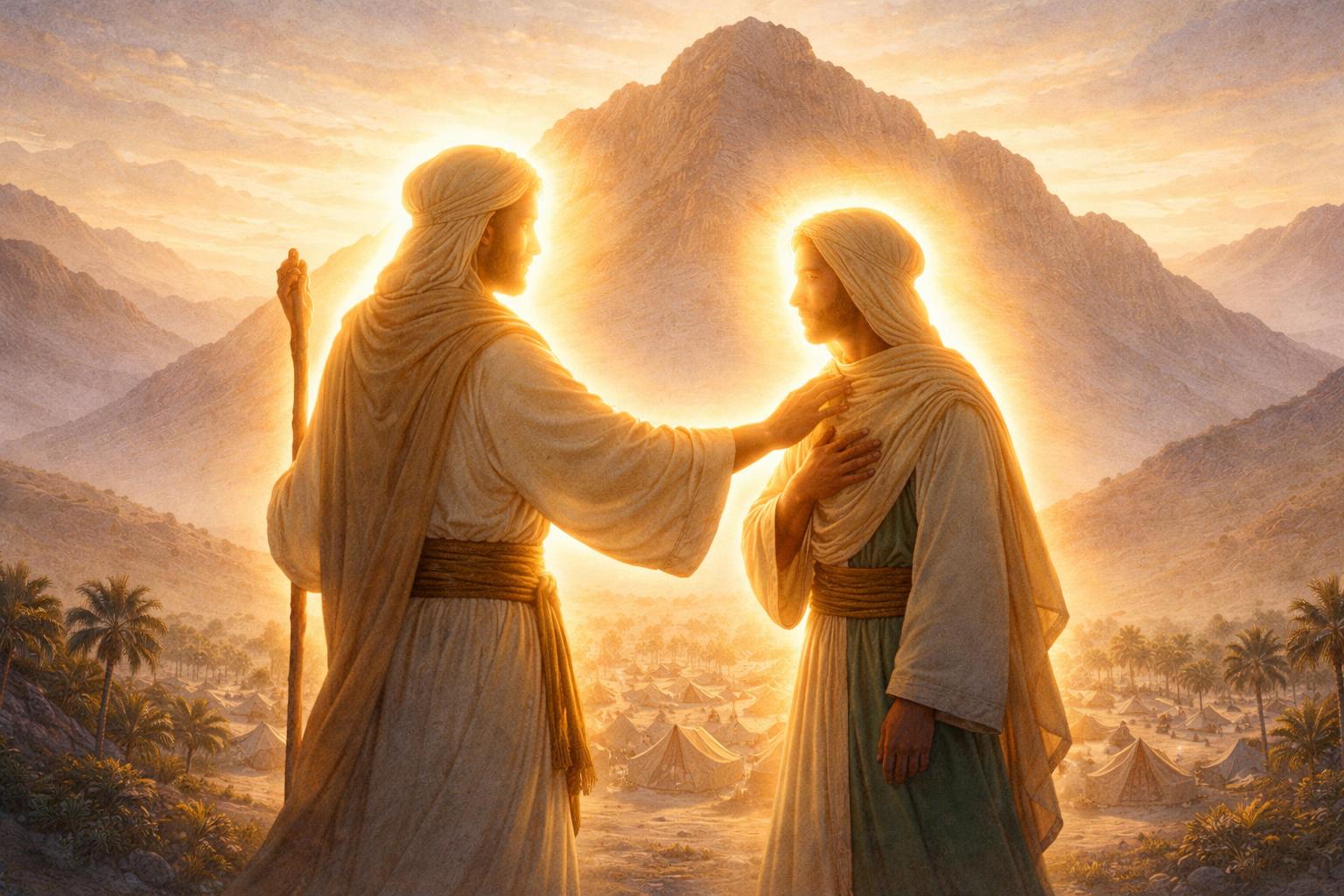
But Musa (AS) was gone longer than expected. The forty days stretched on, and the people grew restless. They had been freed from Pharaoh's slavery not long ago, and despite all the miracles they had witnessed, their hearts were still weak. They were used to having a visible leader, someone they could see and touch.
Among them was a man named Samiri. He was clever and persuasive, but his heart was corrupt. He saw the people's anxiety and decided to exploit it. He gathered gold, jewelry and ornaments that the people had brought from Egypt, and he melted them down. Using his skill, he crafted a golden calf, a statue in the shape of a young cow. And through some trick or illusion, he made it produce a hollow, mooing sound.
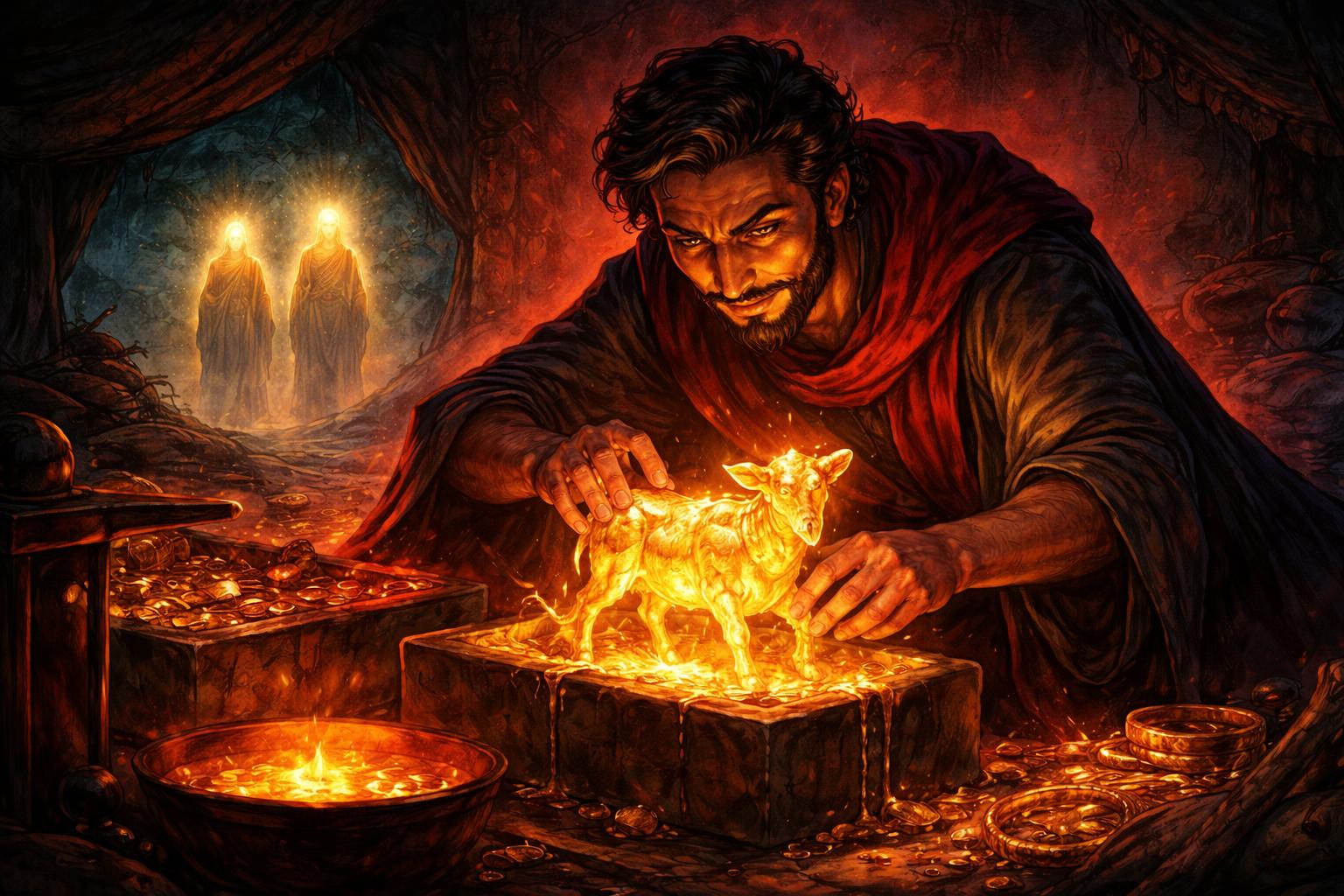
Then Samiri made his terrible declaration: "This is your god and the god of Musa, but he forgot."
The people, who should have known better, who had seen Allah's power at the sea and in the plagues, who had heard Musa (AS) tell them a thousand times that there is no god but Allah, looked at this golden statue and said: "Yes! This is what we will worship!"
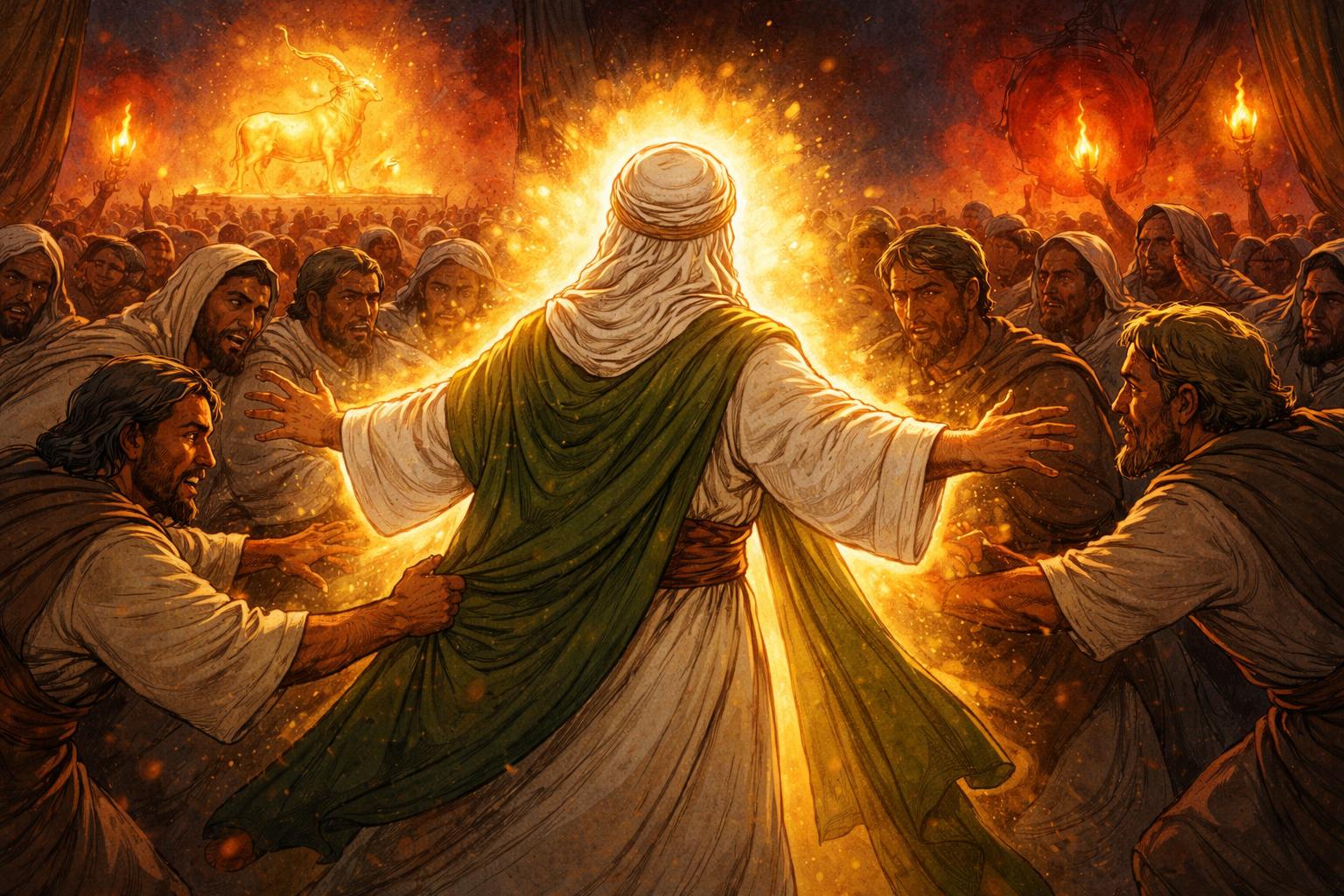
Not all of them fell for the deception. Harun (AS), loyal and true, stood against the tide. He called out to them: "O my people, you are only being tested by this. Indeed, your Lord is the Most Merciful, so follow me and obey my command!"
But they did not listen. The crowd swept past him like a flood. Some grabbed him roughly. They threatened him. They surrounded him with hostility. Harun (AS), a prophet of Allah, was pushed aside by his own people because he stood between them and their idol.
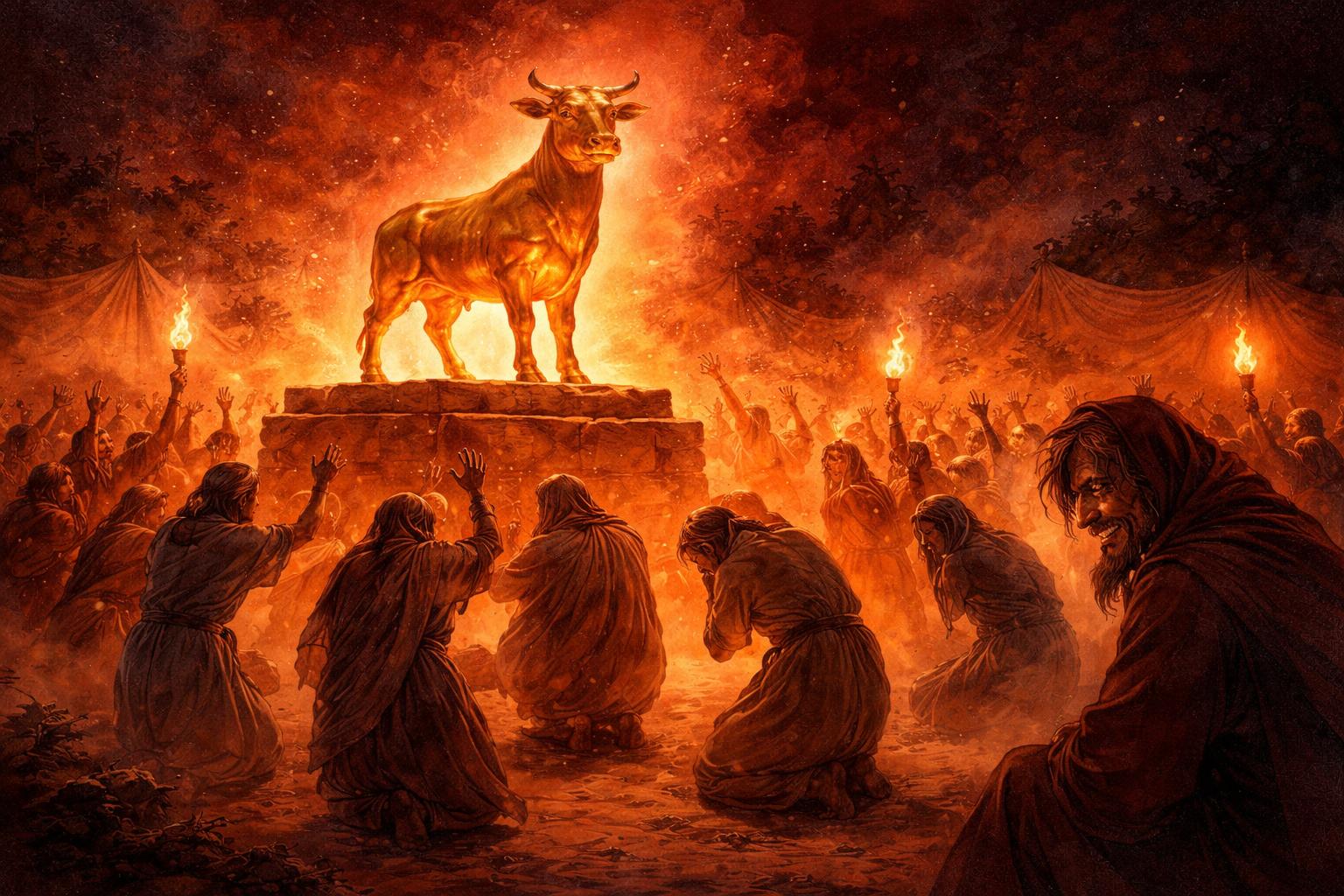
This moment is crucial for understanding what happened. Harun (AS) did not stay silent out of agreement. He did not join them out of fear. He opposed them clearly and was overwhelmed. He chose to maintain what unity he could rather than cause bloodshed among the people, hoping that Musa's return would set things right.
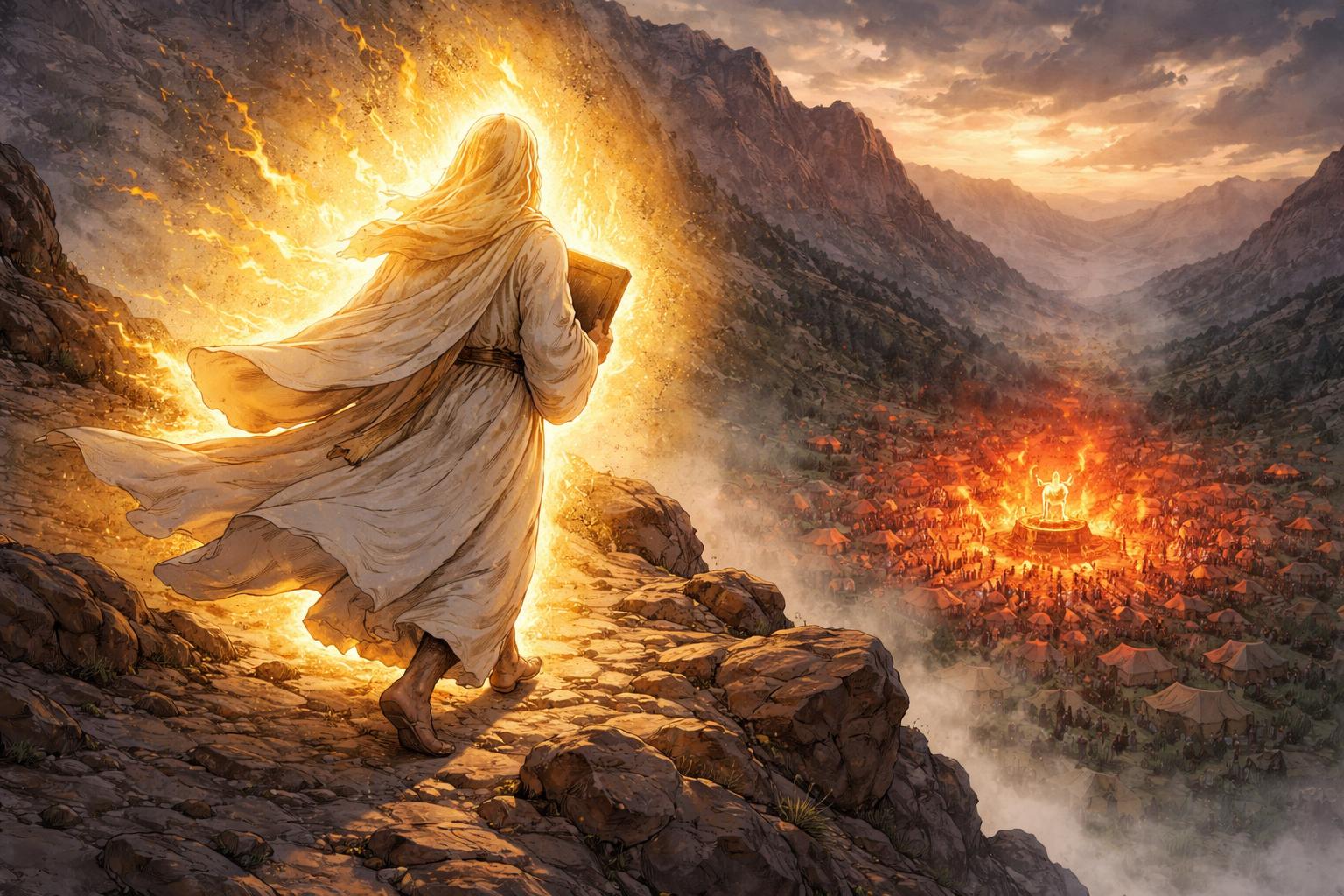
And return Musa did, carrying the divine tablets. When he came down from the mountain and saw his people dancing around a golden calf, his anger was so intense that the Quran says he threw down the tablets. He grabbed his brother by the head, pulling him close, and demanded: "O Harun, what prevented you, when you saw them going astray, from following my instructions? Did you then disobey my order?"
Harun's response is heartbreaking: "O son of my mother, do not seize me by my beard or by my head. Indeed, I feared that you would say, 'You caused division among the Children of Israel, and you did not observe my word.'"
Harun (AS) had been in an impossible position. If he fought the people with force, they would have split into warring factions, and he would be blamed for dividing them. If he waited for Musa (AS), he risked being blamed for not stopping the worship. He chose the path that preserved the most unity while still speaking the truth. And Musa (AS), once he understood the full situation, accepted his brother's reasoning.
Then Musa (AS) turned to the people. His words were fierce: "What was your affair, O Samiri?"
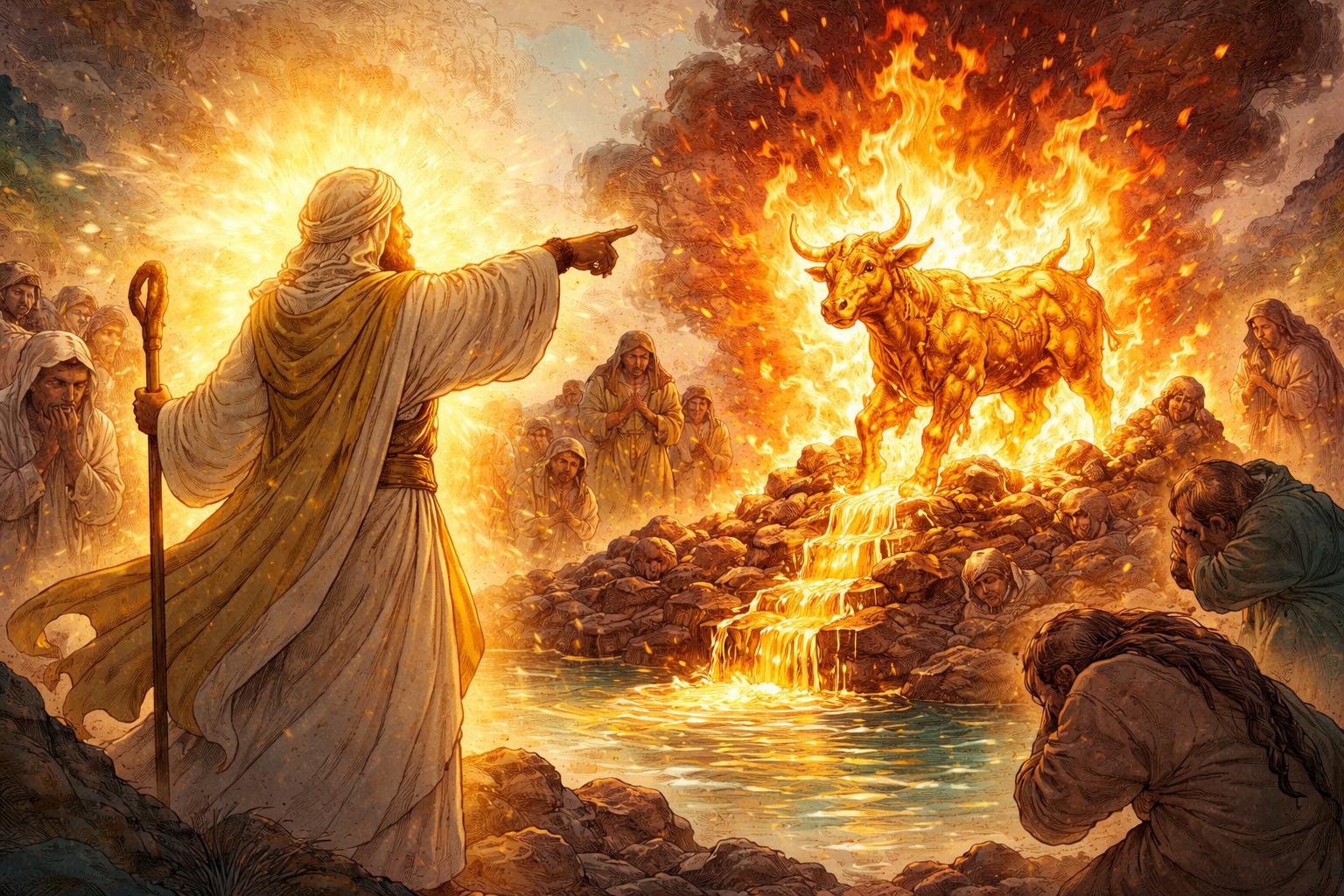
Samiri tried to justify himself, but Musa (AS) pronounced his punishment: "Then go. And indeed, it is decreed for you in this life to say, 'No contact.' And indeed, you have an appointment in the Hereafter which you will not fail to keep. And look at your god to which you remained devoted. We will surely burn it and scatter it into the sea with a scattering."
The golden calf was burned and its remains were cast into the sea. The false god that had dazzled them was reduced to nothing.
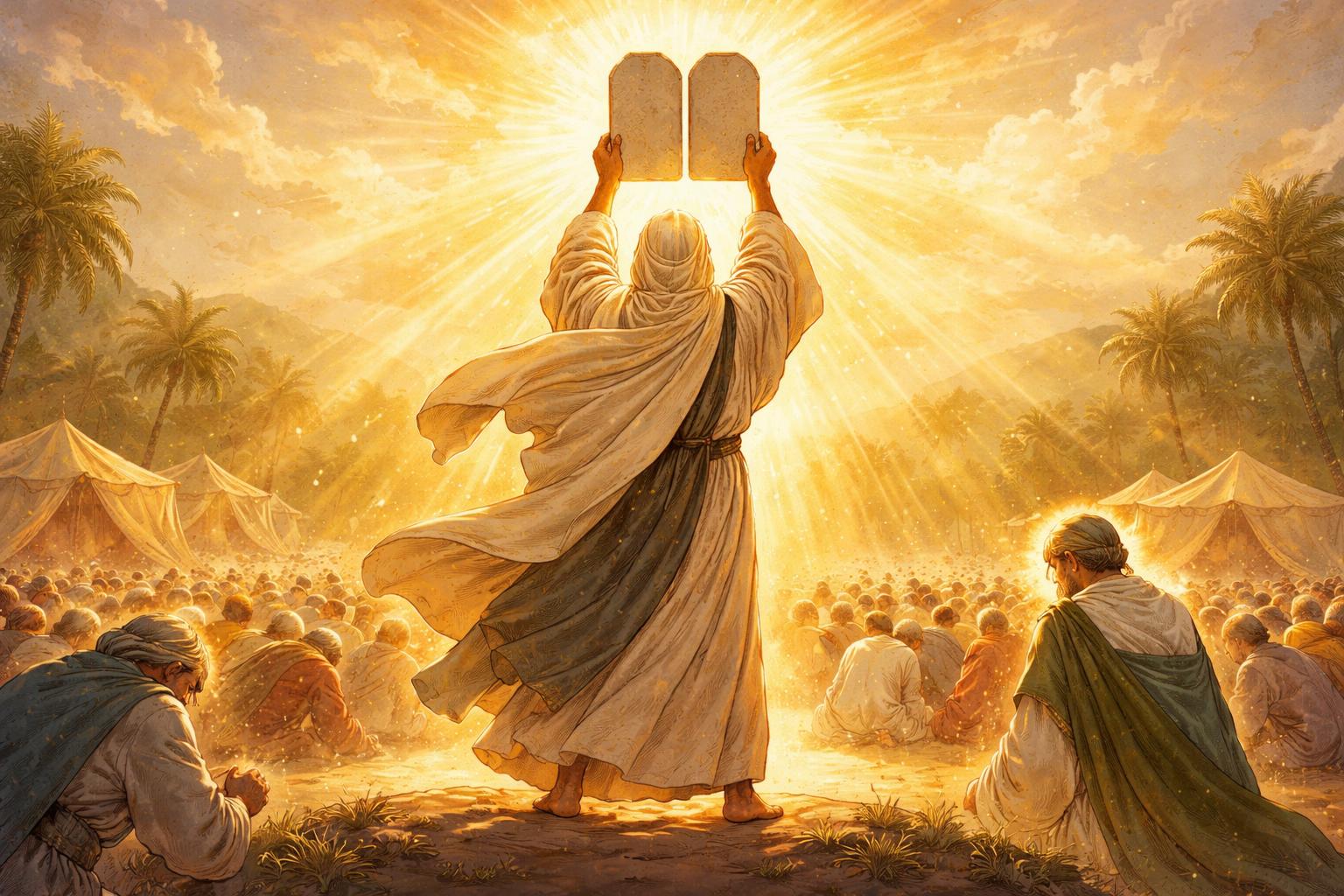
Then Musa (AS) declared the truth that rings through all of history: "Your god is only Allah, other than whom there is no deity. He has encompassed all things in knowledge."
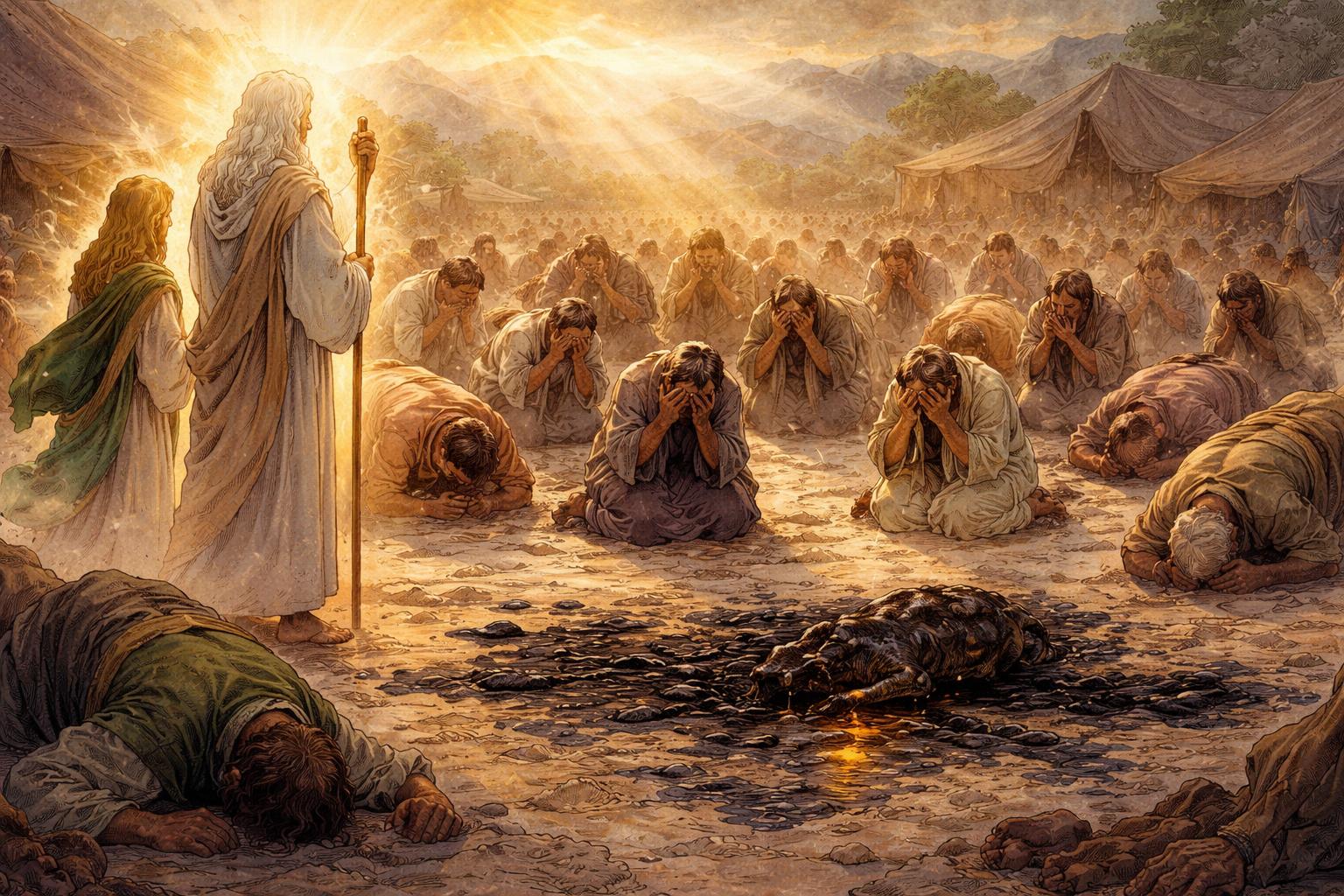
The people wept with regret. Those who had worshipped the calf were punished, and they had to sincerely repent to be forgiven. The incident left a deep scar on the community, a reminder of how quickly people can abandon truth when their leader is away.
In the Shia tradition, this story holds particular significance because of the parallel between Harun and Imam Ali (AS). The Prophet Muhammad (PBUH) said to Ali (AS): "You are to me as Harun was to Musa, except that there is no prophet after me." This is the famous Hadith al-Manzilah.
Just as Harun (AS) was appointed as Musa's successor and then pushed aside by people who chose to follow a different path, Ali (AS) was appointed by the Prophet as his successor at Ghadir Khumm, yet after the Prophet's death, the community chose differently. The Shia see in the golden calf story a warning that people can turn away from the appointed leader even after the clearest instruction.
Imam Ali (AS) himself faced this parallel directly. He said: "I remained patient even though there was a thorn in my eye and a bone stuck in my throat." Like Harun (AS), he chose patience and unity over civil war, even as his right was set aside.
The lesson for us is vital: truth does not depend on popularity. The golden calf was shiny and made noise, and almost everyone followed it. But it was still just gold. It could not hear, could not help, could not save. The truth, standing in the person of Harun (AS), was alone and ignored, but it was still the truth.
In your life, there will be golden calves, things that glitter and attract crowds: popularity, trends, peer pressure, things that everyone seems to follow. And there will be moments when the truth stands alone, when doing the right thing means standing against the crowd. In those moments, remember Harun (AS). Remember that the crowd was wrong, and the lone voice of truth was right. Be the person who follows truth, not noise.
Key Verse
"Qala ya qawmi innama futintum bih, wa inna Rabbakumur-Rahman, fattabi'uni wa ati'u amri" "He (Harun) said, 'O my people, you are only being tested by this. Indeed, your Lord is the Most Merciful, so follow me and obey my command.'" -- Taha (20:90)
Reflection Questions
- The people had witnessed the sea splitting and still worshipped a golden calf weeks later. Why do you think people can forget truth so quickly, and how can we protect ourselves from this?
- Harun (AS) was pushed aside even though he was right. Have you ever been in a situation where you knew the truth but the majority disagreed? How did you handle it?
- The golden calf was shiny and made noise, but it was just gold. What "golden calves" exist in our world today, things that attract attention and followers but have no real value?
Tonight's story is a very important one. It is about something that really happened a long time ago, and it carries a lesson that we all need to hear, even today. It is about what happens when people follow the crowd instead of following the truth. It is the story of the golden calf.
Do you remember Prophet Musa (peace be upon him)? We have heard about him before. He is the prophet who stood up to the mean Pharaoh. He is the prophet who, by Allah's power, split the sea in half so his people could walk through on dry ground! His people, the Children of Israel, had seen so many amazing miracles. They had seen the sea open up like a giant door. They had been saved from slavery. Allah had taken care of them again and again.
Now, Musa had to go up a big mountain called Mount Sinai. Allah was going to give him something very special up there, special tablets with holy writing on them. But before Musa left, he called his brother, Prophet Harun (peace be upon him).
"Harun," Musa said, "I need you to take care of the people while I am gone. Be their leader. Make sure they do the right thing. And do not let anyone cause trouble."
Harun nodded. "I will do my best," he said. Harun was a good man, a prophet of Allah, kind and gentle and honest.
So Musa climbed up the mountain, and the people waited. And waited. And waited some more. Musa was supposed to be gone for forty days, but to the people, it felt like forever! They got nervous. They got fidgety. "Where is Musa?" they whispered to each other. "Why is he taking so long? What if he does not come back?"
Now, among the people there was a sneaky, tricky man named Samiri. Samiri saw that the people were worried, and he got a very bad idea. A very, very bad idea.
"Give me your gold!" Samiri told the people. "Give me your jewelry, your earrings, your bracelets!"
The people were confused, but they gave him their gold. And Samiri melted all that gold down in a big, hot fire. Then he shaped the melted gold into the shape of a baby cow, a calf. He was very clever with his hands, and he even made the statue produce a strange mooing sound, like a real cow.
Then Samiri held up the shiny golden calf and said the worst thing anyone could say. He said, "This is your god! This is the god of Musa, too! Musa just forgot about it!"
Can you believe that? After everything Allah had done for these people, after splitting the sea, after saving them from Pharaoh, after feeding them and protecting them, Samiri was telling them to worship a statue made of melted jewelry! A thing that could not see, could not hear, could not help anyone. Just a shiny piece of gold shaped like a cow.
And sadly, a lot of the people believed him. They looked at the shiny golden calf and said, "Yes! This is what we will worship!" They started dancing around it and bowing down to it.
But not everyone was fooled. Harun knew this was terribly wrong. He stood up tall and called out to the people, "Stop! Listen to me! You are being tested! This is a trick! Your real Lord is Allah, the Most Merciful. Follow me and listen to what I say!"
But the crowd was too excited. They were caught up in the dancing and the shiny gold and the mooing sound. They pushed Harun away. They grabbed at him roughly. They would not listen. Harun, a prophet of Allah, was pushed aside by his own people because he was telling them the truth and they did not want to hear it.
Harun felt so sad. He kept telling them it was wrong, but they would not stop. He could not fight all of them by himself, and he did not want the people to start hurting each other. So he waited, with a heavy heart, for Musa to come back.
And then Musa came down the mountain. He was carrying the beautiful tablets from Allah. But when he looked down at the camp and saw his people dancing around a golden statue, he was so angry and so upset that he dropped the tablets right there on the ground!
He marched straight to Harun and grabbed him. "Harun! What happened? Why did you let them do this?"
Harun's eyes filled with tears. "O my brother," he said, "I tried to stop them! I told them it was wrong! But they would not listen to me. They pushed me away. I was afraid that if I fought them, they would split into groups and hurt each other. I was waiting for you to come back."
When Musa heard the full story, he understood. Harun had done his best. He had spoken the truth even when nobody wanted to hear it. Sometimes, doing the right thing means standing alone, and that is exactly what Harun did.
Then Musa turned to Samiri. "What have you done?" he demanded.
Samiri tried to make excuses, but Musa was not having it. Musa said, "Your punishment is that nobody will ever touch you or come near you for the rest of your life. And look at your so-called god." Then Musa took the golden calf, burned it in the fire, and threw the ashes into the sea. Gone! The shiny golden thing that everyone had been so excited about was now nothing but dust scattered in the water.
Then Musa said to all the people, "Your god is only Allah. There is no other god but Him. He knows everything."
The people who had worshipped the calf felt terrible. They cried and cried. They knew they had made a horrible mistake. They had to ask Allah to forgive them, and they had to truly, honestly mean it.
In our Shia tradition, this story is very, very important. Do you know why? Because of something Prophet Muhammad (peace be upon him and his family) said to Imam Ali (peace be upon him). He said, "You are to me as Harun was to Musa, except that there is no prophet after me."
That means Imam Ali was like Harun. Just like Musa left Harun in charge, Prophet Muhammad chose Ali to lead after him. And just like the people pushed Harun aside and followed the wrong thing, some people pushed Ali aside, too. But Ali, just like Harun, was patient. He did not start a fight. He waited and kept telling the truth, even when most people did not want to hear it.
Imam Ali once said, "I stayed patient even though it hurt, like having a thorn in my eye." That means it was very, very hard for him, but he chose peace over fighting.
The big lesson of this story is one you need to remember your whole life: just because everyone else is doing something does not mean it is right. The golden calf was shiny and exciting, and almost everyone followed it. But it was still just gold. It could not hear. It could not help. It could not do anything. The truth was with Harun, who was standing all alone.
Sometimes in your life, your friends might want to do something that you know is wrong. Maybe they want to be mean to someone, or say something hurtful, or break a rule. And it might feel really hard to say, "No, I am not going to do that." You might feel alone, just like Harun.
But remember this story. Remember that the whole crowd was wrong, and the one person who stood up for the truth was right. Be like Harun. Be like Imam Ali. Be brave enough to follow the truth, even when everyone else is following the shiny, noisy thing.
Because shiny things do not last. But the truth lasts forever.
Key Verse
"Qala ya qawmi innama futintum bih, wa inna Rabbakumur-Rahman, fattabi'uni wa ati'u amri" "Harun said, 'O my people, you are just being tested! Your real Lord is the Most Merciful. So follow me and listen to me!'" -- Taha (20:90)
Let's Talk About It
- The golden calf was shiny and made a mooing sound, but it was just a piece of gold. Can you think of something that looks exciting but is not really good for you?
- Harun told the truth even when nobody listened and everyone pushed him away. Have you ever been in a situation where you had to say something was wrong, even though your friends disagreed?
- Prophet Muhammad said Imam Ali was like Harun. What do Harun and Imam Ali have in common that makes them both so special?