The Owner of the Garden: When Wealth Blinds
Gratitude vs. arrogance; wealth is a test
Tonight's story comes from Surah Al-Kahf, the same surah that gave us the Sleepers in the Cave and Dhul Qarnayn. But this is not about prophets or kings. It is about two ordinary men, neighbors, whose different attitudes toward wealth led them to very different ends. It is a story that could happen in any neighborhood, in any time, and the lesson it carries is as sharp today as it was when the Quran first told it.
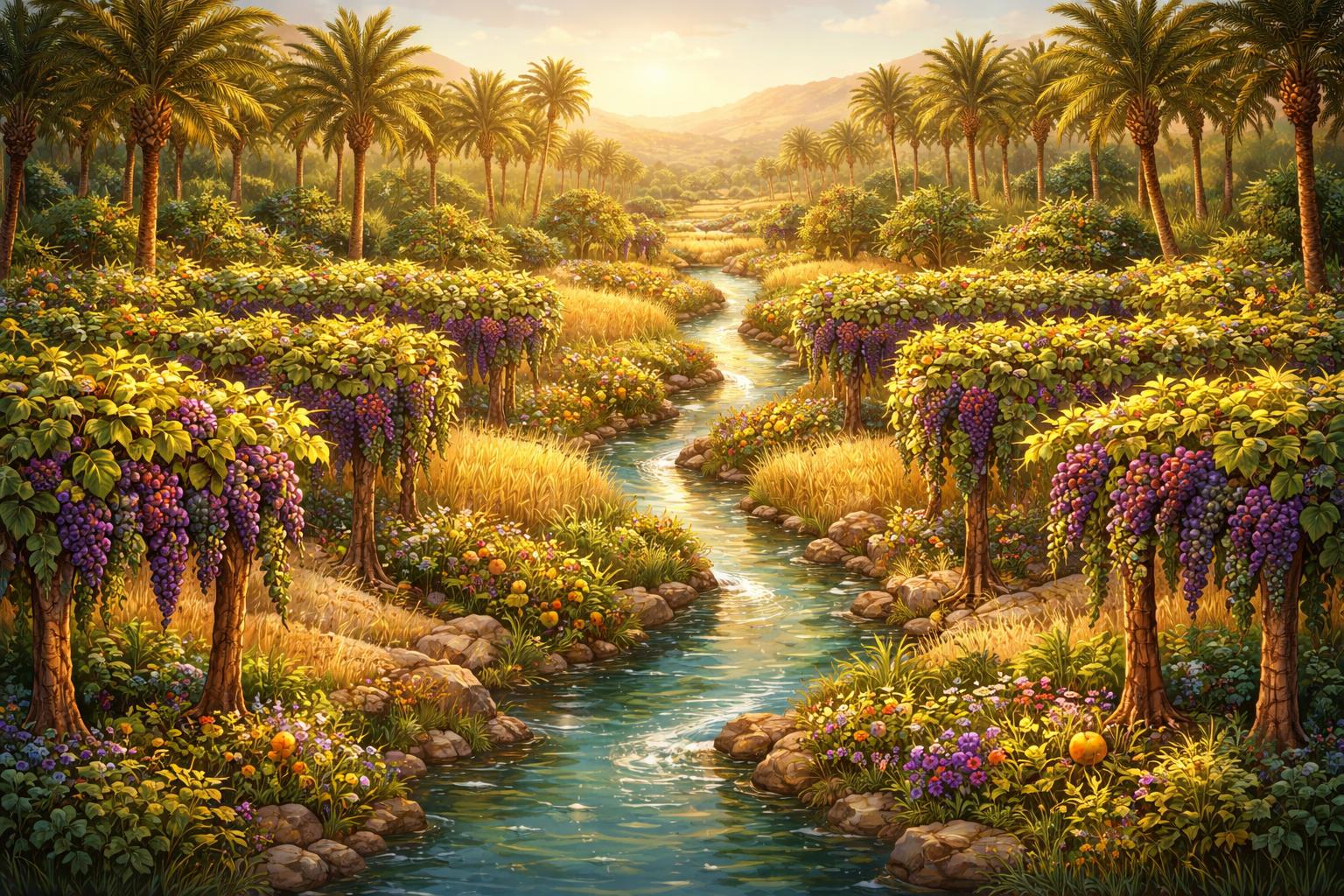
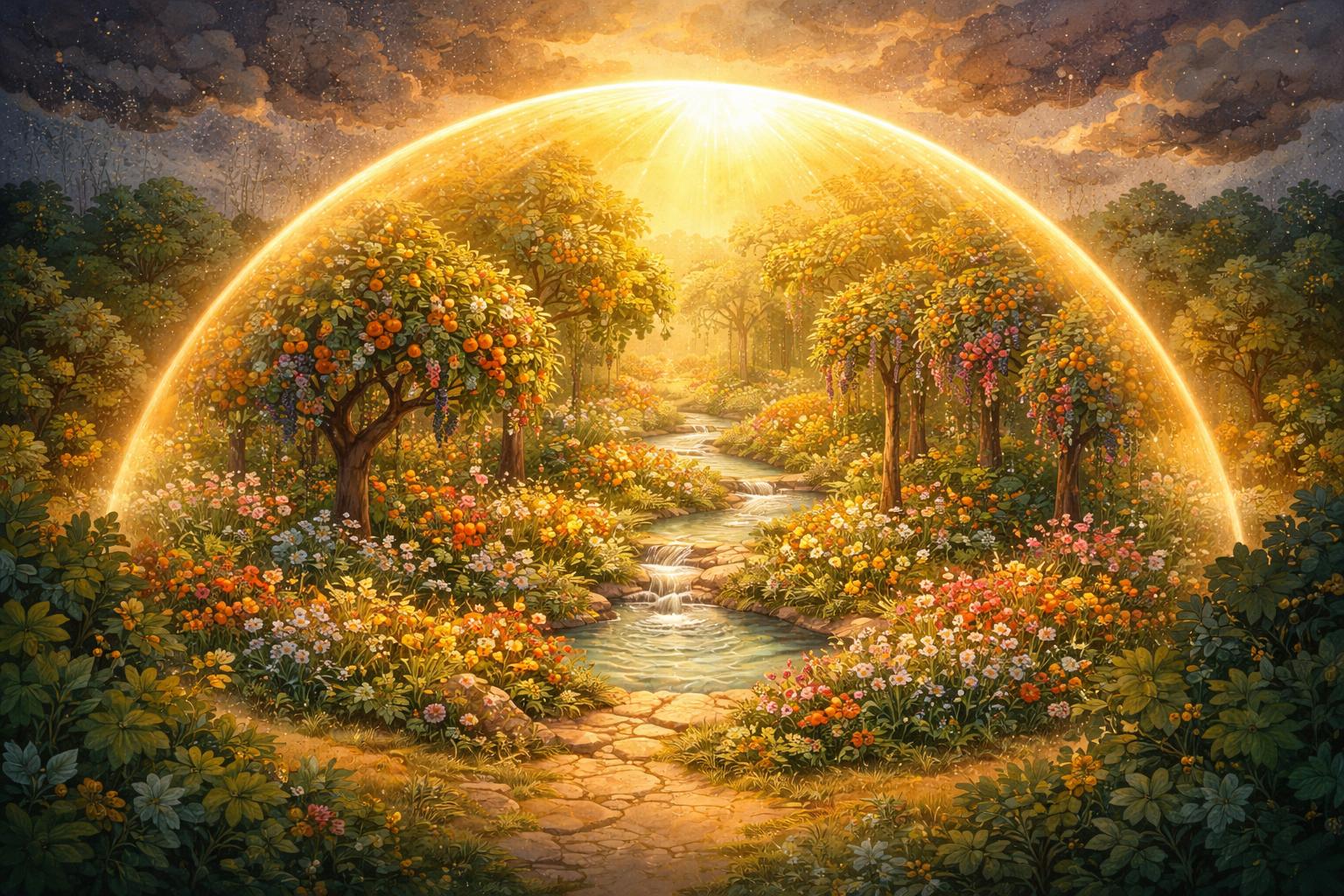
Allah presents to us a parable: two men, each given a garden. But one man's gardens were extraordinary. The Quran describes them in vivid detail: "We presented to them a parable of two men: We granted to one of them two gardens of grapevines, and We bordered them with palm trees and placed between them fields of crops."
Imagine it: two lush gardens, one beside the other, thick with grapevines hanging heavy with fruit, ringed by tall palm trees, and between them, fields of golden grain. A river ran through both gardens, watering everything. Every crop produced its full yield, nothing failed, nothing withered. It was a paradise on earth.
The owner of these magnificent gardens grew proud. Very proud. He looked at his abundance and saw in it proof of his own greatness rather than Allah's generosity. He began to believe that he deserved his wealth, that it was his by right, that it would never end.
His companion, his friend and neighbor, was a believer. He may have had less in worldly terms, but he had something the rich man lacked: gratitude and awareness of Allah.
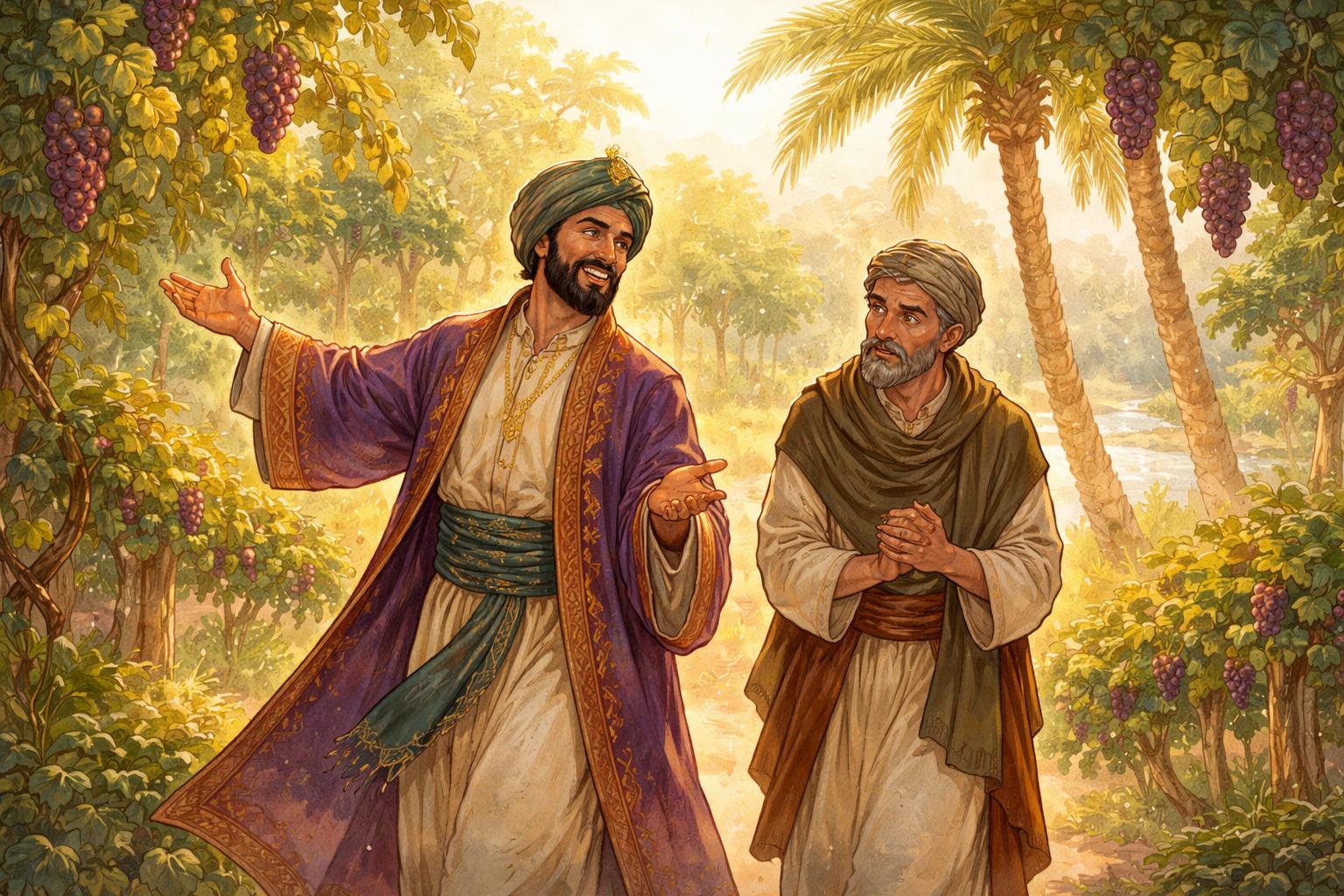
One day, the rich man invited his friend to see the gardens. He walked through the rows of grapevines, showed off the heavy fruit, pointed at the flowing river, the tall palms, the perfect fields. And as he surveyed his kingdom of green and gold, he said something that revealed the sickness in his heart.
"I do not think that this will ever perish," he declared, sweeping his hand across his vast property. In other words: this is permanent. This will last forever. I will always have this.
Then he went further: "And I do not think the Hour will ever come." He was denying the Day of Judgment itself. His wealth had made him so confident that he thought he was beyond accountability.
And then, the worst part: "And if I should be brought back to my Lord, I will surely find something better than this in return." Even if there is an afterlife, he said, someone as successful as me will surely get an even better deal there. His arrogance was complete. He thought his wealth proved that he was favored, that success in this world guaranteed success in the next.
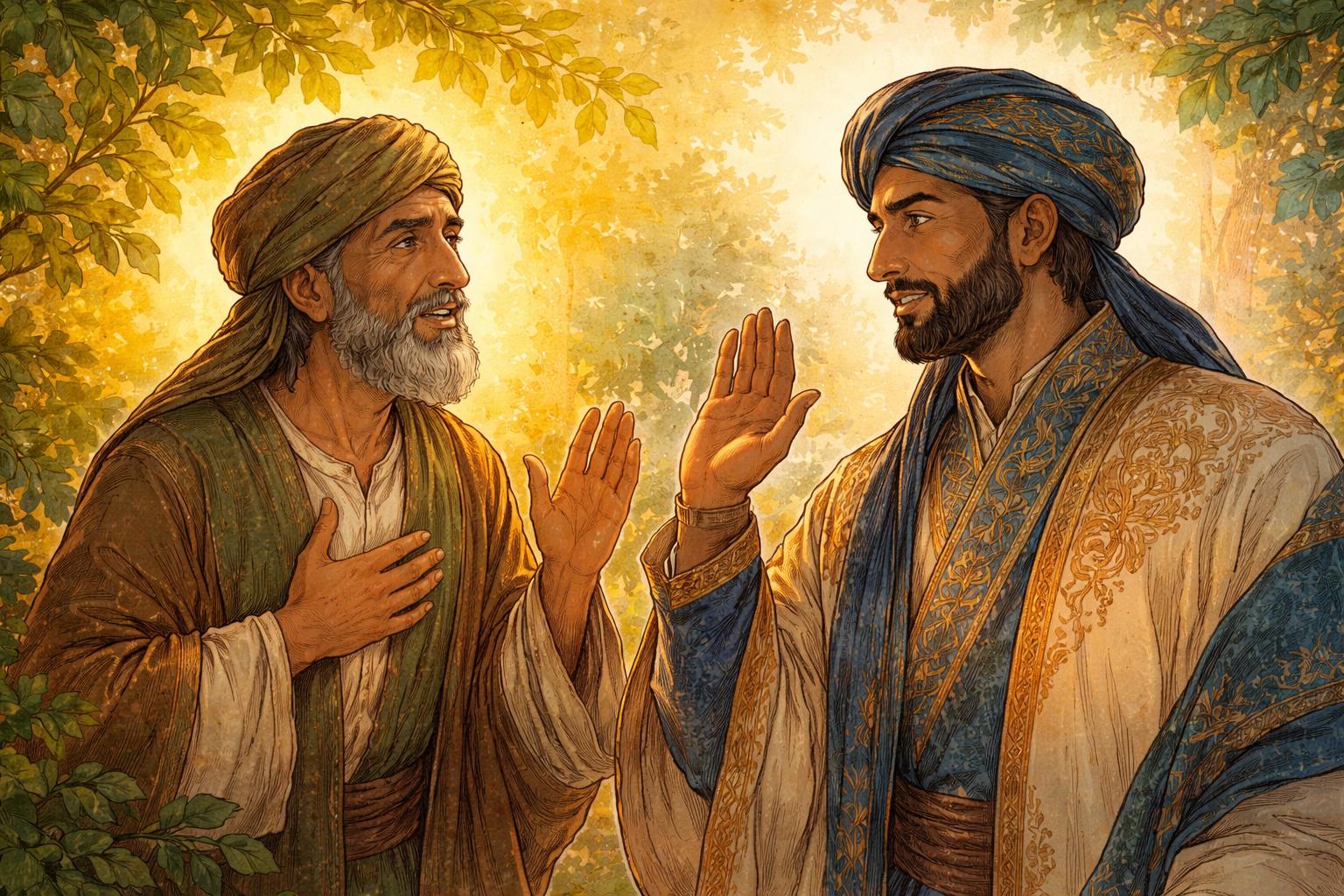
His believing companion listened to all of this with a heavy heart. Then he spoke, and his words are among the most powerful in the Quran:
"Do you disbelieve in He who created you from dust, then from a sperm-drop, then fashioned you as a man? But as for me, He is Allah, my Lord, and I do not associate anyone with my Lord."
He reminded his friend of where he came from: dust. No matter how rich you become, you started as nothing, you were created by Allah, and you will return to Him. Your wealth does not change that basic reality.
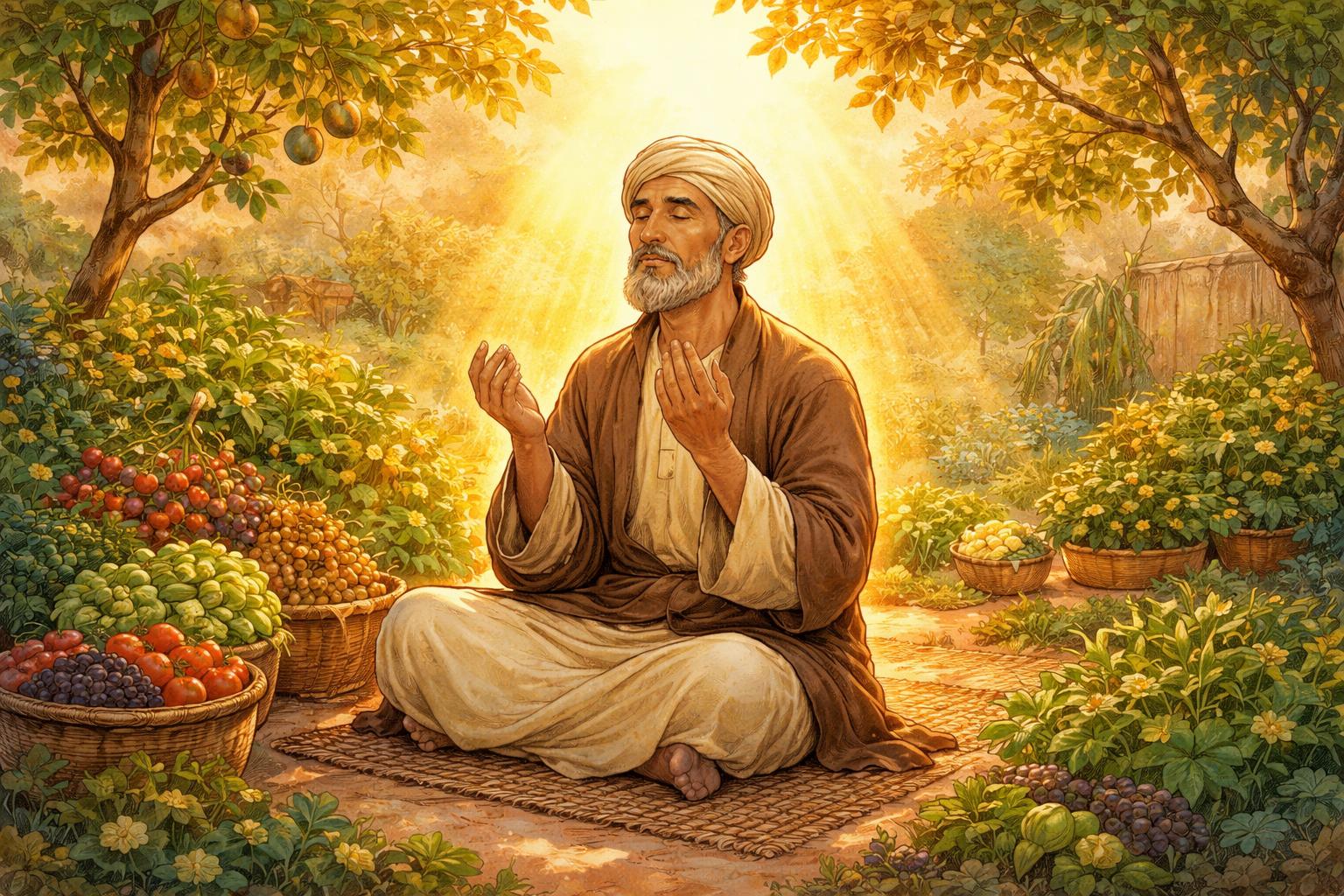
Then the believer gave him advice that shines like gold: "If only, when you entered your garden, you had said, 'Ma sha'Allah, la quwwata illa billah,' which means, 'This is what Allah has willed. There is no power except through Allah.'"
This is the key phrase, the hinge on which the entire story turns. Ma sha'Allah, la quwwata illa billah. If only the rich man had looked at his gardens and said these words, acknowledging that everything he had was from Allah and that he had no power of his own, the story might have ended differently.
The believer continued: "If you see me with less wealth and fewer children than you, perhaps my Lord will give me something better than your garden and will send upon your garden a calamity from the sky, and it will become a smooth, dusty ground, or its water will become sunken into the earth, so you will never be able to seek it."
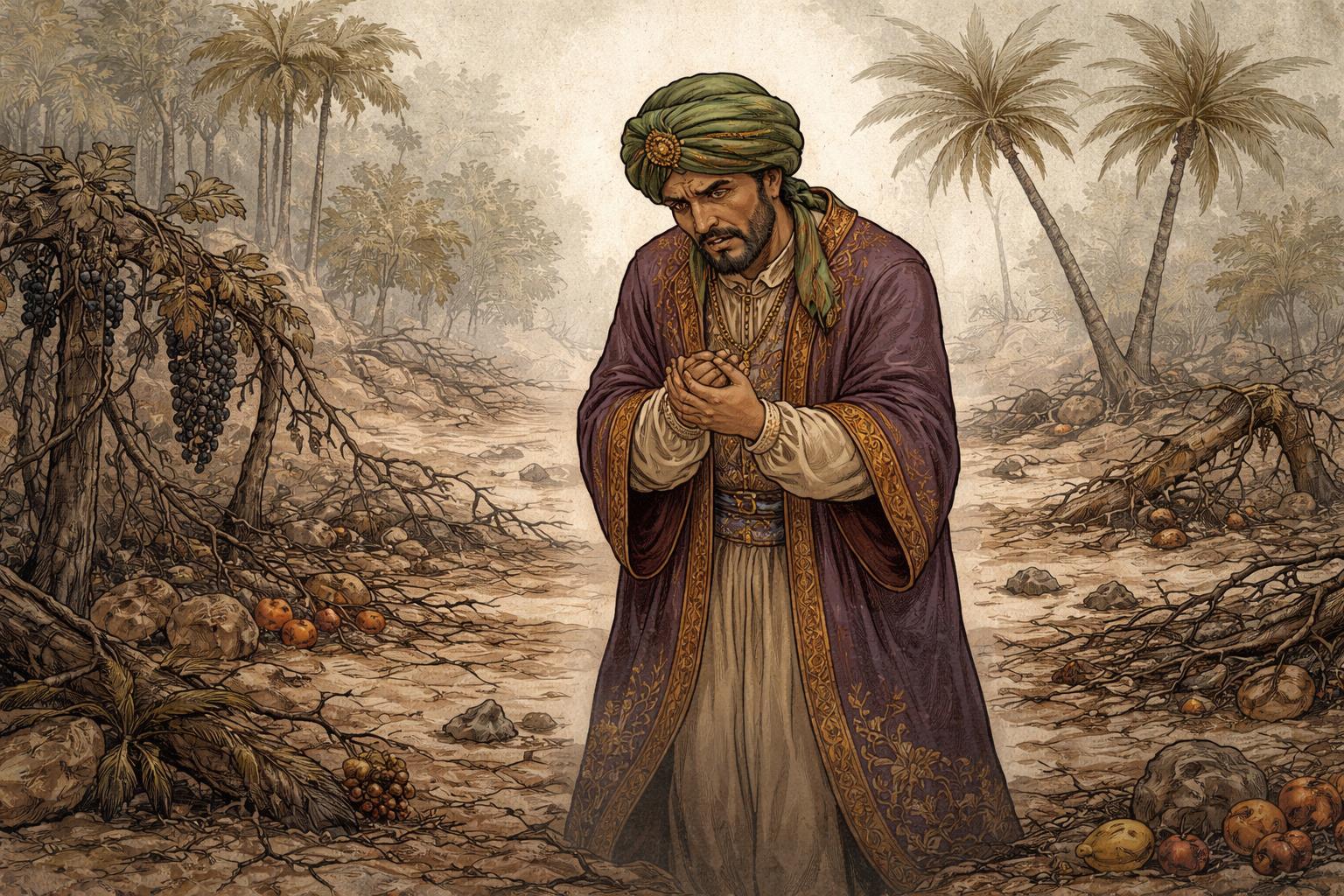
He warned his friend: this could all disappear. Allah who gave it can take it away. The water that flows can sink underground. The garden that blooms can turn to dust. Nothing in this world is permanent.
The rich man did not listen.
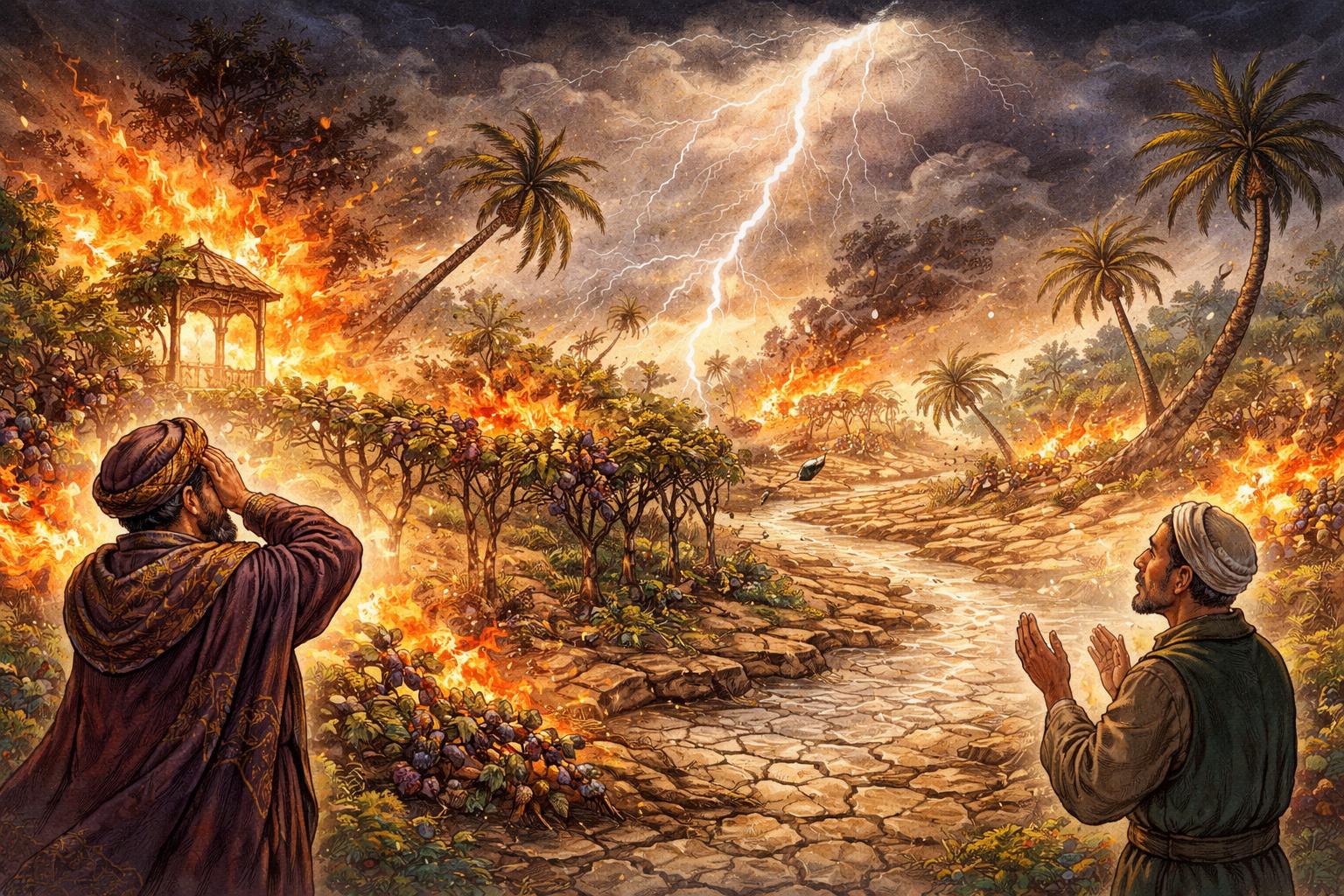
And then it happened. The Quran says: "And his fruit was encompassed by ruin." A disaster struck. Some scholars say it was a fire from lightning, others say a storm. Whatever it was, the gardens were destroyed, completely. The grapevines, the palms, the crops, all of it, turned to ruin. The fruit lay rotting on the ground. The structures collapsed. The river dried up or sank away.
The rich man stood among the ruins of his paradise and wrung his hands. "Oh, I wish I had not associated anyone with my Lord!" he cried. But it was too late for the gardens. The wealth he had worshipped was gone, and all the arrogance that came with it was revealed as hollow.
The Quran then delivers the moral with devastating clarity: "And he had no company to aid him other than Allah, nor could he defend himself. There, authority belongs entirely to Allah, the True. He is best in reward and best in outcome."
In the Shia tradition, this parable is deeply connected to the teachings of the Ahlul Bayt about wealth and humility. Imam Ali (AS), despite being the leader of the Muslim world, lived in extreme simplicity. He patched his own shoes, ate barley bread, and gave away any extra wealth to the poor. When asked why he lived so simply despite having access to the treasury, he said: "How can I sleep with a full stomach when I know there are hungry people in my community?"
Imam Sadiq (AS) taught: "Wealth is not what you own but what you give. The hand that gives is above the hand that takes." The rich man in the parable held onto his wealth tightly and identified himself with it. When it vanished, he had nothing. The Ahlul Bayt taught that true wealth is what you send ahead to the next life through charity, kindness, and gratitude.
The beautiful phrase "Ma sha'Allah, la quwwata illa billah" is one that Muslims say every day. When you see something beautiful, say it. When you receive a blessing, say it. When you achieve something, say it. It is a reminder that everything, every single thing, comes from Allah. And it is a shield against the arrogance that destroyed the garden owner.
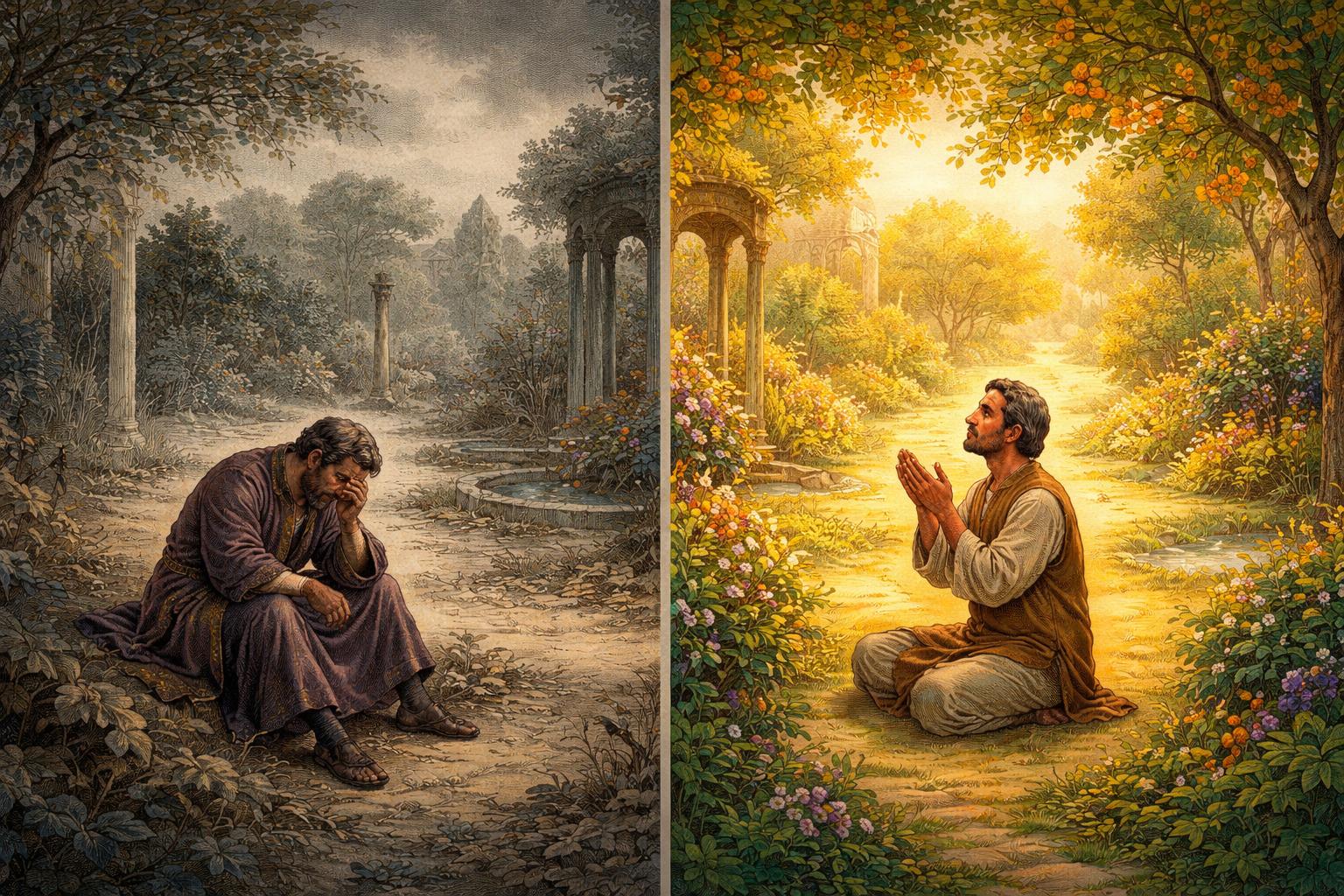
Tonight, as you look at the blessings in your life, whether small or large, practice saying these words. Not as a magic formula, but as a genuine acknowledgment that you are not the source of your blessings. Allah is.
Key Verse
"Wa lawla idh dakhalta jannataka qulta ma sha'Allahu la quwwata illa billah" "If only, when you entered your garden, you had said, 'This is what Allah has willed. There is no power except through Allah.'" -- Al-Kahf (18:39)
Reflection Questions
- The rich man said, "I do not think this will ever perish." Have you ever taken something good in your life for granted, assuming it would always be there? What happened?
- "Ma sha'Allah, la quwwata illa billah" is a reminder to attribute blessings to Allah. Why do you think this simple phrase could have changed the rich man's entire story?
- Imam Ali (AS) lived simply despite being the leader. What does his example teach us about the relationship between power, wealth, and humility?
Tonight, we are going to hear a story from the Quran about two friends. One of them had a lot of things, and one of them did not have as much. But which one do you think was happier? Which one do you think was wiser? Let us find out together.
A long, long time ago, there were two men who lived near each other. They were neighbors and friends. Allah gave one of these men two beautiful gardens. Can you imagine what these gardens looked like? Close your eyes and picture it.
There were grapevines everywhere, with big, round, juicy grapes hanging from them, purple and green and sweet as honey. Tall palm trees stood around the edges of the gardens, reaching up toward the blue sky, with bunches of dates at the top. And between the grapes and the palms, there were rows and rows of golden wheat and other yummy crops. A little river flowed right through the middle of both gardens, giving water to everything. The flowers were blooming, the fruits were growing, and nothing ever went wrong. Every single plant gave the best fruit. Not one leaf was dry. Not one grape was rotten. It was like a tiny piece of Paradise right here on earth.
Now, having a beautiful garden like that is a wonderful blessing from Allah. If the man had said "Thank you, Allah!" and shared his fruits with others, this would be a very different story. But that is not what happened.
The man with the big gardens started to feel very, very proud. He looked at all his grapes, all his dates, all his wheat, and he thought, "I must be really special. I must be really great. I deserve all of this!" He forgot that Allah was the one who made the rain fall and the sun shine and the plants grow. He thought he did it all by himself.
His friend, the other man, did not have as many things. His garden was smaller. He had fewer trees and less fruit. But this man had something very, very important that the rich man did not have. Do you know what it was? He had a grateful heart. He always said, "Thank you, Allah, for everything you have given me." He remembered that everything, every grape, every leaf, every drop of water, was a gift from Allah.
One day, the rich man invited his friend to come see his gardens. He walked his friend through the rows of grapevines, pointing at the heavy bunches of grapes. "Look at these!" he said proudly. He showed him the tall palm trees. "Have you ever seen palms so big?" He pointed at the river sparkling in the sunlight. "Everything here is perfect!"
Then the rich man said something very foolish. He looked around at all his beautiful things and said, "I do not think any of this will ever go away. This will last forever and ever!"
Can you believe he said that? He thought his gardens would never, ever change. But nothing in this world lasts forever, does it? Flowers bloom and then they dry up. Leaves grow green and then they fall. Everything in this world changes. Only Allah lasts forever.
But the rich man did not stop there. He said something even worse. He said, "I do not even think the Day of Judgment will ever come." The Day of Judgment is the day when Allah will ask everyone about what they did, whether they were kind or mean, whether they were grateful or ungrateful. The rich man was saying, "Nobody will ever ask me about anything! I can do whatever I want!"
And then, the worst thing of all, he said: "And even if there is a Day of Judgment, I will get something even better there, because look how much I have here!" He thought that having lots of grapes and dates meant that Allah loved him more than other people. He thought being rich meant he was better than everyone else.
His friend listened to all of these proud words, and his heart felt heavy and sad. He loved his friend, and he could see that his friend was making a very big mistake.
So the good friend spoke up. He said, "Have you forgotten who made you? Allah created you from dust, from tiny, tiny things, and He made you into a person. No matter how many gardens you have, you started as nothing. Allah made you. How can you forget Him?"
Then the good friend gave the most beautiful advice. He said, "If only you had said 'Ma sha'Allah, la quwwata illa billah' when you walked into your garden."
Ma sha'Allah, la quwwata illa billah. Do you know what that means? It means, "This is what Allah wanted to happen. There is no power except through Allah." It is a way of saying, "Thank you, Allah! You did this, not me. All good things come from You."
If only the rich man had said these words! If only he had looked at his beautiful gardens and said, "Wow, Allah, You are amazing! Thank You for giving me all of this!" But he did not.
The good friend also warned him. He said, "Maybe Allah will give me something better than your gardens. And maybe, if you keep being ungrateful, Allah will send something to your garden, maybe a big storm from the sky, and it will all turn to dust. Or maybe the water in your river will sink deep, deep into the ground, and you will never find it again."
He was telling his friend: be careful! Everything you have is from Allah. And Allah can take it back whenever He wants. Nothing belongs to us forever.
But did the rich man listen? No, he did not. He waved his hand and said, "That will never happen to me!"
And then, one day, it happened.
The Quran tells us that his gardens were destroyed. Maybe a big, booming thunderstorm came with lightning crashing down from the sky. Maybe a wildfire swept through. Whatever it was, when it was over, the beautiful gardens were gone. The grapevines were broken and dry. The palm trees were knocked down. The golden wheat was turned to dust. The river had dried up, gone, as if it were never there. The fruits lay rotting on the ground. Everything was ruined.
The rich man stood in the middle of what used to be his beautiful gardens. He looked at the broken vines and the dry, dusty ground. He held his hands together and cried, "Oh, I wish I had not been so proud! I wish I had not forgotten Allah!"
But it was too late for his gardens. All the things he was so proud of, all the things he thought made him better than other people, they were all gone. And what did he have left? Nothing. Because he had put all his love into his things instead of into Allah.
The Quran tells us the lesson very clearly: "True power belongs only to Allah." That means no matter how much stuff you have, no matter how big your house is or how many toys you own, the real power, the real strength, the real greatness, that all belongs to Allah.
Now, let me tell you about some very special people who understood this lesson perfectly. They are the Ahlul Bayt, the family of Prophet Muhammad (peace be upon him and his family).
Imam Ali (AS) was the leader of all the Muslims, the most powerful person in the whole land. But do you know how he lived? He lived very simply. He wore plain clothes. He ate simple bread. He fixed his own shoes with his own hands! When people asked him, "Why do you live like this? You are the leader! You could have anything you want!" Imam Ali said, "How can I eat a big meal when I know there are people in my land who are hungry?"
Imam Ali knew that everything he had was a gift from Allah, a gift meant to be shared. He did not keep things for himself. He gave and gave and gave.
Imam Sadiq (AS), another teacher from the Prophet's family, said something very wise: "Real wealth is not what you keep. Real wealth is what you give away." That means the more you share, the richer you truly are!
So tonight, before you go to sleep, look around at all the good things in your life. Maybe you have a warm bed, or a favorite toy, or food in the kitchen, or people who love you. And say, "Ma sha'Allah, la quwwata illa billah." Thank Allah for every single thing. Because when we are grateful, Allah gives us even more. And when we forget to say thank you, well, you remember what happened to the man with the gardens.
Always say "Ma sha'Allah" when you see something beautiful. Always say "Alhamdulillah," which means "thank God," when something good happens. And always, always share what you have with others. That is the way to keep your blessings forever, not in this world where things break and fade, but in Heaven, where good deeds last forever and ever.
Key Verse
"Wa lawla idh dakhalta jannataka qulta ma sha'Allahu la quwwata illa billah" "If only you had said, when you went into your garden, 'This is what Allah wanted! There is no power except from Allah!'" -- Al-Kahf (18:39)
Let's Talk About It
- When something good happens to you, what should you say? Can you practice saying "Ma sha'Allah, la quwwata illa billah"?
- The rich man forgot to say "thank you" to Allah. What are three things you are thankful to Allah for right now?
- Imam Ali (AS) shared everything he had, even though he was the leader. How can you share with others this week?